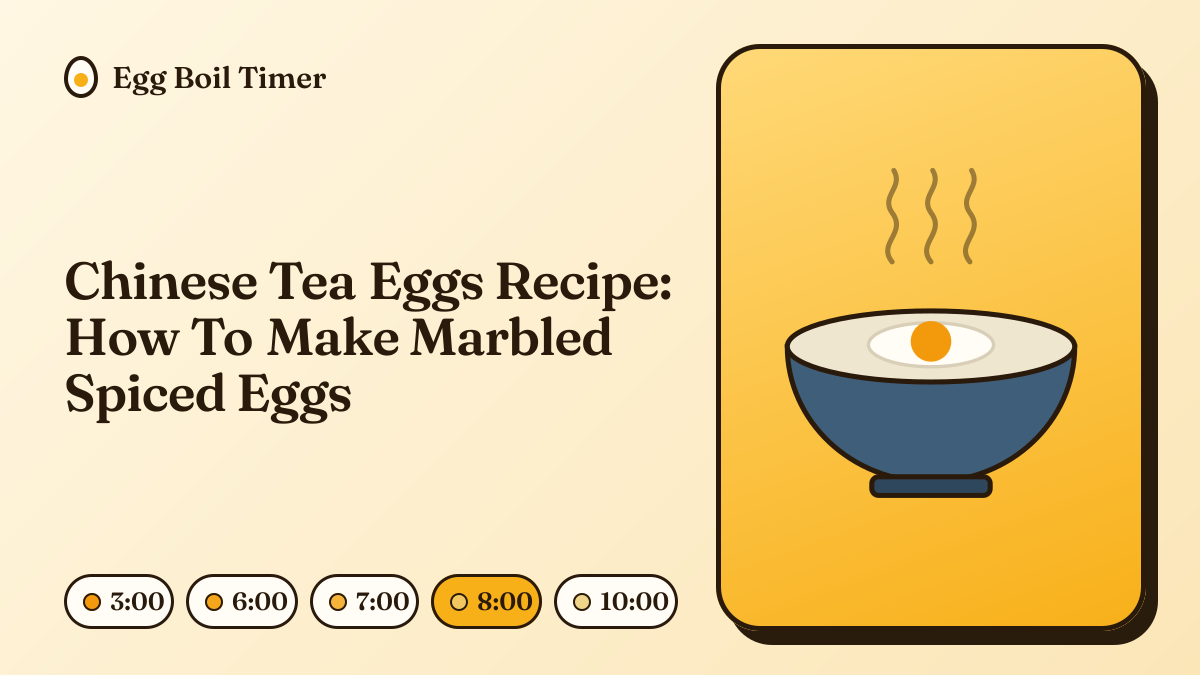
Original Chinese tea eggs (chá yè dàn) dey pass through two cooking stages. First, you go boil am make the white set, then you follow am with gentle simmering and long soaking inside spiced tea soup. When you crack the shell small small, it go allow soy liquid and tea color to trace fine fine lines across the egg white without scatter the egg body.
How Shell Cracking Dey Create Spiderweb Patterns
The beauty of traditional tea eggs depend on how liquid dey enter small spaces under the hard shell. Chicken egg get strong outer shell with two thin protein layers inside. If you peel the egg finish before you put am inside marinade, the white go soak the seasoning all over and turn one uniform brown color, just like Japanese Ramen Egg for House: The 30 Seconds Wey Decide Everything or Korean Soy Sauce Eggs: How To Cook Jammy Marinated Eggs Step by Step. But when you leave the cracked shell for body, it go block the liquid make e follow only the small crack lines.
Make sure you cool the boiled eggs down before you try to crack them. Use the back of iron spoon to tap the body light light, dey turn the egg round and round. Listen for dull, crisp sound wey dey show say shell don crack but the inner skin still tight. When you make plenty small small cracks, you go get fine spiderweb pattern. If your knock too heavy, you go tear the white make small pieces scatter inside your soup.
Soup Mixing: Tea Choice, Spices, and Soy Chemistry
The tasty liquid wey you soak am inside need three things: strong tea leaves, sweet-smelling whole spices, and fermented soy sauces. Each one get work wey e dey do while cooking and when e dey fridge.
- Black tea leaves: Strong black teas like Keemun, Yunnan Dianhong, or Assam dey give deep color and strong taste. Fermented pu-erh dey give dark, earthy flavor. Green and white tea no good for this work because hot water dey make their taste turn bitter sharp.
- Light and dark soy sauce: Light soy sauce dey provide salt and deep flavor. Dark soy sauce get molasses wey dey make the shell crack lines turn deep mahogany color.
- Whole spices: Star anise, cinnamon bark, fennel seeds, cloves, and Sichuan pepper form the main spice group. Whole spices dey release their smell small small over hours of soaking without leaving sand inside the liquid.
- Sweetener and citrus: Chinese rock sugar dey reduce the sharpness of salt and tea. Fresh ginger and orange peel cut through the heavy soy taste with clean citrus warmth.
For mornings when you want soft steamed custard instead of cold tea eggs, check How Dem Dey Make Silky Chinese Steamed Egg Custard: Ratio and Technique. Our main Egg Recipes: Breakfast, Lunch, And Dinner Ideas page cover different ways to cook eggs from breakfast to street snacks.

Boiling Time: Matching Shell Firmness to Target Doneness
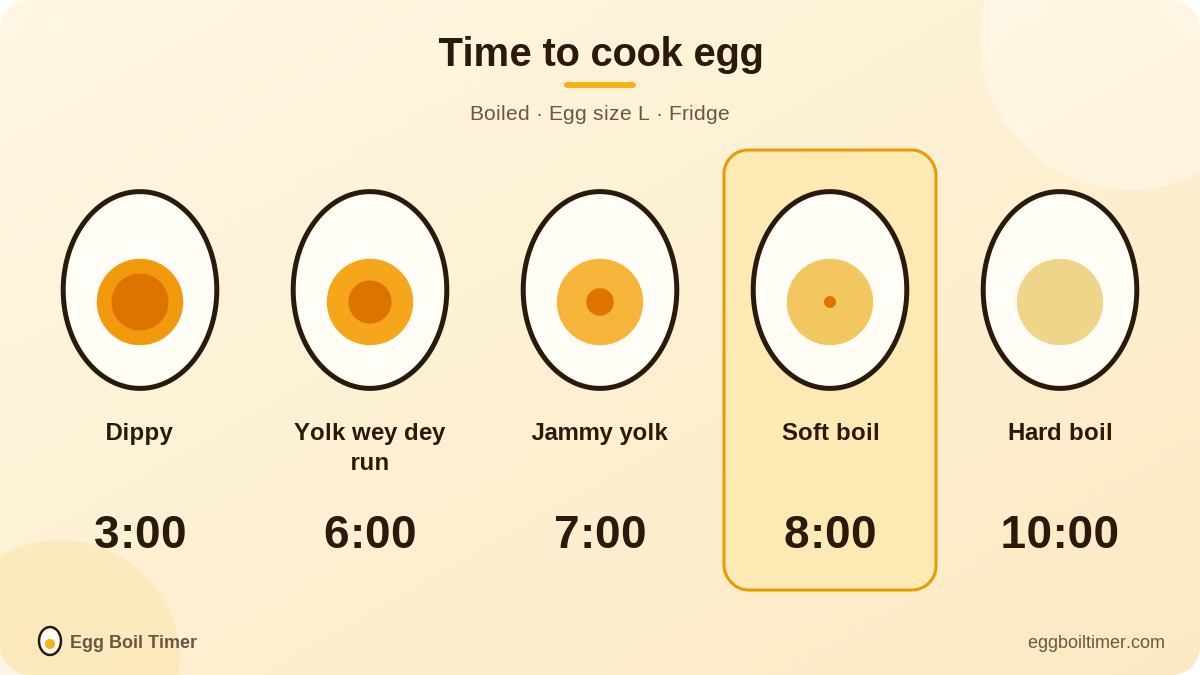
Because the eggs go still enter hot soup for second stage, you must boil am carefully for first stage. When you drop fridge-cold large eggs (55 grams) straight inside boiling water, the shell go peel clean and the white go set well. Our Egg Boil Timer calculator model dey use egg weight and starting temperature to give you the exact yolk hardness wey you want.
| Desired Finished Texture. | Initial Boil Time (55 g Cold Egg). | Broth Heat Treatment. | Resulting Yolk State. |
|---|---|---|---|
| Soft-Jammy Center. | 6 minutes 30 seconds. | Cold steep only (no active simmering). | Thick custard center, tender white. |
| Classic Street-Food Firm. | 8 minutes. | Simmer 20 minutes over low heat. | Fully coagulated, creamy, golden. |
| Traditional Dense Commercial. | 9 to 10 minutes. | Simmer 40 minutes, hold warm. | Dry, crumbly core, deeply seasoned. |
Transfer the eggs straight inside bowl of ice water for 5 minutes. Cold water make the inside egg contract small small from the shell, and that one go make the crack lines clean and peeling very easy later.
Cold Soaking Versus Active Simmering
To bring out flavor from tea leaves, you need careful temperature control. If you allow tea leaves to boil for more than 25 minutes, e go release too much tannin and make your mouth taste dry and bitter.
- Prepare the spice base: Pour 800 ml of water into wide pot. Add 3 tablespoons of light soy sauce, 1.5 tablespoons of dark soy sauce, and 1 tablespoon of rock sugar. Add 3 star anise, 1 stick of cinnamon, 1 teaspoon of Sichuan pepper, 3 ginger slices, and 2 tablespoons of black tea leaves.
- Extract the aromatics: Boil everything together on medium-high heat. Reduce fire to medium-low and simmer open for 10 minutes make sugar melt and spices release their smell.
- Submerge the fractured eggs: Use spoon to put your cracked eggs inside the hot soup. Regulate fire make the water dey shake small small around 85 °C to 90 °C (185 °F to 194 °F) for 20 minutes.
- Strain delicate leaves: Remove pot from fire. If you use broken tea leaves, pack them out after 30 minutes make bitterness no enter, but leave the big spices inside.
- Refrigerate for color penetration: Allow soup to cool down to room temperature. Put eggs and liquid inside clean glass jar or bowl make sure water cover every egg. Keep am for fridge for at least 12 hours. Best taste dey come out between 24 and 36 hours.
Solving Rubbery Whites, Faint Patterns, and Too Much Salt
Small differences in shell thickness, fire strength, and soaking time fit cause small problems. Use this guide to fix them.
| Observed Problem. | Underlying Physical Cause. | Corrective Action. |
|---|---|---|
| Faint or absent marbling. | Shell fractures were too sparse or membrane remained sealed. | Press and roll the egg gently against the counter to create uniform spiderweb cracks before simmering. |
| Torn, jagged egg whites. | Eggs were tapped while hot or struck with too much force. | Shock boiled eggs in ice water for 5 minutes before tapping with the curved back of a spoon. |
| Rubbery white with green yolk ring. | Broth boiled violently during the second cooking stage. | Keep cooking temperature below 90 °C. Ferrous sulfide rings form when yolk iron reacts with white sulfur past 77 °C. |
| Harsh, astringent aftertaste. | Tea leaves simmered too long or cheap dust bags ruptured. | Use whole-leaf tea. Strain out tea leaves after the initial 30 minutes of extraction. |
| Under-seasoned yolk. | Steeping time was under 12 hours. | Extend refrigerated soaking to a full 24 hours so sodium can diffuse to the center via osmosis. |
Other Ways People Cook Marbled Eggs Around the World
Cooked whole eggs get long history for Asian cooking. While Chinese tea style dey use black tea and star anise with cracked shell, other places get their own method to give color and taste to hard-boiled eggs.
| Culinary Tradition. | Primary Botanical Base. | Shell Protocol. | Sensory Profile. |
|---|---|---|---|
| Chinese Chá Yè Dàn. | Black tea, cassia, star anise, soy sauce. | Cracked, retained throughout. | Warmly spiced, savory, marbled pattern. |
| Taiwanese Convenience-Store Style. | Black tea, sugar, concentrated five-spice. | Cracked, held warm continuously. | Deep umami, sweeter notes, dark stain. |
| Indonesian Telur Pindang. | Shallot skins, guava leaves, teak leaves. | Cracked or whole, long boil. | Earthy, reddish-brown exterior, smoky. |
| Japanese Ajitama. | Soy sauce, mirin, sake, dashi. | Peeled completely before soak. | Uniform amber sheen, runny jammy core. |
Safe Fridge Storage and How to Reuse Soup
Boiled egg white and yolk na food wey quick spoil. Food safety rules talk say boiled egg no suppose stay outside for more than 2 hours. Once your pot cool down, pack am straight inside fridge.
When you keep am inside spiced soy soup inside tight glass container, tea eggs fit stay fresh for 3 to 4 days for 4 °C (40 °F) or lower. If eggs stay inside soup past four days, the salt go draw water commot from the white, make am rubbery and too salty. If you know say you no fit finish am within four days, remove the eggs from soup, peel them, and keep am inside dry container for maximum 48 hours.
You fit use the remaining soup as master stock. Strain the liquid with fine sieve, boil am well for 5 minutes to kill germs, and keep am inside freezer for up to 3 months. When you wan make new batch, melt the liquid and add 100 ml of fresh water. Add fresh black tea leaves to bring back the good smell.