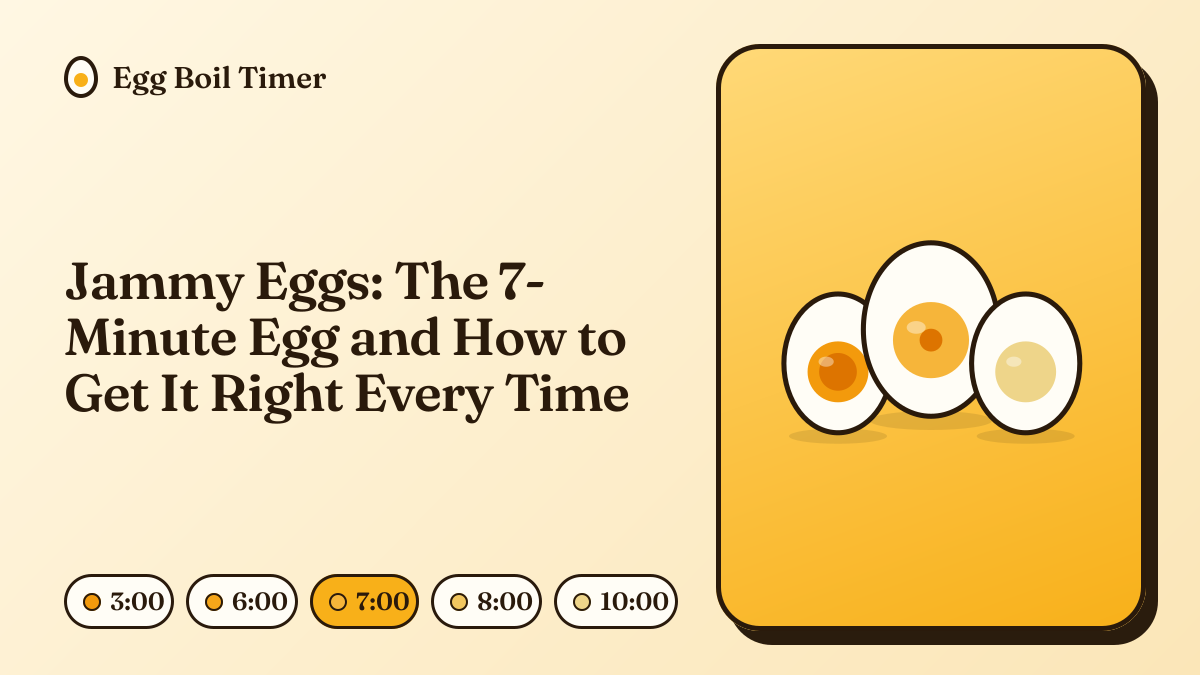
Boiling a large egg for seven minutes produces the benchmark medium-boiled egg with an opaque, tender white and a rich, fudge-like jammy yolk. Known internationally as the French oeuf mollet, German wachsweiches Ei, or Italian uovo barzotto, this culinary sweet spot sits midway between liquid soft-boiled and firm hard-boiled eggs. The yolk remains intensely creamy and spreadable without spilling across the plate. Use our interactive timer above to fine-tune your countdown according to egg size, refrigerator chill, and elevation before lowering your eggs into boiling water.
Egg proteins transform through distinct thermal stages during cooking. While egg white proteins begin coagulating at 62 °C and form a solid structure near 80 °C, the yolk thickens into a glossy gel around 66 °C. A single minute of excess boiling drives the core past this threshold, drying the yolk into a pale crumbly paste. Cooking with precision guarantees velvety jammy centers every single time. For other doneness styles in the shell, consult our Egg Boil Timer and our complete guide on How to Boil Eggs: Master Soft, Jammy and Hard Boiled Eggs.
The Seven-Minute Yolk Window Explained
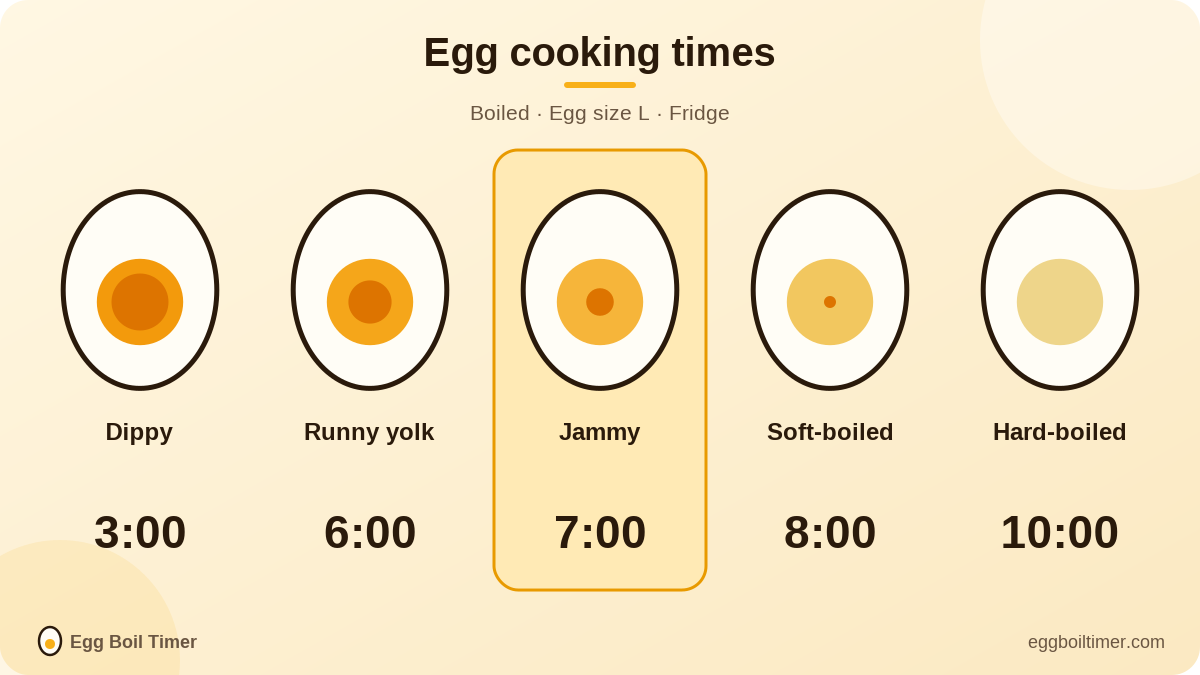
The transition between a runny yolk and a crumbly hard yolk takes place within an extraordinarily narrow sixty-second thermal window. At six minutes of boiling, the yolk core reaches 63 °C, remaining entirely liquid. At eight minutes, the core temperature climbs past 70 °C, turning chalky and pale. At seven minutes (420 seconds), the interior reaches exactly 66 °C, where yolk proteins form an interconnected emulsion that holds its shape when sliced yet melts smoothly on the palate.
Residual heat poses the greatest risk to this delicate texture. Even after lifting an egg from boiling water, the scorching shell and outer albumen continue pumping heat inward toward the yolk. Without immediate cooling, a perfect seven-minute medium egg will quietly cook itself into a firm hard-boiled egg within five minutes on the counter. Plunging cooked eggs directly into an ice bath stops heat transfer instantly, locking in the custardy texture.
Egg Size, Starting Chill, and Doneness Timeline
Egg mass dictates how rapidly heat penetrates the central yolk. A small egg absorbs heat quickly through its thinner albumen blanket, while jumbo eggs require significantly longer exposure to achieve the identical jammy core. The timeline below reflects cold eggs taken straight from a 4 °C refrigerator and lowered directly into boiling water at sea level.
| Egg Caliber | Weight (Grams) | Boiling Time | Core Yolk Temperature | White and Yolk Texture Profile |
|---|---|---|---|---|
| Small | 45 g | 6 minutes (360 s) | 65 °C | Delicate, tender white with a rich, glistening jammy center |
| Medium | 50 g | 6.5 minutes (390 s) | 66 °C | Firm white with a thick, spreadable custardy core |
| Large | 55 g | 7 minutes (420 s) | 66 °C | Classic benchmark medium egg with a dense, fudge-like yolk |
| Extra Large | 60 g | 7.5 minutes (450 s) | 67 °C | Sturdy white with a velvety, deeply concentrated yolk center |
| Jumbo | 65 g | 8 minutes (480 s) | 67 °C | Substantial set white with a rich, semi-solid jammy interior |
Starting temperatures also alter heat dynamics. Eggs kept at room temperature (around 20 °C) reach the jammy target forty-five seconds faster than chilled eggs. If using pantry eggs, reduce your boiling time accordingly to prevent overcooking.
Atmospheric pressure directly suppresses water boiling temperature at higher altitudes. For every 300 meters (1,000 feet) of elevation, pure water boils roughly 1 °C cooler. Because boiling water transfers heat less aggressively in mountain locations, home cooks at high elevations must extend boiling times by fifteen to thirty seconds to achieve the same jammy consistency.

Boiling Water Drop and Rapid Ice-Bath Peel
Peeling a medium-boiled egg without tearing the tender white requires intentional kitchen physics. Starting eggs in cold water allows the albumen proteins to heat slowly and fuse stubbornly to the inner shell membrane. Dropping chilled eggs straight into boiling water shocks the outer proteins, creating a clean microscopic boundary that releases effortlessly later.
- Bring water to a rolling boil: Fill a deep saucepan with at least two quarts of water, ensuring the liquid will submerge the eggs by two inches. Bring the pot to a vigorous rolling boil over high heat before introducing the eggs.
- Lower chilled eggs gently: Take your eggs directly from the refrigerator. Place them onto a wire spider or slotted spoon and lower them smoothly to the bottom of the pan one by one. Lowering gently prevents hairline thermal cracks in the shell.
- Maintain a steady gentle simmer: Reduce heat slightly so the water simmers energetically without violently tossing the eggs against each other. Start the countdown timer the moment the eggs touch the water.
- Submerge in a prepared ice bath: While the eggs cook, fill a large bowl with equal parts cold water and ice cubes. When the timer alerts you at seven minutes, transfer the eggs immediately into the ice water using your slotted spoon. Leave them undisturbed for fifteen minutes.
- Crack and peel under water: Gently tap the wide base of each egg against the counter to fracture the air cell. Roll the egg lightly to craze the entire shell, then peel under the cool water. The water seeps beneath the membrane, sliding the shell away in large clean shards.
Patience during the ice bath phase pays huge dividends. Leaving eggs in ice water for a full fifteen minutes chills the interior thoroughly, causing the tender egg to contract slightly within the shell. This slight shrinkage widens the gap between the cooked white and the fibrous membrane, guaranteeing pristine smooth surfaces.
Culinary Pairings from Ramen to Scotch Eggs
The medium-boiled egg stands as one of the most versatile building blocks in modern gastronomy. Its sturdy yet supple white supports delicate slicing, while the glossy yolk enriches surrounding broths, dressings, and crisp textures without turning soupy or dry.
- Japanese Ajitsuke Tamago (Ramen Eggs): Peel seven-minute eggs and submerge them in a chilled marinade of soy sauce, mirin, sake, and water for four to twelve hours. The salt in the soy sauce cures the outer yolk into a deeply savory, gelatinous delicacy that melts into hot ramen broth.
- Classic Scotch Eggs: Medium-boiled eggs provide the ideal core for sausage-wrapped scotch eggs. Hard-boiled eggs turn dry and rubbery when fried a second time inside the meat casing. A seven-minute egg stays moist and jammy even after deep-frying to golden perfection.
- Artisan Toast and Breakfast Salads: Halve a medium egg over toasted sourdough spread with salted butter or smashed avocado. Sprinkle with coarse sea salt, smoked paprika, or freshly cracked black pepper. The custardy yolk acts as an unctuous natural sauce.
- Grain Bowls and Steamed Greens: Top warm farro, quinoa, or roasted asparagus spears with halved jammy eggs. The velvety center coats the grains and tender vegetables, adding rich protein and luxurious mouthfeel.
You can store unpeeled medium-boiled eggs in their shells in the refrigerator at 4 °C or below for up to four days. Peeled marinated eggs keep safely in their brine for three days. Never leave boiled eggs at room temperature for more than two hours, as warm moist proteins invite rapid bacterial proliferation.