Adobong itlog is a Filipino dish of hard-boiled eggs simmered in a braise of soy sauce, cane vinegar, crushed garlic, bay leaves, and black peppercorns. The sauce balances salt and acidity to coat the smooth exterior of cooked eggs. The dish takes about 25 minutes from start to finish and goes straight onto warm steamed rice.
Boiling Eggs for Sauce Absorption: Doneness and Size Ratios
Preparing adobong itlog starts with boiling the eggs to your target texture before braising. Traditional recipes call for hard-boiled eggs, which hold their shape during continuous simmering. Cooked eggs with soft or jammy yolks offer a rich contrast if added at the very end of sauce reduction.
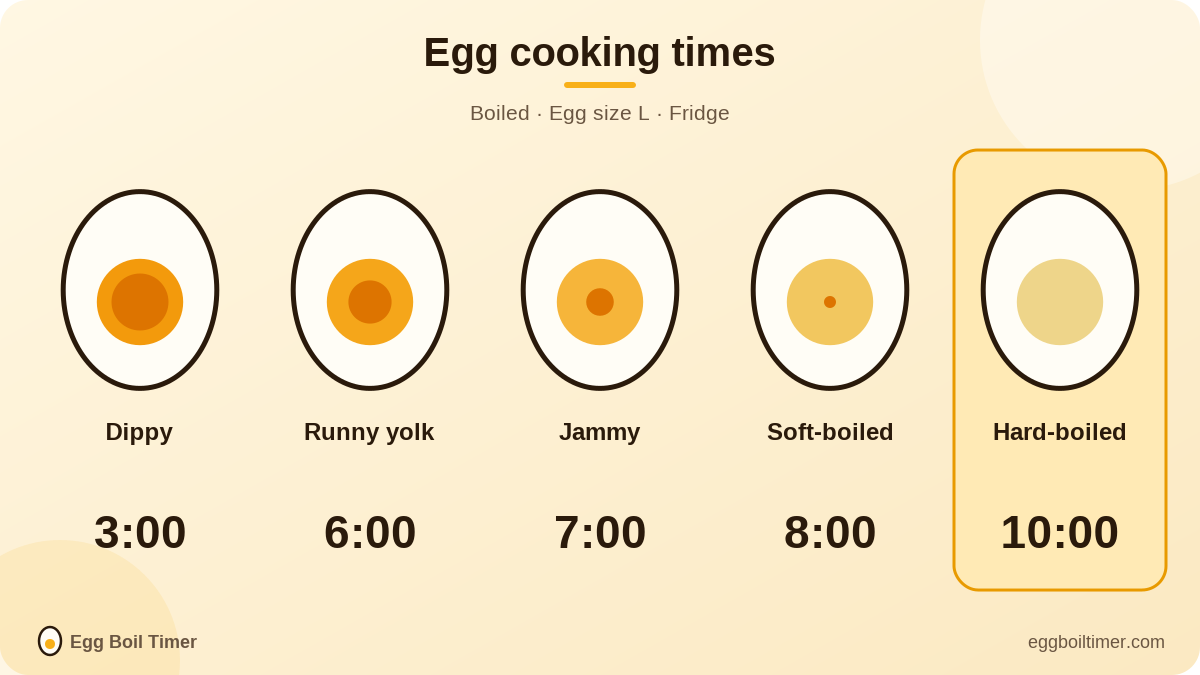
Use Egg Boil Timer to calculate exact cook times based on your starting egg temperature and altitude. When starting with large eggs directly from the refrigerator into rolling boiling water, use these exact benchmark timings:
| Doneness Level | Boil Time (Large Egg) | Yolk Texture | Braising Behavior |
|---|---|---|---|
| Runny (Level 1) | 6 minutes | Liquid center | Warm in finished sauce only; do not simmer |
| Jammy (Level 2) | 7 minutes | Fudge-like core | Add during the last 2 minutes of simmer |
| Firm / Hard (Level 4) | 10 minutes | Fully set yolk | Withstands full 10-minute sauce braise |
Plunge the eggs into an ice bath immediately after boiling. Thermal shock shrinks the egg albumen away from the inner shell membrane. This makes peeling clean and prevents gouges on the smooth white surface.
The Tiger Skin Method: Creating Surface Texture
A common issue when braising peeled eggs is that the thin sauce slides off the smooth white exterior. Pan-frying the peeled eggs in two tablespoons of hot oil before braising solves this. Roll the peeled eggs in a skillet over medium-high heat for 3 to 4 minutes.
As the outer surface loses moisture, blistered brown pockets form across the albumen. These rough patches hold the garlic oil and reduced soy sauce so flavor clings to every bite. Frying also toughens the outer skin, preventing the eggs from splitting during a long simmer. The high heat causes the proteins in the egg white to tighten and dehydrate. This creates a resilient, chewy skin that acts as a structural barrier.
Balancing Soy Sauce, Cane Vinegar, and Aromatics
Filipino adobo balances salty soy sauce against sharp cane or coconut vinegar. Neutral cane vinegar provides the authentic tangy profile. Combine dark soy sauce and cane vinegar at a 2:1 ratio for a rich braise. Use a 1:1 ratio if you prefer a sharper sour punch.
Sauté one whole head of crushed garlic cloves and half a diced yellow onion in oil until fragrant. Pour in equal parts water, soy sauce, black peppercorns, and dried bay leaves. Add the vinegar last. Let it come to a rapid boil without stirring for 3 minutes. Leaving vinegar undisturbed allows harsh acetic acid fumes to cook off without scorching the aromatics. This leaves behind a mellowed, fruity sour base.

Preparing Adobong Itlog: Step by Step
This single-pan recipe yields four portions and sits alongside other classic Egg Recipes: Breakfast, Lunch, and Dinner Ideas.
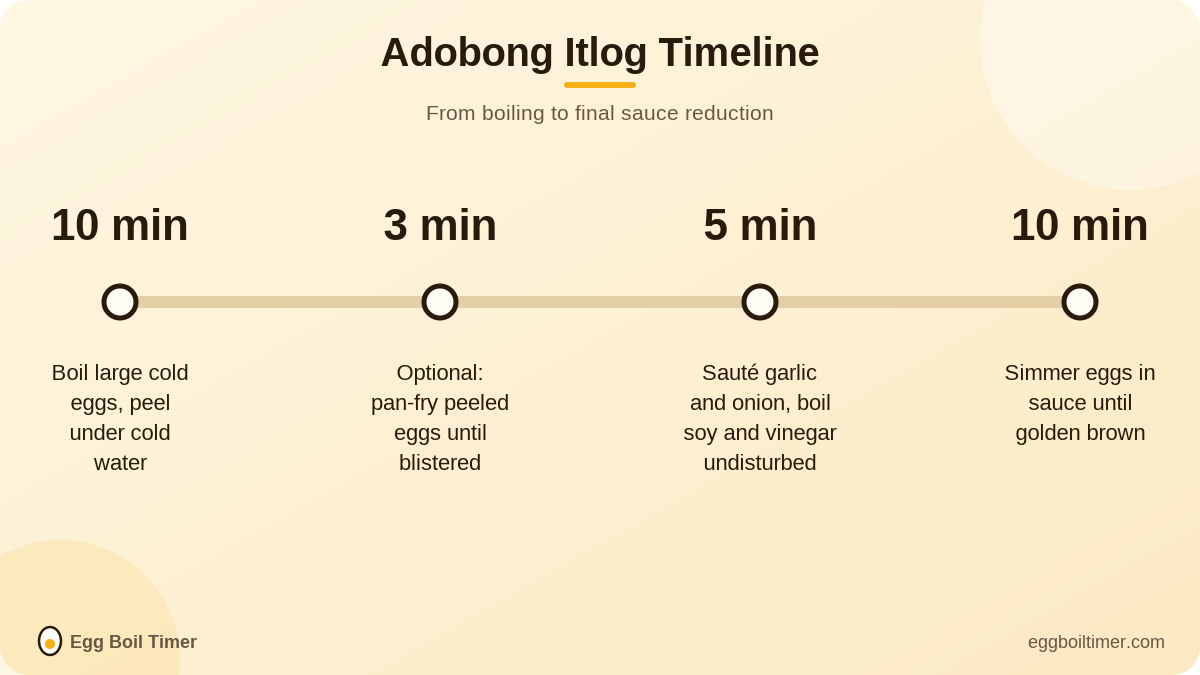
- Boil the eggs: Lower 6 large cold eggs into boiling water. Boil for 10 minutes for firm eggs. Transfer to an ice bath for 5 minutes, then peel carefully.
- Blister the exterior: Heat 2 tablespoons of neutral oil in a deep skillet over medium heat. Fry peeled eggs for 3 to 4 minutes, turning frequently until golden blisters form. Remove eggs and set aside.
- Sauté aromatics: In the same pan, sauté 6 crushed garlic cloves and 1 small diced onion for 2 minutes until softened.
- Build the braise base: Pour in 1/2 cup cane vinegar, 1/2 cup soy sauce, 1/2 cup water, 1 teaspoon whole black peppercorns, and 2 dried bay leaves. Bring to a boil for 3 minutes without stirring.
- Simmer and reduce: Lower heat to medium-low. Stir in 1 teaspoon brown sugar. Place the boiled eggs into the liquid. Simmer uncovered for 10 to 12 minutes until the sauce reduces into a dark, glossy glaze.
Adobo Eggs vs. Cold-Marinated Soy Eggs
While they share a soy-based profile, adobong itlog differs significantly from Japanese ramen eggs or Korean Mayak Gyeran. Ramen eggs are steeped in a cold marinade to preserve a liquid yolk. Adobong itlog is a hot braise where the heat of the sauce actually cooks the egg further.
The vinegar in adobo acts as a preservative and a tenderizer for the proteins. In contrast, ramen egg marinades focus on sweetness and umami. Adobong itlog is meant to be served warm, whereas marinated eggs are typically served cold or at room temperature. The braising process also results in a much darker, more concentrated exterior color than a standard overnight soak.
Adding Potatoes, Eggplant, or Coconut Milk
Adobong itlog adapts easily to budget stretching and regional preferences. Adding cubed potatoes (adobong itlog at patatas) creates a thick, starchy sauce. Fry potato cubes in oil until crisp before simmering them alongside the eggs. The released surface starches bind water and oil into a naturally rich gravy.
In some provinces, coconut milk is added to create Adobo sa Gata. This transforms the sharp, salty braise into a creamy, pale-orange sauce. It pairs exceptionally well with spicy bird's eye chilies. Sliced eggplant adds a mild, spongy element that absorbs excess vinegar. You can also mix boiled eggs into leftover pork adobo, much like the egg-and-meat combination found in Vietnamese Trứng Kho: Vietnamese Braised Eggs and Pork Recipe. Serve your finished adobo alongside garlic fried rice as part of a traditional Authentic Silog Recipe: Filipino Garlic Rice, Egg & Ulam spread. For street-food style deep-fried coated eggs, explore our guide on Crispy Kwek Kwek: Filipino Fried Orange Quail Eggs.
Troubleshooting: Balancing Salt, Acidity, and Color
Achieving a dark color and balanced flavor requires managing heat and reduction timing. If the sauce tastes overly sour, simmer uncovered for an additional 4 minutes to evaporate remaining acetic acid. You can also stir in 1/2 teaspoon of dark brown sugar. If the eggs look pale, ensure you are using dark or Filipino cane soy sauce.
Let peeled eggs soak in the warm pot off the heat for 15 minutes post-cooking to absorb surface pigment. If the sauce appears thin and watery, remove the eggs temporarily. Boil the liquid on high heat for 3 to 5 minutes until large, glossy bubbles appear. Then roll the eggs back through the glaze. If the sauce is too salty, add more sliced onions or a few extra potato wedges to absorb the salt.
Storage, Safety, and Reheating Rules
Adobong itlog tastes even better the next day as the acidity and garlic continue to penetrate the albumen. Store leftover eggs sealed in their sauce inside an airtight container in the refrigerator for up to 4 days. According to USDA nutritional data, one large egg provides approximately 6.3 grams of complete protein. This makes it a dense, economical meal prep option.
Reheat leftover adobong itlog gently in a small saucepan over medium-low heat for 5 to 7 minutes until warm throughout. Avoid reheating whole peeled boiled eggs in a microwave without slicing them in half first. Trapped steam inside dense yolk structures can cause whole eggs to burst dangerously upon contact with a fork. This is general information, not medical advice.


