Tortang talong is a classic Filipino omelette. It is made by charring slender eggplants, peeling the skin, flattening the flesh, and pan-frying the vegetable in seasoned beaten egg. The technique yields crisp, lacy egg edges around a smoky, custard-like eggplant core. It requires basic ingredients and takes 25 minutes from prep to plate.
Anatomy of a Traditional Filipino Eggplant Omelette
In the regional spectrum of Egg Recipes: Breakfast, Lunch, and Dinner Ideas, tortang talong stands apart from Western folded egg dishes. Standard Western omelettes fold liquid eggs around chopped filling. This dish uses the whole charred eggplant as an intact structural base. Leaving the stem attached gives you a sturdy handle for dipping and flipping in the pan.
Long Asian eggplants, such as Japanese or Chinese varieties, work best for this preparation. Their thin skins char fast, and their small seeds stay sweet during frying. Western globe eggplants hold too much water and contain bitter seeds. That extra moisture makes the egg batter slide off during frying.
Eggs act as both a structural binder and a crisp outer shell. A single large egg provides 6.3 grams of protein. Its yolk emulsifiers help coat the charred vegetable pulp. In hot oil, yolk proteins bind to surface starch and moisture, building a crisp golden seal. For timing other egg preparations alongside stovetop frying, check the interactive egg timer on Egg Boil Timer.
Charring, Steaming, and Baking Methods Compared
The flavor of tortang talong hinges on how you soften the eggplant flesh before coating it with egg. Charring over a direct flame infuses woodsy smoke deep into the vegetable pulp. Secondary kitchen heat sources work as well, though each yields a distinct texture and moisture level.
| Preparation Method. | Heat Profile and Time. | Flavor Impact. | Moisture Level and Handling. |
|---|---|---|---|
| Direct Gas Flame. | Open burner, 8–10 minutes. | Deep smoky aroma, blistered skin. | Low moisture, ideal crisping base. |
| Broiler / Oven Bake. | 230 °C (450 °F), 15–20 minutes. | Mild roast sweetness, soft flesh. | Moderate moisture, blot before dipping. |
| Stovetop Steam. | Steamer basket, 10–12 minutes. | Clean vegetable flavor, zero smoke. | High moisture, requires firm pressing. |
| Air Fryer Roast. | 200 °C (400 °F), 12–15 minutes. | Light roast, tender pulp. | Low to moderate moisture, minimal mess. |
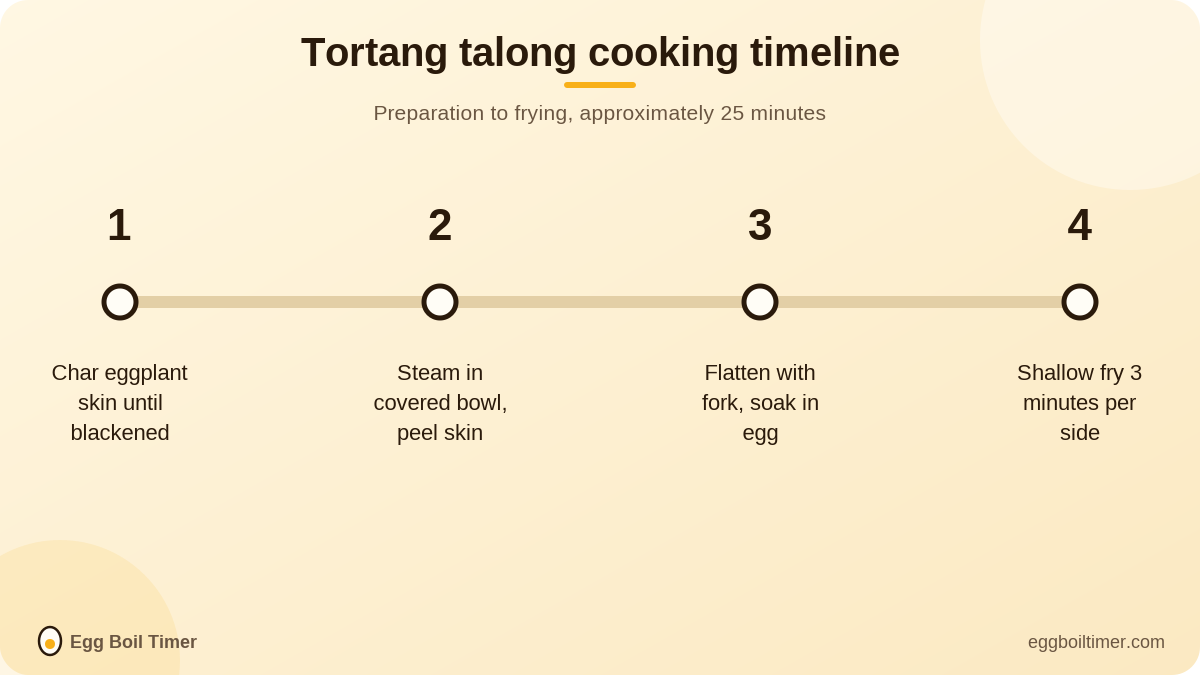
After charring, seal the hot eggplants in a covered bowl for 5 minutes. Trapped steam loosens the skin so it peels away easily without pulling off the flesh. Keep the stem intact. Lay the peeled eggplant on a plate. Press it gently with a fork to flatten the pulp into a fan shape. This creates maximum surface area for the egg coating.
Four Steps for Superior Batter Adhesion
- Drain surface moisture completely. Press the flattened eggplant between double layers of paper towels for 30 seconds. Wet vegetable fibers repel egg proteins instantly in hot oil.
- Season the egg batter right before dipping. Whisk eggs with salt, black pepper, and garlic powder immediately before frying. Adding salt minutes early draws moisture out of the egg whites, thinning the coating.
- Work with room-temperature eggs. Cold eggs straight from the refrigerator drop the skillet oil temperature rapidly. Room-temperature eggs set immediately upon contact with hot oil, locking in shape.
- Pour reserved batter over the pan. Put the dipped eggplant into the skillet. Spoon two tablespoons of fresh egg batter over the top face before the bottom sets completely.
Classic Filipino Tortang Talong Recipe
This recipe yields two traditional eggplant omelettes using simple pantry ingredients.
- Yield: 2 servings.
- Prep time: 10 minutes.
- Cook time: 15 minutes.
- Total time: 25 minutes.
Ingredients
- 2 long Asian eggplants (stems intact).
- 2 large eggs.
- 1/2 teaspoon fine sea salt.
- 1/4 teaspoon freshly ground black pepper.
- 1/4 teaspoon garlic powder.
- 3 tablespoons neutral frying oil (canola or vegetable).
Instructions
- Wash and dry the eggplants. Prick the skin twice with a fork to release steam during heating.
- Place eggplants directly on a gas stove burner over medium-high heat. Char for 8 to 10 minutes, turning every 2 minutes with tongs. Stop when the skin blackens and flesh feels soft.
- Transfer eggplants to a bowl and cover with a plate for 5 minutes to steam.
- Peel off the charred skin while keeping the stem attached. Discard the skin.
- Place peeled eggplants on a flat plate. Press gently with a fork from the stem downward to spread the flesh thin.
- In a shallow bowl, whisk the eggs, salt, black pepper, and garlic powder until blended.
- Heat oil in a wide skillet over medium heat until shimmering.
- Dip one flattened eggplant into the egg mixture to coat both sides. Lower it into the skillet. Spoon half of the remaining egg batter over the top face.
- Fry for 3 minutes until golden brown underneath. Flip carefully with a wide spatula. Cook the second side for 3 minutes until set.
- Drain on paper towels and repeat with the second eggplant.
Diagnostic Guide for Frying Failures
Achieving a crisp fried crust without a greasy interior depends on oil thermal management. Use this diagnostic table to fix common cooking issues.
| Symptom. | Primary Cause. | Solution. |
|---|---|---|
| Omelette feels greasy. | Skillet oil below 175 °C (350 °F). | Heat oil until it shimmers; food should sizzle instantly on contact. |
| Egg coating peels off. | Eggplant surface unblotted before dipping. | Press peeled eggplant with paper towels until dry to the touch. |
| Soggy center texture. | Water trapped inside thick flesh. | Flatten vegetable thinner and cook over medium heat to evaporate steam. |
| Missing smoky note. | Eggplant prepared by steaming or baking. | Whisk 1/4 teaspoon liquid smoke or smoked paprika into egg batter. |
Rest finished eggplants on a wire rack when cooking multiple batches. Avoid stacking them on a plate. Stacking traps steam, which turns the crisp fried shell soft and rubbery. For related pan-fried egg preparations, explore Italian Frittata Recipe: The Italian Skillet Method and Fillings or Chinese Egg Foo Young: Golden Patties and Savory Brown Gravy techniques.
Ground Pork Fillings, Dipping Vinegar Ratios, and Side Pairings
The standard meatless version makes a fast weekday dish, but regional variations introduce savory fillings. Tortang talong with giniling adds seasoned ground pork sautéed with onions and tomatoes. Spread two tablespoons of warm cooked meat over the flattened eggplant flesh right before dipping it into the egg batter.
In Filipino home kitchens, tortang talong pairs naturally with garlic fried rice (sinangag) as part of a classic Authentic Silog Recipe: Filipino Garlic Rice, Egg & Ulam breakfast. Banana ketchup provides a sweet contrast to the smoky pulp. Alternatively, serve a quick dipping vinegar. Mix 4 tablespoons of cane vinegar with 1 minced garlic clove, 1 crushed red chili, and a pinch of salt to cut through the oil.
Leftover omelettes store well in an airtight container in the refrigerator for up to 3 days. Reheat them in a dry skillet over medium heat for 2 minutes per side. Avoid reheating in a microwave, as steam softens the crisp outer egg crust. For another street-style egg dish featuring crisp batter, see how Indonesian cooks prepare Martabak Telur Recipe: Crispy Indonesian Egg Pancake.


