Martabak telur is a savory Indonesian street food pancake. It features a paper-thin pastry envelope shallow-fried in oil and folded around a filling of minced meat, raw eggs, curry spices, and scallions. While sweet martabak manis uses a thick yeast batter cooked in a ribbed pan, savory martabak telur relies on an elastic gluten dough rolled paper-thin. At home, you need to balance dough elasticity with proper oil temperature. This ensures the egg filling sets completely before the wrapper burns.
Martabak Telur versus Martabak Manis: The Indonesian Street Food Divide
Night markets across Jakarta, Surabaya, and Medan feature heavy flat griddles dedicated to martabak. The dish traces its origins to Middle Eastern mutabbaq, an Arabic word meaning folded. It arrived in Sumatra and Java through Arab and Indian Muslim trade routes during the early twentieth century. Indonesian cooks soon split the concept into two distinct traditions sharing a single name.
Martabak manis is a thick dessert pancake with an open honeycomb texture, slathered in butter and condensed milk. Martabak telur remains strictly savory, centering on seasoned meat, aromatics, and rich eggs folded into translucent dough.
In West Sumatra, a regional variation known as martabak Mesir incorporates warm cardamom and clove into the minced meat. If you cook boiled snacks alongside fried appetizers, check our Egg Boil Timer to calibrate exact water temperatures and times. The finished pancake shares street food status with skewered Telur Gulung: Indonesian Street-Style Rolled Skewer Eggs and tea-infused Telur Pindang: Indonesian Braised Marbled Eggs Recipe.
Dough Selection Strategy: High-Gluten Elasticity versus Spring Roll Wrappers
Achieving a paper-thin, blistered crust requires either gluten relaxation or a dependable store-bought sheet. Street vendors use high-protein wheat flour with protein near 12 percent. They knead water, salt, and oil into a supple ball. After dividing the dough, vendors submerge the balls entirely in neutral vegetable oil for two hours. This oil immersion stops surface drying and lets the gluten relax thoroughly. You can then stretch the dough across an oiled board until transparent.
| Dough Option. | Total Time. | Crust Texture. | Recommended Cook. |
|---|---|---|---|
| Homemade elastic dough. | Takes 2.5 hours with resting. | Ultra-crisp and flaky layers. | Best for traditional street stall texture. |
| Spring roll sheets. | Takes 10 minutes. | Uniform crunch with a drier crumb. | Best for fast weeknight meals. |
When working with store-bought spring roll sheets, layer two sheets together with a light brush of oil between them. This prevents raw liquid egg from tearing through the wrapper before the parcel seals in the pan. If you make homemade dough, grease your counter and hands with cooking oil instead of flour. Raw flour burns quickly in hot oil and leaves a bitter crust.

Pre-cooking Meat and Whisking Eggs for the Filling Base
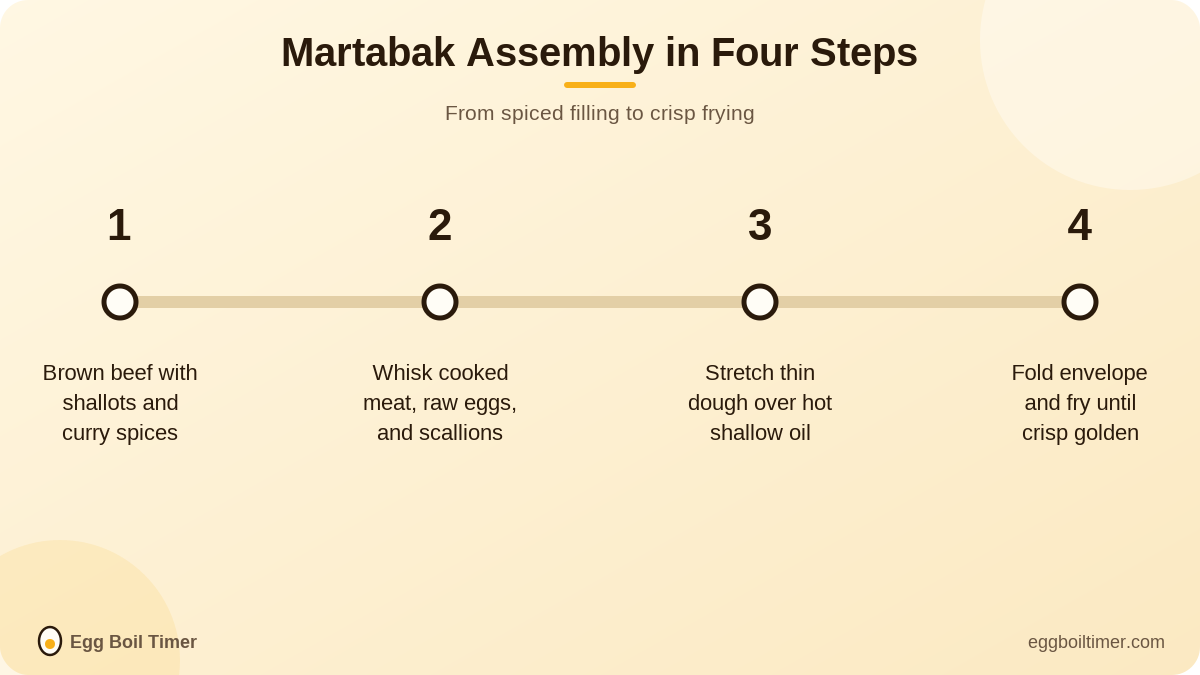
Raw ground meat sealed inside a quickly fried pancake will not cook through. Always brown minced beef, lamb, or mutton in a skillet beforehand. Sauté the meat with garlic, shallots, coriander, cumin, turmeric, and yellow curry powder. Food safety standards from the FSIS dictate that ground meat must reach a minimum internal temperature of 71 °C (160 °F) to destroy bacteria.
Allow the spiced meat to cool completely to room temperature before assembling the filling. Stirring hot beef directly into raw beaten eggs initiates premature coagulation in the bowl. That early curdling creates rubbery lumps before the pastry touches hot oil.
Duck eggs are the historical street vendor standard because their larger yolks yield a richer custard. Chicken eggs also work reliably well, supplying approximately 6.3 g of protein per large egg. Whisk 4 large eggs with salt and ground white pepper. Fold in 1.5 cups of thinly sliced scallions alongside the cooled meat. The scallions release steam as the egg sets, keeping the interior tender.

Pan Assembly, Envelope Folding, and Shallow Frying Technique
Frying requires a wide, heavy cast iron skillet heated with roughly 1.5 cm of neutral vegetable oil to 175 °C (350 °F). Steady heat allows the pastry skin to blister into crisp layers. It also gives the egg filling enough time to cook through to the center.
- Stretch the dough: Press a rested dough ball flat on an oiled counter. Work outward with your palms until the sheet is wide and paper-thin.
- Lay into hot oil: Carefully lift the thin sheet with both hands. Drape it into the skillet, letting the edges ride up against the pan sides.
- Add the filling: Pour the whisked egg, scallion, and spiced meat mixture directly onto the center of the dough.
- Fold the envelope: Use two spatulas to fold the four pastry edges inward over the filling. Seal into a neat square parcel.
- Baste the top: Spoon hot cooking oil continuously over the top fold. This sets the upper pastry seams before you flip the packet.
- Fry to golden crispness: Cook for 2 to 3 minutes per side until the crust turns deep golden brown. Drain on a wire rack set over a baking sheet.
Draining the fried pancake on a wire rack prevents trapped steam from softening the underside. Paper towels trap steam and make the crust soggy. For more savory egg techniques, browse our Egg Recipes: Breakfast, Lunch, and Dinner Ideas archive.
Solving Dough Tears, Excess Oil Absorption, and Raw Interiors
Handling wet egg filling inside a thin pastry shell brings specific mechanical challenges. Heat control and dough handling make all the difference. The matrix below outlines direct solutions for common frying issues.
| Issue Encountered. | Root Cause. | Practical Remedy. |
|---|---|---|
| Dough tears during stretching. | The gluten was not relaxed enough. | Submerge dough balls in oil for 30 extra minutes. Patch small tears with oiled dough scraps. |
| Soggy egg center with dark crust. | Pan oil was too hot. | Lower stovetop heat to hold oil at 170 °C. Spoon hot oil over the top to cook the egg evenly. |
| Greasy pancake absorbing excess oil. | Frying oil dropped below 160 °C. | Preheat oil fully before frying. Cook one parcel at a time to keep pan heat steady. |
| Liquid filling bursts through seams. | Dough stretched unevenly or sat too long. | Work swiftly once filling hits the dough. Keep the dough center even and avoid thin spots. |
Traditional Dips: Cuka Acar Timun and Sweet Soy Reductions
Cut the drained martabak into bite-sized squares using a sharp chef knife while the crust is hot. Fried dough and rich egg filling need sharp acid to balance each bite. Indonesian street stalls always serve freshly fried squares with two signature accompaniments.
The standard accompaniment is acar timun, a brisk pickle made from diced cucumbers, shallots, bird's eye chilies, vinegar, and sugar. This sharp pickle cuts right through the richness of fried pastry and egg filling.
Alongside the pickle, vendors provide a dipping sauce known as kuah cuka. Cooks simmer palm sugar, tamarind pulp, garlic, and sweet kecap manis into a tangy liquid. You can also serve these sliced squares alongside crisp finger foods like Egg Roll Dip: Warm Skillet Recipe and Serving Guide for gatherings.


