A warm egg roll dip deconstructs takeout egg rolls into a skillet appetizer ready in twenty minutes. Cooking seasoned ground pork with ginger, garlic, and soy sauce creates a savory base. Melting brick cream cheese directly into the meat and folding in crisp coleslaw captures the classic filling texture without frying wrappers.
Balancing Rich Pork and Dairy with Acid and Umami
Egg roll filling relies on high contrast. Rich pork and dense cream cheese require immediate counterpoints of acidity, pungent aromatics, and savory depth. Without acid and salt, melted dairy fats coat the tongue and mute the ginger and scallion notes.
Soy sauce supplies umami and sodium, while rice vinegar cuts cleanly through the melted dairy fats. A teaspoon of toasted sesame oil adds a nutty aroma to the steam rising from the pan. For the sweetness common in American takeout egg rolls, add two teaspoons of brown sugar or sweet chili sauce to round out the tart vinegar edge.
Pork, Brick Cheese, and Cabbage: The Base Ratios
Every ingredient controls either moisture, structural bind, or aromatic punch. Assemble and measure each item before lighting the burner so aromatics never scorch while you unwrap the dairy.
- 450 g ground pork. An 80% lean grind provides roughly 21 grams of protein per 100 grams. It renders just enough fat to bloom minced aromatics without pooling grease. Ground chicken, turkey, or bulk pork sausage work equally well.
- 225 g brick cream cheese. Standard block cream cheese contains about 34 grams of fat and 6 grams of protein per 100 grams. It emulsifies loose meat crumbles and shredded vegetables into a cohesive dip. Bring the brick to room temperature so it dissolves smoothly.
- 400 g tri-color coleslaw mix. Shredded green cabbage, red cabbage, and matchstick carrots provide bulk and crisp bite. Freshly shredded whole cabbage works as long as you pat it dry before cooking.
- Garlic and fresh ginger. Three minced garlic cloves and one tablespoon of finely grated ginger deliver clean heat. Dehydrated powders lack the pungency needed to pierce through warm cream cheese.
- Liquid seasonings. Combine 30 ml low-sodium soy sauce, 15 ml rice vinegar, 5 ml toasted sesame oil, and 15 ml sriracha. These deliver balanced heat, acid, and salinity.
- Garnish. Three thinly sliced green onions and a teaspoon of toasted sesame seeds add fresh crunch right before serving.

Searing the Meat and Emulsifying the Sauce: Four Skillet Steps
A broad 30 cm skillet or cast-iron pan provides enough surface area for steam to escape quickly so the cabbage wilts without turning soggy.
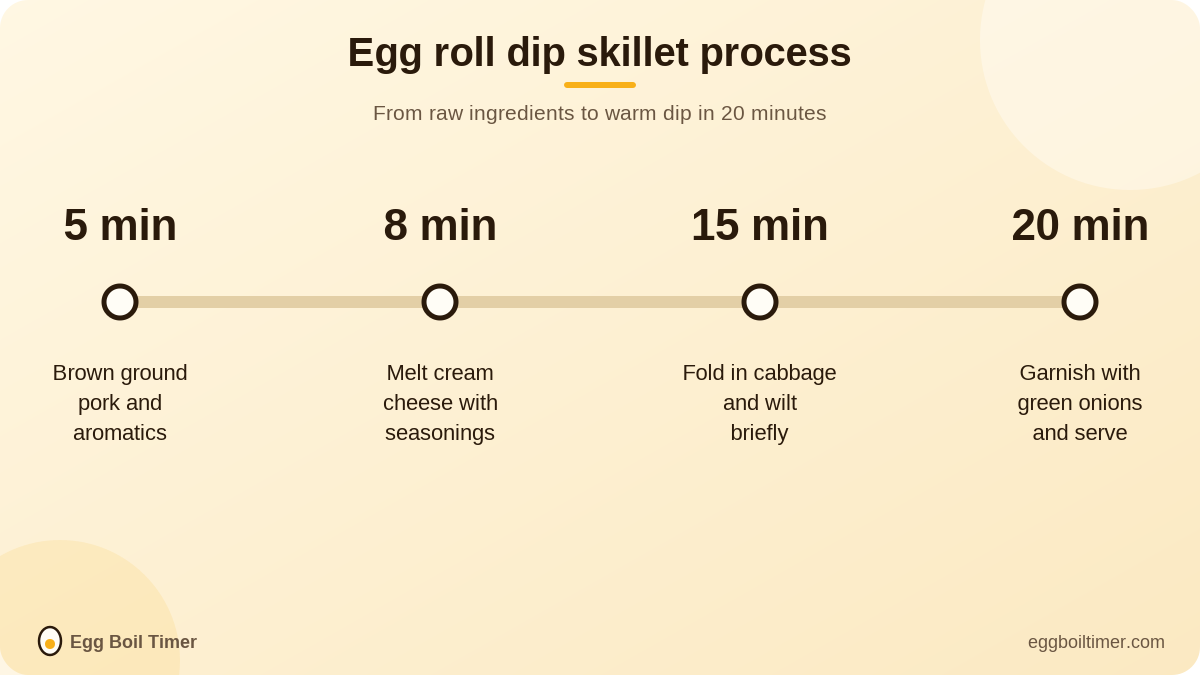
- Brown the meat and bloom aromatics: Cook ground pork in a broad skillet over medium-high heat for 5 to 6 minutes until done. Push the browned pork to the perimeter. Drop the minced garlic and grated ginger into the hot center fat. Stir for 45 seconds until fragrant. Spoon out excess pooled fat, leaving roughly one tablespoon in the pan.
- Melt the dairy binder: Lower the heat to medium-low. Cut the softened cream cheese into cubes and drop them onto the warm pork. Pour in the soy sauce, rice vinegar, sriracha, and toasted sesame oil. Stir steadily for 2 to 3 minutes until the cheese melts into a smooth sauce coating the meat.
- Wilt the shredded vegetables: Add the coleslaw mix to the skillet. Fold the cabbage gently into the warm pork and cream cheese sauce. Cook for 2 to 3 minutes, stirring constantly. The cabbage should soften slightly while keeping its snap. Pull the pan off the burner immediately to avoid carryover softening.
- Finish with garnishes: Scatter sliced green onions and toasted sesame seeds across the surface. Serve directly from the warm skillet with crisp dippers. If you like quick skillet meals with Asian aromatics, compare this technique with our wok method in Egg Fried Rice Recipe: Dry Grains, High Heat, and Fast Stir-Frying or serve it alongside savory Tamagoyaki: How to Roll Japanese Rolled Omelette.

Troubleshooting Watery Sauce, Lumpy Dairy, and Bland Pork
Vegetable moisture and skillet heat decide whether the dip stays creamy or turns loose and watery. Simple adjustments in the pan correct common texture and seasoning imbalances.
| Symptom. | Underlying Cause. | Immediate Correction. |
|---|---|---|
| Watery liquid pooling in the bowl. | Cabbage was cooked past 3 minutes or trapped under a lid, releasing cellular water. | Simmer uncovered over medium heat for 2 minutes to boil off liquid. You can also fold in 30 g extra cream cheese to bind free water. |
| White dairy specks that refuse to melt. | Cold cream cheese was dropped into high heat, shocking the milk solids. | Drop the heat to low immediately. Whisk vigorously with a silicone spatula until the cheese warms and smooths out. |
| Flat, heavy taste without punch. | The dip needs more acid or salt to cut through the rich dairy fats. | Stir in 5 ml rice vinegar, a squeeze of fresh lime juice, or an extra splash of soy sauce. |
| Oily puddle collecting around edges. | Pork fat was not spooned off before melting the cheese binder. | Press a folded paper towel lightly over the surface to soak up fat. Then stir in a handful of fresh raw cabbage. |
Low-Carb Leaves and Sesame Crackers: What to Dip
Crisp wonton chips replicate the traditional fried egg roll crunch. Sturdy raw vegetables and gluten-free crackers hold up just as effectively against the thick warm pork base.
| Dipping Option. | Dietary Profile. | Preparation Tip. |
|---|---|---|
| Crisp baked wonton triangles. | Traditional crunch. | Brush square wonton wrappers with neutral oil, cut into triangles, and bake at 190 °C for 6 to 8 minutes until golden. |
| Butter lettuce cups. | Low-carb and gluten-free. | Separate whole leaves and soak in ice water for 5 minutes. Spin dry to create rigid handheld scoops. |
| Thick cucumber rounds and bell peppers. | Keto and cooling crunch. | Slice seedless Persian cucumbers on a 45-degree angle to create wide, sturdy dipping paddles. |
| Tamari sesame rice crackers. | Gluten-free crunch. | Choose double-baked brown rice rounds that will not shatter when scooping heavy meat dip. |
Mushroom Swaps, Extra Heat, and Stir-Fry Conversions
Modifying this skillet dip for plant-based eaters or main-course dinners requires only slight adjustments to cooking time and dairy ratios.
- Vegetarian mushroom base: Swap ground pork for 400 grams of diced cremini and shiitake caps sautéed in neutral oil. Mushrooms release substantial moisture. Sear them until the pan is dry and browned before adding ginger and garlic.
- Sweet takeout glaze: Stir two tablespoons of sweet plum sauce into the cream cheese with a teaspoon of rice vinegar. This matches the sweet dipping sauces served in Chinese-American restaurants.
- Spicy chili crunch: Increase sriracha to 30 ml and stir in half a teaspoon of red chili flakes. Spoon chili crisp over the finished surface before serving.
- Stir-fry bowl conversion: To transform this party dip into a quick weeknight dinner, reduce cream cheese to 110 grams and double the coleslaw mix to 800 grams. Spoon the resulting stir-fry hot over steamed jasmine rice. You can also browse our central Egg Recipes: Breakfast, Lunch, and Dinner Ideas hub for companion sides.
Refrigeration Limits, Reheating, and Why Freezing Fails
This cooked skillet dip stores reliably for weekday lunches. Federal guidelines from the USDA and FoodSafety.gov require storing cooked ground meat and dairy combinations at 4 °C (40 °F) or below. Consume refrigerated portions within 3 to 4 days.
Let the skillet cool for 20 minutes before scraping the dip into a clean glass container with a tight lid. In the refrigerator, the cream cheese sets into a firm, spreadable paste. Scoop it cold onto cucumber slices, or warm individual portions in a small saucepan over low heat. Add one tablespoon of water to loosen the sauce. Microwave reheating works best at 50% power in 30-second increments with a quick stir between each burst to keep the sauce from splitting.
Do not freeze egg roll dip. Freezing damages the cellular walls of shredded cabbage, turning the vegetables mushy and watery upon thawing. Cream cheese emulsions also weep liquid and turn grainy when defrosted. For accurate egg boiling times to accompany breakfast spreads and meal prep, consult our Egg Boil Timer timer.


