An egg salad blt pairs cold, mayonnaise-dressed hard-boiled eggs with warm, crisp bacon, salted tomato slices, and sturdy greens on toasted bread. Avoiding sogginess requires boiling eggs until yolks set firmly to 77 °C (170 °F). You must also drain sliced tomatoes on towels and place broad lettuce leaves against the toast to block moisture.
Balancing Rich Egg Curds with Crisp Bacon and Tomato
Standard egg salad relies entirely on soft textures and rich fats. Coagulated albumen and emulsified yolks bring tender protein, while mayonnaise carries oil and vinegar. Adding bacon, lettuce, and tomato corrects this uniform softness.
Smoked bacon delivers necessary salt, crunch, and rendered fat. Crisp lettuce provides clean resistance against the teeth. Ripe tomato slices bring bright acidity that cuts straight through heavy mayonnaise.
Thermal contrast heightens that distinction. Chilled egg salad set against hot, freshly fried bacon delivers a sharp temperature shift in every bite. Stack the sandwich immediately after the bacon finishes draining. This step ensures the cured pork stays brittle rather than softening against cold eggs.
Boiling Firm, Tender Yolks Without Gray Margins
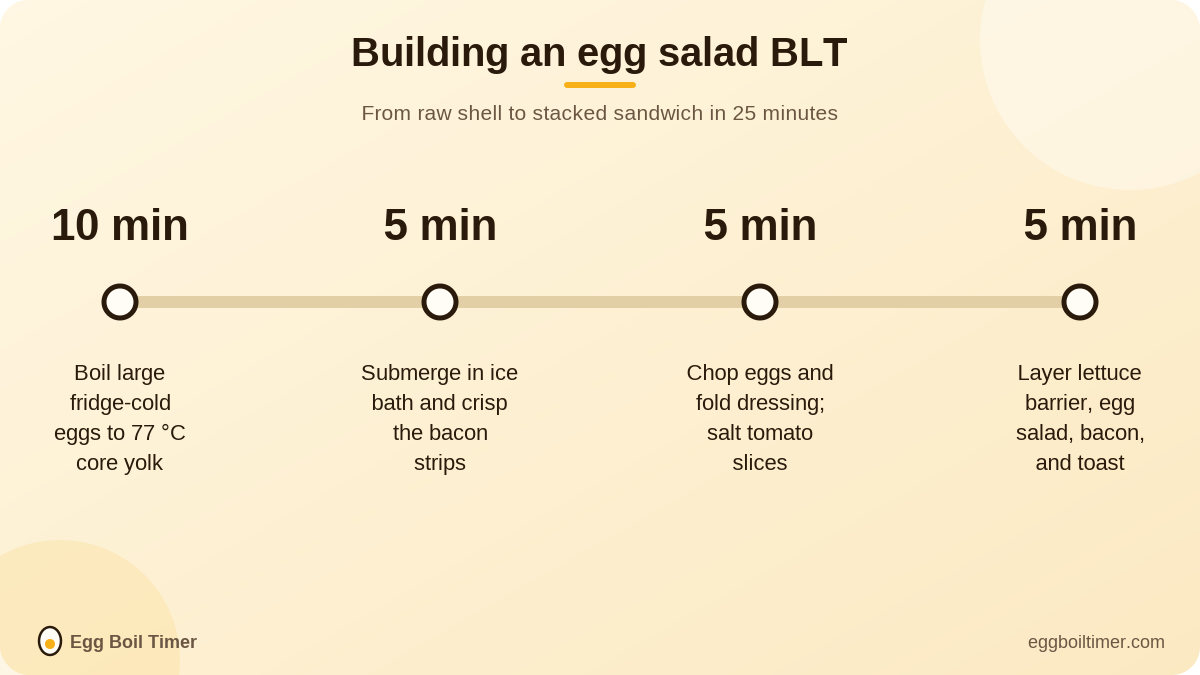
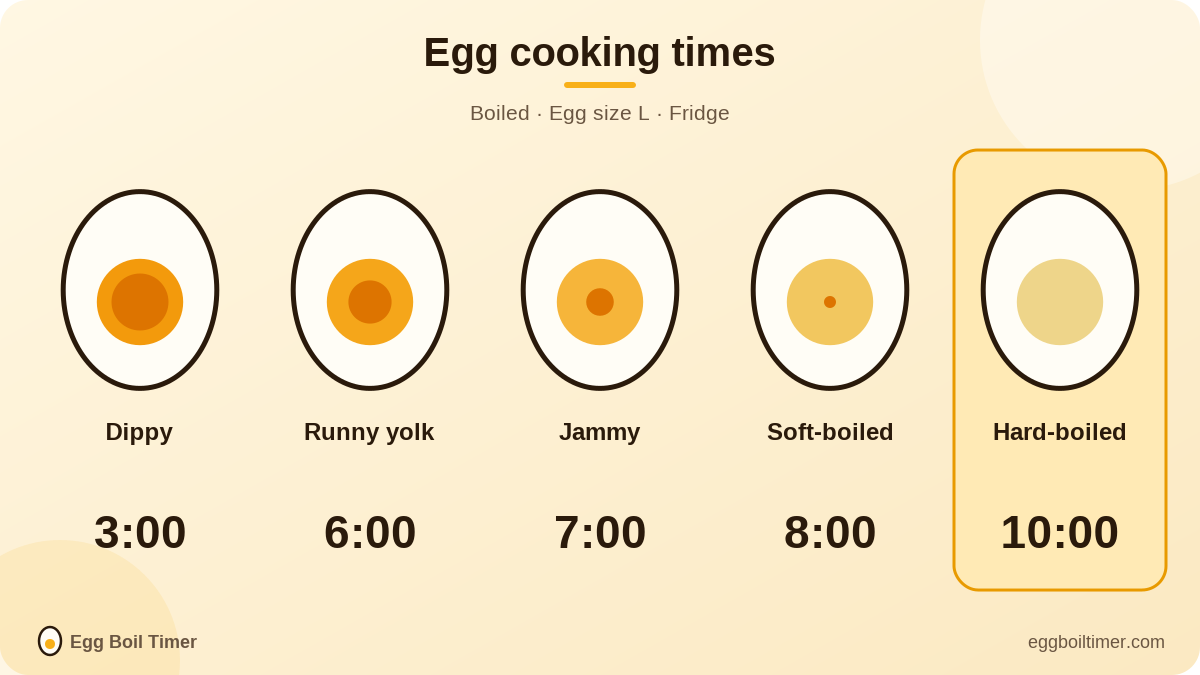
Egg salad demands fully coagulated yolks that hold their shape during dicing. Lowering large 55-gram eggs straight from a 4 °C refrigerator into boiling water requires exactly 10 minutes (600 seconds) at sea level. Always lower cold eggs directly into boiling water rather than starting in cold water. Rapid heating denatures albumen proteins quickly, which prevents them from bonding to the inner shell membrane.
Because water boils cooler by about 1 °C for every 300 meters of elevation, mountain kitchens must add cooking time using our Egg Boil Timer. A medium 50-gram egg finishes in 9 minutes and 25 seconds, while an extra-large 60-gram egg needs 10 minutes and 35 seconds.
The green-gray ring around overcooked yolks is ferrous sulfide. Prolonged heat drives sulfur from the white toward the yolk core. There, sulfur reacts with yolk iron once temperatures pass 77 °C. Transferring cooked eggs immediately into a bath of equal parts ice and water halts carryover cooking. The thermal shock also contracts the egg interior, making peeling effortless.
| Egg Size | Average Weight | Boiling Water Time | Yolk Core Temp | Salad Texture |
|---|---|---|---|---|
| Medium (M) | 50 g | 9 min 25 s | 77 °C (170 °F) | Tender curd, quick mashing. |
| Large (L) | 55 g | 10 min 00 s | 77 °C (170 °F) | Balanced firm white, creamy center. |
| Extra Large (XL) | 60 g | 10 min 35 s | 77 °C (170 °F) | Sturdy cubes, holds mayo well. |
Baking Flat, Crisp Bacon Strips for Even Stacking
Skillet frying often produces twisted, curled bacon strips. In an egg salad BLT, curled bacon creates air pockets and causes the sandwich to slide apart during eating. Baking strips flat on a parchment-lined baking sheet solves this mechanical flaw.
Arrange thick-cut bacon strips in a single layer in a cold oven. Set the heat to 200 °C (400 °F) and bake for 16 to 20 minutes until the fat renders completely. The gradual rise in temperature renders collagen smoothly while keeping strips straight and flat.
Transfer the browned bacon to double layers of paper towels immediately. Let the surface fat drain for two minutes. Flat bacon creates a solid, structural layer that rests cleanly against sliced tomatoes without dislodging the egg salad.

Master Ratio for a Stable, Creamy Dressing
Watery filling develops when warm eggs melt the dressing emulsion. It also happens when salted mix-ins release cellular juice into the bowl. Cool peeled eggs to room temperature or chill them before dicing into clean 1-centimeter cubes. Coarse dice keeps white curds distinct. For an ultra-smooth alternative, compare this rustic texture to the whipped filling of Classic Deviled Eggs Recipe: Creamy Filling and Easy Peeling.
For every 4 large eggs, whisk 3 tablespoons of Homemade Mayonnaise: Ratios, Oil Chemistry, and Technique, 1 teaspoon of Dijon mustard, 1 teaspoon of lemon juice, and 1/4 teaspoon of salt in a small bowl. Mixing the dressing first guarantees uniform seasoning without bruising the fragile whites. Stir in 2 tablespoons of finely minced celery and 1 tablespoon of sliced chives.
Never add minced raw yellow onions directly into egg salad hours ahead of time. Raw onion releases sulfurous liquids that break mayonnaise down into an oily puddle. Crisp chives or scallion greens deliver fresh allium flavor without weeping excess water.
Layering Sequence to Stop Bread From Turning Soggy
Assembling an egg salad BLT requires strict moisture control. Fresh tomatoes contain roughly 94 percent water. If placed directly against bread, tomato juices soak through the crumb within minutes.
Cut ripe tomatoes into 6-millimeter slices ten minutes before building the sandwich. Lay the rounds across paper towels and sprinkle lightly with salt. Salt pulls surface liquid out through osmosis, allowing you to blot it away before assembly.
Toast sourdough or rustic country bread until rigid. Spread a thin layer of softened butter or rich Aioli: Traditional Garlic Sauce and Foolproof Method across both inner bread faces to establish a fat barrier. Place dry romaine leaves on the bottom slice. Spoon egg salad over the lettuce, then set drained tomatoes on top. Finish with flat bacon and the second toast slice.
Diagnosing Watery Fillings, Tough Whites, and Seasoning Flaws
Sandwiches fail when wet vegetables dilute dressing or overcooked albumen turns rubbery. Use this diagnostic matrix to pinpoint causes and apply immediate kitchen remedies.
| Symptom | Underlying Cause | Immediate Kitchen Fix |
|---|---|---|
| Liquid pooling at bowl bottom. | Dressing folded into warm eggs, or celery released cell water. | Mash one extra hard-boiled yolk into the bowl to absorb moisture and re-bind emulsion. |
| Rubbery, tough albumen cubes. | Eggs cooked at a rolling boil beyond 11 minutes. | Chop whites into tiny 4-millimeter pieces to soften mouthfeel; limit boiling to 10 minutes. |
| Soggy bottom bread slice. | Egg salad made direct contact with toast crumb. | Position intact, thoroughly dried lettuce leaves between bread and filling as a splash guard. |
| Dull, heavy, fatty profile. | Insufficient acid to cut through mayonnaise and cured bacon. | Whisk in 1/2 teaspoon of fresh lemon juice, pickle brine, or finely minced salted capers. |
| Filling slides out on first bite. | Bacon curled during frying, creating uneven pressure. | Bake bacon flat between parchment sheets, or crumble strips coarsely across the egg layer. |
Safe Cold Holding and Protein Variations
Cooked egg dishes require steady refrigeration. Food and Drug Administration rules state that cooked egg preparations must stay at or below 4 °C (40 °F). Discard egg salad left at room temperature past 2 hours, or after 1 hour if surrounding air exceeds 32 °C (90 °F).
Stored in an airtight glass container, prepared egg salad stays fresh for 3 to 4 days. Whole unpeeled hard-boiled eggs keep for up to 7 days in the refrigerator. Never freeze egg salad, because mayonnaise splits completely and cooked albumen turns watery and sponge-like upon thawing.
You can adjust the meats to match dietary preferences without altering construction rules. Turkey bacon reduces fat while preserving smoke, while dry-cured pancetta lends peppery depth. For batch preparation planning, read our Twelve Eggs, Five Lunches: A Week of Egg Salad That Does Not Get Boring guide, or browse classic brunch ideas in our Egg Recipes: Breakfast, Lunch, and Dinner Ideas hub.


