A classic eggnog cake pairs fresh grated nutmeg and creamy dairy custard with a fine, velvety crumb. Unlike store-bought shortcuts that drown boxed mix in liquid flavoring, baking from scratch relies on dairy fats and whole eggs to build a soft crumb that stays tender for days without turning gummy or wet.
What Defines the Flavor and Texture of Real Eggnog Cake
Eggnog cake gets its distinct culinary profile from three elements: high dairy fat, whole eggs, and freshly grated nutmeg. Prepared eggnog functions both as the primary flavoring agent and as the core liquid component in the batter. Because commercial eggnog contains thickeners, sugar, and egg yolk solids, it behaves quite differently in an oven than whole milk or buttermilk.
Standard yellow sponge recipes rely on milk with roughly 3.25% butterfat to hydrate flour starches. Commercial dairy eggnog routinely contains between 6% and 9% butterfat, alongside dissolved sucrose and emulsified yolks. When mixed into wheat flour, this surplus of fat coats gluten-forming proteins, preventing tough cross-linked networks. The result is a tender crumb that melts cleanly on the palate rather than chewing like sandwich loaf. Balancing this moisture with adequate chemical leavening keeps the cake light instead of dense.
Ingredient Science: Flour, Fats, and Protein Architecture
Each component in this batter serves a specific physical function during mixing and heat exposure. Selecting standard ingredients with deliberate moisture and protein levels prevents the gummy streaks that often plague rich holiday bakes.
- All-purpose flour (360 g): Provides structural gluten. A moderate protein level between 10.5% and 11.5% gives enough strength to hold expanding steam without toughening the bite.
- Unsalted butter (170 g, room temperature): Aerates the sugar crystals during creaming. Trapped microscopic pockets expand under heat, giving the crumb an even rise.
- Granulated white sugar (350 g): Sweetens, tenderizes, and retains moisture hygroscopically after cooling.
- Large eggs (3 whole, 50 g each): Whole eggs provide lift and structure. According to official USDA food data, a standard large whole egg provides approximately 6.28 g of protein. In cake batter, these proteins coagulate around 62 °C to 70 °C, locking crumb cell walls into place as steam expands.
- Prepared eggnog (300 ml): Supplies moisture, lactic acid, sugar, and emulsified dairy fats. Bring it to room temperature (about 20 °C) before mixing. Cold eggnog straight from the refrigerator curdles creamed butter immediately.
- Baking powder (12 g) and fine salt (4 g): Supplies carbon dioxide leavening, while salt balances sweetness.
- Freshly grated whole nutmeg (2 g / about 1 teaspoon): Pre-ground nutmeg loses volatile aromatic oils quickly. Grating a whole nutmeg seed over a microplane provides the characteristic woody warmth that defines traditional holiday custard bakes.
- Dark rum or pure vanilla extract (15 ml): Alcohol-soluble compounds carry spice aromas across the palate. If baking without liquor, pure vanilla extract and 1/4 teaspoon of ground cinnamon replicate the aromatic depth.

Baking the Cake and Whipping the Spiced Buttercream
Follow these exact steps to achieve an even rise and a sturdy, silky frosting. You will need two 23 cm (9-inch) round cake pans lined with parchment circles on the base.
- Prepare the oven and pans: Position an oven rack in the center and preheat to 175 °C (350 °F). Grease two 23 cm round cake pans, line the bases with parchment rounds, and flour the walls lightly, tapping out excess flour.
- Sift dry ingredients: In a medium bowl, whisk together 360 g all-purpose flour, 12 g baking powder, 4 g salt, and 2 g freshly grated nutmeg until uniform.
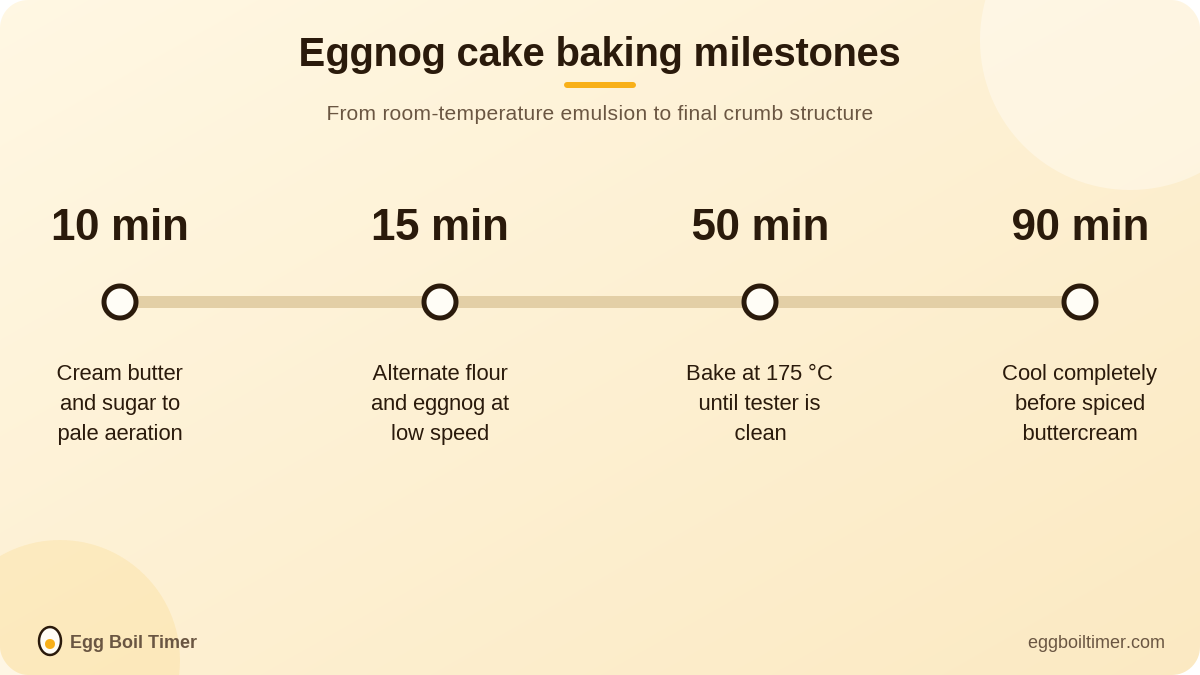
- Cream butter and sugar: Place 170 g softened unsalted butter and 350 g granulated sugar into a stand mixer bowl fitted with the paddle attachment. Beat at medium-high speed for 4 to 5 minutes until pale, light, and fluffy.
- Emulsify the eggs: Add 3 room-temperature eggs one at a time, beating for 30 seconds after each addition. Pour in 15 ml dark rum (or vanilla extract) and blend until smooth.
- Alternate dry and liquid additions: Reduce mixer speed to low. Add one-third of the flour mixture, followed by half of the 300 ml eggnog. Repeat with the second third of flour, remaining eggnog, and conclude with the final third of flour. Mix only until dry pockets disappear; stop immediately to prevent dense gluten bands.
- Bake to crumb set: Divide batter evenly between prepared pans (about 610 g per pan). Bake at 175 °C for 28 to 32 minutes. The cake is done when the surface springs back under a light touch and a wooden tester inserted into the center comes out clean or with a few moist crumbs.
- Cool completely: Rest the pans on wire racks for 15 minutes. Run a thin offset spatula around the edges, invert onto wire racks, peel away parchment circles, and let cool to room temperature (about 60 minutes) before frosting.
- Whip the eggnog buttercream: In a clean bowl, beat 230 g softened butter with an electric mixer for 3 minutes until smooth. Gradually beat in 450 g sifted powdered sugar alternating with 60 ml eggnog, 1 teaspoon freshly grated nutmeg, and 1 teaspoon dark rum or rum extract. Whip on high speed for 2 minutes until glossy. Spread between cooled layers and over the exterior, finishing with an extra dusting of fresh nutmeg on top.

Eggnog Base Profiles: Carton, Homemade, and Alcohol-Spiked Dynamics
The type of eggnog poured into the batter directly dictates sugar balance, fat ratio, and crumb rise. Use this kitchen decision matrix to evaluate your options:
| Eggnog Style | Fat & Moisture Profile | Flavor Character | Baking Adjustments Needed |
|---|---|---|---|
| Commercial Regular | High sugar, moderate butterfat, includes emulsifiers and guar gum. | Pronounced vanilla and sweet custard notes. | None; this recipe is calibrated directly for standard carton dairy eggnog. |
| Traditional Homemade | Very rich yolk solids and heavy cream; lower water content. | Complex dairy richness, deeply aromatic. | Thin with 2 tablespoons whole milk to avoid an overly dense crumb. |
| Alcohol-Spiked (Commercial) | Added rum/bourbon (often 12-14% ABV); thinner viscosity. | Strong boozy aroma with reduced sweetness. | Omit added rum in the batter; reduce oven time by 2 minutes to prevent dry edges. |
| Plant-Based (Oat/Almond) | Lower fat (2-3%), higher free water content, no egg proteins. | Milder spice flavor, slightly nuttier finish. | Add 1 tablespoon melted butter to batter to restore lost dairy fat. |
Food safety is straightforward for holiday bakes. USDA safety guidelines note that raw egg mixtures carry potential Salmonella contamination risks if prepared without pasteurization; heating egg mixtures to 71 °C (160 °F) eliminates this risk. When using homemade eggnog in this cake, the internal crumb reaches 95 °C during baking, neutralizing bacterial pathogens completely. For raw buttercream frostings, stick to pasteurized carton eggnog or non-alcoholic extracts.
Fixing Sunken Centers, Dense Streaks, and Broken Buttercream
Eggnog introduces extra dissolved sugars and dairy fats that make oven physics slightly less forgiving than an everyday vanilla sponge. Here is how to diagnose and resolve crumb irregularities:
Sunken centers: If your cake rises nicely and then craters in the middle as it cools, the culprit is usually early oven disruption or over-leavening. Opening the oven door during the first 20 minutes lets sudden cool air collapse delicate starch walls before egg proteins set. Excess baking powder also generates more carbon dioxide gas than the gluten matrix can trap, causing air cells to rupture and collapse inward.
Dense, gummy crumb streak: A rubbery layer running along the lower third of the cake points to cold liquids or overmixing. When cold eggnog straight from the fridge hits creamed butter, butterfat solidifies into tiny beads. Those chilled fat droplets sink during baking, creating a dense line. Always bring eggnog and eggs to room temperature before creaming.
Weak holiday flavor: Oven heat vaporizes delicate spice esters. If a baked cake tastes like generic yellow cake, the nutmeg was likely stale or pre-ground. Always use whole nutmeg kernels grated fresh, and preserve secondary aromatics by brushing warm layers with a light simple syrup flavored with dark rum or spiced rum extract.
Runny buttercream: Adding cold liquid eggnog too fast can break a butter emulsion. If the frosting turns loose or curdled, chill the bowl in the refrigerator for 15 minutes, then rewhip on medium speed until the butter recovers its structural hold.
Storage Guidelines and Seasonal Twists
Because eggnog buttercream contains dairy eggnog, store frosted cakes in an airtight cake carrier in the refrigerator for up to 4 days. Let chilled slices sit on the counter for 20 minutes before serving; butter-based frostings taste hard straight out of cold storage, but soften into a silky texture at 21 °C room temperature.
For long-term storage, wrap unfrosted cake rounds tightly in two layers of plastic wrap and a sheet of heavy-duty aluminum foil. Freeze flat for up to 3 months. Thaw frozen rounds overnight in the refrigerator before assembling and frosting.
If you want to vary the presentation, try these baker-tested adaptations:
- Bundt pan presentation: Pour the entire batter into a greased and floured 10-cup fluted bundt pan. Bake at 175 °C for 48 to 55 minutes. Finish with a warm spiced rum glaze made from 120 g powdered sugar, 30 ml eggnog, and 15 ml dark rum whisked until smooth.
- Cranberry compote filling: Spread a thin layer of tart cranberry compote between the two cake rounds before applying buttercream. The sharp fruit acidity cuts cleanly through rich custard notes.
- Skillet and custard alternatives: If you enjoy the warm dairy custard profile of this cake, try incorporating leftover holiday eggnog into Fluffy Eggnog Pancakes: Spiced Holiday Griddle Recipe or traditional custard desserts like Crème Brûlée vs Crema Catalana: Key Differences & Recipes. For savory meals throughout the holiday season, balance rich desserts with simple egg classics like Classic Quiche Recipe: Flaky Crust and Silky Egg Custard or explore regional specialties in our wider collection of Egg Recipes: Breakfast, Lunch, and Dinner Ideas. You can also time your morning boiled eggs precisely with the Egg Boil Timer.