Omurice is a Japanese yoshoku staple consisting of savory stir-fried chicken ketchup rice wrapped in or crowned with a soft, custard-like omelette. The dish balances the tangy sweetness of caramelized tomato sauce with the rich creaminess of lightly scrambled eggs, requiring careful heat management and about twenty minutes of active cooking.
Origin and Anatomy of Japanese Yoshoku Omelette Rice
Omurice originated around the turn of the twentieth century in Japan as part of yoshoku. This culinary movement adapted Western diner recipes using local pantry staples and stovetop pans. Early Tokyo and Osaka establishments helped popularize the format across casual diners, family kitchens, and department store parlors. The dish combined seasoned poultry, fried starch, and French egg cookery into an accessible single-plate meal.
The name merges the phonetic Japanese loanwords for omelette (omu) and rice (raisu). While variations use different meats and finishing reductions, the core structure centers on two distinct presentations. The home-style version encases the seasoned rice inside a thin, fully folded egg parcel. Cooks shape this parcel like an oval football. In contrast, the restaurant-style version perches an unsplit, half-set rolled omelette directly on top of the molded rice. The cook slices the pillow lengthwise at the table, allowing soft folds to spill over the grains.
Searing Chicken Ketchup Rice for Firm, Separate Grains
Moisture control is the main technical hurdle when preparing chicken ketchup rice (chikin raisu). Pouring cold condiments directly over freshly steamed, steaming-hot rice breaks the grain starch. The grains soften, absorb excess water, and create a gummy mush. Use medium-grain white rice that has rested uncovered in the refrigerator overnight. The dry chill retrogrades the starch and removes surface moisture. This structural change allows individual grains to separate cleanly upon hitting hot butter.
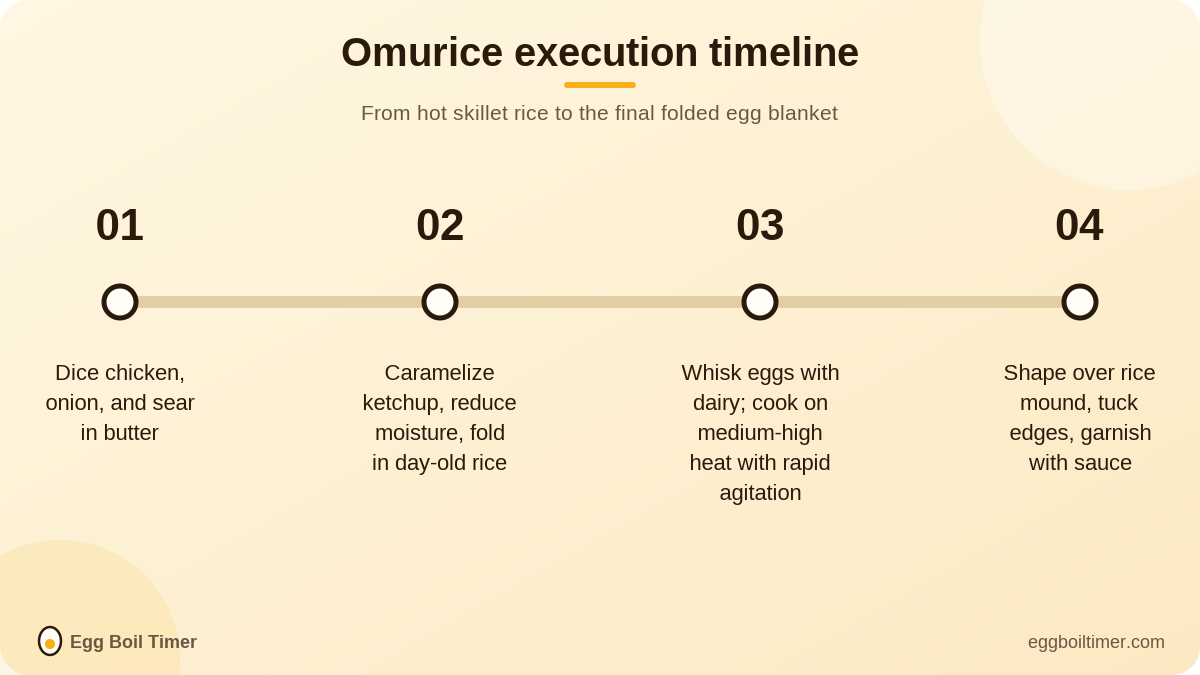
Dice skinless chicken thigh or breast into small cubes of roughly one centimeter. Small cubes cook through rapidly without shedding excess juices into the skillet. Brown the poultry in a wide skillet over medium-high heat with unsalted butter and finely diced yellow onions. Once the onions turn soft and translucent, clear an open circle in the center of the pan floor. Pour the ketchup and soy sauce directly onto the exposed metal surface.
Boiling the sauce against the bare metal for twenty to thirty seconds evaporates sharp vinegar notes. Direct heat concentrates natural tomato sugars and triggers gentle caramelization. Once the ketchup darkens and bubbles briskly, fold the chilled rice into the red glaze. Break up cold clumps using the edge of a flat wooden spatula. Toss steadily until the rice turns uniformly red. Pack the mixture into an oval bowl to preserve warmth and shape while preparing the eggs.
High-Heat Agitation for a Soft Toro-Toro Curd
The hallmark of classic omurice is a tender outer skin supporting a moist, velvety interior known as toro-toro. Achieving this texture requires three large eggs per serving, beaten with fine salt and a splash of dairy. Whole milk or heavy cream introduces emulsified fat that raises the coagulation temperature slightly, buffering delicate proteins against tough curdling. Straining the beaten mixture through a fine-mesh sieve removes dense chalazae strings, ensuring an even, unblemished yellow exterior.
Select an eight-inch (20 cm) non-stick skillet or smooth carbon steel pan. Heat a tablespoon of butter over medium-high heat until the white foam subsides. Pour the beaten eggs into the center all at once. The outer perimeter should sizzle immediately without turning brown. Shake the pan steadily back and forth with your wrist while rapidly stirring the liquid center in small circles with wooden chopsticks.
This rapid agitation generates thousands of micro-curds, preventing large rubbery sheets from forming against the hot metal. In the timer preset for our Omelette Timer: Exact Cooking Times and Fold Guide, this phase mirrors the brisk two-minute French method. The pan stays in continuous motion for roughly sixty to seventy-five seconds until the curds resemble soft scrambled eggs on a delicate set film. Albumen sets between 62 °C and 65 °C, while yolk lipids remain creamy below 70 °C. Pull the pan from the burner while the top remains visibly fluid. Carryover heat completes the setting off the flame.
Plating and Tucking the Classic Oval Pillow
Transferring and shaping the egg requires prompt, calm movements before residual heat sets the delicate center. Invert the molded bowl of chicken ketchup rice onto the middle of an oval plate to create a neat, compact mound.
For the home-style wrap, tilt the skillet at a forty-five-degree angle directly above the rice mound. Let the cooked egg sheet slide out smoothly, centering it directly over the grains. Lay a clean sheet of parchment paper or a folded kitchen paper towel over the warm egg blanket. Cup both hands gently along the flanks and press downward to tuck the trailing edges underneath the rice mound. This gentle pressure smooths the exterior into an oval football shape without tearing the delicate skin.
For the split-top presentation, roll the agitated curds forward against the far curved lip of the skillet to form an unsealed, spindle-shaped pillow. Invert your wrist to tap the handle, coaxing the far edge backward over the filling. Roll this soft bundle directly onto the crest of the rice with the seam facing down. Using a sharp paring knife, slice the outer membrane from end to end in one steady stroke. The surface tension releases instantly, letting the creamy interior cascade over both sides of the warm rice.
Structural Comparison: Omurice vs. Classic French Omelette
While omurice draws inspiration from European egg methods, its texture and handling differ sharply from a classical French omelette. The differences govern everything from pan size to curd thickness.
| Attribute. | Yoshoku Omurice Omelette. | Classic French Omelette. |
|---|---|---|
| Core Structure. | Draped sheet or scored pillow over seasoned starch. | Self-contained, tightly rolled cylinder. |
| Interior Texture. | Fluid, semi-liquid curd (toro-toro). | Soft, creamy baveuse interior without liquid runniness. |
| Pan Diameter. | 20 cm (8-inch) skillet for deep curd gathering. | 20 to 24 cm skillet to control roll thickness. |
| Internal Inclusions. | Rests atop seasoned poultry and rice; no fillers inside egg. | Herbs, soft cheeses, or aromatics folded into curd. |
| Surface Finish. | Golden sheen dressed with tomato ketchup or demi-glace. | Pale yellow, zero browning, polished with cold butter. |
Mastering skillet heat here translates across other egg methods in our collection of Egg Recipes: Breakfast, Lunch, and Dinner Ideas, whether monitoring moisture in a baked Frittata Recipe: The Italian Skillet Method and Fillings or managing gentle surface heat for French Toast: The Ratio, Bread Choice, and Pan Heat.
Omelette Texture and Pan Control Troubleshooting
Small adjustments to pan temperature, fat quantity, and stirring speed resolve nearly every common failure point encountered when cooking omurice.
| Observed Flaw. | Underlying Cause. | Practical Kitchen Correction. |
|---|---|---|
| Egg tears or sticks during transfer. | Insufficient fat or worn non-stick coating. | Increase butter to 15 grams. Use an unblemished non-stick pan. |
| Interior turns firm and dry. | Prolonged pan contact or low skillet heat. | Keep burner at medium-high. Finish stirring within 75 seconds. |
| Rice turns soggy and breaks apart. | Warm, freshly cooked rice mixed with unreduced ketchup. | Use chilled day-old rice. Boil ketchup against bare pan metal first. |
| Omelette splits open prematurely. | Skin cooked too thin due to broad pan diameter. | Switch to a 20 cm pan to keep the base layer insulated. |
| Egg exterior turns brown and crusty. | Excess pan heat or milk sugars burning against dry metal. | Lower burner flame slightly. Ensure butter coats the whole pan. |
| Curds separate into watery liquid. | Over-beating or excessive salting hours before cooking. | Whisk eggs just before cooking. Add dairy and salt immediately prior. |
When egg proteins overheat, the protein mesh contracts excessively. This rapid squeeze expels trapped water in a process known as syneresis. Keeping the cooking window brief prevents this separation and maintains a creamy texture across the entire surface.
Savory Glazes: From Japanese Curry to Brown Demi-Glace
While a zigzag of ketchup is the classic household standard, Japanese restaurants frequently pair omurice with concentrated pan sauces that turn the dish into a hearty dinner.
A classic beef or mushroom demi-glace provides an earthy counterpoint to the sweet chicken rice. Simmer veal or beef stock, red wine, tomato paste, Worcestershire sauce, and sliced mushrooms until the sauce coats the back of a spoon. Spoon this dark reduction around the base of the plated omelette instead of pouring it directly over the egg. This plating keeps the bright yellow curd clearly visible and prevents the delicate surface from wilting.
Japanese curry sauce offers another spiced pairing. Reheated curry infused with root vegetables and dashi brings a savory warmth that cuts through rich butter. For a milder option, prepare a white corn bechamel with sauteed bay shrimp and freshly cracked black pepper. If you enjoy skillet dishes built around rich tomato bases, contrast this technique with the braised texture of stovetop Shakshuka: Eggs Poached in Spiced Tomato Sauce.
Complete Omurice Recipe and Method
This recipe yields two generous portions. Prepare the ketchup rice first, mound the portions onto warmed plates, and cook each omelette individually right before serving.
Chicken Ketchup Rice Ingredients
- 300 grams chilled cooked medium-grain white rice (day-old).
- 120 grams boneless chicken thighs, diced into 1 cm cubes.
- 60 grams yellow onion, finely diced.
- 40 grams frozen green peas or button mushrooms.
- 45 ml (3 tablespoons) tomato ketchup.
- 5 ml (1 teaspoon) soy sauce.
- 15 grams unsalted butter.
- Fine salt and freshly ground black pepper.
Toro-Toro Omelette Ingredients (Per Serving)
- 3 large eggs (about 50 grams each).
- 15 ml (1 tablespoon) whole milk or heavy cream.
- 10 grams unsalted butter.
- A small pinch of fine table salt.
- Garnish: extra ketchup or warm demi-glace.
Step-by-Step Instructions
- Melt 15 grams of butter in a 24 cm skillet over medium-high heat. Add the diced chicken and onions. Cook for four to five minutes until the meat is cooked through, then stir in the green peas.
- Push the chicken and vegetables to the perimeter of the pan. Pour the ketchup and soy sauce into the cleared center. Let the sauce bubble briskly for twenty to thirty seconds until thickened and slightly caramelized.
- Add the cold cooked rice to the skillet. Use the spatula edge to break apart cold rice clumps, folding until every grain is evenly coated. Season with salt and pepper. Divide the rice between two small oval bowls, pressing lightly, and invert each onto a warmed plate to form an oval mound.
- For the first portion, beat three large eggs, milk, and a pinch of salt in a small bowl until smooth. Remove any separate albumen streaks.
- Melt 10 grams of butter in an 8-inch (20 cm) non-stick skillet over medium-high heat. When the foam subsides, pour in the beaten eggs. Shake the pan steadily while rapidly stirring the center with chopsticks for sixty to seventy-five seconds until soft curds form.
- While the surface is still wet and glossy, slide the omelette directly onto one of the plated rice mounds. Use a clean sheet of paper towel to gently tuck the egg edges under the rice, forming an oval football shape. Repeat for the second serving.
- Drizzle the top with ketchup or ladle warm demi-glace around the plate base. Serve immediately while hot. For boiling parameters, shell guidelines, and core timing principles across preparations, review our guide on the Egg Boil Timer page.
Handling Leftovers, Food Safety, and Technique Queries
Cooking egg dishes requires attention to hygiene, storage timing, and temperature. Addressing common procedural questions ensures safe and reliable execution at home.


