Basted eggs are skillet-cooked eggs whose tops set under trapped steam or hot pan fat rather than from flipping. The method yields tender, opaque whites without the gelatinous raw ring common to open frying, while keeping the yolk warm and runny. A standard serving cooks in two to three minutes over medium-low heat.
Two Basting Methods: Pan Steam Versus Hot Butter Ladling
Cooks rely on two mechanical approaches to baste an egg, both designed to solve the same heat-transfer problem. In an open skillet, heat travels directly into the bottom white from the pan floor, while ambient air leaves the top surface cool. Egg albumen proteins coagulate between 62 °C to 65 °C, whereas yolk proteins begin thickening near 65 °C to 70 °C. Because the thick white sits high around the yolk dome, it remains wet unless heat descends from above.
Steam basting is the faster, lower-fat household standard. You fry the egg in a small film of butter or oil until the bottom turns opaque, splash one tablespoon of water onto the bare metal, and seal the skillet with a domed lid. The water turns to vapor instantly, condensing on the cooler upper egg surface. This latent heat sets the top albumen in 60 to 90 seconds without turning the egg over, producing a tender texture reminiscent of Poached Egg Timer: Exact Water Times and Pro Technique.
Fat basting is the classic French bistro technique. Instead of water, the skillet holds three to four tablespoons of foaming butter or olive oil. Tilting the pan slightly toward you, you ladle the hot fat across the yolk dome and white repeatedly with a shallow spoon. The hot fat crisps the base slightly, glazes the exterior, and builds a richer mouthfeel than water vapor alone. Continuous spooning takes roughly three to four minutes, requiring constant attention so the butter browns into nuttiness rather than burning.
The Skillet Sequence: Timing and Temperature
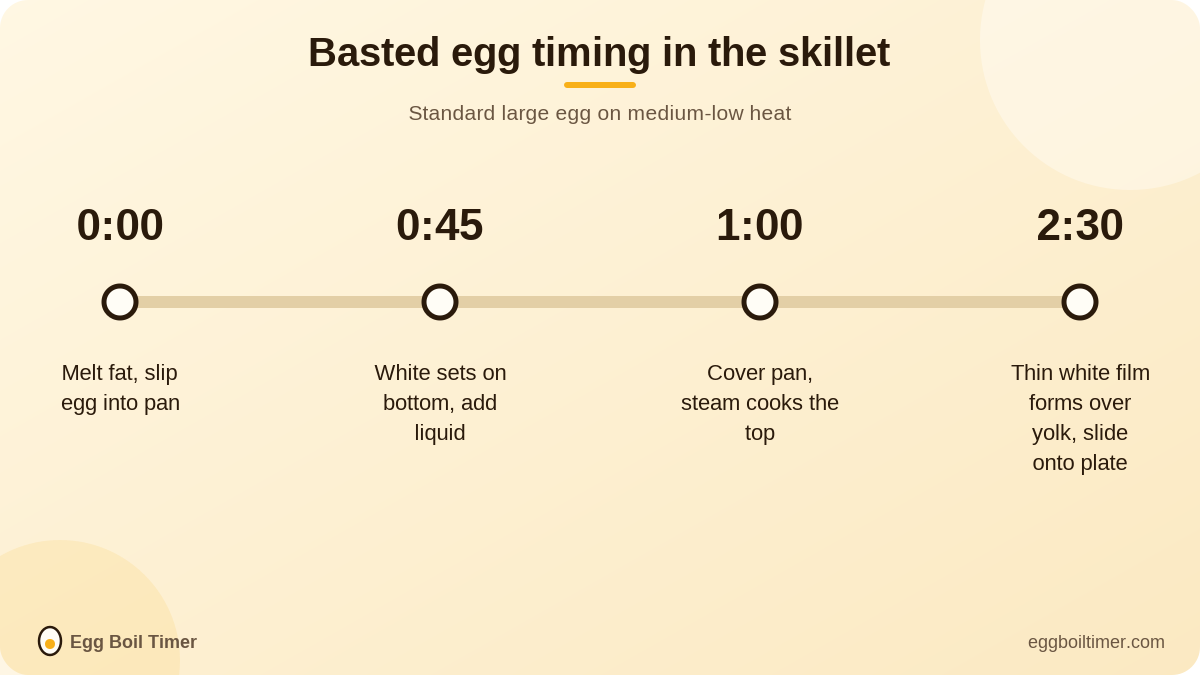
Precise temperature control separates a tender basted egg from a rubbery disc. Moderate heat gives ambient steam enough time to coagulate the upper white before the base scorches.
- Warm an 8-inch non-stick or well-seasoned cast-iron skillet over medium-low heat. Add one tablespoon of unsalted butter or oil, coating the cooking surface evenly before it smokes.
- Crack one or two large eggs into small ramekins first to ensure intact yolks, then slide them gently into the warm skillet. Let them sit undisturbed for 45 to 60 seconds until the bottom perimeter turns opaque.
- Pour one tablespoon (15 ml) of water directly onto the bare pan floor beside the eggs, keeping the liquid off the yolks.
- Seal the pan immediately with a tight glass lid to lock in the rising vapor while keeping the burner at medium-low.
- Watch through the glass as the clear white turns chalky and a pale, pearlescent film glazes the orange yolk dome. Running our Egg Boil Timer timer preset for fried eggs keeps this window consistent.
- Remove the lid, tilt the pan to let surface moisture evaporate for five seconds, and slide a thin silicone spatula under the base to plate.
Basted, Sunny-Side Up, and Over Easy Side by Side
Each skillet style handles the upper white differently, creating distinct yolk textures and mouthfeels. You can explore broader skillet preparations in our 15 Ways to Cook Eggs, From Boiled to Sous Vide (With Times for Each).
| Style | Heat Transfer Method | Upper White Texture | Yolk Condition | Flip Required? |
|---|---|---|---|---|
| Basted (Steam) | Conduction from base, condensation from trapped steam above | Soft, fully set, opaque veil across yolk | Warm, completely liquid | No |
| Basted (Fat) | Conduction from base, hot oil ladled repeatedly over top | Rich, glossy, gently crisped edges | Warm, liquid to custardy | No |
| Sunny-Side Up Eggs: Set Whites, Runny Yolks, No Flipping | Conduction from bottom only, open air above | Tender base, thick white near yolk often slightly runny | Bright orange, exposed, completely liquid | No |
| Over Easy vs Over Medium vs Over Hard Eggs: What Each Means and How Long | Conduction from base, flipped to sear top directly against metal | Firmly set on both sides with light browning | Enclosed in white pocket, warm and liquid | Yes |
Diagnosing Slimy Tops, Burnt Bases, and Overset Yolks
Steam basting relies on vapor containment. Minor deviations in heat or lid fit alter the finish quickly.
Clear, uncooked albumen remaining around the yolk points to escaping steam or an early lid removal. A lid must fit flush with the pan rim. If the lid has an open exhaust hole, cover the hole with a folded damp cloth, or add another half-tablespoon of water to sustain vapor volume.
A browned, leathery underside beneath an undercooked top means pan heat was too high. Intense heat flashes the water off into steam too rapidly and scorches bottom proteins before convective heat penetrates the upper albumen. Drop the burner to medium-low so the liquid simmers gently rather than popping violently.
A solid, chalky yolk indicates the pan stayed covered thirty seconds too long. Steam transfers energy efficiently across the thin yolk membrane. The moment the yolk surface turns pale pink-white, lift the skillet off the heat immediately. Residual pan heat finishes setting the white during plating.
Violent oil spattering happens when cold water hits hot fat directly. Pour the water along the dry pan perimeter away from oil pools, and hold the lid low over the rim so you can drop it into position in one swift motion.
Sticking along the pan floor usually occurs when sliding eggs into a cold pan before the butter has melted completely, or when using unseasoned steel. Ensure the fat coats the entire base and bubbles lightly before introducing the eggs.
Pan Surfaces and Fat Chemistry: Butter versus Oil
An 8-inch to 10-inch non-stick skillet gives the most predictable release for steam basting because delicate egg whites slide out intact with minimal added grease. Carbon steel and smooth cast iron also work well once seasoned, especially for fat basting where iron holds heat steady as you tilt and spoon.
Unsalted butter provides traditional breakfast aroma as its milk solids toast gently in the pan. The splash of water during steam basting keeps these solids from burning. Extra virgin olive oil creates crisper edges and carries a pleasant peppery note. Neutral oils like avocado oil tolerate higher temperatures and leave a clean palate when pairing the eggs with chili crisp or soy sauce.
Egg temperature and egg size slightly shift your basting timeline. Two extra-large eggs pulled directly from a 4 °C refrigerator drop skillet temperatures faster than medium room-temperature eggs. When working with cold jumbo eggs, add an extra teaspoon of water and allow 15 to 20 additional seconds under the lid to guarantee the thick inner albumen cooks through completely.
Salmonella Rules and Serving Textures
One large egg supplies roughly 6.3 grams of protein along with choline and fat-soluble vitamins. The USDA and FoodSafety.gov advise that Salmonella risks drop significantly when whites and yolks cook until firm. Vulnerable groups, including young children, pregnant individuals, older adults, and anyone with compromised immunity, should cook basted eggs until yolks are firm or choose pasteurized in-shell eggs for runny presentations. This is general culinary information, not medical advice.
Basted eggs pair cleanly where poached eggs usually belong. With their tidy rounded contours and absence of loose boiling water, they rest comfortably on toasted sourdough, potato rosti, or warmed breakfast grains without soaking the base. Once sliced, the liquid center runs out to form an immediate, velvety pan sauce across the plate.


