Egg bhurji is a North Indian street scramble of beaten eggs folded into caramelized red onions, plum tomatoes, fresh ginger, garlic, and chilies. Authentic bhurji yields distinct, tender curds enveloped in spiced fat rather than a soft custard. Serve it hot alongside griddled pav or warm flatbreads.
Street Tawas and the Separation of the Curd
Anda bhurji developed around transport hubs, mill gates, and night markets across Mumbai, Delhi, and Punjab. Street vendors, known as bhurji walas, work over broad concave cast-iron tawas. They chop alliums rapidly, reduce fresh tomatoes into a dense paste, and crack raw eggs straight into the seasoned fat. The dish delivers inexpensive, protein-dense fuel for workers needing quick nourishment before dawn or after late shifts.
Texture separates authentic street bhurji from European breakfast eggs. European methods prize unbroken sheets or custardy curds suspended in dairy fat. Indian street bhurji demands discrete, pebble-sized morsels that keep their individual identity without collapsing into mush. Achieving this curd structure requires continuous, deliberate spatula work the moment the egg whites begin setting over medium-high heat. The curds absorb turmeric, cumin, and red chili oils without turning dry or rubbery.
Nutritional value reinforces its place as an everyday household staple. A standard large chicken egg provides roughly 6.3 grams of protein along with essential lipids, choline, and fat-soluble vitamins. Scrambling six eggs with aromatics and oil yields a protein-rich meal in twelve minutes.
Bhurji, Akuri, and Western Scrambles Compared
Diners outside South Asia often confuse egg bhurji with classic diner eggs or Parsi akuri. All three cook beaten eggs in a heated pan, but they diverge in fat ratios, water content, and final coagulated texture. Clarifying these differences helps avoid overcooking or unwanted moisture.
| Characteristic | Egg Bhurji | Parsi Akuri | Western Scrambled Eggs |
|---|---|---|---|
| Core Texture | Separated, distinct, tender small curds. | Loose, custardy, slightly runny paste. | Large, soft folds or small silky curds. |
| Moisture Level | Dry to semi-dry with no pooling liquid. | Wet and creamy from deliberate undercooking. | Moist from retained butter or steam. |
| Aromatic Base | Browned onions, garlic, ginger, and tomatoes. | Softened onions, raw ginger, and fresh herbs. | Minimal butter, cream, pepper, and chives. |
| Spice Profile | Cumin, turmeric, coriander, chili, and garam masala. | Mild turmeric, green chilies, and fresh coriander. | Salt with black or white pepper. |
| Traditional Vessel | Heavy carbon-steel tawa or cast-iron skillet. | Shallow pan or skillet over low heat. | Nonstick skillet or saucier pan. |
Akuri relies on deliberate undercooking, pulling the skillet off the flame while the eggs remain glossy and spreadable. Western scrambled eggs focus on gentle dairy emulsification with butter or heavy cream. Egg bhurji demands fully coagulated egg proteins coated in spiced oil, ensuring no raw albumin lingers in the final serving.
The Masala Foundation: Aromatics and Spice Chemistry
The success of an Indian egg scramble rests on the masala base, traditionally called the tadka. If aromatics remain wet, the eggs turn watery and gray with a spongy bite. Three distinct chemical phases take place before beaten eggs hit the pan.
First comes the whole-spice bloom. Heating cooking oil to roughly 175 °C (350 °F) causes whole cumin seeds to crackle and release volatile oils within eight seconds. Dropping finely diced red onions into this hot fat immediately drops pan temperature and stops the seeds from burning. Red onions contain higher sugar levels and firmer fiber than yellow varieties, caramelizing at the edges while preserving a subtle crunch.
Second is the aromatic paste reduction. Grated ginger and garlic, combined with sliced green chilies, cook alongside the softened onions. Sautéing this mixture for ninety seconds expels sharp sulfur gases and creates a mellow, roasted depth. The oil extracts fat-soluble capsaicin from the chili skins, spreading warmth evenly through the pan rather than concentrating heat into sharp bites.
Third is the dehydration of tomatoes and ground spices. Finely diced plum tomatoes go into the skillet next, seasoned with ground turmeric, coriander powder, Kashmiri chili powder, and salt. Salt pulls moisture out of tomato cell walls through osmosis, generating steam that dissolves and cooks the ground spices. You must simmer this mixture until the free water evaporates and oil separates in small beads around the edges. That oil release signals that the masala is dry enough to cling to egg proteins without thinning them.
Ingredients for Four Servings
Using eggs at room temperature prevents sudden temperature drops when pouring them into the hot skillet. The measurements below produce a balanced, four-portion skillet.
- 6 large chicken eggs (roughly 55 g each in shell, whisked lightly with a pinch of salt).
- 2 tablespoons vegetable oil (or 1 tablespoon neutral oil plus 1 tablespoon ghee).
- 1 teaspoon whole cumin seeds.
- 1 medium red onion (about 120 g, cut into fine 3 mm dice).
- 2 small green finger chilies (thinly sliced into rounds).
- 1 tablespoon ginger-garlic paste (grated fresh in equal weights).
- 2 medium ripe plum tomatoes (about 150 g, seeds retained, cut into fine 5 mm dice).
- 1/2 teaspoon ground turmeric.
- 1 teaspoon ground coriander.
- 1/2 teaspoon Kashmiri red chili powder.
- 3/4 teaspoon fine sea salt.
- 1/2 teaspoon garam masala.
- 1 tablespoon unsalted butter.
- 3 tablespoons fresh cilantro leaves and tender stems (finely chopped).
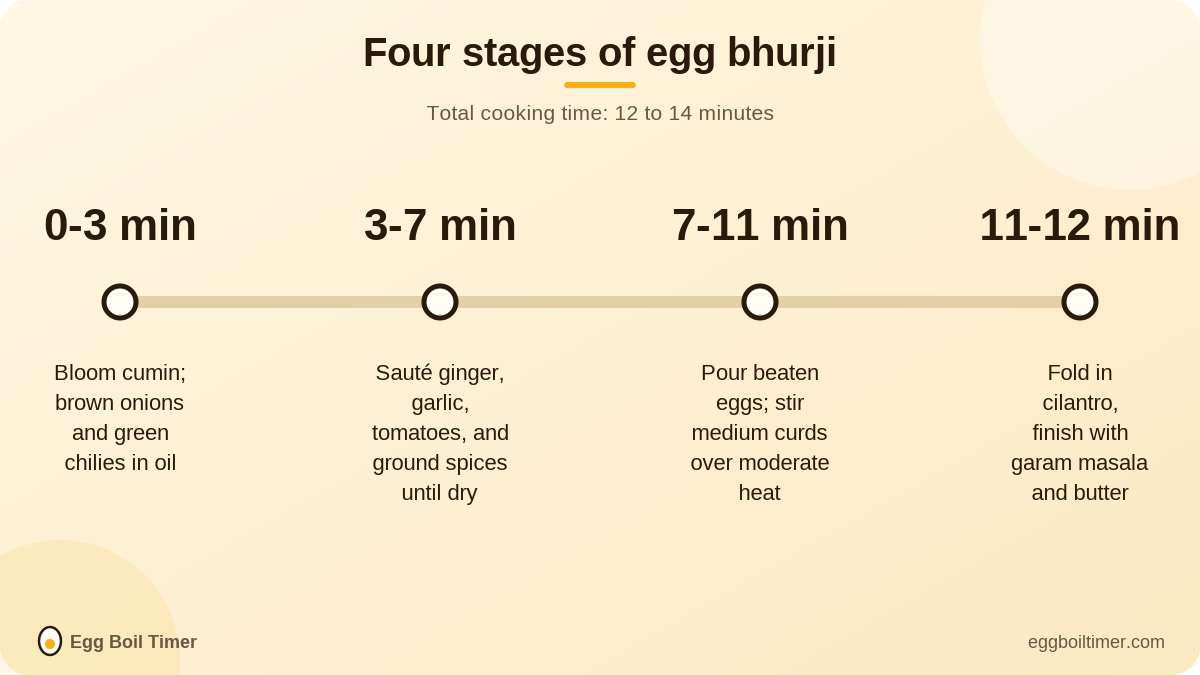
Cooking the Curds: The Twelve-Minute Pan Sequence
Preparing egg bhurji requires deliberate heat shifts between medium-high heat for frying aromatics and moderate heat for coagulating egg proteins. Set all chopped ingredients next to the stove before turning on the burner.
- Whisk the eggs: Crack all 6 eggs into a bowl. Add a pinch of salt and whisk with a fork for twenty seconds until uniform. Avoid heavy whipping that whips in froth. Leave the bowl at room temperature.
- Bloom the cumin: Heat 2 tablespoons of oil in a wide carbon-steel pan or cast-iron skillet over medium-high heat. When the oil ripples, add the whole cumin seeds. Let them sizzle and darken for 8 to 10 seconds.
- Sauté the alliums: Scatter the diced red onions and sliced green chilies into the pan. Cook for 4 to 5 minutes, stirring frequently. The onions will soften, turn translucent, and take on light brown edges.
- Cook the aromatics: Spoon the ginger-garlic paste into the center. Stir constantly for 60 to 90 seconds until the sharp raw scent gives way to a toasted fragrance.
- Dehydrate the tomato masala: Stir in the diced tomatoes, turmeric, coriander powder, chili powder, and salt. Lower the stove to medium heat. Cook for 4 to 5 minutes while crushing tomato pieces with the back of a wooden spatula. Stop only when the mixture forms a thick, glistening paste and oil bubbles visibly around the edges.
- Scramble the curds: Pour the whisked eggs directly over the bubbling tomato paste. Let the liquid sit undisturbed for ten seconds so the base begins to set. Push your spatula in steady strokes from the pan perimeter toward the middle. Break setting ribbons into tender, bite-sized curds. Keep the contents in motion for 2 to 3 minutes until no runny liquid remains.
- Finish and rest: Pull the pan off the burner while the curds remain soft-set and shiny. Add 1 tablespoon of butter, dust the garam masala across the eggs, and fold through the cilantro. Carryover heat finishes cooking the curds to safe internal temperatures above 71 °C (160 °F) while preventing sulfur smells. Serve right away.
Pair your breakfast with the Scrambled Eggs Timer: Stovetop Times and Curd Guide for audio cues by egg count. For comparison with North African eggs braised inside a looser tomato and bell pepper stew, explore our guide to Shakshuka: Eggs Poached in Spiced Tomato Sauce.
Troubleshooting Matrix: Moisture, Curd Size, and Heat Control
Even experienced cooks run into bhurji that weeps water or turns chalky. Use this diagnostic table to identify common pan issues and make immediate corrections.
| Visible Symptom | Root Cause | Kitchen Remedy |
|---|---|---|
| Water pooling around the curds (weeping). | Tomatoes were not reduced sufficiently, or high heat caused egg protein syneresis. | Sauté the tomato paste until oil separates cleanly before adding eggs. Pull the skillet off heat while curds remain glossy. |
| Eggs look gray, dull, or unappetizing. | Excessive cooking time caused sulfur-iron bonding, or dry turmeric burned on hot metal. | Cook ground spices directly inside the moist tomato pulp. Keep total scrambling time under 3 minutes. |
| Curds are powdery and leathery. | Pan heat was too high, drying out sensitive ovalbumin proteins. | Reduce heat to medium before adding eggs. Stir in chilled butter off the flame to halt carryover cooking. |
| Bland flavor despite multiple spices. | Insufficient salt, or onions and garlic were undercooked and retained water. | Brown the onions thoroughly to concentrate natural sweetness. Salt both the tomato reduction and the beaten eggs. |
| Pasty, dense, solid mass instead of curds. | Eggs sat stationary without enough spatula movement. | Use continuous sweeping strokes from the rim to the center to form separate, defined curds. |
Moisture management controls texture. If fresh plum tomatoes contain excessive water, scoop out the liquid seed cavity before dicing. That adjustment cuts two minutes off the reduction time and keeps the finished curds firm.
Serving Traditions and Regional Additions
Street stalls across Maharashtra serve bhurji with pav. These soft white yeast rolls are split down the middle, griddled on the buttery tawa until golden, and dusted with spicy podi. A squeeze of fresh lime juice over the warm eggs cuts the richness of the butter and balances the chili heat.
North Indian households wrap steaming bhurji inside freshly griddled whole-wheat rotis or layered parathas for a portable morning meal. Thick slices of crusty sourdough or sandwich bread toasted in salted butter serve equally well as a crisp base.
Regional variations offer varied flavor profiles without altering core pan technique:
- Mumbai Street Style: Add 1/2 teaspoon of pav bhaji masala alongside the ground coriander. The fennel, amchur, and clove notes create an unmistakable street-cart scent.
- Dhaba Style: Sauté two tablespoons of finely diced green bell pepper with the onions to add a crisp vegetable crunch and light bitterness.
- Cheese Bhurji: Grate 40 grams of sharp processed Amul cheese or mild white cheddar over the eggs thirty seconds before removing the pan from the heat. The cheese melts into savory pockets between spiced curds.
- Dry Tari Variation: For saucier curries served with basmati rice, consult our guide to Egg Curry: Authentic Dhaba Gravy with Spiced Eggs. That method simmers whole hard-boiled eggs inside a rich sauce.
Explore more breakfast ideas in our collection of Egg Recipes: Breakfast, Lunch, and Dinner Ideas. You can also use our Egg Boil Timer to calculate exact boiling times by size and altitude.


