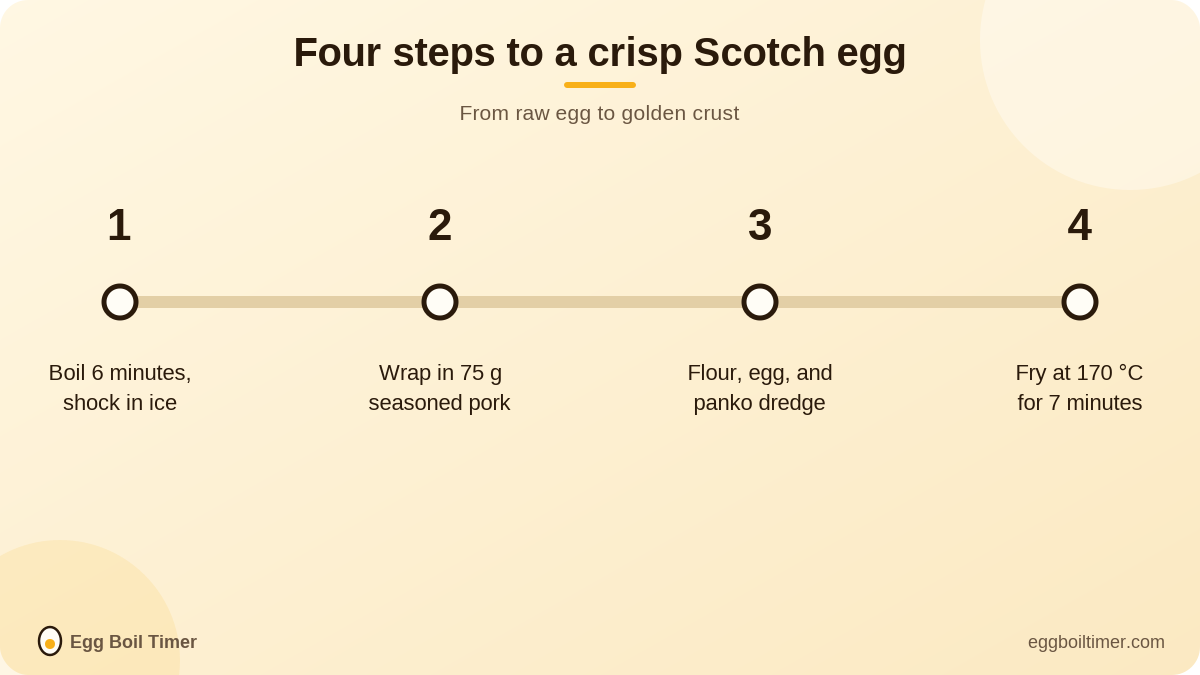
A classic scotch egg consists of a soft or hard-boiled egg wrapped in seasoned sausage meat, coated in breadcrumbs, and fried until deeply golden. A crisp outer casing with a warm, liquid yolk requires exact timing. Boil large fridge-cold eggs for exactly 6 minutes, then cool them in an ice bath. Wrap each egg tightly and fry at 170 °C (340 °F) for 6 to 7 minutes.
Pork Thickness and Heat Transfer
Cooking a scotch egg successfully depends on thermal contrast. The outer sausage layer must cook through to 71 °C (160 °F). Meanwhile, the egg white inside stays tender and the yolk avoids solidifying into chalky sulfur. London department store Fortnum & Mason claims to have invented the portable snack in 1738 for stagecoach travelers. Culinary historians also trace wrapped egg traditions to South Asian nargisi kofta. Whether eaten chilled on a picnic or warm from a fryer with brown sauce, clean slicing requires a thin, consistent layer of pork.
Meat thickness dictates success. If the sausage wall exceeds 6 millimeters, the sphere requires extended time in the frying oil, which overcooks the yolk into a hard center. If the meat layer is rolled thinner than 3 millimeters, it splits during cooking and exposes delicate egg white directly to bubbling fat. Weighing 75 grams of ground sausage meat per large egg provides the exact volume needed to encase the egg completely without bulking up the exterior.
Boiling Times for Runny, Jammy, and Firm Centers
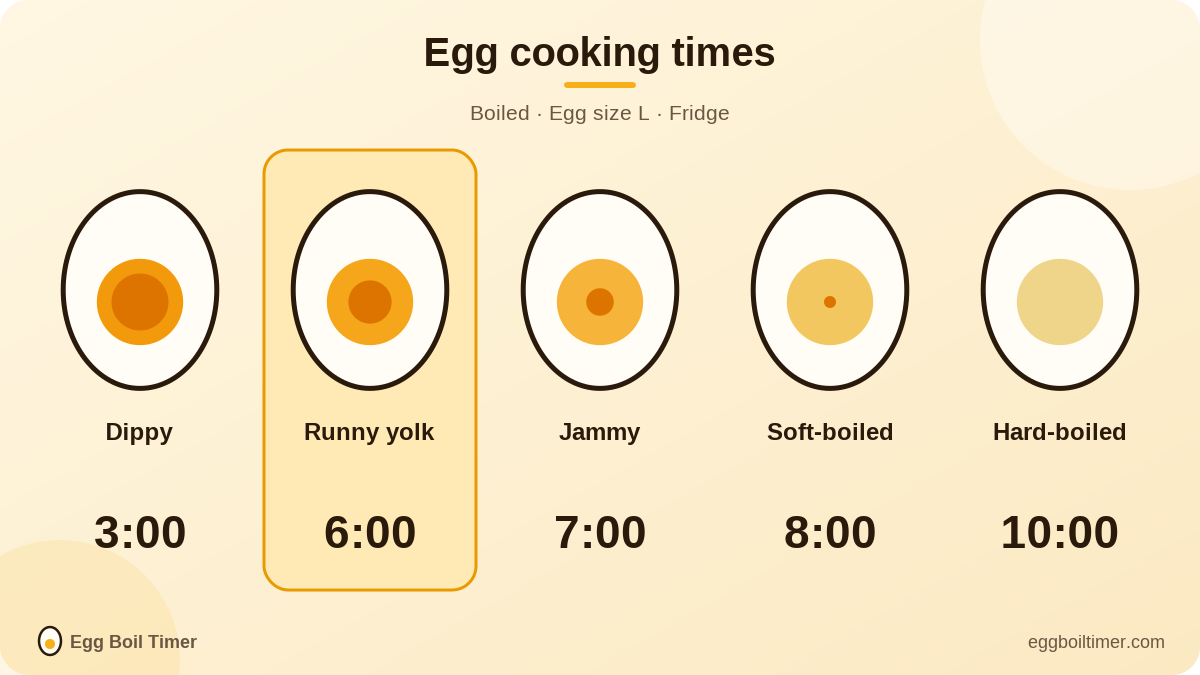
Preparing the eggs happens across two distinct stages. The initial water boil partially solidifies the albumen so you can peel and handle the egg without rupturing its wall. The subsequent frying or baking step heats the egg a second time, warming the yolk while cooking the exterior meat through. Calculate your initial water bath timing using Egg Boil Timer based on fridge-cold large eggs lowered directly into boiling water at sea level.
| Target Yolk in Finished Dish. | Initial Boil Time. | Egg White Texture. | Handling Difficulty. |
|---|---|---|---|
| Runny (Liquid center). | 6 minutes (360 s). | Tender, delicate. | High; chill thoroughly before peeling. |
| Jammy (Custardy center). | 7 minutes (420 s). | Firm, pliable. | Moderate; holds shape under pressure. |
| Firm (Traditional picnic). | 10 minutes (600 s). | Completely solid. | Low; ideal for slicing cleanly into halves. |
Plunging the boiled eggs directly into a bowl of ice water for at least 10 minutes arrests thermal carryover. Chilling contracts the interior proteins away from the inner shell membrane. If you attempt to peel a warm 6-minute egg, the delicate albumen tears, leaking raw yolk and preventing a clean bond with the pork layer. Similar minute-by-minute timing dictates the cured centers in Ramen Eggs at Home: The 30 Seconds That Decide Everything and decorative snacks like Chinese Tea Eggs: The Marbled Snack That Is Mostly Waiting.
Sausage Selection, Seasoning, and Encasement
Pork shoulder ground to an 80/20 lean-to-fat ratio yields the juiciest crust. Lean meat dries out and pulls away from the egg during frying. You can remove the natural casings from raw breakfast links or purchase bulk seasoned pork. Fresh herbs provide traditional British seasoning: combine finely chopped fresh sage, thyme, flat-leaf parsley, a pinch of ground mace or nutmeg, salt, and freshly cracked black pepper.
- Divide 300 grams of seasoned meat into four equal portions of roughly 75 grams each.
- Lay a sheet of plastic wrap on your work surface. Flatten one meat portion into a round disc roughly 12 centimeters in diameter, keeping the edges slightly thinner than the center.
- Dust a peeled, cold egg lightly in all-purpose flour. This thin layer of starch binds the wet albumen to the raw pork fats.
- Place the egg upright in the middle of the flattened meat patty.
- Gather the four corners of the plastic wrap upward, drawing the meat around the egg. Press gently with your palms to smooth out air pockets and seal the seams completely. Twist the top of the plastic wrap to tighten the sphere, then unwrap.

Double Breading Protocol for a Uniform Crust
A bare patch on a fried scotch egg allows hot oil to penetrate the meat, creating steam bursts that detach the coating. Set up three shallow bowls. Put flour and salt in the first, two beaten eggs in the second, and coarse Japanese panko breadcrumbs in the third. Panko delivers a lighter, crunchier shell than traditional fine breadcrumbs without absorbing excess frying fat.
Roll each sausage-wrapped ball in the flour, shaking off loose powder. Submerge it into the beaten egg wash until wet on all sides, then roll thoroughly in panko, pressing gently so the flakes anchor into the meat. For an impenetrable crust that resists cracking, dip the sphere back into the egg wash and roll in panko a second time. Chill the breaded spheres in the refrigerator for 20 minutes before cooking. Chilling firms the fat and sets the breading structure before heating.
Frying, Baking, and Air-Frying Heat Profiles
Deep-frying in neutral vegetable oil, sunflower oil, or lard yields the classic pub finish: an even mahogony color and shattered crunch. Pour at least 7 centimeters of oil into a heavy Dutch oven, heating it to 170 °C (340 °F). Monitor the fat with a deep-fry thermometer. Oil cooler than 160 °C (320 °F) saturates the crust with grease. Conversely, oil hotter than 180 °C (356 °F) browns the breadcrumbs before the raw pork cooks through.
| Method. | Vessel Setup. | Temperature. | Time. | Internal Meat Temp. |
|---|---|---|---|---|
| Deep-Fry. | Dutch oven, submerged in oil. | 170 °C (340 °F). | 6 to 7 minutes. | 71 °C (160 °F). |
| Oven Bake. | Baking sheet with wire rack. | 200 °C (400 °F). | 22 to 25 minutes. | 71 °C (160 °F). |
| Air Fryer. | Perforated basket, oil sprayed. | 180 °C (355 °F). | 12 to 14 minutes. | 71 °C (160 °F). |
Baking produces a paler crust unless you toast the breadcrumbs lightly in a dry skillet with a tablespoon of butter before dredging. When using an oven, place the spheres on a wire rack set over a rimmed baking sheet so circulating air browns the undersides evenly. Because baking requires longer cooking times, the heat travels deeper into the egg, setting a 6-minute runny yolk into a jammy or firm finish. For portable lunches and picnic hampers, firm centers slice cleanly, matching the travel-ready convenience of Frittata Recipe: The Italian Skillet Method and Fillings or cold wedges of Spanish Omelette: Classic Tortilla Española Step by Step.
Solving Splits, Loose Breading, and Overcooked Yolks
Enclosing a cold boiled egg inside raw meat and submerging it in hot oil creates competing expansion rates. When crusts split or breading peels away, specific mechanical errors are at work.
| Symptom. | Root Mechanical Cause. | Correction. |
|---|---|---|
| Cracked crust and split meat. | Trapped air bubble between egg and pork expanded from heat. | Smooth the meat tightly with plastic wrap to compress all air out before dredging. |
| Breading slides off in patches. | Omission of the preliminary flour dusting on the egg or sausage. | Dust dry surfaces with flour so egg wash has microscopic tooth to grip. |
| Overcooked, grey-rimmed yolk. | Oil temperature was too low, forcing prolonged frying time. | Maintain oil strictly at 170 °C (340 °F) and do not exceed 7 minutes of frying. |
| Raw, pink meat near the center. | Meat layer exceeded 6 mm or eggs entered the oil fridge-cold. | Roll meat thin and let assembled raw spheres sit at room temperature for 10 minutes. |
Insert an instant-read digital meat thermometer laterally into the center of the sausage layer without piercing through to the egg yolk. The USDA sets 71 °C (160 °F) as the safe threshold for ground pork. If the breadcrumbs darken before the pork reaches 71 °C, move the eggs to a 180 °C (350 °F) oven. Bake for 3 to 5 minutes to finish the interior without burning the crust.
Master Recipe: Classic British Scotch Eggs
This master formula produces four Scotch eggs featuring a crisp shell, seasoned herbal pork, and warm runny yolks. Serve them with English mustard, tart piccalilli, or an emulsion such as homemade Homemade Mayonnaise: Ratios, Oil Chemistry, and Technique or garlic Aioli: Traditional Garlic Sauce and Foolproof Method. Explore additional egg techniques across our Egg Recipes: Breakfast, Lunch, and Dinner Ideas hub.
Ingredients
- 4 large eggs (chilled, for boiling).
- 2 large eggs (beaten, for dredging).
- 300 g ground pork sausage meat (80/20 lean to fat).
- 1 tablespoon finely chopped fresh flat-leaf parsley.
- 1 teaspoon finely chopped fresh sage leaves.
- 1/2 teaspoon fresh thyme leaves.
- 1/4 teaspoon freshly grated nutmeg or ground mace.
- 1/2 teaspoon fine sea salt.
- 1/2 teaspoon freshly ground black pepper.
- 40 g all-purpose flour.
- 100 g panko breadcrumbs.
- 1 liter neutral high-smoke-point oil (canola, peanut, or sunflower).
Step-by-Step Instructions
- Boil the eggs: Bring a pot of water to a rolling boil. Gently lower in 4 cold large eggs using a slotted spoon. Boil for 6 minutes for runny yolks, or 7 minutes for jammy centers. Immediately transfer eggs into a prepared ice water bath for 10 minutes. Gently tap the shells and peel carefully under cold running water. Pat dry with paper towels.
- Season the meat: In a mixing bowl, combine the sausage meat, parsley, sage, thyme, nutmeg, salt, and black pepper. Mix with your hands until the seasonings are uniformly distributed. Divide the mixture into 4 equal balls (about 75 grams each).
- Wrap the eggs: Flatten one meat portion into a thin, circular disc on plastic wrap. Dust a peeled boiled egg lightly in flour, place it in the center, and wrap the meat upward around the egg. Smooth the seams with your fingertips so no white is visible and no air pockets remain. Repeat for all four eggs.
- Bread the spheres: Place flour in one shallow dish, 2 beaten eggs in a second, and panko in a third. Coat each meat-wrapped egg in flour, dip completely in beaten egg, and roll firmly in panko. Dip in egg and panko a second time for extra crunch. Transfer to a plate and refrigerate for 20 minutes.
- Fry until deep golden: Heat oil in a deep heavy pot to 170 °C (340 °F). Fry eggs in batches of two, turning occasionally with a slotted metal spoon. Cook for 6 to 7 minutes until the crust turns dark golden brown and the meat reaches an internal temperature of 71 °C (160 °F). Drain on a paper-towel-lined wire rack for 3 minutes before slicing lengthwise to serve.


