Baking eggs in their shells is a handy way to cook a dozen or more at once without a big pot of water. The eggs come out like hard-boiled eggs, the yolk a little creamier, and the method is popular for meal prep and Easter batches. It is slower than boiling, and ovens vary, so a test run pays off.
How to make hard-boiled eggs in the oven
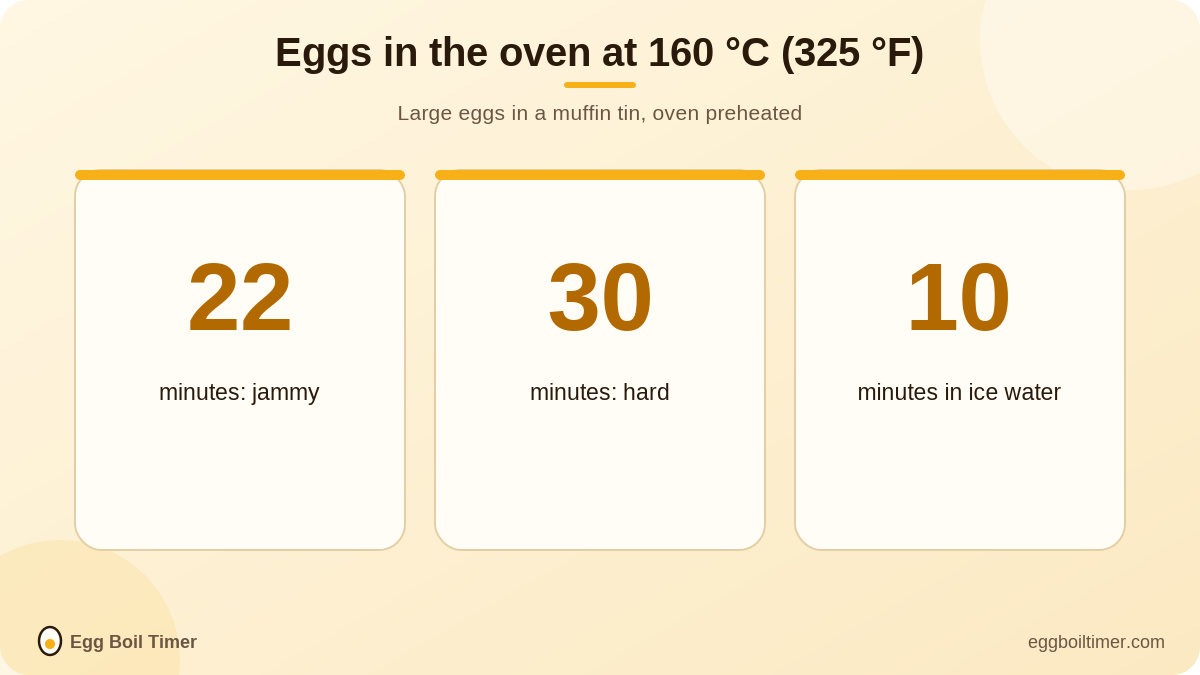
- Preheat the oven to 160 °C (325 °F). Higher temperatures cook the outside too fast and brown the shells.
- Put one egg in each cup of a muffin tin so they cannot roll and the heat reaches them evenly.
- Bake about 30 minutes for hard yolks, or about 22 minutes for jammy ones. The timer at the top of this page is set to the oven method.
- Move the eggs into ice water for 10 minutes. They keep cooking from their own heat otherwise: Ice Bath or Cold Tap? What Cooling Really Does to a Boiled Egg.
Brown spots on the shell
Where the egg touches the hot tin, the shell can get small brown spots, and sometimes the white underneath shows a light brown mark. It is harmless, only on the surface, and you can avoid most of it by putting a little water in each muffin cup or a folded paper towel under the eggs.
Why ovens give different results
Ovens often run 10 to 20 degrees hotter or cooler than the dial says, and a fan oven cooks faster than a conventional one. Bake two eggs first, cool them and cut them open, then adjust by 2 or 3 minutes. In a pot of water at a rolling boil the time is the same in every kitchen, which is why boiling is still the most precise method: 15 Ways to Cook Eggs, From Boiled to Sous Vide (With Times for Each).
Storing them
Keep oven-baked eggs in the fridge, unpeeled if you can, and eat them within a week, like any hard-cooked egg: How Long Do Hard-Boiled Eggs Last in the Fridge?. For eggs in water, the Hard Boiled Egg Timer and the Egg Boil Timer give exact times for your egg size.