You took the egg out at exactly seven minutes, and the yolk is still firmer than you wanted. The timer was right. The problem is what happened in the two minutes after it rang.
The egg keeps cooking
When an egg leaves boiling water, the outside is close to 100 °C and the centre is cooler. That heat keeps moving inwards, so the yolk goes on setting for a while after the egg is out of the pot. For a hard-boiled egg this hardly matters. For a runny or jammy yolk, a minute or two of extra heat is the difference between the egg you wanted and the next one up.
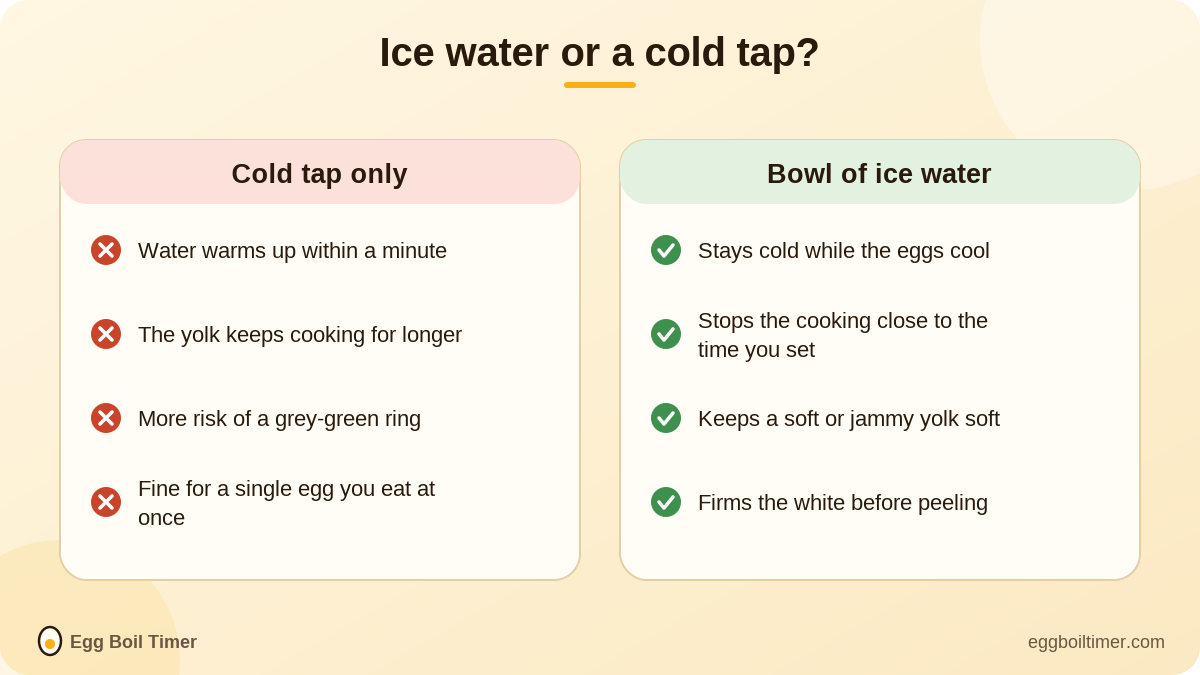
Why ice water and not just the tap
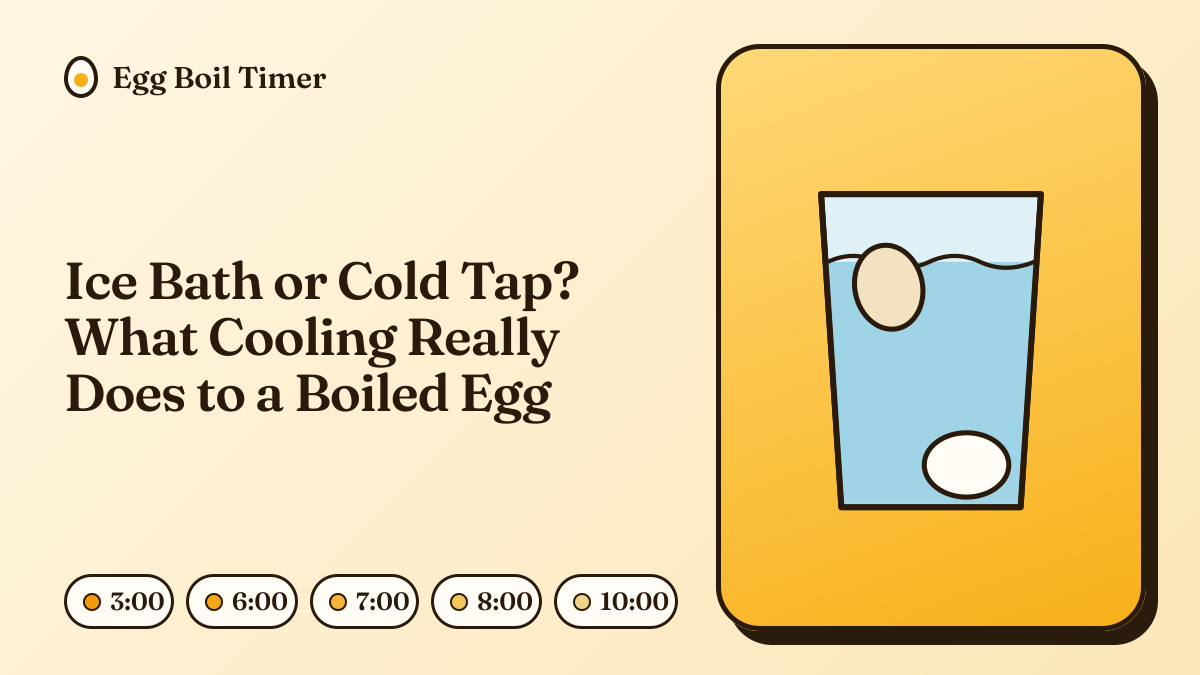
A hot egg warms the water around it. A few eggs under a cold tap, or in a bowl of plain cold water, soon sit in lukewarm water and cool slowly. A bowl with plenty of ice stays cold while it takes the heat out, so the cooking stops close to the moment you set.
- Soft or jammy eggs: 1 to 2 minutes in ice water if you eat them warm, longer if they are for later.
- Hard-boiled eggs: about 5 minutes, until they are cool enough to handle all the way through.
- A single egg you eat at once: a short rinse under the cold tap is enough.

It also protects the colour
The grey-green ring around an overcooked yolk forms when an egg stays hot for too long. Cooling quickly is one of the simplest ways to avoid it; the chemistry is here: The Green Ring on Your Hard-Boiled Eggs Is Telling You Something.

Does it make peeling easier?
A little. A chilled white is firmer and tears less, which helps when you peel. How the egg went into the pot and how old it was matter more; the full method is here: How to Peel a Boiled Egg in Ten Seconds (and Why the Spoon Trick Works).
After the bath
Dry the eggs and put them in the fridge if you are not eating them soon. Do not leave boiled eggs at room temperature for more than 2 hours. Set the cooking time for your eggs with the Soft Boiled Egg Timer or the Hard Boiled Egg Timer, or choose any doneness on the Egg Boil Timer.