An egg poacher is a specialized tool that cooks cracked eggs inside cups suspended over steam or water. Cooking a Large egg (55 g) in a stovetop poacher takes 3 to 4 minutes (180 to 240 seconds) for a soft yolk and opaque white. The cup holds the albumen in place, eliminating the need for swirling water or added vinegar.
What Is an Egg Poacher and How Does Steam Poaching Work?
Traditional poaching submerges a raw egg directly into bare water heated to 80 °C or 85 °C. The cook creates a swirling vortex in the water to wrap the loose white around the yolk. An egg poacher replaces direct water submersion with indirect steam heat. A skillet or base pan holds a small volume of boiling water beneath a raised tray of metal or silicone cups. As the water boils, it generates enclosed steam at 100 °C that transfers thermal energy through the cup walls into the raw egg mass.
Egg white proteins set at staggered temperature thresholds. Ovotransferrin begins coagulating at 62 °C and forms a tender gel by 65 °C. Ovalbumin, making up over half the white protein, sets near 80 °C. Yolk proteins thicken at 65 °C and solidify at 70 °C.
In bare water, uncontained thin albumen drifts across the pan before reaching 62 °C, forming wispy feathers. The physical wall of a poacher cup holds the raw white in a compact dome until steam raises the mass past its coagulation threshold.
Steam poaching offers physical advantages over direct liquid immersion. Enclosed steam transfers heat rapidly without liquid movement. Because no water washes over the egg surface, the albumen retains its full moisture and natural flavor. Cookers do not need acid additives, such as vinegar, to speed up protein bonding. The solid cup mold creates uniform round shapes that fit neatly onto toast or English muffins.
Four Main Types of Egg Poachers Compared
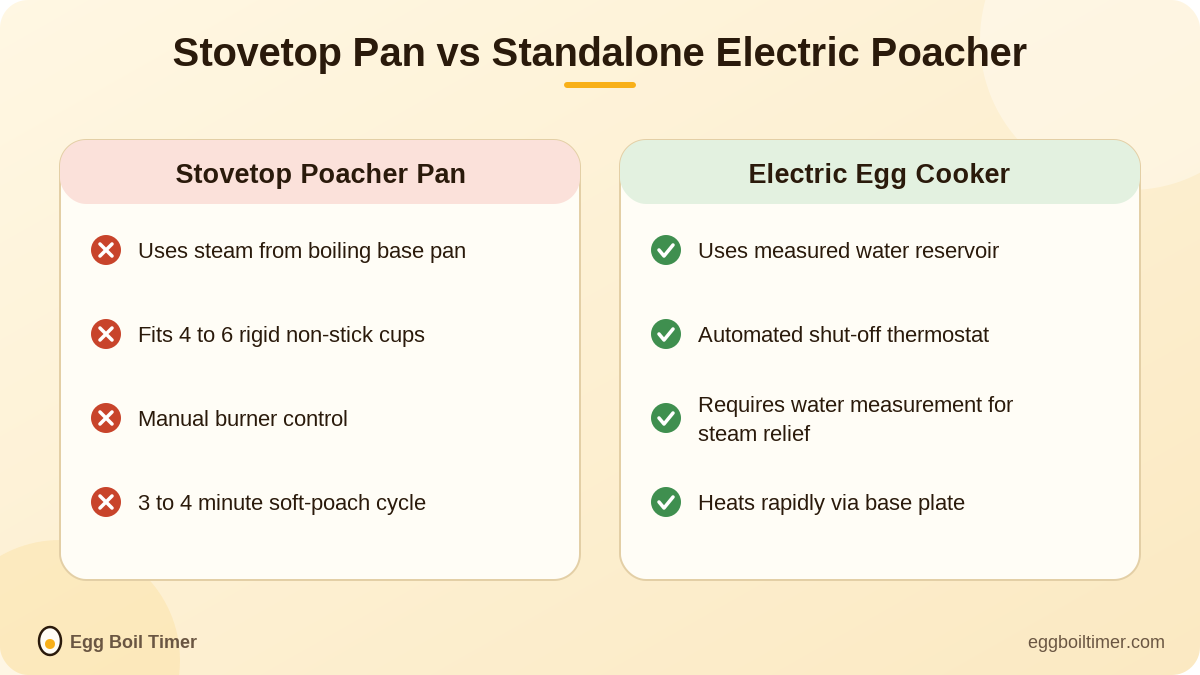
Egg poachers fall into four distinct equipment categories based on heat source and construction material. Stovetop pan sets, electric egg cookers, floating silicone cups, and microwave pods each offer specific thermal transfer properties and operating requirements.
| Poacher Style. | Primary Material. | Heat Transfer Method. | Soft Poach Time (Large Egg). | Capacity Range. | Best Kitchen Use. |
|---|---|---|---|---|---|
| Stovetop Pan Set. | Aluminum or Stainless Steel. | Enclosed Burner Steam. | 3 to 4 minutes (180–240 s). | 2 to 6 eggs. | Daily breakfast and batch cooking. |
| Electric Egg Cooker. | Plastic and Metal Heating Plate. | Automated Reservoir Steam. | 4 to 5 minutes (240–300 s). | 4 to 7 eggs. | Hands-off automated cooking. |
| Floating Silicone Cups. | Food-Grade Silicone. | Water Bath and Ambient Steam. | 5 to 6 minutes (300–360 s). | 1 to 4 eggs. | Small kitchens with limited storage. |
| Microwave Poaching Pod. | BPA-Free Plastic or Silicone. | Microwave Radiation and Water. | 1 minute (50–60 s). | 1 to 2 eggs. | Rapid office or single-serve prep. |
Stovetop poacher sets consist of a shallow skillet, a removable insert rack, and individual metal cups coated with non-stick resin. Removing the tray turns the base into a standalone pan, serving dual roles alongside traditional Choosing the Best Egg Pan: Materials, Sizes, and Sticking Solutions. Electric cookers steam eggs using a small internal heating plate that evaporates a measured quantity of water, operating like specialized multi-mode Egg Cookers: Steam Physics, Timing, and Buyer Trade-Offs. Floating silicone pods sit directly inside a covered pot of simmering water, while microwave units use localized water and microwave energy for high-speed single servings.
Choosing between these styles depends on available storage space, desired batch size, and preferred cleanup routine. Rigid stovetop pans deliver the fastest heat transfer and sharpest cup definition. Silicone cups store flat in small drawers, but their thick walls slow thermal conduction. Electric units offer automatic shut-off features for busy mornings, while microwave pods trade shape perfection for maximum cooking speed.
Thermal Conductivity and Material Science of Poacher Cups
The material of a poacher cup dictates how fast heat moves from the steam chamber into the raw egg white. Different materials exhibit vast variations in thermal conductivity, measured in Watts per meter-Kelvin (W/m·K).
Aluminum poacher cups feature high thermal conductivity of roughly 200 W/m·K. When steam hits an aluminum cup, the metal transfers thermal energy through its walls almost instantly. This rapid heat conduction sets the outer white quickly, preventing raw albumen from clinging to the rim. Stainless steel cups have a lower conductivity near 16 W/m·K. Steel heats slightly slower than aluminum, providing a gentle temperature gradient that reduces the risk of rubbery edges.
Food-grade silicone possesses a very low thermal conductivity of approximately 0.2 W/m·K. Silicone acts as a thermal insulator. Heat moves slowly through a silicone cup wall, requiring an additional 60 to 90 seconds of steam exposure compared to aluminum. Cooks using silicone cups must keep the pan covered to ensure upper steam sets the exposed top white while heat creeps through the insulated base.
Surface coatings also govern release performance. Most metal poacher cups feature polytetrafluoroethylene (PTFE) or ceramic non-stick coatings. These non-wetting surfaces prevent egg proteins from forming chemical bonds with the metal substrate. Heating an ungreased cup past 200 °C damages PTFE coatings. Always wash non-stick cups with soft sponges and avoid metal utensils that scratch the protective film.
How to Use a Stovetop Egg Poacher Pan Step by Step
Cooking with a stovetop poacher pan requires proper water levels, temperature control, and accurate timing. Follow these steps to achieve consistent results every time.
- Add water to the base skillet: Pour 1.5 to 2 cm of tap water into the bottom pan. Ensure the water level remains below the base of the insert rack so boiling liquid does not splash into the cups.
- Bring water to a rolling boil: Place the covered skillet over medium-high heat on your stovetop until dense steam accumulates beneath the lid.
- Lightly grease each insert cup: Apply a light layer of cooking spray, neutral oil, or melted butter to the interior of each cup. Even high-grade non-stick coatings require a thin lipid barrier to guarantee clean release.
- Crack the eggs into individual cups: Crack one cold Large egg (55 g) into each greased cup. Cracking eggs into small ramekins first prevents shell fragments from falling into the poacher.
- Insert the rack and lock the lid: Lower the filled cup rack into the steaming pan base and seat the lid firmly over the skillet rim.
- Set the cooking timer: Reduce heat slightly to maintain a steady simmer and time the steam cycle according to your target yolk texture.
- Remove cups and plate: Lift the lid away from your face to vent hot steam. Remove the cup rack using oven mitts, gently loosen the egg edges with a flexible silicone spatula, and slide each egg onto your plate.
Timing determines the internal temperature and fluidity of the yolk. Use the baseline cooking times below, modeled on standard Large fridge-cold eggs (55 g) at sea level from Egg Boil Timer:
| Doneness Target. | Steam Time (Seconds). | Yolk Temperature. | Albumen and Yolk Consistency. |
|---|---|---|---|
| Soft / Liquid. | 180 to 240 seconds (3 to 4 min). | 63 °C. | Opaque set white, completely warm and liquid yolk. |
| Medium / Jammy. | 240 to 300 seconds (4 to 5 min). | 67 °C. | Firm white, thickened fudge-like jammy yolk core. |
| Firm / Hard. | 300 to 360 seconds (5 to 6 min). | 72 °C. | Fully coagulated white, solid pale yellow yolk. |
Adjust cooking times based on egg weight. Small eggs (45 g) cook 30 seconds faster than Large eggs, while Extra-Large eggs (60 g) require 30 seconds of extra steam exposure. Room-temperature eggs reduce overall steam duration by roughly 20 seconds because less heat energy goes into warming the cold mass.
How to Use Electric, Microwave, and Silicone Egg Poachers
Alternative poacher styles require adjustments to moisture management, power output, and thermal timing.
Using Standalone Electric Egg Cookers
Electric egg cookers rely on precise water volumes to control cooking duration. Pour cold water onto the central heating plate using the included measuring beaker. The water volume matches the number of eggs and chosen doneness. Place the poacher tray over the heating plate and grease the non-stick cups.
Crack an egg into each cup and secure the plastic dome lid. Press the power switch to initiate heating. Steam fills the enclosure as the plate boils the water. Once the water reservoir completely evaporates, the heating plate temperature rises above 100 °C, triggering an automatic thermal thermostat shut-off and audible chime. Remove the lid immediately to stop residual steam from overcooking the eggs.
Operating Microwave Poaching Pods
Microwave poaching pods require water additions to protect egg proteins from direct microwave radiation. Place half a teaspoon of cold water into each pod cavity before cracking the egg inside. The water layer distributes surface heat and prevents the outer white from turning tough and rubbery.
Microwave energy heats polar water and lipid molecules directly inside the yolk. Rapid heating causes steam pressure to build beneath the vitelline membrane surrounding the yolk sac. To prevent violent pops, prick the top of the yolk once with a wooden toothpick. Cover the pod with its vented lid and microwave at 50% power for 50 to 60 seconds. Allow the sealed pod to rest inside the microwave for 30 seconds after cooking. This resting period lets heat equalize, setting the white gently through residual steam.
Using Floating Silicone Poaching Cups
Floating silicone cups require a wide pot with at least 3 to 4 cm of simmering water. Lightly grease the interior of each silicone pod with vegetable oil or butter before cracking in the eggs. Gently lower the filled cups into the pan so they float freely without tipping.
Cover the pot with a tight-fitting lid to trap upper steam. Because silicone insulates against heat, keep the water at a steady simmer around 95 °C. Steam Large eggs for 5 to 6 minutes for soft yolks. Lift the cups out using tongs, let them cool for 15 seconds, and flex the pliable silicone walls inward to pop the eggs onto paper towels or toast.
Key Factors to Consider When Buying an Egg Poacher
Selecting the best egg poacher depends on your kitchen setup, household size, and cooking frequency. Evaluate five core structural parameters before purchasing a dedicated poaching tool.
Capacity and Batch Size
Poacher capacities range from single-egg microwave pods to 6-cup stovetop pans. Single-person households or individuals with small kitchens benefit from 2-cup stovetop pans or floating silicone pods. Families preparing breakfast for multiple people should select a 4-cup or 6-cup stovetop unit to cook an entire meal simultaneously.
Material Quality and Surface Safety
Heavy-gauge tri-ply stainless steel or anodized aluminum offers superior durability and warp resistance over time. Ensure all non-stick coatings are certified PFOA-free PTFE or ceramic resin. If you prefer avoiding non-stick chemical coatings entirely, choose polished stainless steel cups or food-grade platinum silicone pods.
Handle Insulation and Ergonomics
Steam poacher components reach high operating temperatures. Look for skillet handles and insert cup knobs fitted with heat-resistant Bakelite, silicone sleeves, or extended cool-touch steel wires. Well-insulated handles allow cooks to lift individual cups out of hot steam trays safely without burning fingers.
Lid Design and Visibility
A tempered glass lid with a stainless steel rim provides clear visual tracking of egg white opacity without lifting the cover. Opening a metal lid during cooking releases trapped steam, dropping internal temperatures and extending cook times by 60 seconds. Built-in steam vents prevent lid rattling and control pressure release.
Multi-Use Functionality
Specialized single-use tools consume valuable cabinet space. A stovetop poacher pan with a removable insert rack functions as a standard heavy-bottom skillet for frying or searing when the rack is removed. Check whether metal cups double as baking molds for small custards or egg bites.
Troubleshooting Matrix: Solutions for Sticking, Watery Tops, and Rubber Whites
Poaching errors stem from incorrect heat management, lack of surface lubrication, or excess lid condensation. Use the diagnostic matrix below to fix common poacher issues:
| Symptom. | Root Cause. | Scientific Explanation. | Corrective Action. |
|---|---|---|---|
| Egg white tears and sticks to cup wall. | Missing oil layer or damaged non-stick coating. | Egg proteins form covalent chemical bonds with exposed metal or degraded resin pores. | Wipe cups with butter or oil spray before adding eggs; clean with non-abrasive sponges. |
| Watery fluid pooling on top of egg white. | Lid condensation dripping into cup or watery thin albumen. | Steam condenses on cool lid inner surfaces and falls onto the set egg dome. | Tilt lid away when opening; strain loose thin white through a mesh sieve before filling cups. |
| Tough, rubbery white exterior texture. | Excessive burner heat or prolonged steam exposure. | High temperatures over-crosslink ovalbumin proteins, squeezing out water content. | Reduce stove heat to a medium simmer once steam forms; strictly follow timed cook windows. |
| Grey-green discoloration ring around yolk. | Severe overcooking past 70 °C yolk temperature. | Sulfur from albumen reacts with iron in the yolk, forming iron sulfide gas residue. | Stop cooking immediately at target time; lift cup rack from base pan to cool. |
| Silicone cups tipping in water pan. | Excessive water depth or unbalanced water turbulence. | High water levels create buoyant instability, causing light silicone cups to roll. | Maintain water depth at half the cup height; place eggs in cups before floating. |
| Microwave egg pops loudly or bursts. | Rapid steam pressure buildup inside sealed yolk membrane. | Microwave energy heats yolk fats directly, creating expanding internal steam. | Prick yolk sac once with a toothpick; add 1/2 tsp water over egg; cook at 50% power. |
Preventing water accumulation on top of set eggs relies on condensation management and egg selection. Fresh eggs contain a high proportion of thick, gel-like albumen that holds its shape inside the cup. Older eggs break down into watery thin albumen, which separates and forms a loose liquid layer during steaming. Strain older eggs in a fine-mesh sieve for 5 seconds to drain off loose liquid before filling poacher cups.
The grey-green ring surrounding overcooked yolks is harmless iron sulfide. This chemical reaction occurs when iron in yolk lipids binds with hydrogen sulfide released from heated white proteins above 70 °C. Pulling cups from steam immediately at the 4-minute mark stops iron sulfide formation. Home cooks searching for alternative poaching methods can explore specialty tools like metal Egg Ring Guide: Leak-Free Seals, Materials, and Technique or silicone rings inside traditional skillets.
Are Egg Poachers Worth It? Poachers vs Traditional Water Swirling
Deciding whether to buy a dedicated egg poacher depends on your tolerance for traditional poaching technique and how often you prepare poached eggs.
Advantages of Steam Poachers
Steam poachers eliminate the steep learning curve of open-water poaching. In traditional bare-water poaching, cooks must maintain water between 80 °C and 85 °C, add acetic acid (vinegar), and swirl a vortex to wrap the albumen. Poacher cups hold the egg in shape automatically using physical boundaries. Poachers allow you to cook up to 6 eggs simultaneously with zero risk of eggs colliding or tearing in turbulent water. The process yields clean, uniform, round eggs that release smoothly onto serving plates without residual vinegar flavor.
Drawbacks of Steam Poachers
The primary drawback of steam poachers is surface texture and kitchen storage. Steamed egg whites set against metal or silicone form a smooth, uniform skin that differs slightly from the feathery, delicate texture of traditional water-poached eggs. Single-use electric cookers or dedicated poacher pans require dedicated storage space in kitchen cabinets. However, choosing a stovetop poacher set with a removable cup rack solves storage concerns by converting into an everyday skillet.
Final Decision Rule
If you regularly cook poached eggs for multiple family members, demand identical shapes, or struggle with feathering in open water, an egg poacher is a worthwhile kitchen investment. If you poach eggs only occasionally and enjoy mastering manual culinary techniques, traditional bare-water poaching with a pan and fine-mesh strainer remains fully sufficient.


