A classic North Indian egg curry pairs firm boiled eggs with an intensely caramelized onion and tomato sauce. The eggs are scored and blistered in turmeric oil, then simmered in a reduced masala until savory fats break free along the edges of the pan. Hard-boiled eggs absorb these spices without falling apart during cooking.
The Anatomy of Punjabi Dhaba Gravy
Roadside Punjabi eateries, known as dhabas, serve an egg curry distinguished by rustic texture, a reddish-amber sheen, and a pungent savory depth. Unlike milder Mughlai curries finished with heavy cream or cashew pastes, dhaba gravy relies on finely minced yellow onions browned patiently in mustard oil or ghee. Rushing this stage leaves the gravy thin and sharp, with raw onion pieces floating loosely in watery tomato broth.
Browning raw onions transforms pungent sulfur compounds into complex sugars through the Maillard reaction. Adding minced ginger and crushed garlic once the onions reach a golden hue prevents the garlic from scorching. Finely chopped or grated plum tomatoes introduce acidity that deglazes the pan, cutting through the rich oil. Reducing the tomato mixture until all moisture evaporates gives the gravy authentic body without added starch. The cooking oil separates cleanly at the pan perimeter once the water cooks out.
Ingredients and Method for Punjabi Dhaba Egg Curry
This recipe yields four generous servings and pairs naturally with layered parathas or steamed basmati rice. Whole poultry eggs provide about 6.3 grams of protein each and take on spiced rubs quickly. They turn this fragrant curry into a fast, satisfying weeknight meal.
Ingredients
- 6 large eggs, boiled firm and peeled.
- 3 tablespoons mustard oil or neutral vegetable oil.
- 1 dried bay leaf, 1 black cardamom pod, 2 green cardamom pods, 1 teaspoon cumin seeds, 1 small cinnamon stick.
- 2 medium yellow onions (finely chopped), 1.5 tablespoons ginger-garlic paste (freshly crushed), 2 green chilies (slit lengthwise).
- 3 medium ripe plum tomatoes, pureed smooth in a blender.
- 1/2 teaspoon ground turmeric (divided), 1 teaspoon Kashmiri chili powder, 1.5 teaspoons ground coriander, 1/2 teaspoon ground cumin, 3/4 teaspoon garam masala.
- 1 teaspoon fine salt, 1 teaspoon dried fenugreek leaves (kasuri methi), 2 tablespoons chopped fresh cilantro.
- 1.25 cups hot water.
Preparation Steps
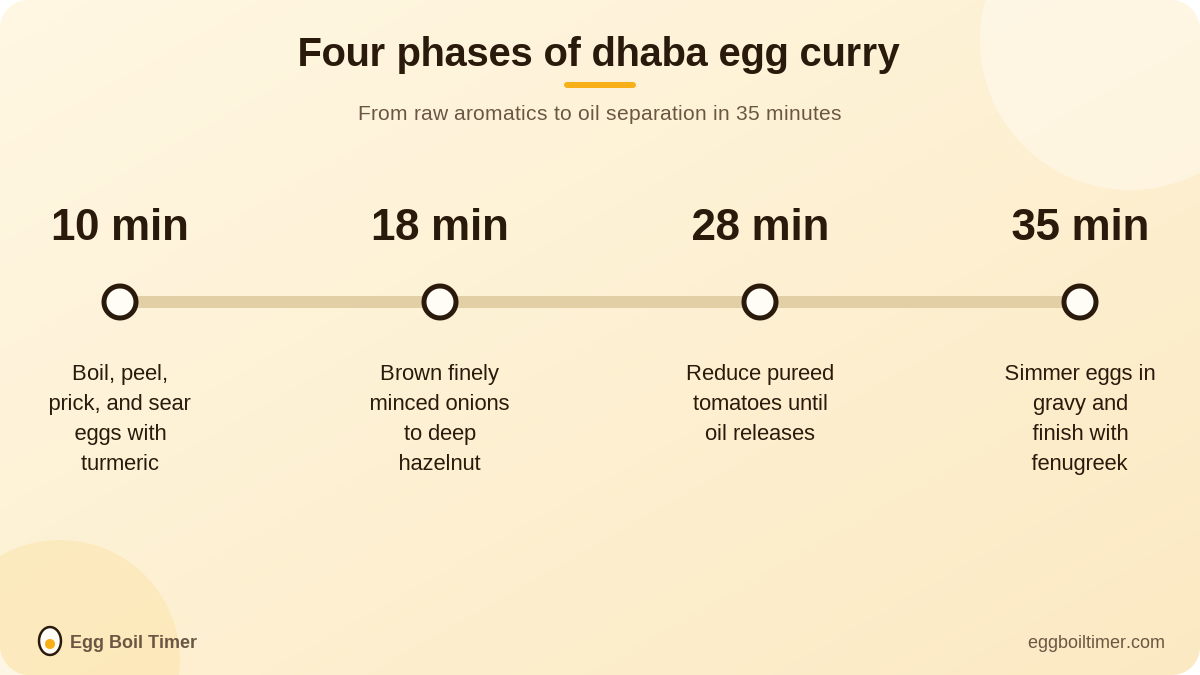
- Make three shallow vertical slits along the sides of each peeled egg, penetrating just through the white. Dust the eggs with 1/4 teaspoon turmeric and 1/4 teaspoon chili powder. Heat 1 tablespoon of oil in a wide pan over medium-high heat. Add the eggs and roll them through the hot oil for 2 minutes until the whites form blistered, golden-yellow skin. Transfer eggs to a plate.
- Add the remaining 2 tablespoons of oil to the same skillet. Once hot, lower heat to medium and drop in the cumin seeds, bay leaf, cinnamon stick, black cardamom, and green cardamoms. Fry for 30 seconds until the cumin crackles and turns fragrant.
- Stir in the chopped onions with a pinch of salt. Sauté over medium heat, stirring regularly, for 10 to 12 minutes until the onions reduce to a dark hazelnut color. Stir in the ginger-garlic paste and slit chilies, cooking for 90 seconds until the raw sulfur aroma dissipates.
- Lower the flame to low. Add the remaining turmeric, coriander powder, cumin powder, and Kashmiri chili powder. Stir briskly for 20 seconds to toast the ground spices without scorching. Pour in the pureed tomatoes and remaining salt. Raise the heat to medium and cook for 8 to 10 minutes, stirring often. The moisture will evaporate, leaving shiny oil droplets along the edges of the thick paste.
- Pour in 1.25 cups of hot water, scraping up browned fond from the bottom of the pan. Bring the gravy to a rolling boil, then lower the flame to a gentle simmer. Slip the seared eggs into the sauce. Cover the skillet with a lid and let the curry cook for 5 to 6 minutes so the spices penetrate the cuts in the whites.
- Remove the lid. Crush the kasuri methi between your palms and sprinkle it across the top, followed by the garam masala. Stir gently to avoid breaking the eggs, simmer uncovered for 1 minute, and turn off the heat. Scatter fresh cilantro over the curry before serving.
Boiling Times by Egg Size and Altitude for Curry
Curry requires an egg that withstands scoring, pan-frying, and hot simmering without disintegrating into the gravy. Soft or runny centers dissolve when pierced, turning tomato gravy cloudy. Using our Egg Boil Timer ensures whites set cleanly while keeping yolks tender rather than chalky.
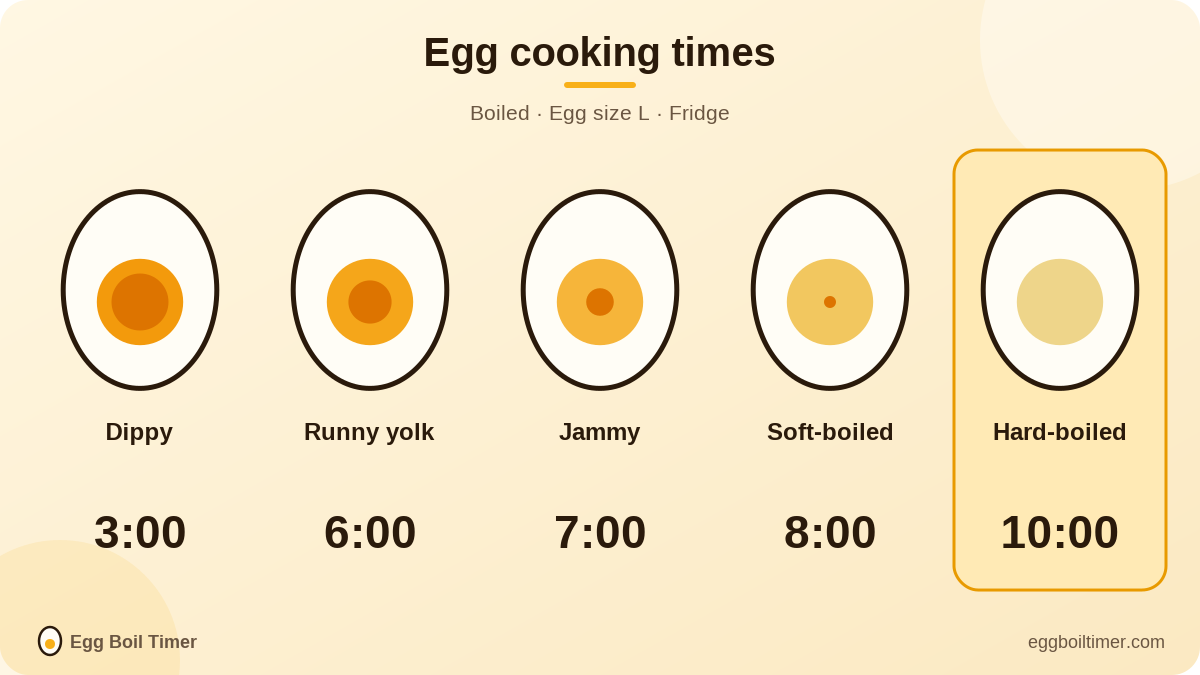
According to our timer calculation, a standard large fridge-cold egg lowered into boiling water at sea level reaches the hard-boiled stage at exactly 600 seconds (10 minutes). At this point, the core yolk temperature reaches approximately 77 °C (171 °F), firming liquid proteins without creating an unpalatable dry texture.
| Egg Size. | Weight (grams). | Sea Level (100 °C). | At 900 m Altitude (97 °C). | Target Texture. |
|---|---|---|---|---|
| Medium (M). | 50 g. | 9 min 25 sec. | 10 min 20 sec. | Firm white, creamy pale-yellow yolk. |
| Large (L). | 55 g. | 10 min 00 sec. | 11 min 00 sec. | Solid white, fully set tender core. |
| Extra Large (XL). | 60 g. | 10 min 35 sec. | 11 min 40 sec. | Dense white, completely firm yolk. |
| Jumbo (XXL). | 65 g. | 11 min 10 sec. | 12 min 20 sec. | Resilient white suitable for long stewing. |
As documented by the USDA Food Safety and Inspection Service, the boiling point of water drops roughly 1 °C for every 300 meters of elevation. At 900 meters, water boils at 97 °C. Water boils cooler at high elevations, which slows heat transfer. As calculated above, eggs require an extra minute or more of cooking time to reach a solid yolk.
Once the boiling timer ends, plunge the eggs into an ice bath for 5 minutes. Chilling shrinks the egg volume slightly inside the shell, making peeling effortless and stopping residual thermal carryover from creating a sulfurous green ring.

Why Whites Turn Rubbery and Gravies Separate Poorly
Kitchen flaws in egg curry stem from distinct thermal and chemical reactions during pan frying and masala reduction.
Rubbery, Leathery Whites
Cause: Frying the boiled eggs in oil that is too cold for too long, or boiling the eggs beyond 12 minutes before saucing.
Fix: The sear requires brisk heat for under 2 minutes. The goal is surface blistering, not deep crusting. Keep egg whites tender by using the precise 10-minute boiling window from our timer. Never let the eggs boil furiously inside the curry gravy for extended periods; 5 minutes on low simmer is sufficient.
Thin, Watery Gravy Without Body
Cause: Inadequately caramelized onions or adding unreduced cold water.
Fix: Simmer the skillet uncovered over medium heat. To quickly build velvety body without flour, crush one boiled egg yolk into two tablespoons of hot gravy in a small bowl. Whisk until smooth, then stir that emulsion back into the pan. Alternatively, blend half of the caramelized onion-tomato base before adding the eggs.
Bland or Bitter Spice Profile
Cause: Ground spices scorched on dry heat, or onions undercooked before adding tomatoes.
Fix: Ground coriander and chili burn within seconds if dropped into searing oil without liquid. Always reduce heat to low before adding dry powders, or stir the spices into a tablespoon of water to form a protective slurry before frying. If the gravy tastes flat, stir in a splash of lemon juice and a pinch of sugar. An extra pinch of toasted kasuri methi also restores brightness.
Oil Refuses to Separate
Cause: Tomato puree was not cooked down enough to expel water content.
Fix: In Indian cooking, fat separation (bhunao) indicates that vegetable juices have evaporated. The remaining spice paste then fries in the oil to mellow its raw sharpness. Keep the heat on medium and stir continuously until the paste turns dense, darkens two shades, and releases fat along the edges before pouring in water.
Regional Profiles: Kerala, Mughlai, and Bengali Adaptations
Egg curries across India use distinct regional fats, thickening agents, and spices.
To adapt the base recipe to a specific style, adjust your aromatics according to this reference matrix.
| Curry Style. | Primary Fat. | Key Aromatics. | Thickening Base. | Heat & Acidity. |
|---|---|---|---|---|
| Punjabi Dhaba. | Mustard oil or ghee. | Cumin, black cardamom, kasuri methi. | Caramelized onions & reduced tomatoes. | Medium warmth with sharp tomato tang. |
| Kerala (Mutta Roast). | Coconut oil. | Curry leaves, black pepper, fennel. | Sweated sliced onions & thick coconut milk. | High peppery heat with sweet coconut finish. |
| Mughlai. | Unsalted butter & oil. | Mace, green cardamom, white pepper. | Cashew paste, boiled onion puree, yogurt. | Mild heat with velvety creaminess. |
| Bengali (Dimer Dalna). | Mustard oil. | Panch phoron, ginger, bay leaf. | Boiled potato wedges in light broth. | Mild-medium heat with clean, aromatic gravy. |
For a South Indian version, swap mustard oil for coconut oil and add fresh curry leaves. Pour in 1/2 cup of thick coconut milk during the final two minutes of simmering. If you enjoy spiced egg dishes with international roots, explore Middle Eastern Shakshuka: Eggs Poached in Spiced Tomato Sauce or savory Japanese Ramen Eggs at Home: The 30 Seconds That Decide Everything.
Breads, Rice Pairings, and Refrigerator Storage Limits
Dhaba egg curry pairs naturally with flat breads that scoop up thick sauce. Flaky tandoori roti, butter naan, or whole-wheat lachha parathas provide textural contrast to the soft eggs. For a lighter meal, ladle the curry over warm, cumin-scented jeera rice.
According to USDA food safety standards, cooked egg dishes should be refrigerated within two hours of preparation. Store the curry in an airtight glass container at 4 °C (40 °F) or below. It keeps fresh for 3 to 4 days in the refrigerator. The flavor of the gravy deepens after 24 hours as the spices penetrate the egg whites.
Freezing whole boiled eggs in gravy is not recommended. Egg albumen contains roughly 88% water. When frozen, expanding ice crystals break the protein mesh of the white, rendering it watery and spongy upon thawing. If you wish to freeze the meal, freeze the prepared curry base separately in airtight containers for up to 2 months. When ready to eat, reheat the thawed gravy in a pan, drop in freshly boiled eggs, and simmer for five minutes before dining. For other versatile egg preparations, browse our collection of Egg Recipes: Breakfast, Lunch, and Dinner Ideas.


