A classic Strammer Max is a traditional German open-faced sandwich featuring dark rye bread, pan-seared ham, and a sunny-side-up fried egg. Prepared in under ten minutes, the dish turns a warm, runny yolk into a rich sauce that coats crisp ham and toasted bread. It serves as a quick breakfast or hearty pub meal across Central Europe.
The Cultural Background of Germany's Favorite Open-Faced Toast
Strammer Max originated as a quick pub meal in Berlin and Saxony during the early twentieth century. The colloquial name translates roughly to "strapping Max." It referenced the stamina provided by a hot plate of eggs, meat, and bread. Today, it remains an essential piece of German home cooking. You can explore similar regional egg dishes in our Egg Recipes: Breakfast, Lunch, and Dinner Ideas hub.
The sandwich relies on three distinct layers. First comes a dense slice of German dark bread. Next is a layer of pan-seared ham. Finally, a sunny-side-up fried egg crowns the stack.
The egg albumen sets entirely while the yolk stays fluid. When pierced with a fork, the warm yolk runs over the meat and bread. This creates a natural sauce that binds all the textures together. The meal satisfies hearty appetites while taking minimal effort to prepare.
Bread, Ham, and Butter Selection Standards
Because the recipe uses few components, each ingredient directly affects texture and structural stability.
- Bread selection: Dense German rye (Roggenbrot) or dark sourdough (Mischbrot) provides the required structure. Soft white sandwich bread collapses under the heat and steam of hot toppings. Slices should measure roughly 1.5 centimeters (half an inch) thick. Thin slices soften too fast once the yolk breaks.
- Ham choices: Traditional recipes favor dry-cured smoked ham like Katenschinken or Black Forest ham (Schwarzwälder Schinken). Pan-searing renders the surface fat and crisps the edges. Cooked ham (Kochschinken) offers a milder, softer alternative. Thick slices around 2 millimeters hold up best in the frying pan.
- Butter and fat: Unsalted butter adds rich flavor and helps brown the bread evenly. Clarified butter or lard (Griebenschmalz) provides a higher smoke point for frying. Butter should bubble gently without turning dark brown.
- Egg quality: Use a fresh large egg (55 to 60 grams). Fresh eggs hold a tight oval shape in the pan because the thick albumen stays concentrated around the yolk. Older eggs spread thin, creating uneven edges.
- Finishing seasonings: Fine sea salt, freshly cracked black pepper, and chopped chives enhance the rich flavors. A small pinch of ground paprika or cayenne pepper can be added for warmth.
Heat Control and Doneness Parameters for Pan-Frying
Frying an egg for Strammer Max requires controlled pan heat. The goal is a firm, opaque white and a warm, liquid yolk. High surface heat burns the bottom of the egg before the top sets. Low heat sets the protein slowly but risks drying out the edges.
The table below outlines cooking parameters for a large egg in butter based on our Egg Boil Timer cooking model:
| Doneness Level | Pan Heat | Target Time | White Texture | Yolk Texture |
|---|---|---|---|---|
| Sunny-Side Up (Default) | Medium-Low | 180 seconds (3:00) | Fully opaque, soft surface | Warm, completely liquid |
| Over-Easy | Medium-Low | 210 seconds (3:30) | Sealed top coat | Runny core |
| Over-Medium | Medium-Low | 270 seconds (4:30) | Firm structure | Jammy and thick |
| Over-Hard | Medium | 330 seconds (5:30) | Solid white | Fully set yolk |
For the authentic German style, aim for sunny-side up. Frying for three minutes on medium-low allows the bottom albumen to set without scorching. Covering the pan during the final thirty seconds traps steam to cook the surface white without filming over the yolk.
Step-by-Step Preparation Protocol
Executing Strammer Max in sequence ensures every element arrives at the plate warm and crisp.
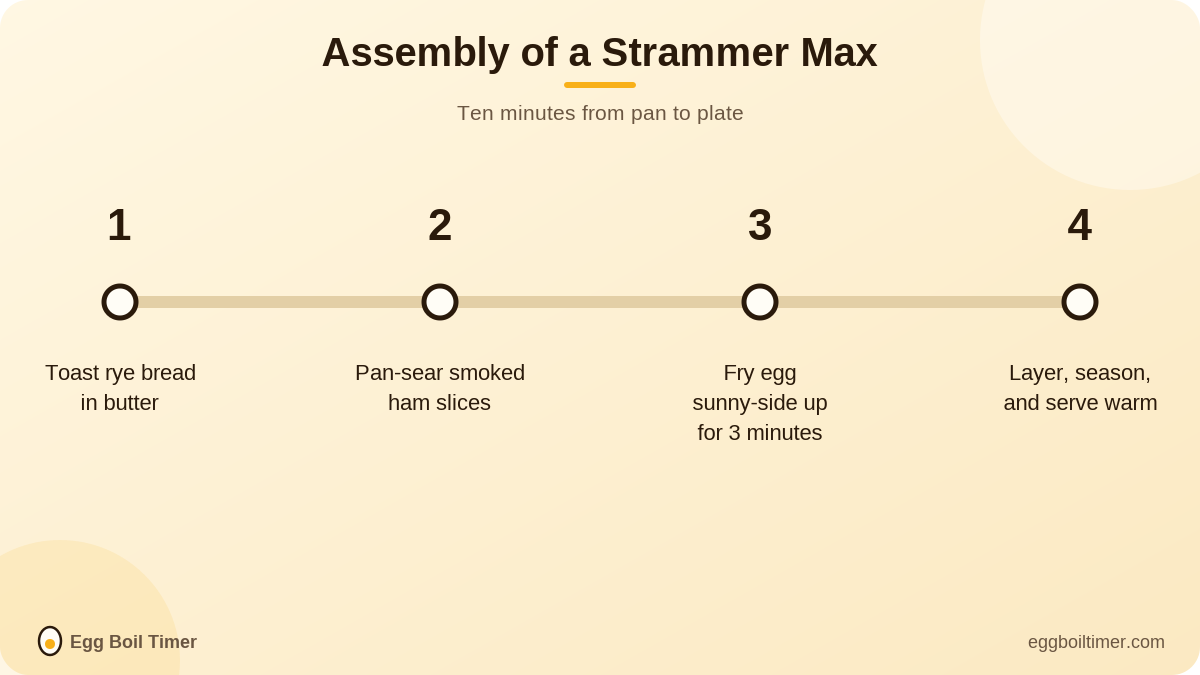
- Prepare the bread slice: Slice a dark rye loaf into a 1.5 cm thick slab. Trim any uneven crusts if necessary so the bread lays flat in the skillet.
- Toast the bread in butter: Melt 7 grams (half a tablespoon) of unsalted butter in a skillet over medium heat. Place the bread slice in the foam. Toast for two minutes per side until golden brown and firm. Transfer the crisp slice to a warm serving plate.
- Sear the ham: Add 60 grams of smoked ham slices directly to the hot pan. Fry for 45 to 60 seconds on the first side. Flip and sear for another 45 seconds until the fat turns translucent and the edges turn brown. Arrange the warm ham over the toasted rye slice.
- Fry the egg gently: Wipe the pan clean if any dark ham bits remain. Lower heat to medium-low and melt the remaining 8 grams of butter. Crack the egg into a small cup, then slide it into the bubbling butter. Fry for 3 minutes without moving the pan.
- Assemble and garnish: Lift the fried egg using a wide spatula. Slide it onto the ham-covered toast. Season the top with sea salt, black pepper, and fresh chives. Serve immediately while hot.
Regional Variations Across Germany, Austria, and Switzerland
Home cooks across Central Europe adjust the open-faced sandwich format to match local charcuterie and cheeses.
Strammer Otto: This variation replaces ham with sliced cold roast beef or pan-seared beef steak. It is popular in northern Germany and often includes a side of remoulade sauce.
Strammer Moritz: Named in pairing with the classic tale of Max and Moritz, this version uses grilled Nuremberg sausages or thick bacon slices instead of flat ham.
Broiled Cheese Style (Überbacken): Popular in southern regions, a slice of Gouda, Swiss, or Emmental cheese goes over the ham. The toast rests under an oven broiler until the cheese melts and bubbles before receiving the fried egg.
Swiss Style (Strammer Max Schweiz): Swiss variations often feature Appenzeller cheese and dry-cured mountain ham. A spoonful of sautéed onions or pickled cucumber rounds completes the plate.
Pickled Accents: Serving sliced dill pickles (Gewürzgurke) alongside the bread cuts through the rich fat of the butter and ham. Sweet pickled red cabbage or sliced radish also offers a fresh contrast.
Solving Common Pan-Frying and Assembly Problems
Even simple toast dishes present technical challenges in heat transfer and moisture control.
Soggy bread crumb: Toasting the bread slice thoroughly in butter forms a sealed, crispy barrier against moisture. Un-toasted bread absorbs water from hot steam and wet ham instantly. Similar moisture challenges appear when preparing soaked breads like French Toast: The Ratio, Bread Choice, and Pan Heat, where crumb density dictates liquid absorption.
Rubbery egg whites: Excessive pan heat coagulates albumen proteins too fast. This traps steam pockets and creates a tough texture. Lower the pan heat. Adding a tiny splash of water and covering the pan for 30 seconds steams the top gently.
Curling ham slices: Dry-cured ham shrinks when heat contracts its outer muscle fibers. Make small cut marks along the fat edge before placing slices in the pan. This allows the ham to remain flat against the hot metal for uniform searing.
Egg sticking to the pan: Cold butter added to a warm pan creates an emulsion that prevents sticking. Use a clean cast-iron pan or nonstick skillet. Ensure the butter foams completely before sliding the egg into the vessel.
For more egg frying tips and timing guidelines across different breakfast setups, consult our guide on Spanish Omelette: Classic Tortilla Española Step by Step or explore warm, spiced pan options like Shakshuka: Eggs Poached in Spiced Tomato Sauce and Huevos Rancheros Recipe: Authentic Mexican Fried Eggs.


