Trứng kho is a cornerstone of Vietnamese home cooking. This traditional dish pairs tender pork belly with eggs simmered in a dark coconut caramel sauce. Families across Vietnam prepare thịt kho trứng for daily dinners and Lunar New Year celebrations. To explore other Asian egg traditions, examine braised dishes like Indonesian Telur Pindang: Indonesian Braised Marbled Eggs Recipe and spicy Telur Balado Recipe: Indonesian Spicy Eggs Step by Step.
The braising liquid infuses peeled eggs with a deep amber color and a balance of sweet and savory notes. Achieving soft yolks and tender whites requires precise control over both boiling and braising temperatures. For broader meal planning ideas, browse our collection of Egg Recipes: Breakfast, Lunch, and Dinner Ideas or read about Silky Chinese Steamed Egg Custard: Ratio and Technique.
Boiling Eggs Before Braising: Timing by Size and Temperature
Boiling eggs prior to braising demands exact timing. Hard-boiling an egg completely before it enters the braising pot causes severe overcooking. Extended simmering in hot, salty liquid drives out moisture from the albumen. This leaves the egg white rubbery and turns the yolk dry and chalky.
Soft-boiling the egg first preserves internal moisture. The yolk stays pliable enough to absorb heat during the braise without hardening into a dry mass. Dropping fridge-cold eggs directly into boiling water creates thermal shock. This shock weakens the bond between the outer membrane and the inner shell, making peeling effortless.
Use our Egg Boil Timer to adjust boiling times for your local elevation and starting egg temperature. Higher altitudes lower the boiling point of water, requiring longer cooking times to set the albumen.
| Egg Size | Start Temp | Initial Boil Time | Initial Doneness | Final Yolk Texture |
|---|---|---|---|---|
| Medium (50 g). | Fridge (4 °C). | 6 minutes 30 seconds. | Soft yolk, set white. | Creamy and moist. |
| Large (55 g). | Fridge (4 °C). | 7 minutes. | Jammy yolk, tender white. | Fudge-like and velvety. |
| Large (55 g). | Room (20 °C). | 6 minutes. | Jammy yolk, tender white. | Smooth center. |
| Extra Large (60 g). | Fridge (4 °C). | 7 minutes 30 seconds. | Soft-jammy yolk. | Tender without chalkiness. |
| Duck Egg (70 g). | Fridge (4 °C). | 8 minutes. | Soft yolk, firm white. | Dense, rich golden core. |
Plunge peeled eggs into an ice bath immediately after boiling. Rapid cooling contracts the egg contents away from the shell wall. It also halts residual heat from cooking the yolk before the eggs enter the warm braising liquid.
Nước Màu: Building the Amber Coconut Caramel Base
Nước màu, or braising caramel sauce, provides the signature color and bittersweet depth for trứng kho. Preparing caramel requires careful heat control. Granulated sugar melts over medium-low heat, shifting from clear liquid to light amber and finally deep mahogany.
Adding coconut water at the precise moment halts caramelization before the sugar burns. Sugar reaches its caramelization stage between 160 °C and 180 °C. Beyond 190 °C, sucrose decomposes into acrid carbon compounds that ruin the sauce.
- Heat two tablespoons of sugar with one tablespoon of neutral oil in a heavy saucepan over medium-low heat.
- Allow sugar to melt undisturbed so heat spreads evenly across the pan bottom.
- Watch for the color transition from pale gold to dark reddish-brown over three to four minutes.
- Pour in 400 ml of fresh coconut water immediately when deep amber bubbles appear.
- Stand back to avoid steam splatters as cold liquid hits hot sugar.
- Stir gently over low heat until the hardened caramel dissolves into a smooth broth.
Fresh coconut water contains natural sugars that slowly concentrate during a long simmer. This reduction creates a glossy coat over the eggs and pork. Avoid canned coconut milk, because its fat separates into oily layers during prolonged braising.

Choosing Duck Eggs, Chicken Eggs, and Pork Cuts
Selecting traditional ingredients determines the texture and rich mouthfeel of trứng kho. Duck eggs are popular in Southern Vietnam. Their high fat content protects the yolk during long cooking. Their thick whites hold their shape well throughout the simmering process. Large chicken eggs offer a lighter flavor and a more delicate texture.
Quail eggs provide a bite-sized alternative that absorbs marinade rapidly. When using quail eggs, reduce the initial boiling time to two minutes and braise for no more than 20 minutes.
Pork belly (ba chỉ) provides the ideal balance of muscle, fat, and skin. Interlocking fat layers render into the sauce, keeping the meat moist while thickening the braising liquid. Lean cuts like pork loin or shoulder turn dry and fibrous under extended heat. Cut pork belly into uniform four-centimeter cubes so each piece cooks evenly alongside the eggs.

Step-by-Step Trứng Kho Recipe
This traditional recipe serves four people. Prepare ingredients ahead so you can monitor heat levels continuously during cooking.
Ingredients
- Pork belly: 600 g, cut into 4 cm cubes.
- Eggs: 6 large chicken eggs or duck eggs.
- Fresh coconut water: 500 ml.
- Fish sauce: 4 tablespoons (40 ml).
- Shallots: 3 finely minced bulbs.
- Garlic: 4 minced cloves.
- Sugar: 2 tablespoons for caramel, 1 tablespoon for marinade.
- Black pepper: 1 teaspoon coarsely ground.
- Bird eye chilies: 2 whole peppers.
Cooking Steps
- Blanch pork belly cubes in boiling salted water for three minutes. Drain and rinse under cold water to remove surface impurities.
- Marinate pork with minced shallots, garlic, two tablespoons of fish sauce, black pepper, and one tablespoon of sugar for 30 minutes.
- Boil six large eggs for seven minutes. Cool them in an ice bath and peel carefully once cold.
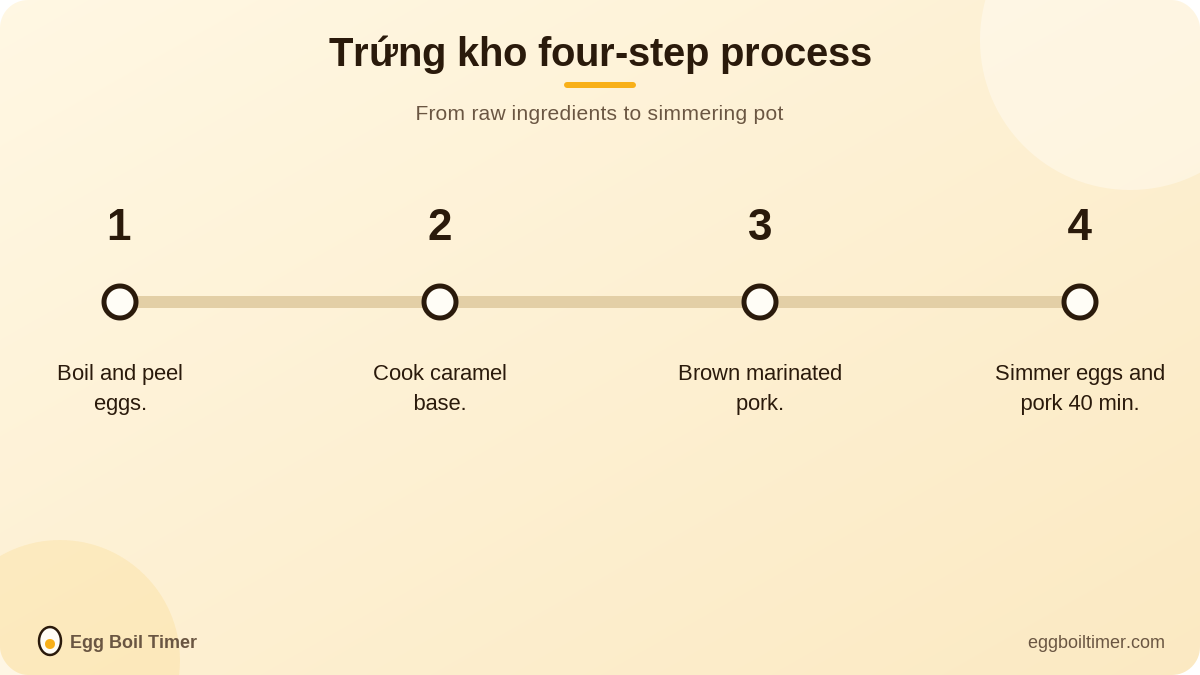
- Prepare the nước màu caramel base with sugar, oil, and coconut water in a clay pot or heavy saucepan.
- Add marinated pork belly to the hot caramel liquid. Bring to a simmer over medium heat for 10 minutes while skimming foam.
- Lower heat and add peeled eggs with whole chilies. Cover partially and simmer gently for 35 minutes until pork fat becomes translucent.
- Adjust seasoning with remaining fish sauce and serve warm.
Science of the Long Braise: How Heat Alters Proteins
Understanding heat transfer prevents common structural failures in braised eggs. Egg whites consist mostly of water and proteins like ovotransferrin and ovalbumin. Ovotransferrin sets at 62 °C, while ovalbumin coagulates at 80 °C. Heat moves gradually from the exterior liquid into the center of the egg.
Maintaining a gentle simmer below 90 °C prevents ovalbumin from contracting too tightly. Rapid boiling squeezes water out of the protein web, leaving the whites rubbery. Rendered pork fat coats the egg surface during braising. This thin fat layer slows moisture loss, preserving tenderness over low heat.
Simmering eggs for over an hour triggers a reaction between iron in the yolk and sulfur in the white. This reaction forms ferrous sulfide, creating a greenish ring around the yolk. Keeping the braise under 45 minutes prevents discoloration and keeps the pork tender.
Regional Flavors: North, Central, and South Variations
Braised egg recipes differ across Vietnam based on local ingredients and taste preferences.
| Region | Braising Liquid | Sweetness Level | Dominant Aromatics | Preferred Egg Type |
|---|---|---|---|---|
| Northern (Trứng Kho Tiêu). | Water or pork stock. | Low. | Black pepper, shallots. | Small chicken eggs. |
| Central (Thịt Kho Central). | Water, fish sauce base. | Moderate balance. | Sliced chilies, garlic. | Standard chicken eggs. |
| Southern (Thịt Kho Tàu). | Fresh coconut water. | High (sweet-savory balance). | Whole garlic cloves, chilies. | Duck eggs. |
Northern cooks prepare a saltier, darker dish seasoned with coarse black pepper. They frequently use water or pork stock instead of coconut water. Southern cooks rely on fresh coconut water. It tenderizes meat fibers while adding natural sweetness. Duck eggs remain dominant in the Mekong Delta, where large yolks withstand repeated reheating.
Diagnostic Guide for Rubbery Eggs and Burnt Sauce
Simmering eggs alongside fat and sugar requires careful monitoring. Here is how to diagnose and correct common kitchen issues:
Rubbery egg whites: Caused by overboiling during initial prep or braising at a high boil. Boil eggs for seven minutes initially and keep the braising liquid at a gentle simmer below 90 °C.
Tough pork belly: Resulting from insufficient cooking time or skipping the blanching step. Blanch meat first, then simmer covered over low heat for at least 40 minutes to convert collagen into gelatin.
Bitter sauce base: Occurs when sugar burns past dark mahogany. Discard burnt caramel and start fresh; adding extra sugar will not mask bitter carbon notes.
Oversalted broth: Caused by excessive evaporation. Add 100 ml of fresh coconut water or warm water and simmer for five minutes to restore balance.
Separated oil layer: Happens when pork fat renders too fast over high heat. Skim excess oil from the top using a wide ladle before serving.
Serving Pairings: Balancing Richness with Acidity
Trứng kho features rich fats and bold savory flavors. Serving it with contrasting side dishes enhances the overall dining experience. Steamed jasmine rice absorbs the amber caramel gravy, making it an essential accompaniment.
Pickled mustard greens (dưa chua) provide sharpness that cuts through rendered pork belly fat. Crisp cucumber slices and fresh cilantro also add refreshing crunch to the meal. For a complete feast, pair braised eggs with clear vegetable soups like mustard green soup.
Refrigeration, Food Safety, and Reheating Guidelines
Store leftover trứng kho in sealed glass containers inside the refrigerator. According to official food safety standards, braised meat and eggs remain safe at 4 °C for three to four days. Reheat gently on the stovetop over medium-low heat with two tablespoons of added water to restore sauce volume.
Do not freeze braised eggs. Freezing expands water inside cooked egg whites, creating ice crystals that rupture protein membranes. When thawed, the whites turn spongy, watery, and unpalatable.


