An egg allergy is an immune system response where the body misidentifies harmless proteins in chicken eggs as dangerous invaders. Affecting roughly 2% of young children worldwide, it ranks among the most frequent pediatric food sensitivities. Symptoms appear rapidly after eating or touching egg proteins, ranging from mild hives to severe anaphylaxis. This overview outlines biological causes, diagnostic procedures, label reading rules, culinary substitutes, and daily dietary precautions. This guide provides information for educational purposes and does not replace personal care from a board-certified allergist.
How IgE Antibodies Trigger Egg Protein Reactions
An allergic reaction begins when the immune system produces Immunoglobulin E (IgE) antibodies tailored to specific egg proteins. During initial exposure, known as sensitization, the immune system encounters these proteins and falsely identifies them as pathogens. Plasma cells generate IgE antibodies that attach to high-affinity receptors on mast cells in skin, gastrointestinal linings, and respiratory tracts.
Upon subsequent exposure, egg proteins cross-link adjacent IgE antibodies on mast cell surfaces. This binding triggers immediate degranulation, releasing preformed mediators including histamine, leukotrienes, and prostaglandins into surrounding tissues. Histamine causes rapid vascular permeability, smooth muscle constriction, and mucous secretion within minutes.
Most egg allergies emerge in infancy between 6 and 12 months of age, often coinciding with the introduction of solid foods. Modern pediatric guidelines from the American Academy of Pediatrics recommend introducing cooked egg around 6 months of age to encourage immune tolerance. Delayed introduction can increase allergy risks in infants with severe eczema or pre-existing peanut allergies. Adult-onset egg allergy occurs infrequently, sometimes following viral illnesses, gastrointestinal inflammation, or occupational exposure in bakeries.
Egg Allergy Versus Egg Intolerance: Biological Differences
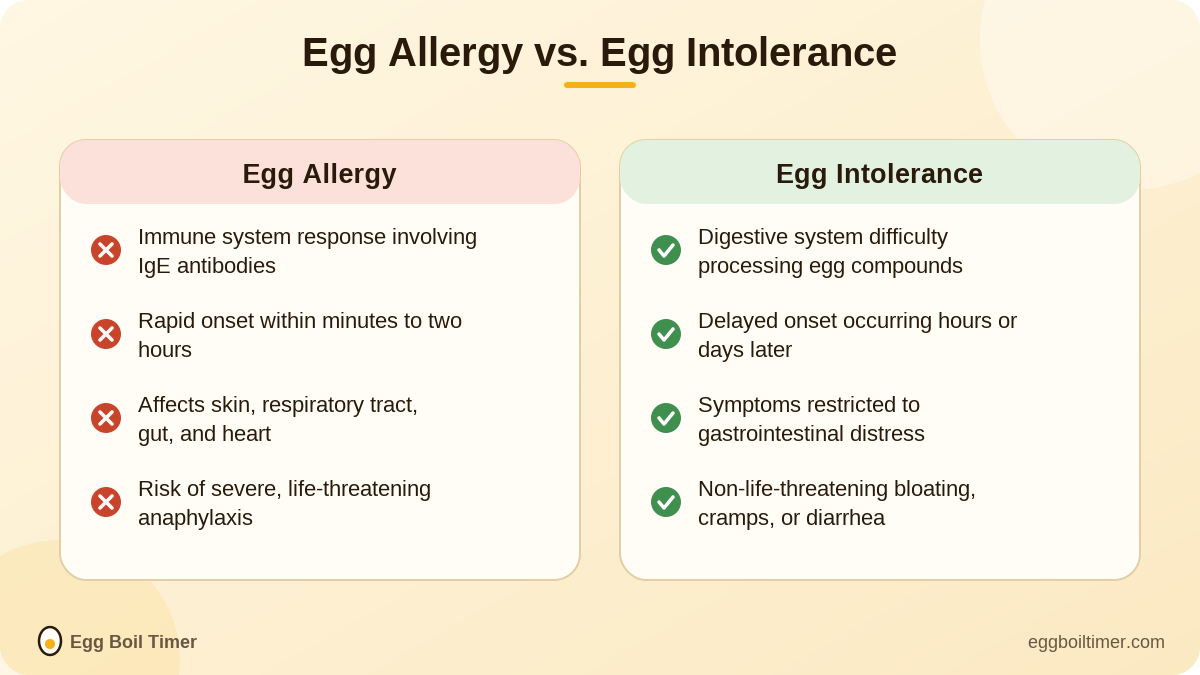
Many individuals confuse an egg allergy with an egg intolerance, yet their underlying physiological pathways differ completely. An allergy involves IgE-mediated immune pathways capable of triggering systemic reactions across multiple organ systems. An intolerance represents a non-immunologic digestive difficulty caused by enzyme deficiencies, altered gut permeability, or sensitivity to specific sulfur compounds.
A person with an intolerance may experience abdominal bloating, flatulence, or mild diarrhea hours after eating scrambled eggs without facing life-threatening systemic risks. In contrast, an IgE-mediated allergy can trigger severe airway constriction or drop blood pressure from microgram-level cross-contamination. Diagnostic testing relies on specific antibodies for allergies, whereas intolerance is typically identified through dietary elimination and rechallenge trials. The table below outlines key medical distinctions.
| Parameter | Egg Allergy | Egg Intolerance |
|---|---|---|
| System Involved | Immune system (IgE antibodies) | Digestive system (gastrointestinal tract) |
| Reaction Onset | Rapid: minutes up to 2 hours post-ingestion | Delayed: 2 to 48 hours post-ingestion |
| Primary Symptoms | Hives, facial swelling, wheezing, vomiting | Bloating, gas, stomach cramps, diarrhea |
| Severity Risk | Can cause fatal anaphylaxis | Uncomfortable, but not life-threatening |
| Trace Sensitivity | Microgram amounts trigger reactions | Small cooked amounts often tolerated |
| Diagnostic Tool | Skin prick test, IgE blood test, food challenge | Elimination diet, symptom journal |

Identifying Symptoms and Managing Anaphylaxis Risk
Symptoms of an egg reaction vary between individuals and can change unpredictably between exposures. Mild to moderate reactions primarily affect the cutaneous and gastrointestinal systems. Skin manifestations include acute urticaria (hives), erythematous rashes, and angioedema around the eyes or lips. Gastrointestinal signs comprise sudden nausea, sharp abdominal cramps, and repetitive vomiting within two hours of ingestion.
Severe reactions escalate into anaphylaxis, a systemic emergency requiring immediate clinical intervention. Anaphylaxis involves severe bronchospasm, laryngeal swelling, sudden drop in blood pressure (anaphylactic shock), and cardiac arrhythmia. Immediate administration of intramuscular epinephrine in the outer mid-thigh is the primary life-saving treatment.
Families and patients should maintain a written emergency action plan signed by their physician. Anyone prescribed an epinephrine auto-injector must carry two doses at all times, as severe reactions may require a second dose after 5 to 15 minutes if symptoms persist. Use the decision table below to determine appropriate immediate actions based on clinical signs.
| Symptom Scenario | Clinical Signs | Required Immediate Action |
|---|---|---|
| Localized Mild Skin Reaction | A few isolated hives, mild skin itching | Administer prescribed oral antihistamine and monitor closely. |
| Isolated Digestive Upset | Mild nausea or stomach discomfort without rash | Rest, track symptoms, and consult an allergist for review. |
| Respiratory Distress | Wheezing, persistent coughing, throat tightness | Inject epinephrine auto-injector immediately and call 911. |
| Cardiovascular Collapse | Dizziness, fainting, pale or blue skin tint | Inject epinephrine, lay person flat with legs raised, call 911. |
| Multi-System Reaction | Hives combined with vomiting or stomach cramps | Administer epinephrine auto-injector instantly and seek ER care. |

Protein Structure and Heat: The Science of Baked Tolerance
Egg whites contain four primary allergenic proteins that differ significantly in heat stability and molecular structure. Ovalbumin constitutes 54% of total white protein and denatures readily at 84 °C (183 °F). Ovomucoid makes up 11% of white protein and possesses a rigid, heat-stable structure reinforced by nine disulfide bonds that resist thermal breakdown and enzymatic digestion in the stomach. Ovotransferrin (12%) and lysozyme (3.5%) represent secondary allergens.
Extensive heating at 180 °C (350 °F) for 30 minutes in the presence of wheat flour causes conformational changes. The starch matrix physically traps denatured ovalbumin and ovomucoid, reducing their accessibility to IgE antibodies. Consequently, roughly 70% to 80% of egg-allergic children tolerate well-baked products like muffins and cakes without experiencing adverse symptoms.
Allergists utilize a standardized egg ladder protocol to introduce egg step by step under clinical supervision. The ladder progresses through specific steps:
- Step 1: Well-Baked Matrix: Muffins or biscuits baked at 180 °C for 30 minutes with flour.
- Step 2: Hard-Cooked Matrix: Baked cakes or waffles cooked with lighter flour ratios.
- Step 3: Baked Egg Dishes: Frittatas or quiches baked thoroughly throughout the center.
- Step 4: Well-Cooked Whole Egg: Hard-boiled eggs cooked until yolks and whites solidify completely.
- Step 5: Lightly Cooked Egg: Scrambled eggs or pancakes cooked on stovetop surfaces.
- Step 6: Raw or Loose Egg: Soft-boiled eggs, runny poached eggs, or homemade mayonnaise.
Never initiate the egg ladder at home without explicit approval from an allergist. Attempting unmonitored home trials with lightly cooked eggs can trigger severe reactions, especially before understanding safe food prep limits like those outlined for Runny Eggs for Toddlers: Why the Answer Depends on Where You Live.
Diagnostic Tests: Skin Prick, Blood Tests, and Oral Challenges
Self-diagnosis based solely on suspected food associations often leads to unnecessary dietary restriction or unsafe exposure. Board-certified allergists employ three primary objective diagnostic tools to confirm sensitivity.
- Clinical History Review: Detailing exact food preparation methods, timing of onset, symptom combination, and previous exposure records.
- Skin Prick Test (SPT): Placing concentrated liquid egg extract on the forearm or back and scratching the epidermis with a sterile lancet. A raised wheal measuring 3 millimeters or larger compared to negative control within 15 minutes indicates IgE sensitization.
- Component-Resolved Serum IgE Test: Measuring blood antibody levels specific to ovalbumin and ovomucoid. High IgE levels against ovomucoid suggest persistent allergy to both raw and baked egg, whereas low ovomucoid IgE indicates probable baked egg tolerance.
- Oral Food Challenge (OFC): The clinical gold standard for diagnosis. Under direct medical supervision in an equipped clinic, the patient consumes small, incremental doses of egg protein every 15 to 20 minutes while vital signs and skin reactions are monitored.
Label Reading and Hidden Technical Ingredient Names
Managing an egg allergy requires constant vigilance when purchasing processed foods. Under major international food labeling regulations, such as the US Food Allergen Labeling and Consumer Protection Act (FALCPA) and EU Regulation 1169/2011, manufacturers must explicitly state egg ingredients on food packages in plain language.
However, imported products, non-food items, and restaurant menus may still list technical chemical names for egg derivatives. Check labels carefully for these terms:
- Albumin or Ovalbumin: Main egg white protein used as a binder and whipping agent in baked goods and confectionery powders.
- Globulin and Ovoglobulin: Protein fractions utilized for foaming and emulsification in processed foods.
- Lysozyme (E1105): Antimicrobial enzyme extracted from egg white, used as a preservative in cheeses and cured meats.
- Vitellin and Ovovitellin: Lipoproteins derived from egg yolk used in specialty emulsions.
- Livetin: Water-soluble yolk protein known to cause bird-egg syndrome in sensitized individuals.
- Lecithin: Emulsifier that can be sourced from egg yolk, soy, or sunflower; check source labeling explicitly.
- Words with 'Ova', 'Ovo', or 'Silici albuminate': Any term incorporating these prefixes indicates egg origin.
Hidden food sources include salad dressings (Caesar, ranch), pasta sauces (carbonara), surimi imitation seafood, marshmallows, wine or beer clarified with egg whites (fining agents), ice creams, and glazed breads brushed with egg wash. Non-food products like skin care creams with Egg Hair Mask Guide: Benefits, Hair Types, and DIY Recipes components, hair conditioners, finger paints, and pet foods for animals (such as formulations discussed in Eggs for Dogs: Nutritional Benefits, Risks, and Safe Portions and Can Cats Eat Eggs? Vet Rules, Portions, and Preparation) can also contain real egg proteins.
Culinary Substitutes: How to Bake and Cook Without Eggs
Eliminating eggs from your kitchen does not require sacrificing texture or binding in home cooking. Modern plant-based substitutes effectively replace eggs based on their functional role in recipes, such as binding, moisture addition, or leavening.
- Flax Seed Gel (Flax Egg): Whisk 1 tablespoon of finely ground flaxseed meal with 3 tablespoons of warm water. Let sit for 10 minutes until a gelatinous texture forms. Ideal binding agent for muffins, quick breads, and pancakes.
- Chia Seed Gel: Mix 1 tablespoon of whole or ground chia seeds with 3 tablespoons of water. Excellent for dense baked goods like brownies and rustic breads.
- Aquafaba (Chickpea Liquid): Use 3 tablespoons of liquid drained from canned chickpeas to replace one whole egg, or 2 tablespoons for one egg white. Aquafaba whips into stiff peaks like egg whites for meringues and macaroons.
- Unsweetened Applesauce or Mashed Banana: Use 60 grams (1/4 cup) of fruit puree per egg to add moisture to cakes and sweet breads. Add 1/2 teaspoon of baking powder to prevent dense textures.
- Commercial Egg Replacers: Starch-based powders made from potato starch, tapioca flour, and leavening agents whisked with water to bind baked products without altering flavor profiles.
Cross-Contamination Hazards in Home and Restaurant Kitchens
Accidental exposures frequently result from cross-contamination in shared kitchen spaces. Microscopic egg proteins remain on surfaces, cutting boards, pans, and frying oils long after cooking completes. Hand sanitizers and dry towels remove bacteria but leave sticky egg proteins intact.
Implement strict kitchen hygiene routines to maintain safety:
- Clean all counters, cutting boards, and cooking utensils with hot water and dish detergent before preparing allergen-free meals.
- Assign dedicated cookware, toaster ovens, and waffle irons for egg-free cooking to prevent residual protein contact.
- Avoid using shared deep fryers in restaurants, as oil used to fry egg-battered foods transfers allergenic proteins to french fries or chips.
- Provide restaurant staff with a clear chef card detailing your severe allergy, ingredient limits, and surface cleaning requirements.
- Wear a high-contrast medical alert bracelet listing egg allergy and emergency contact details.
Vaccines and Egg Protein Safety Facts
Parents often express concern regarding vaccines cultured in chick embryo media. Medical health organizations, including the Centers for Disease Control and Prevention (CDC) and the American Academy of Pediatrics, have established clear safety guidelines based on extensive clinical trials.
The Measles, Mumps, and Rubella (MMR) vaccine is grown in chick embryo fibroblast cultures but contains no detectable ovalbumin protein. Clinical guidelines recommend administering the MMR vaccine without prior skin testing or special precautions. Inactivated influenza (flu) vaccines contain only trace quantities of ovalbumin (typically less than 1 microgram per dose). Large safety studies demonstrate that egg-allergic individuals of any severity level can safely receive any age-appropriate flu vaccine in standard medical clinics without special waiting periods. Cell-based and recombinant flu vaccines are completely egg-free alternatives for added peace of mind.
Pediatric Outgrowth, Oral Immunotherapy, and Reintroduction Protocols
The long-term prognosis for pediatric egg allergy is highly favorable. Research indicates approximately 50% of affected children outgrow their allergy by age 5, and up to 80% achieve complete tolerance by age 16. Allergists monitor progress through annual serum IgE tests to track declining antibody levels.
For children with persistent high IgE levels, medical centers offer Oral Immunotherapy (OIT). Under medical supervision, patients consume tiny, daily doses of egg powder, gradually increasing the dose over several months. OIT desensitizes the immune system to raise the reaction threshold, protecting against accidental exposure.
When antibody tests suggest tolerance, your physician will conduct a supervised oral food challenge. Passing the challenge safely expands dietary freedom. To learn more about general egg nutrition, culinary doneness levels, and dietary guidelines after passing reintroduction, return to Egg Boil Timer or read our detailed analysis on Eggs and Cholesterol: What Current Science Recommends.


