The date on the carton has passed and you are not sure about the last four eggs. Someone once told you to put them in water: if they sink they are fine, if they float they are bad. The first half of that is useful. The second half is not quite true.
What the test measures
An eggshell has thousands of tiny pores. Over time moisture leaves through them and air comes in, so the air pocket at the wide end of the egg grows. More air means more lift.
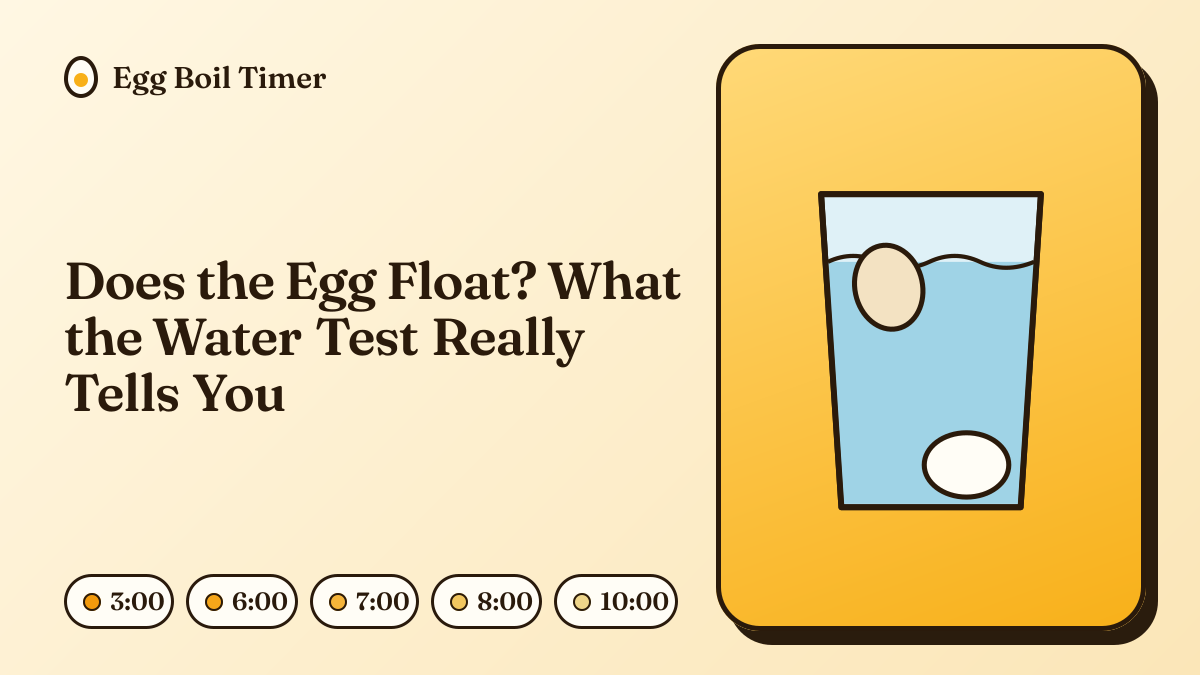
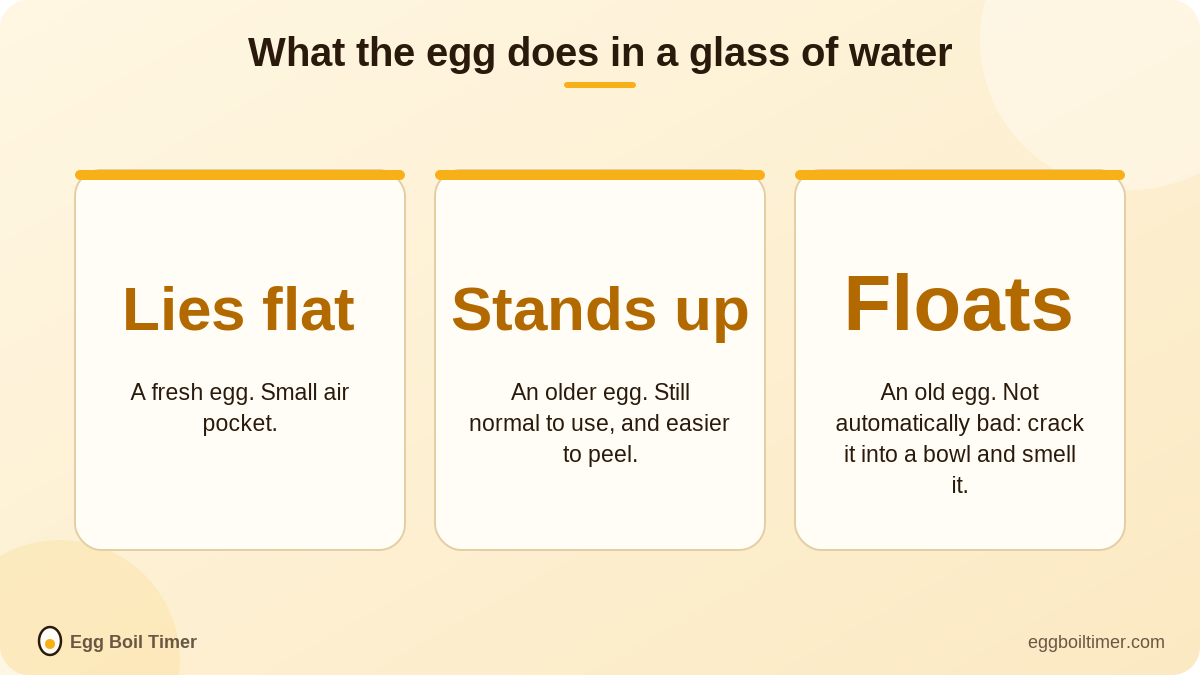
- Lies flat on the bottom: a fresh egg.
- Stands on its point but stays down: an older egg, still normal to use.
- Floats to the surface: an old egg with a large air pocket.
What it does not measure
The test tells you about age, not about safety. A floating egg is old, but it is not automatically spoiled, and an egg that sinks can still be bad. The bacteria that make people ill do not change how an egg floats.

The check that matters more
Crack the egg into a separate bowl before you use it. A spoiled egg has a strong, unpleasant smell that is hard to miss, raw or cooked. If it smells wrong or looks unusual, throw it away. Keep eggs in the fridge, and cook older eggs until both the white and the yolk are firm.
Old eggs have one advantage
Eggs that stand upright in the glass are the best ones for boiling, because older eggs peel far more easily than fresh ones; the reason is here: Fresh Eggs Are the Worst Eggs to Boil. Here Is Why. Boil them until firm with the Hard Boiled Egg Timer, or choose any other doneness on the Egg Boil Timer.