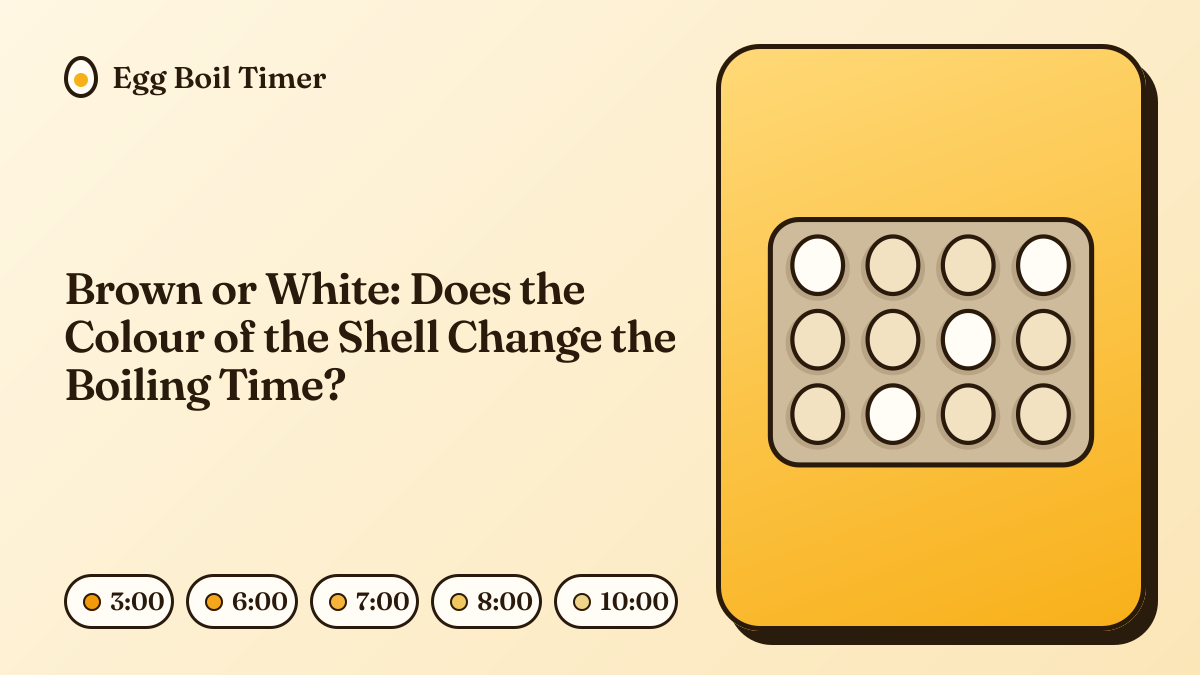
Put a brown egg and a white egg of the same size into the same pot, take them out at the same moment, and you will get the same yolk. It sounds too simple, but many people still add a little time for brown eggs because they look sturdier.
Where the colour comes from
Shell colour depends on the breed of the hen. Pigment is added to the shell in the last hours before the egg is laid; the inside of the egg is the same. The United States Department of Agriculture puts it plainly: shell colour is not related to quality, flavour, nutritive value, cooking characteristics or shell thickness.
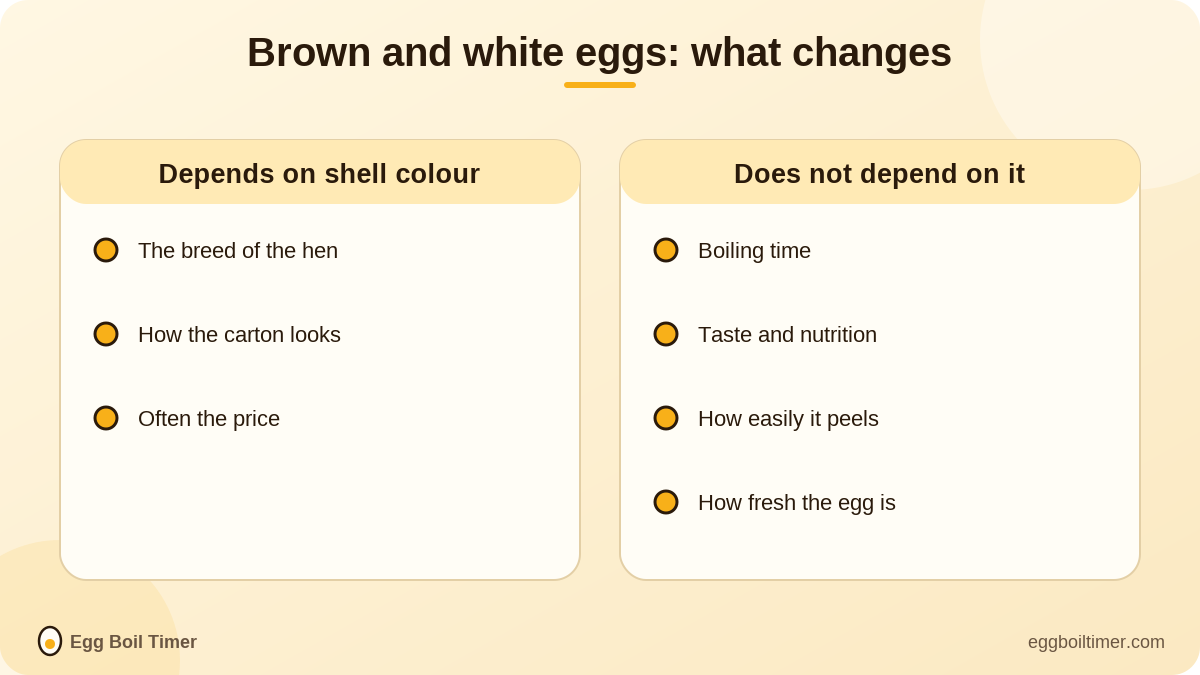
What actually changes the boiling time
- Size. A bigger egg takes longer for the heat to reach the centre. If brown eggs in your shop tend to be larger, that is the reason they seem to need more time, not their colour.
- Starting temperature. An egg straight from the fridge needs more time than one at room temperature.
Altitude matters too, if you live high up, because water boils at a lower temperature there.

And peeling?
Colour does not make an egg easier or harder to peel. Age does: very fresh eggs of any colour cling to their shells; the reason is here: Fresh Eggs Are the Worst Eggs to Boil. Here Is Why. If you are not sure how old your eggs are, a glass of water gives a rough answer: Does the Egg Float? What the Water Test Really Tells You.

So which should you buy?
Whichever you like, at the size you usually cook. Then set the timer by size and starting temperature, not by colour: the Egg Boil Timer does that for every doneness, and the Hard Boiled Egg Timer is ready for firm eggs.