Most egg recipes say “large eggs” and stop there. But the word means different things in different countries, and a few grams more or less change how long the centre of the egg needs to reach the yolk you want.
What the letters mean in Europe
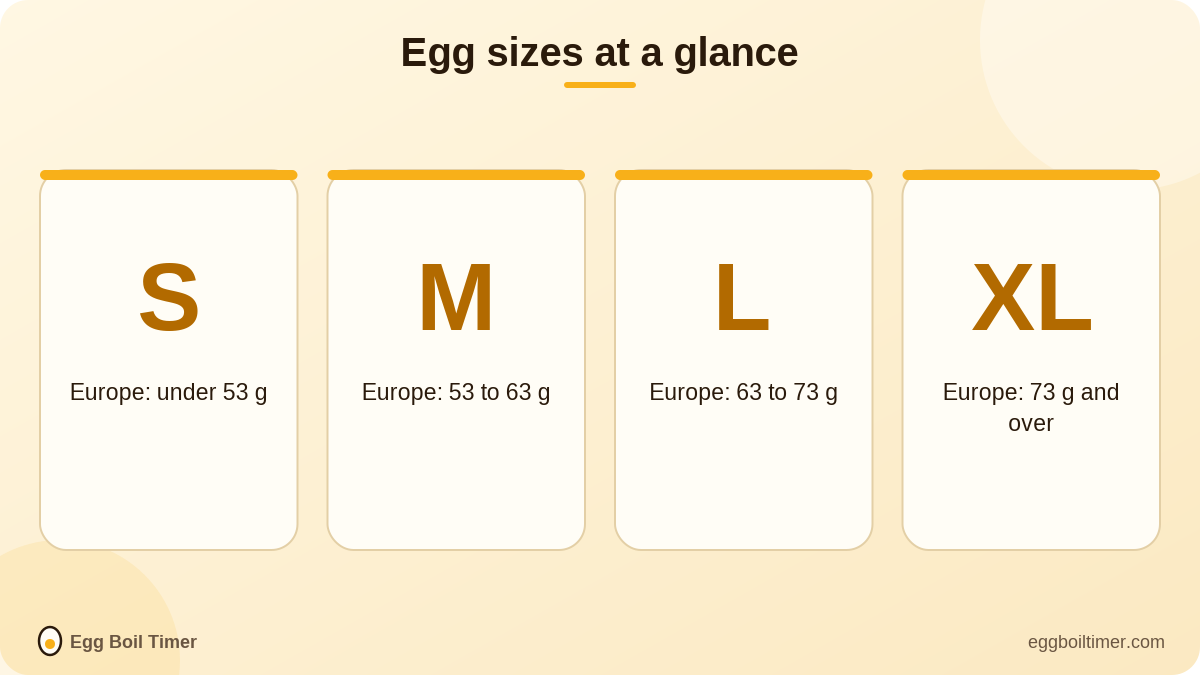
In the European Union eggs are sold by weight class, egg by egg:
- S (small): under 53 g.
- M (medium): 53 to 63 g.
- L (large): 63 to 73 g.
- XL (very large): 73 g and over.
What the names mean in the United States
American sizes are set by the weight of a dozen, so a single egg can vary a little. A dozen large eggs must weigh at least 24 ounces, which works out at about 57 g per egg; for extra large it is about 64 g, for jumbo about 71 g and for medium about 50 g. In other words, an American large egg sits between a European M and L.

Why a few grams matter
Heat travels from the shell to the centre. The bigger the egg, the further it has to go and the more egg there is to warm. In practice, a medium egg reaches the same yolk about 20 to 30 seconds earlier than a large one, and an extra-large one about the same amount later. For a firm yolk that hardly shows. For a runny or jammy yolk it is the difference between two different eggs; what each minute does is here: Six, Seven or Eight Minutes: Which Egg Person Are You?.

Mixed sizes in one pot
If the carton has eggs of different sizes, put them in together and take the smaller ones out first. For a whole batch, cook by the largest egg if you want every yolk firm.
Let the timer do the arithmetic
The Egg Boil Timer asks for the size and the starting temperature and works out the time, and the Soft Boiled Egg Timer does the same for runny and jammy yolks.