Whisking whole eggs with finely grated vegetables produces tender egg muffins blw infants can palm easily from six months of age. Unlike loose scrambles that slip through tiny fingers, these baked rounds hold their shape while yielding gently to gum pressure without posing a choking risk.
Why Baked Egg Cups Suit Self-Feeding Infants
Baby-led weaning centers on foods that an infant can grasp in a palmar reflex grip before developing a pincer grasp around nine months. Strips or rounds of firm baked egg satisfy this manual requirement cleanly. One large egg provides approximately 6.3 g protein alongside bioavailable choline, iron, and essential fatty acids that support neurodevelopment during early weaning stages.
Introducing whole eggs early and repeatedly also aligns with pediatric allergen guidelines, which recommend offering common allergens once solid foods begin. Serving baked eggs in muffin format keeps exposure consistent without the mess of runny purees. Check our basic preparation benchmarks on the Egg Boil Timer page if you also boil standalone eggs for older toddler snacks.
Formula and Step-by-Step Baking Method
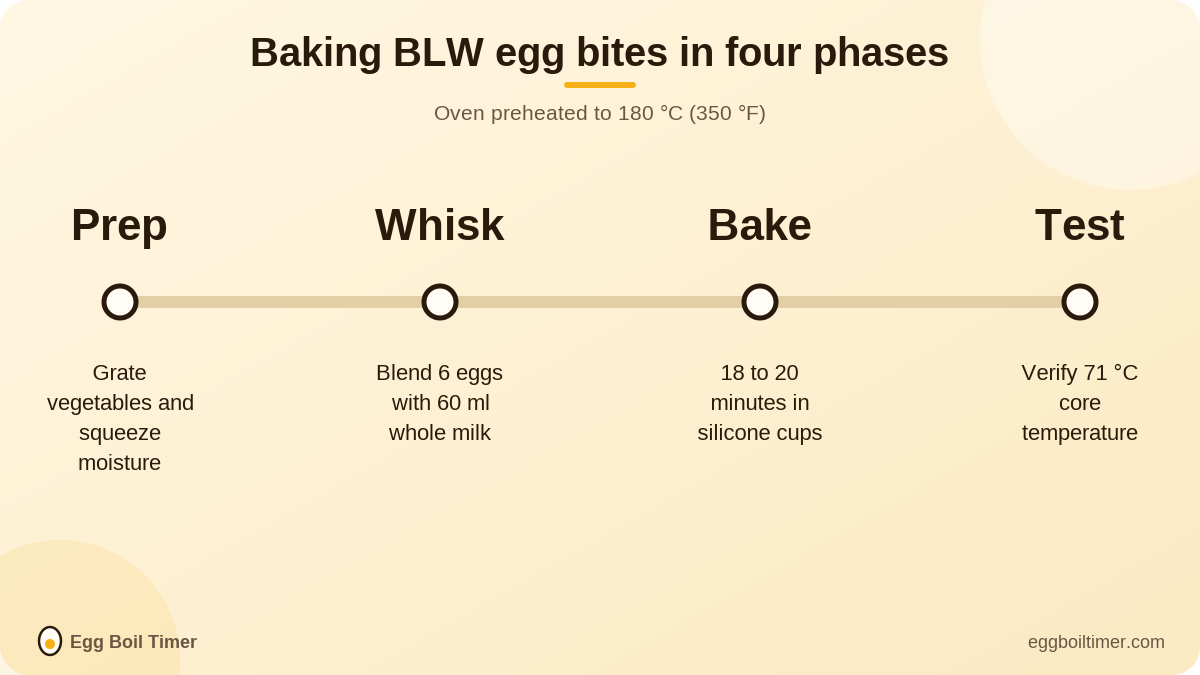
A balanced base requires 6 large eggs, 60 ml (1/4 cup) whole milk or unsweetened plant milk, and 120 g (about 1 cup) finely prepared vegetables. Silicone muffin molds eliminate sticking entirely without requiring heavy grease layers that cause infant digestions to struggle.
- Heat the oven: Bring the rack to the middle position at 180 °C (350 °F). Line a 12-cup muffin tin with silicone cups or grease thoroughly with unsalted butter or olive oil.
- Process the vegetables: Grate 60 g zucchini and 60 g peeled carrot. Press the zucchini firmly inside a clean tea towel to expel free water, which prevents hollow, watery muffins.
- Whisk the custard: Beat 6 large eggs and 60 ml milk in a bowl until the yolks and whites merge into an even yellow suspension with minimal surface foam. Skip added salt entirely for babies under twelve months.
- Distribute and fill: Divide the squeezed vegetables evenly among 8 standard muffin wells. Pour the egg mixture over the produce, filling each cup roughly three-quarters full to leave space for oven lift.
- Bake through: Transfer to the oven for 18 to 20 minutes until the surfaces rise slightly, turn light matte gold, and resist gentle finger pressure at the center.

Targeting 71 °C for Safe Infant Egg Dishes
Undercooked egg mixtures carry risks from Salmonella enteritidis, which presents severe danger to immature infant immune systems. Casseroles, quiches, and baked egg cups must reach a minimum internal temperature of 71 °C (160 °F) according to official USDA food safety standards. Visual cues alone can deceive because residual pan heat browns the exterior before center liquid solidifies.
Insert a digital instant-read thermometer directly into the geometric center of the largest muffin. If the display reads below 71 °C, return the tray to the oven for another 2 to 3 minutes. Never serve a soft or runny center to a baby under one year old. This is general food preparation information, not specialized pediatric medical advice; always speak with your pediatrician about severe dietary questions. For related baked custard dynamics, compare our guide to crustless Classic Quiche Recipe: Flaky Crust and Silky Egg Custard textures.

Balancing Milk and Moisture for Gum-Friendly Texture
Baking whole eggs without added moisture causes proteins to contract into a rubbery puck that slips past gums unmashed. Adding small measures of whole milk, formula, breastmilk, or full-fat ricotta tenderizes the crumb by interrupting dense ovotransferrin networks.
| Liquid Addition | Vegetable Treatment | Resulting Density | Best Infant Stage |
|---|---|---|---|
| None (plain eggs) | Raw chopped florets | Dense, chewy, firm | 12+ months (chewing molars active) |
| 60 ml whole milk | Grated and squeezed | Pliable, tender, spongy | 6 to 9 months (palmar grasp, gums) |
| 60 g whole milk ricotta | Steamed, pureed greens | Velvety, soft, melts easily | 6 to 8 months (initial solid exposure) |
| 45 ml water or bone broth | Finely diced sauteed onion | Light custard, slight tear | 9 to 12 months (pincer grasp development) |
Notice how dairy fat shields moisture during baking. If preparing dairy-free batches, unsweetened oat milk or pureed butternut squash fills this structural role effectively without introducing allergens before you intend to test them. Much like folding Frittata Recipe: The Italian Skillet Method and Fillings ingredients, keeping vegetable pieces smaller than a pea ensures even heat distribution.
Diagnosing Sticking, Rubberiness, and Collapse
Egg mixtures cling aggressively to hot metals, collapse when wet vegetables steam inside them, or toughen when overcooked. Identify your exact batch flaw using the physical indicators below.
- Muffins tear and stick to pan cups: The metal surface lacked non-stick protection or cooled unevenly. Switch to food-grade platinum silicone muffin cups, or let the metal pan rest for 5 minutes over a damp kitchen towel so steam releases the bottom crust.
- Spongy, tough, rubbery bite: Oven temperature exceeded 190 °C, or the tray baked past 22 minutes. Lower oven heat to 175 °C and remove muffins the moment the core reaches 71 °C.
- Watery pocket at the base: High-water produce like raw spinach, tomatoes, or grated zucchini sweated during the bake. Always saute moisture-heavy greens or squeeze grated squash in cloth before mixing.
- Muffins puff high then shrivel completely: Beating air into the eggs with an electric mixer creates unstable souffles that collapse upon cooling. Whisk gently with a hand fork just until the yolks break and combine.
Cutting Shapes, Freezing Limits, and Reheating
For early weaning between six and eight months, slice each cooled muffin vertically into two finger-wide spears. This geometry allows the infant to clutch the bottom half while gnawing on the top protrusion. Once a child masters the pincer grasp around nine to ten months, cut the muffin into thumbnail-sized cubes to encourage finger coordination.
Cool baked muffins completely on a wire rack before packing. Store them in an airtight glass container in the refrigerator for 3 to 4 days. For longer storage, freeze the muffins solid on a parchment-lined sheet before packing into freezer bags for up to three months.
To reheat from frozen, avoid microwave high-power settings that turn egg proteins leathery. Warm on 50 percent power for 45 to 60 seconds, or heat in a 160 °C (325 °F) toaster oven for 6 minutes until heated through. Confirm the core is lukewarm before serving. You can discover more batch breakfast ideas in our broader Egg Recipes: Breakfast, Lunch, and Dinner Ideas collection.
Mild Combinations for Early Palate Exploration
Infants benefit from early contact with diverse vegetable profiles, provided ingredients remain unsalted and free of honey or harsh choking threats like whole corn kernels. Pureed cooked broccoli florets with a pinch of mild ground cumin offer pleasant depth. Grated sweet potato steamed until tender pairs naturally with beaten egg and chopped fresh dill.
Finely shredded mild cheddar or pasteurized goat cheese introduces savory richness, though keep dairy portions modest to keep sodium within recommended daily thresholds for infants under one year. If you enjoy skillet baking for family meals, explore our low-salt approach to Spanish Omelette: Classic Tortilla Española Step by Step wedges as your infant transitions toward shared family dining.


