An egg wash is a liquid mixture of beaten egg and water, milk, or cream brushed onto raw dough before baking to control crust color, surface shine, and crispness. Applied to pies, puff pastry, brioche, and bread loaves, it drives Maillard browning above 140 °C (284 °F) while creating a moisture barrier and adhering surface seeds or crust decorations.
How Egg Wash Transforms Crust Color, Gloss, and Texture
Brushing raw dough with an egg coating changes how oven heat and ambient moisture interact with the surface. A standard 50 g large egg carries roughly 6.3 g of protein along with natural fats and lecithin in the yolk. When baking begins, egg whites denature around 62 °C to 65 °C (144 °F to 149 °F), while yolk proteins set between 65 °C and 70 °C (149 °F to 158 °F). This rapid protein coagulation forms a thin, continuous film over the dough skin.
As oven temperatures exceed 140 °C (284 °F), amino acids from these denatured proteins react with reducing sugars present in the flour starches. This Maillard reaction generates rich golden-brown pigments called melanoidins alongside roasted surface aromas. Yolk lipids smooth out microscopic irregularities on the dough surface so ambient light reflects evenly, creating high gloss. Meanwhile, this coagulated protein barrier prevents inner steam from escaping too quickly, protecting fruit pie crusts from turning soggy.
Egg wash also acts as a natural food adhesive. Coarse sanding sugar, poppy seeds, sesame seeds, and sea salt shed off dry dough during oven spring. The tacky protein coating binds garnishes and decorative pastry cutouts securely through the entire bake without scorching or dropping off.
Egg Wash Ratios: Combining Whole Eggs, Yolks, and Liquids
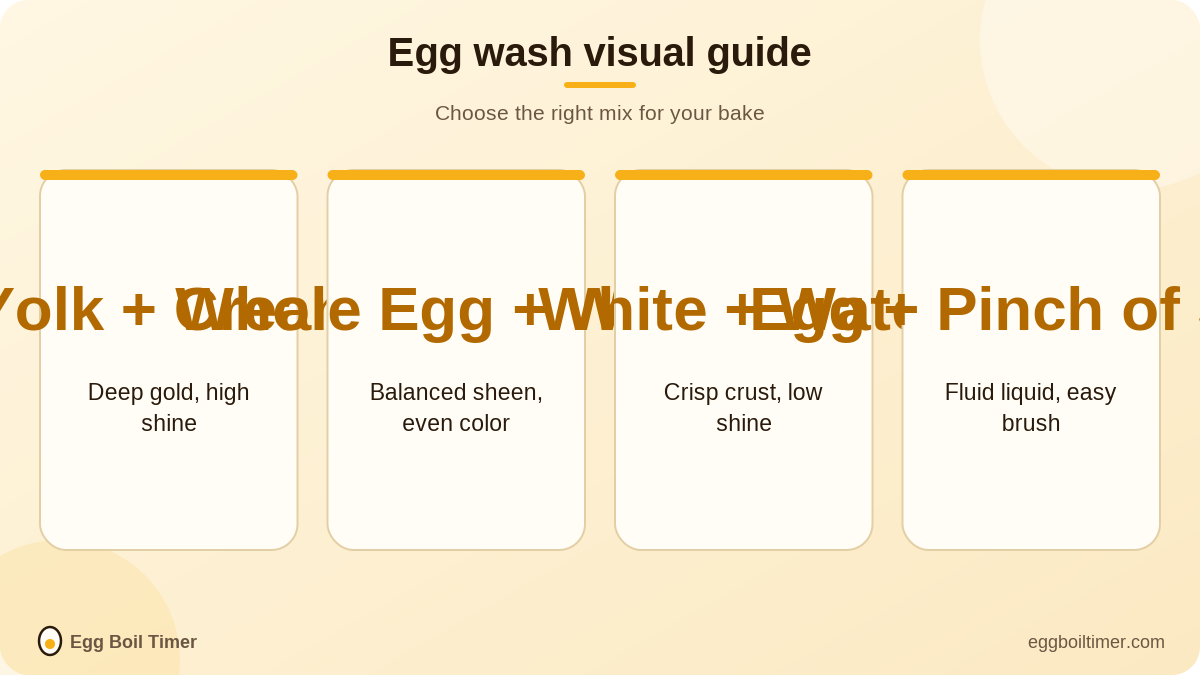
Adjusting the proportion of egg whites, yolks, and added liquid allows precise control over surface shade, sheen, and crust firmness. Undiluted beaten egg is thick and viscous, making it difficult to spread evenly without leaving heavy streak lines or dark scorched spots. Adding 1 tablespoon (15 ml) of liquid per large egg thins the protein strands so the glaze glides smoothly.
- Whole egg and water: 1 large egg whisked with 1 tablespoon water. This foundational mix provides balanced golden browning, medium shine, and a crisp yet pliable crust. Water dilutes the proteins slightly without adding extra sugars or fats.
- Whole egg and whole milk: 1 large egg whisked with 1 tablespoon whole milk. Lactose in milk caramelizes alongside egg proteins, creating a deeper bronze color and a softer, tender top crust ideal for sandwich breads and dinner rolls.
- Egg yolk and heavy cream: 1 large yolk whisked with 1 tablespoon heavy cream. Rich in fats and natural emulsifiers, this dense wash produces an intense dark mahogany shade with high gloss. It suits rich laminated doughs like croissants, Danish pastries, and brioche. If you need to divide your eggs cleanly for this mix, review our step-by-step guide on how to How to Separate Eggs Cleanly: Methods, Tools, and Storage.
- Egg white and water: 1 large egg white whisked with 1 tablespoon water. With zero fat from the yolk, pure white washes bake into a pale, low-sheen, exceptionally crisp finish. Bakers use white wash on rustic hearth loaves and to secure seeds without adding dark color. Read more about using whites in our overview of Flax Egg White Guide: Ratios, Baking Uses, and Whipping Limits.
- Whole egg and salt: 1 large egg whisked with a pinch of fine table salt. Sodium ions shift the electrical charge on protein chains, breaking down thick albumen strands into a fluid glaze without adding liquid volume.

Egg Wash Decision Guide: Matching Finishes to Baked Goods
Choosing the right wash depends on whether your recipe demands a glossy dark mahogany shine or a pale, extra-crisp shell. Sweet enriched breads benefit from dairy fats and lactose, while hearth loaves need water-based glazes that preserve crust crunch.
| Mixture | Color & Sheen | Crust Texture | Best Used For |
|---|---|---|---|
| Whole Egg + 1 tbsp Water | Golden brown, medium shine | Semi-crisp | Fruit pies, puff pastry, savory tarts |
| Egg Yolk + 1 tbsp Heavy Cream | Deep amber, high gloss | Tender | Brioche, challah, croissants, holiday breads |
| Egg Yolk + 1 tbsp Whole Milk | Golden yellow, moderate shine | Soft-crisp | Dinner rolls, sweet buns, scones |
| Egg White + 1 tbsp Water | Pale gold, matte/low sheen | Very crisp | Rustic white bread, baguettes, seed coatings |
| Whole Egg + Pinch of Salt | Rich gold, glossy | Crisp | Empanadas, galettes, hand pies |

Preparation and Application Techniques for Even Coverage
Achieving an even, professional finish requires thorough blending, proper tool selection, and careful timing. Heavy application causes excess liquid to pool around dough bases, resulting in scrambled egg spots on the baking tray.
- Whisk completely: Beat the egg and liquid in a cup for 30 to 45 seconds using a fork or small whisk. Continue until no clear albumen strands or thick yellow clumps remain visible.
- Strain through a sieve: Pass the liquid through a fine-mesh strainer into a clean dish. Straining catches chalazae cords and air bubbles that cause dark specks and uneven spots on baked pastry.
- Choose the proper brush: Soft natural bristle brushes or fine silicone brushes spread liquid gently. Avoid stiff plastic bristles that drag across soft dough or score delicate laminated pastry layers.
- Brush in thin, even coats: Dip only the bristle tips into the liquid and press off excess against the bowl rim. Apply long, gentle strokes across the dough surface right before the pan enters the oven.
- Double-wash enriched doughs: For high-gloss items like brioche or galette des rois, apply a thin coat before the final dough proof. Apply a second light layer right before baking to restore sheen lost during expansion.
Resolving Dark Spots, Blistering, and Pooled Edges
Minor prep errors or heavy brushing can affect surface appearance and texture. Here is how to diagnose and resolve common egg wash issues in home baking.
Scorched or premature browning: If crusts turn dark brown within the first 15 minutes of baking, the glaze was applied too thick or contained added sugars. Cover the bake loosely with aluminum foil to reflect direct radiant heat while letting the interior finish cooking.
Streaks and dark lines: Visible dark streaks occur when thick albumen strands pass onto the dough unstrained. Always strain egg wash through a fine sieve and avoid pressing bristles heavily into raw dough.
Pooled edges and glued seams: Liquid dripping down pastry walls cooks into rubbery yellow pools at the base. On puff pastry, pooled egg glues cut dough layers together and stops full rising. Brush from the center outward and keep liquid away from exposed cut edges.
Blistering or flaking glaze: If the shiny coat peels off after baking, the egg wash was applied over cold, sweating dough or baked in a dry oven without adequate humidity. Allow chilled dough to rest at room temperature briefly before applying wash.
Flat matte finish: Diluting egg with too much water or baking at temperatures below 140 °C (284 °F) prevents complete protein coagulation and Maillard browning, leaving the crust dull.
Storage Rules, Leftovers, and Plant-Based Alternatives
Raw egg wash carries food safety risks if left out on warm counters. Raw eggs can harbor Salmonella bacteria, so proper sanitation is essential. Store unused clean egg wash in an airtight glass container in the refrigerator at 4 °C (39 °F) or lower for up to 24 hours. Never save glaze that came into contact with a brush used on room-temperature raw dough for over 30 minutes, as warm dough and raw egg promote bacterial growth.
You can freeze clean leftover egg wash in ice cube trays. Whisk the mixture with a tiny pinch of salt or sugar to prevent protein gelation, freeze solid, and transfer the cubes to a freezer bag for up to one month. Thaw overnight in the fridge before brushing.
If you have fresh leftover wash that never touched a pastry brush, cook it into scrambled eggs or whisk it into a homemade Custard Recipe and Science: Perfecting Egg-Thickened Creams base. If you need quick hard-boiled eggs while waiting for your bread to cool, use our main timer on the Egg Boil Timer for exact heat settings.
When baking without eggs, alternative liquids provide acceptable finishes. Heavy cream or whole milk yields light browning through milk sugar caramelization. Melted butter brushed onto warm bread straight from the oven gives a soft matte sheen. For vegan baking, aquafaba (canned chickpea liquid) or maple syrup mixed with unsweetened almond milk helps seeds stick and provides subtle golden color.


