A classic menemen recipe yields silky scrambled eggs suspended in a rich sauce of softened green peppers, olive oil, and reduced fresh tomatoes. Unlike firm breakfast scrambles, authentic menemen remains saucy and spoonable, designed specifically to be scooped straight from a two-handled copper skillet with warm crusty bread.
Skillet Dynamics: Why Menemen Differs from Scrambles and Shakshuka
Menemen occupies its own territory in Mediterranean egg cooking. Diners often confuse it with North African Shakshuka: Eggs Poached in Spiced Tomato Sauce, yet the two pans yield distinct textures. Shakshuka submerges whole poached eggs into a thick, cumin-spiced sauce where yolks stay unbroken until pierced at the table. Menemen integrates the eggs directly into the vegetable base, folding the whites into the stewed tomatoes while leaving the broken yolks glossy and semi-liquid.
American and European scrambled eggs rely on constant whisking over low heat or vigorous curd production in clarified butter, producing distinct curds surrounded by moisture. Menemen treats eggs as an emulsifying custard binder. The natural acidity and pectin of reduced tomatoes keep the egg proteins from tightening into dry knots. Cooking this dish successfully means treating the vegetables as the primary liquid medium, letting egg whites set gently without drying out.
Sivri Biber, Grated Tomatoes, and the Onion Dispute
The flavor profile of menemen rests entirely on two vegetables: thin-skinned green peppers and ripe tomatoes. In Turkey, cooks reach for sivri biber (slender, mild green pointy peppers) or sweet çarlistan peppers. When Turkish markets are out of reach, mild Italian frying peppers, Cubanelle peppers, or Anaheim peppers work best. Standard green bell peppers have skins that are too tough and excess moisture that dilutes the skillet sauce.
Tomatoes demand grating rather than chopping. Dicing produces floating bits of tough skin and uneven chunks. Instead, halve vine-ripened summer tomatoes crosswise and rub the cut face against the coarse holes of a box grater directly into a bowl. The metal teeth shred the sweet tomato pulp while leaving the bitter skin flat against your palm to discard. Outside peak tomato season, canned whole San Marzano plum tomatoes crushed by hand provide far better sweetness and acidity than pale supermarket fruit.
The debate over onions in menemen divided Turkey during a famous 2018 national survey. The traditional consensus follows a practical split: breakfast menemen skips onions to highlight the pure sweetness of peppers, butter, and tomatoes. Evening menemen welcomes finely minced yellow onions, sautéed until translucent before adding the peppers, providing a savory depth that stands up to cured meats and sharp cheeses.

Setting the Curds: Heat Control and Egg Coagulation
Egg proteins react quickly to changes in temperature. Albumen begins to thicken at 62 °C and forms an opaque, tender gel at 65 °C. Egg yolk thickens at 65 °C and solidifies near 70 °C. If a skillet bubbles furiously when the eggs hit the pan, the ovalbumin in the whites seizes, squeezes out moisture, and leaves a watery puddle under rubbery curds.
To achieve the velvety texture typical of a traditional menemen, drop the stove burner to medium-low before adding the eggs. A single large egg delivers roughly 6.28 grams of complete protein, which acts as a gentle thickening agent for the simmering tomato base.
Break the whites first with a wooden spoon, swirling them through the sauce in figure-eight patterns so they cook into soft streaks. Leave the yolks largely intact until the whites turn opaque. Once the whites are set, break the yolks with two light folds. Pull the skillet off the flame immediately so residual heat finishes the eggs into a rich glaze.
Vulnerable groups such as young children, pregnant women, and older adults face higher food safety risks. For these diners, regulatory agencies like the FSIS and FDA advise cooking egg dishes thoroughly to 71 °C (160 °F) until both whites and yolks are firm. Covering the pan with a tight lid on low heat for two extra minutes traps steam, setting the curds safely without drying out the sauce.

Skillet Technique for Traditional Menemen
Preparing menemen takes ten minutes of vegetable prep and fifteen minutes at the stove. This recipe yields two generous portions served directly from the pan.
Ingredients
- 4 large eggs, kept at room temperature
- 3 medium vine-ripened tomatoes (about 450 g), halved and grated (skins discarded)
- 3 Turkish green pointy peppers (sivri biber) or 2 Cubanelle peppers, stemmed, seeded, and sliced into thin rings
- 2 tablespoons extra virgin olive oil
- 1 tablespoon unsalted butter
- 1/2 teaspoon fine sea salt
- 1/4 teaspoon freshly cracked black pepper
- 1/2 teaspoon Aleppo pepper flakes (pul biber)
- Crusty sourdough bread, pita, or Turkish simit for serving
Step-by-Step Cooking Steps
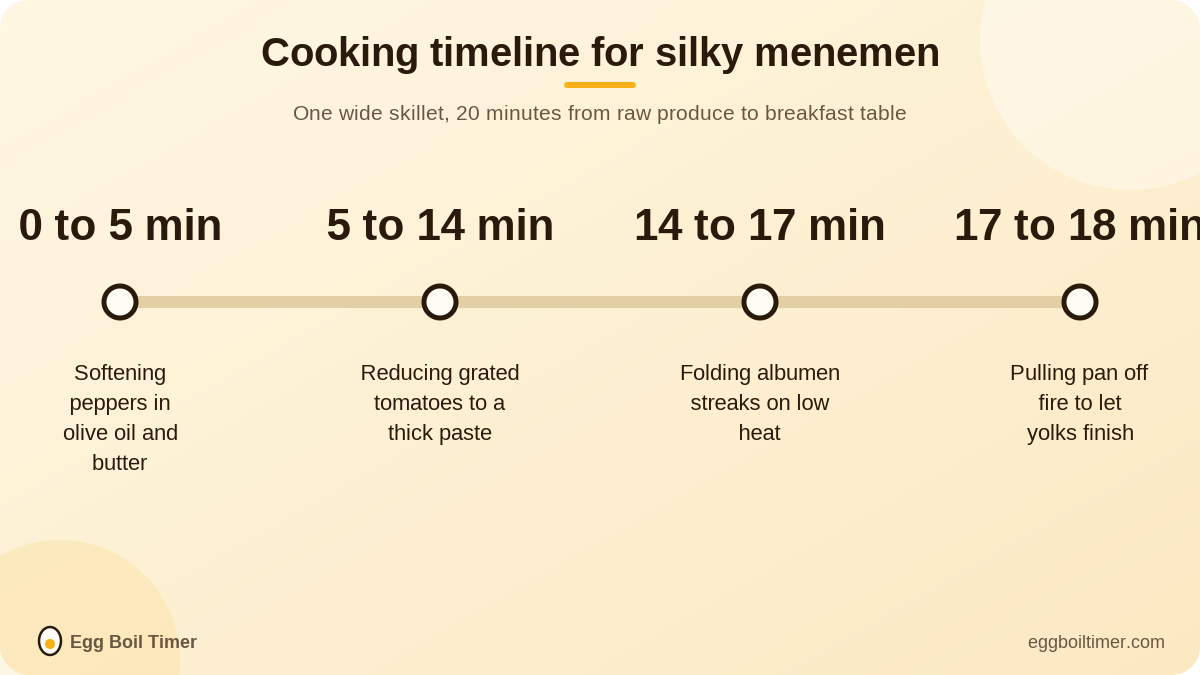
- Warm the olive oil and butter together in a 24-centimeter skillet over medium heat until the butter melts and foams gently.
- Toss in the sliced pepper rings and sauté for 4 to 5 minutes until tender and slightly blistered along the edges.
- Pour in the grated tomato pulp, sea salt, black pepper, and half of the Aleppo pepper flakes. Lower the heat to medium-low and simmer uncovered for 8 to 10 minutes. The sauce is ready when it thickens into a jammy paste with small oil droplets at the edges.
- Crack the eggs directly into the simmering sauce, keeping the yolks intact initially.
- Gently draw the clear whites through the bubbling sauce using a wooden spoon, moving in wide circles until the whites turn milky and opaque.
- Puncture the yolks and pull them through the sauce with two gentle strokes, creating marbled red-and-yellow ribbons. Take the skillet off the burner while the eggs still look glossy and wet, roughly 90 seconds after cracking them in.
- Dust the top with the remaining Aleppo pepper flakes and carry the skillet directly to the table alongside warm crusty bread.
Skillet Adjustments for Moisture, Texture, and Flavor
Cooking successful menemen depends on evaporating excess tomato water before the eggs enter the pan. The diagnostic table below pinpoints why texture or flavor falters and how to correct it.
| Visible Skillet Issue | Underlying Mechanism | Immediate Kitchen Fix |
|---|---|---|
| Watery liquid pooling around the curds | Tomatoes were not reduced long enough to evaporate free water before adding eggs. | Simmer grated tomatoes until oil beads visibly at the edges before introducing eggs. |
| Rubbery curds with a faint sulfur smell | The pan heat was too intense, causing egg proteins to contract and expel water. | Lower burner to low before adding eggs and pull skillet off heat while eggs remain glossy. |
| Flat, acidic flavor lacking sweetness | Underripe tomatoes lacking natural sugars, or insufficient salt to balance acid. | Stir 1/2 teaspoon of Turkish sweet red pepper paste (tatlı biber salçası) into the simmering tomatoes. |
| Uniform orange paste without marbled streaks | Eggs were vigorously beaten beforehand rather than folded directly into the sauce. | Crack eggs whole into sauce and draw whites through first; puncture yolks only at the very end. |
Table Accompaniments, Additions, and Reheating Limits
In Turkish homes, menemen anchors a weekend serpme kahvaltı (spread breakfast). Place the skillet in the center of the table alongside briny sheep's milk feta (beyaz peynir), aged kashar cheese (eski kaşar), cured black olives, crisp Persian cucumbers, and fresh mint leaves. A glass of strong black tea cuts through the rich butter and olive oil.
Variations exist across regional kitchens. Sautéing sliced Turkish garlic sausage (sucuk) or cured dried beef (pastırma) with the peppers infuses the sauce with spiced paprika oil. Alternatively, scatter a handful of shredded kashar or whole-milk mozzarella across the surface during the final minute of cooking, covering the pan briefly until the cheese melts into tender threads.
Menemen does not reheat well once eggs are folded into the sauce. Reheating causes delicate egg curds to contract, releasing water and turning rubbery. To save time on busy mornings, prepare the tomato and pepper base up to 4 days ahead and store it in an airtight glass container in the refrigerator. When ready to eat, warm three-quarters of a cup of the chilled base in a skillet until simmering, then fold in fresh eggs just before serving.
The technique of simmering eggs directly in reduced vegetables connects menemen to other regional skillet traditions. Compare this method with skillet cooking in Huevos Rancheros Recipe: Authentic Mexican Fried Eggs or Indian Egg Bhurji: Indian Spiced Scrambled Eggs Recipe. For oven-finished eggs, see our guide to Frittata Recipe: The Italian Skillet Method and Fillings. To check baseline egg cooking times across various yolk textures, use our interactive Egg Boil Timer timing tool.


