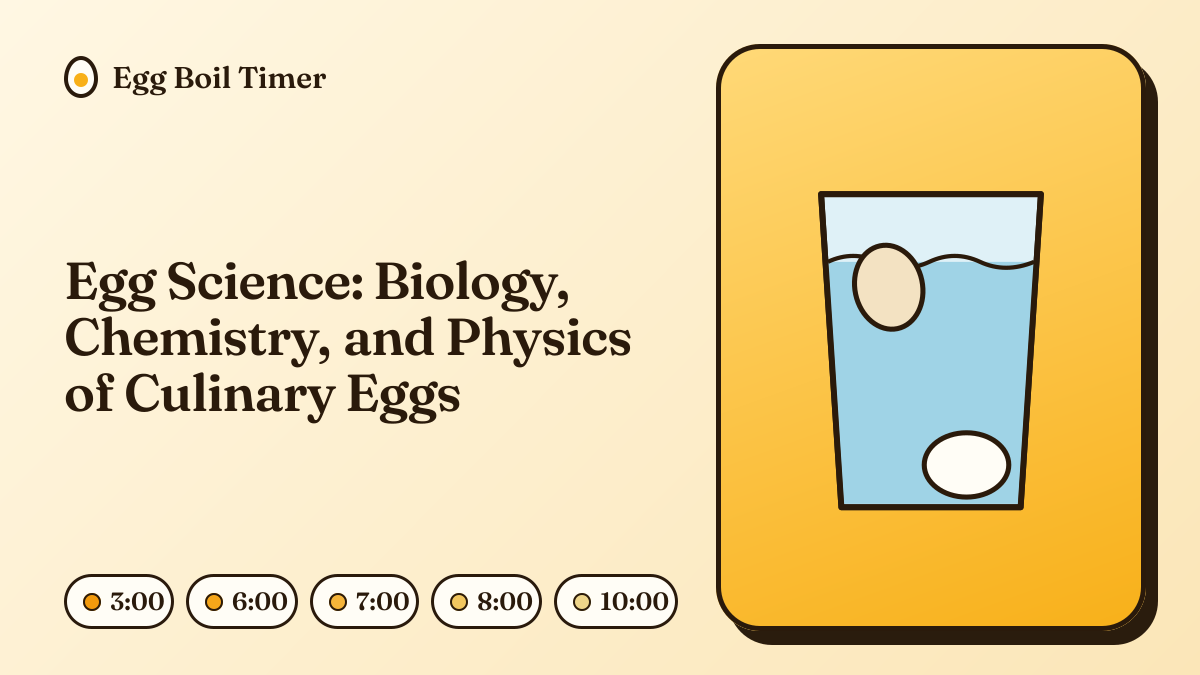
Egg science studies how thermal energy, physical force, and chemical bonds alter the proteins, lipids, and calcium shell of culinary eggs. Heat denatures albumen proteins between 60°C and 85°C, while yolk lecithin acts as an emulsifier that binds water to oil. Understanding these underlying biological and physical mechanics enables precise culinary control and explains fundamental kitchen phenomena.
Architectural layers from calcium shell to inner vitelline membrane
An egg contains seven distinct structural layers engineered for biological protection, gas exchange, and nutrient delivery. The outer shell, built primarily from calcium carbonate, features roughly 7,000 to 17,000 microscopic pores that permit carbon dioxide and moisture to escape while oxygen diffuses inward.
Directly inside the shell sit the outer and inner shell membranes, made of fibrous keratin proteins. These membranes line the albumen, which separates into thick and thin gel layers containing water and over 40 distinct proteins. At the center lies the lipid-rich yolk, protected by a thin vitelline membrane and anchored by twisted protein strands called chalazae. For a comprehensive breakdown of each layer, see our guide to What Is the Chalaza? Egg Anatomy, Freshness, and Cooking.

Avian reproductive biology and the 25-hour egg formation timeline
A laying hen takes 24 to 26 hours to form a single egg, moving it through five specialized regions of the oviduct. Hormonal shifts triggered by daylight initiate this continuous biological cycle.
Ovulation releases a yolk into the infundibulum, where fertilization can occur within a 15-minute window. Over the next three hours in the magnum, specialized cells deposit albumen around the yolk. The egg then moves to the isthmus, which weaves the inner and outer shell membranes over 75 minutes. The longest phase occurs in the shell gland, where the egg spends 20 hours absorbing water, salts, and calcifying a rigid shell composed of 94% calcium carbonate. Learn how these reproductive stages operate in our deep dive into How Are Eggs Made? Inside the Hen's 25-Hour Cycle, or examine evolutionary evidence in our analysis of the Which Came First: The Chicken or the Egg? Science Explains paradox.

Protein uncoiling temperatures across albumen and yolk lipids
Heat transforms liquid egg proteins into a solid gel through thermal denaturation and coagulation. White proteins solidify between 60°C and 85°C, whereas yolk proteins coagulate between 65°C and 70°C.
Raw egg proteins exist as tightly folded spheres suspended in water. As thermal energy enters from boiling water or pan contact, these protein bundles unfold and expose hydrophobic amino acids. The uncoiled strands then cross-link into a three-dimensional network that traps water molecules within its grid. Ovalbumin makes up 54% of white protein and requires temperatures above 80°C to set firmly, while ovotransferrin begins setting at 62°C. Rapid temperature shifts also expand air inside the air cell against the rigid shell walls. To calculate precise boiling schedules that prevent shell fractures from thermal expansion, use our Egg Boil Timer or read why pressure changes cause shell ruptures in Why Your Eggs Crack the Second They Touch the Water.
Sulfur bonds, iron reactions, and pH-driven discoloration
Overcooking hard-boiled eggs triggers a chemical reaction between sulfur in the white and iron in the yolk, forming a dark green layer of ferrous sulfide along the yolk boundary.
Sustained heating above 70°C breaks down sulfur-bearing amino acids like cysteine in the albumen, releasing hydrogen sulfide gas. Thermal gradients push this gas inward toward the cooler center of the egg. When hydrogen sulfide contacts iron ions released from yolk phosvitin proteins, they react to produce ferrous sulfide. This reaction accelerates in older eggs because lost carbon dioxide increases albumen pH from 7.6 to 9.2. Learn how to control cooking times and ice bath cooling to prevent this discoloration in our guide on the The Green Ring on Your Hard-Boiled Eggs Is Telling You Something.
Osmosis, gas permeability, and shell strength in laboratory trials
Eggshells display distinct physical properties, including high vertical compressive strength and semi-permeability to small molecules under acidic conditions.
An egg's dome structure distributes applied force evenly across its surface, allowing an intact shell to support up to 4 kg of vertical weight before fracturing. Submerging an egg in dilute acetic acid (vinegar) initiates a chemical reaction where the acid reacts with solid calcium carbonate to yield soluble calcium acetate, water, and carbon dioxide gas. Removing the mineral shell exposes the semi-permeable inner membrane, enabling osmosis experiments where water moves across the barrier based on solute concentration gradients. Step-by-step instructions for shell-dissolving and density testing experiments are detailed in our guide to Egg in Vinegar Experiment: How to Make a Bouncy Egg.
Diagnostic matrix of thermal, chemical, and mechanical egg behaviors
The table below summarizes common physical and chemical changes observed during egg cooking and laboratory testing, identifying the underlying scientific mechanism for each behavior.
| Phenomenon | Primary Scientific Driver | Physical or Chemical Result | Mitigation or Application |
|---|---|---|---|
| Watery egg white in pan | Thermal over-coagulation of ovalbumin | Syneresis (water squeezed out of protein matrix) | Cook below 85°C or reduce heating duration |
| Dark yolk ring | Ferrous sulfide synthesis at high heat | Iron-sulfur bond formation at yolk boundary | Submerge in ice water immediately after cooking |
| Raw egg floats in water | Enlarged air cell from moisture evaporation | Increased buoyancy due to reduced overall density | Indicates older egg with higher internal pH |
| Whipping foam collapse | Lipid interference at air-water boundary | Disruption of hydrophobic protein alignment | Use clean glass or copper vessels free of yolk fat |


