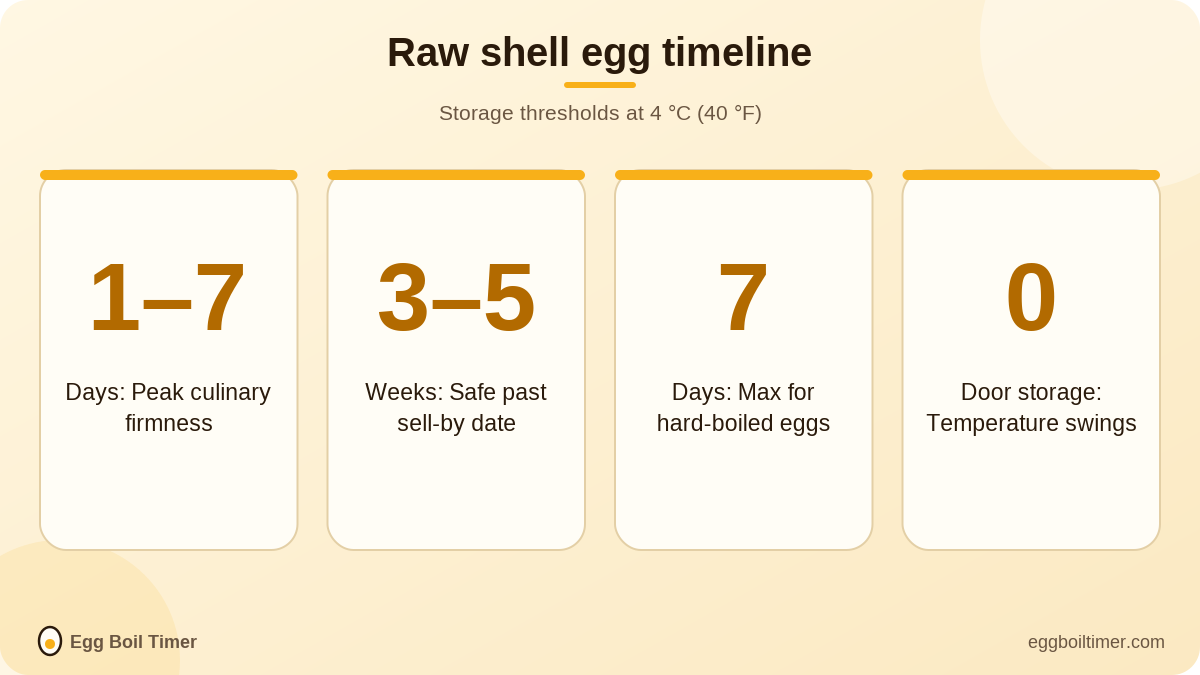
Whole raw shell eggs remain safe to eat for three to five weeks beyond the printed sell-by date when stored in a refrigerator at or below 4 °C (40 °F). Stamped dates govern retail turnover rather than microbial decay. Therefore, eggs expire only when bacterial colonization or structural breakdown compromises the interior.
Sell-By versus Expiration: Reading Carton Date Codes
Retail cartons display stamped codes that regulate inventory rotation rather than food safety thresholds. Federal packaging rules distinguish between retail logistics and spoilage boundaries. A sell-by date instructs store managers when to pull cartons from display. It ensures shoppers take home eggs with ample usable lifespan remaining.
Pack dates appear as a three-digit Julian number. Here 001 denotes January 1, while 365 marks December 31. Stored cold, eggs safely last another 3 to 5 weeks past the printed sell-by date. Best-by stamps indicate when albumen thickness begins declining from grade AA to grade A or B. They do not mark the onset of food poisoning.
Carton turnover influences how long crates sit in commercial storage before purchase. This pattern is explored in Buy Eggs Smarter: Labels, Prices, and Real Freshness. Track your storage clock from the day you refrigerate the carton at home, not the date on the lid.
Cold Storage Windows for Raw and Cooked Shells
Egg longevity depends directly on thermal stability and albumen structure. Raw intact shells protect the interior far longer than cooked eggs because native antimicrobial enzymes remain biologically active.
| Egg Format. | Refrigerator (4 °C / 40 °F). | Room Temperature (20 °C / 68 °F). | Freezer (-18 °C / 0 °F). |
|---|---|---|---|
| Raw whole eggs in shell. | 3 to 5 weeks past sell-by. | Discard after 2 hours. | Do not freeze in shell. |
| Raw egg whites. | 2 to 4 days. | Discard after 2 hours. | Up to 12 months. |
| Raw egg yolks. | 2 to 4 days (submerged in water). | Discard after 2 hours. | Up to 10 months (stabilized with salt). |
| Hard-boiled eggs (in shell or peeled). | 7 days maximum. | Discard after 2 hours. | Do not freeze (whites turn rubbery). |
Hard-boiled eggs spoil faster than raw eggs in the shell. Boiling strips away the outer protective coating and fractures microscopic mineral bonds. Ambient bacteria then penetrate the porous calcium matrix. Anyone reading How Long Do Hard-Boiled Eggs Last in the Fridge? should discard boiled stock after seven days. Keep this strict window in mind when organizing batches for A Dozen Eggs on Sunday: The Meal-Prep Habit That Feeds You All Week.

The Physical Chemistry of Egg Aging and Decay
An eggshell contains between 7,000 and 17,000 microscopic pores. These pores permit respiratory gas transfer for an embryo. From laying onwards, two physical mechanisms dictate internal quality: continuous moisture evaporation and carbon dioxide diffusion.
Carbon dioxide steadily vents through shell pores, driving albumen pH from 7.6 up to roughly 9.5. This alkaline shift degrades protein networks, thinning the viscous white into a watery pool. Meanwhile, the vitelline membrane enclosing the yolk loses tension and flattens out. Escaping water vapor creates an internal vacuum that pulls air inward, expanding the air cell at the blunt base.
True spoilage occurs when environmental bacteria cross the porous shell barrier. As bacterial colonies break down sulfur-bearing amino acids inside the egg, they synthesize hydrogen sulfide gas. This volatile compound creates the pungent rotten odor that unambiguously signals microbial spoilage.

Three Kitchen Checks: Water, Smell, and the Albumen Plate
Assessing freshness takes less than a minute at the kitchen counter using basic physical cues.
- The water submersion test: Lower the intact egg into a bowl of cold tap water. A fresh egg rests flat against the bottom because its internal air pocket is negligible. As moisture evaporates during storage, the expanding air pocket lifts the blunt end upright. An egg that tilts or stands on its tip remains safe to consume. An egg that floats on the surface has lost substantial water weight. Crack it into a dish to inspect it. Complete buoyancy guidance is detailed in Does the Egg Float? What the Water Test Really Tells You.
- The olfactory check: Crack the egg into an individual dish before adding it to a skillet or batter. A spoiled egg releases an immediate sulfury stench that is unmistakable even from several feet away. If the cracked egg smells sour, putrid, or chemical, discard it immediately. Wholesome eggs have no perceptible odor.
- Visual albumen assessment: A freshly laid egg shows two distinct layers of white. A tall, cloudy inner albumen ring cups the yolk, surrounded by a thin fluid perimeter. Cloudiness reflects dissolved carbon dioxide and signals peak freshness. Transparent, runny whites denote an older egg with relaxed protein chains. The yolk should stand round and tall. A fragile yolk that ruptures instantly upon touching the plate indicates a weakened vitelline membrane.
Matching Older Eggs to the Right Cooking Method
Older eggs belong on the plate rather than in the trash, provided they show zero signs of bacterial activity. Aging offers distinct culinary advantages across several cooking techniques.
| Diagnostic Result. | Physical Condition. | Culinary Action. |
|---|---|---|
| Sinks flat to bottom. | Tight albumen, tiny air pocket, pH 7.6–8.2. | Poaching, sunny-side frying, steamed custards. |
| Stands upright on bottom. | Slightly loose albumen, moderate air pocket. | Hard-boiling (easy peeling), scrambling, quick batters. |
| Floats at water surface. | Large air pocket, high moisture loss. | Crack into a separate bowl: use in baking if odor is clean, discard if pungent. |
| Discolored white (green, pink, iridescent). | Pseudomonas colonization. | Discard immediately. |
| Sulfur stench. | Bacterial hydrogen sulfide accumulation. | Discard immediately. |
Older eggs peel cleanly after boiling because higher internal alkalinity prevents the white from clinging to the inner membrane. Consult the timer on Egg Boil Timer to calibrate cooking duration. You can cross-reference standard weight bands in Small, Large or Jumbo: Egg Sizes Explained, and Why They Change Your Timer.
Why American Eggs Need Refrigeration While European Eggs Do Not
British and European grocery stores display egg cartons on ambient, unrefrigerated shelves. In contrast, markets across the United States, Canada, and Japan store eggs strictly inside refrigerated cabinets. This split reflects two contrasting regulatory approaches to controlling Salmonella enteritidis.
Commercial producers in the United States wash freshly collected eggs with warm sanitizing detergents. This wash removes dirt and exterior bacteria, but it also erodes the cuticle. The cuticle is a natural waxy barrier that seals porous shell canals against environmental microbes. Stripped shells allow airborne pathogens to enter unless cartons remain chilled below 7 °C (45 °F). Once cold, washed eggs must never sit at room temperature. Condensation on chilled shells creates liquid channels that pull surface contaminants inward.
European agricultural standards forbid commercial washing. European agencies preserve the native cuticle while combating Salmonella through mandatory flock vaccinations, strict farm sanitation, and unwashed distribution chains. The intact cuticle preserves the shell's biological defense, allowing unwashed European eggs to sit safely at moderate room temperatures for several weeks.
Salmonella Risks and Food Safety Safeguards
Eating spoiled eggs introduces genuine microbial hazards, primarily from Salmonella enterica or environmental bacteria that multiply over extended storage. Symptoms of foodborne infection include abdominal cramps, diarrhea, fever, nausea, and vomiting. These signs typically develop between 6 hours and 6 days following consumption. Vulnerable diners, including young children, pregnant women, older adults, and immunocompromised individuals, face serious risks from undercooked contaminated eggs. This guide provides practical kitchen information rather than formal medical advice.
Basic kitchen diligence prevents microbial contamination. Store cartons on an interior refrigerator shelf, where temperatures hold consistently between 2 °C and 4 °C (35 °F to 40 °F). Never store cartons in door trays, where constant opening exposes shells to warm ambient air surges. Cook whites and yolks until firm when serving vulnerable family members. An internal core temperature of 71 °C (160 °F) ensures complete bacterial inactivation.


