A blood spot in an egg is a harmless rupture of a microscopic vessel that occurs when the yolk leaves the hen's ovary. These specks are safe to eat once the egg is cooked and do not indicate fertilization or spoilage. While commercial candling filters most of them out, they appear in about 1% of white eggs and up to 18% of brown eggs. Finding a spot often indicates extreme freshness, as the blood eventually diffuses into the white as the egg ages.
The mechanics of ovulation: why the stigma tears
Egg formation begins in the hen's ovary, where a yolk matures inside a fluid-filled follicle. This follicle is threaded with microscopic blood vessels that supply the necessary nutrients and lipids. When the yolk reaches its full size, the follicle must split to release it into the oviduct. This split is designed to happen along a specific, vessel-free line known as the stigma.
If a tiny blood vessel happens to cross that stigma line during the split, it tears. A droplet of blood escapes and clings to the vitelline membrane (the yolk's surface) before the shell membrane and calcium carbonate seal the package. Less frequently, a rupture occurs further down the oviduct, casting the drop into the clear albumen. This is a purely anatomical accident. It occurs more frequently in younger hens starting their cycle or in older birds. Stressors like sudden changes in coop lighting or vitamin A deficiencies in the flock's feed can also increase the frequency of these tears.
Safety matrix: identifying harmless spots vs. bacterial risk
The USDA classifies eggs with blood spots as safe for consumption if they are cooked until both the white and yolk are firm. The spot is biological tissue, not a pathogen. If the appearance is unappealing, you can lift the speck out with the tip of a clean knife or the edge of an eggshell half before cooking. This is general information, not medical advice. Use the timer on our Egg Boil Timer page to ensure your eggs reach a safe internal temperature of 71 °C (160 °F).
Real danger comes from bacterial growth, which looks distinctly different from a vascular tear. If an egg white appears pink, red, or iridescent green, discard it immediately. This discoloration indicates contamination by Pseudomonas bacteria, which produce fluorescent pigments. Unlike a sharp, localized blood spot, bacterial spoilage creates a diffuse, hazy tint throughout the albumen. To minimize risk, avoid raw or undercooked yolks, especially for children under five or adults over 65. For recipes requiring raw textures, use Pasteurized Eggs: Safety, Pasteurization Temp, and Cooking Uses.
| Visual Marker | Biological Cause | Safety Status | Kitchen Action |
|---|---|---|---|
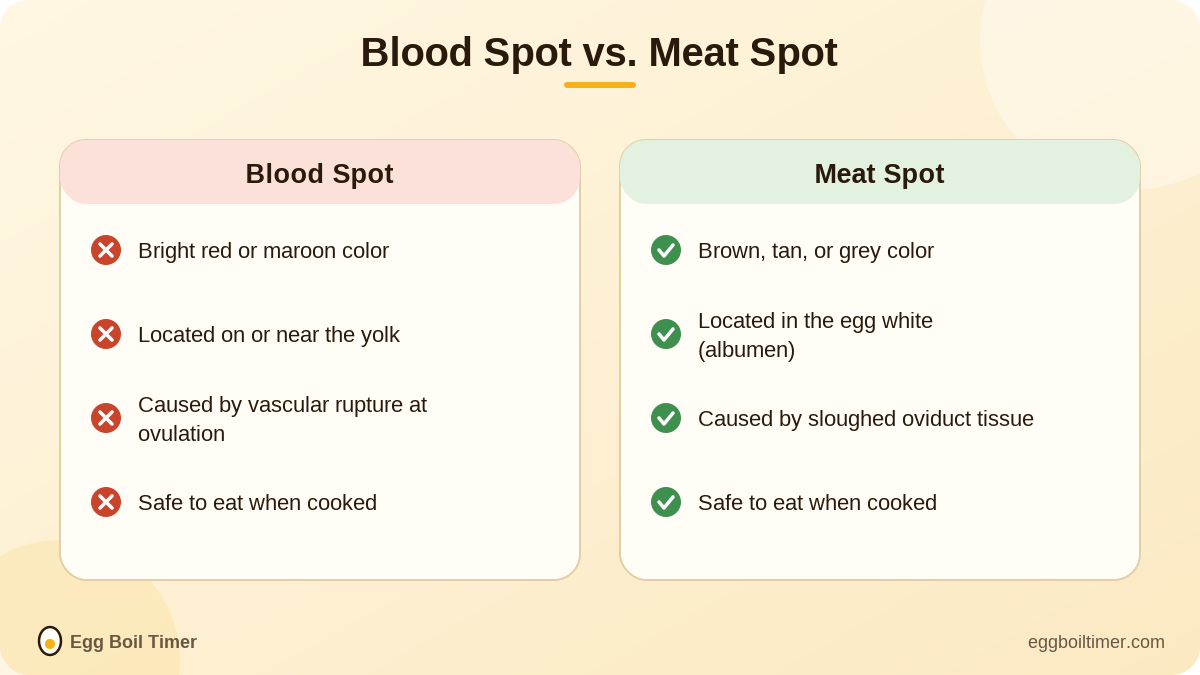
| Bright red spot on yolk | Vessel rupture at ovulation | Safe when cooked | Scrape off or cook as is |
| Brown/grey speck in white | Oxidized blood or oviduct tissue | Safe when cooked | Remove with knife or cook |
| Pink or iridescent white | Pseudomonas bacteria | Unsafe | Discard entire egg |
| White ring on yolk | Germinal disc (fertilization) | Safe when cooked | Cook normally |

The oxidation of meat spots and the fertilization myth
Home cooks often mistake blood spots for signs of a Fertilized Eggs: Identification, Safety, and Edibility Facts. In commercial poultry operations, hens live in rooster-free environments, making fertilization impossible. A fertilized egg is identified by a white, circular ring (the blastoderm) on the yolk, not a red speck. A blood spot is simply a mark of a vascular break. Even if the egg were fertilized, it would remain safe to eat if handled correctly.
You may also encounter "meat spots," which appear brown, tan, or grey. These are often blood spots that have oxidized over time, changing from bright red hemoglobin to brown methemoglobin. Alternatively, they can be tiny pieces of tissue shed from the hen's oviduct lining. Like blood spots, they are harmless protein structures that do not change how the egg behaves when whisked or baked. They are more common in Chicken Eggs: Anatomy, Formation, Nutrition, and Cooking from specific heritage breeds.

Optical barriers: why brown shells hide internal defects
Commercial facilities use automated candling (shining high-intensity light through the shell) to detect internal defects. This process is highly effective for eggs with white shells because the light passes through the pale calcium carbonate easily. Sensors can instantly flag and divert eggs with internal shadows. This is why a Where to Buy Double-Yolk Eggs and How They Affect Cooking or a blood spot is rarely seen in white-shell cartons.
Brown shells contain protoporphyrin pigments that absorb light, making internal inspection much harder. This explains why you are statistically more likely to find a spot in a carton of brown eggs than white ones. If you boil Brown or White: Does the Colour of the Shell Change the Boiling Time?, a spot might only become visible after the shell is removed. Interestingly, the presence of a bright, distinct red spot is a sign of freshness. As an egg ages, the spot absorbs moisture from the white, pales in color, and eventually diffuses into the albumen, becoming less noticeable.
The glass bowl method and kosher dietary laws
For those following Jewish dietary laws, blood spots require specific handling. Because the consumption of animal blood is prohibited, kosher practice involves cracking each egg into a clear glass bowl or ramekin to inspect it before use. If a spot is found on the yolk, many traditions require discarding the entire egg. If the spot is in the white, some authorities allow removing the spot while keeping the rest of the egg, provided the egg came from a commercial, non-fertilized source.
Even for those not following dietary laws, the glass-bowl method is a practical kitchen habit. It prevents a single spoiled or spotted egg from ruining a large bowl of batter or a hot pan. This is especially useful when working with specialty items like How to Boil Duck Eggs: Precise Times, Peeling, and Safety or heritage Types of Eggs: A Guide to Species, Production Labels, and Sizes, which are not always candled with the same rigor as commercial white eggs. It is a simple step that ensures visual quality in custards and meringues.
Prevention and flock management for home keepers
If you keep your own chickens and notice a high frequency of blood spots, several environmental factors may be the cause. Sudden loud noises or the presence of predators can startle hens during the ovulation cycle, leading to vascular ruptures. Ensuring a calm environment is the first step in reducing these occurrences. Check that your nesting boxes are comfortable and that the coop is secure from nocturnal disturbances.
Nutrition also plays a vital role. A deficiency in Vitamin A or Vitamin K can weaken the vascular walls in the hen's reproductive tract. Providing a high-quality, balanced layer feed supplemented with fresh greens can often resolve the issue within a few weeks. While you cannot eliminate blood spots entirely—as they are a natural biological occurrence—maintaining a steady light schedule and a nutrient-rich diet will minimize them. For more on shell quality and health, see our guide on Buying and Storing Eggs: Freshness, Safety, and Label Guide.


