Poaching an egg to restaurant standards takes three to five minutes in sub-boiling water held between 85 °C and 90 °C. A soft poached egg requires three minutes for a warm, liquid golden yolk wrapped in tender whites. A medium poached egg takes four minutes for a custardy, spreadable core. A firm poached egg needs five minutes for a fully set yolk suitable for salads. Use our interactive timer above to adjust for egg size, temperature, and elevation before lowering your eggs into the pot.
Every whole hen egg contains two distinct albumen fractions. The inner thick white stays wrapped tightly around the yolk, while the outer thin white turns watery over time. When dropped directly into hot water, that thin outer fraction immediately separates into ragged foamy tendrils. Straining that loose liquid away first produces a tight oval shape every time. For classic in-shell boiling methods, check our Egg Boil Timer and guide on How to Boil Eggs: Master Soft, Jammy and Hard Boiled Eggs.
Mesh Strainer Staging and Gentle Water Drop
Draining the loose outer white through a fine-mesh sieve eliminates messy water feathers without altering egg flavor. Cold eggs fresh from the refrigerator maintain firmer structural bonds than warm room-temperature eggs.
- Crack into a fine-mesh sieve: Place a small wire sieve over a bowl. Crack one cold large egg directly into the mesh. Swirl the sieve gently for ten seconds so thin watery albumen drips away, keeping only the viscous thick white around the yolk.
- Transfer into a smooth ceramic ramekin: Tip the strained egg gently from the mesh into a small cup or ramekin. Staging the egg in a rigid vessel lets you slide it into the water smoothly without puncturing the yolk.
- Establish a steady sub-boiling simmer: Heat three inches of water in a wide pan until tiny pinhead bubbles form along the bottom at 85 °C to 90 °C (185 °F to 195 °F). Lower your heat to avoid heavy surface bubbles.
- Submerge the vessel lip and release: Bring the rim of the ramekin flush with the water surface. Tip the vessel slowly so water enters first, allowing the egg to slide out horizontally rather than dropping from a height. Start the timer immediately.
- Retrieve and blot dry: When the countdown completes, scoop the poached egg using a slotted spoon. Rest the spoon base on folded paper towels for five seconds to absorb trapped exterior liquid before plating onto warm toast.
Dropping an egg from several inches above the pot breaks surface tension abruptly, shattering the albumen into scattered fragments. Sliding the egg horizontally across the water line lets the hot liquid envelop the albumen gently, setting outer proteins before the egg drifts downward.
Water Temperature Thresholds and Texture Breakdown
Cooking speed depends directly on water temperature, egg size, and barometric boiling point. Water below 80 °C fails to set albumen quickly enough, causing the white to flatten. Water above 95 °C creates violent steam bubbles that tear the egg white apart mechanically.
| Doneness Level | Total Time | Core Yolk Heat | White and Yolk Texture Profile | Recommended Serving |
|---|---|---|---|---|
| Soft Poached | 3 minutes (180 s) | 62 °C to 64 °C | Tender, pillow-soft white with a fully liquid, warm golden yolk | Eggs Benedict, buttered sourdough toast |
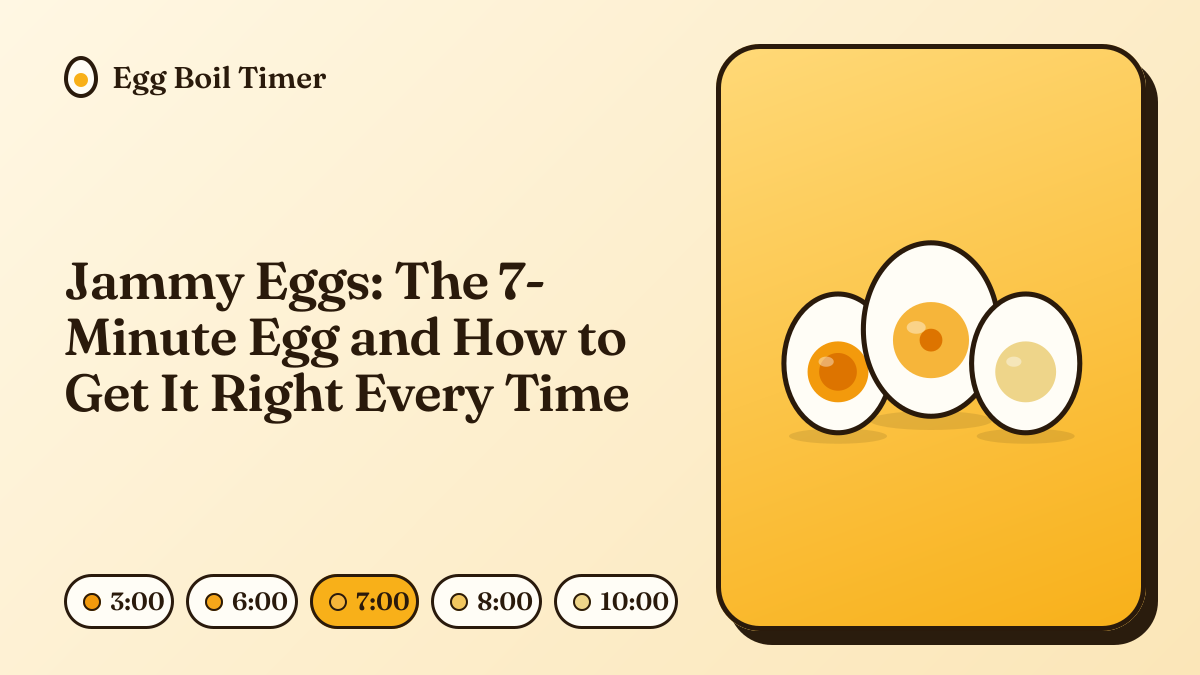
| Medium Poached | 4 minutes (240 s) | 66 °C to 68 °C | Opaque, solid white with a thick, velvety Jammy Eggs: The 7-Minute Egg and How to Get It Right Every Time center | Warm grain bowls, asparagus, avocado tartines |
| Firm Poached | 5 minutes (300 s) | 72 °C to 74 °C | Firm, set white with a solid yet creamy yolk throughout | Chilled salads, meal prep, breakfast sandwiches |
High elevations lower the boiling temperature of water, slowing protein coagulation. For every 300 meters (1,000 feet) above sea level, pure water boils roughly 1 °C cooler. Egg size also shifts the thermal curve: a medium egg reaches a soft poached center twenty seconds faster than a large egg, while a jumbo egg needs thirty seconds longer.
Vortex Swirling Versus Vinegar in Simmering Water
Two traditional home poaching techniques frequently cause frustration: adding distilled white vinegar to the water and spinning a deep whirlpool vortex with a spoon. Both methods carry distinct culinary trade-offs that home cooks should weigh before turning on the stove.
- Acidification with vinegar: Adding a spoonful of vinegar lowers water pH, speeding up albumen denaturation. While this forces proteins to bond faster and reduces wispy ribbons, acid leaves a chalky, rubbery surface and a sharp sour taste on the exterior. Straining with a fine-mesh sieve achieves clean results mechanically without flavor distortion.
- The central whirlpool vortex: Stirring a deep whirlpool pulls loose white inward around the central yolk, which works well when preparing a single egg in a deep pot. However, swirling fails when cooking multiple eggs because the current spins separate eggs into each other, tangling them into a single mass.
- Still water poaching in wide skillets: Straining multiple eggs into individual cups and slipping them gently into still, shallow water allows you to poach four eggs side by side. Convection currents circulate naturally without tangling the whites, producing uniformly rounded eggs in a single cooking cycle.
Advance Staging and Warm Reheating in Batches
Serving poached eggs to a weekend crowd makes cooking eggs to order stressful. Professional brunch kitchens solve this challenge through advance poaching. You can poach twelve eggs thirty minutes before guests arrive, hold them safely in cold water, and re-warm them in sixty seconds without hardening the runny yolks.
To batch-poach successfully, remove your soft-poached eggs from the simmering water twenty seconds early, around two minutes and forty seconds. Transfer the eggs immediately into a large bowl filled with cold water and ice cubes. The cold water stops internal cooking instantly, preserving the liquid yolk core. You can cover the chilled bowl and store the submerged eggs in the refrigerator for up to 48 hours.
When ready to plate, heat a shallow pot of clean water to 60 °C (140 °F), which is hot to the touch but well below simmering. Lower the chilled eggs into the warm bath with a slotted spoon. Leave them undisturbed for sixty seconds to warm the core through completely without overcooking the yolk.
Drain every reheated egg thoroughly before plating. A wet poached egg releases water into toasted sourdough or brioche within seconds, turning crisp bread soggy and washing away sauces. Resting the base of the slotted spoon against a clean folded kitchen towel for five seconds removes residual water pockets effortlessly, ensuring clean richness and crisp contrast.