Making homemade pickled eggs requires hard-boiling eggs until the yolks set completely, stripping the shells cleanly, and submerging them in a seasoned vinegar brine. The eggs steep in the refrigerator for at least 3 to 7 days to absorb tart brine deep into the yolk. Once cured, they keep safely chilled for up to 3 to 4 months.
Boiling and Peeling Eggs for Clean Brining
Smooth, unblemished whites are essential for pickling because ragged tears trap sediment and turn pickling liquid murky. To ensure shells release cleanly, choose cartons purchased 7 to 10 days before cooking, not eggs straight from a farm. As eggs sit in cold storage, moisture evaporates through microscopic shell pores. This loss expands the blunt-end air pocket and raises albumen pH, which weakens the bond between the inner membrane and the white.
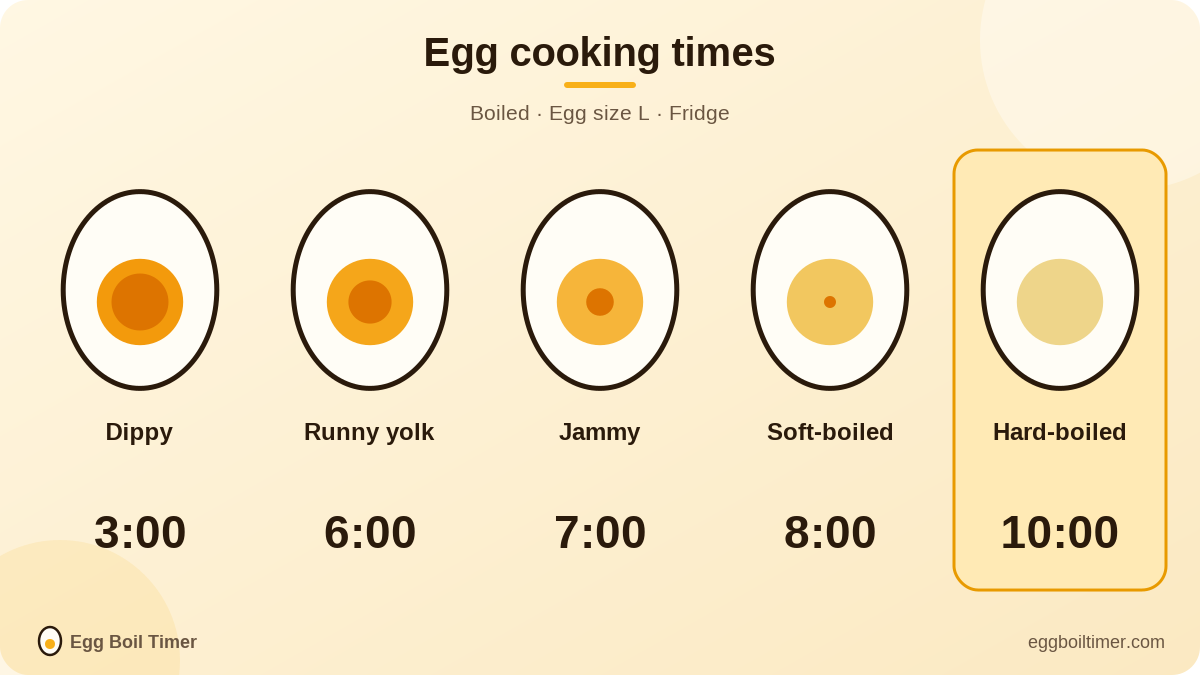
Lower cold eggs directly into boiling water. Starting eggs in cold water lets heat rise gradually. That slow warming gives outer albumen proteins time to fuse tightly against the shell wall. The timer above runs for 10 minutes at a steady boil for standard large eggs. This duration sets the yolk to a firm 77 °C. Transfer the cooked eggs immediately to a basin containing half ice and half cold water. Let them chill for 10 minutes so internal steam condenses, shrinking the egg body away from the rigid shell.
| Egg Size. | Weight (grams). | Boiling Water Time. | Ice Bath Duration. |
|---|---|---|---|
| Medium. | 50 g. | 9 min 25 sec. | 10 min. |
| Large. | 55 g. | 10 min 00 sec. | 10 min. |
| Extra Large. | 60 g. | 10 min 35 sec. | 12 min. |
Tap each chilled egg around its center against a flat counter. Roll it with light palm pressure to fracture the shell, then peel starting from the broad air pocket. Peeling inside a bowl of water helps float the clear inner membrane off the white. You can check timings for alternate sizes or high altitudes using the main Egg Boil Timer calculator.
Brine Chemistry and Four Flavor Blueprints
The preservative power of pickling liquid rests entirely on acetic acid. Your brine must contain at least equal measures of vinegar (5 percent acidity) and water. This balance ensures an equilibrium pH below 4.6 throughout both the albumen and the dense yolk core. Distilled white vinegar yields the sharpest bite and keeps colors bright. In contrast, cider vinegar introduces mellow fruit notes and an amber cast. Never dilute vinegar below a one-to-one proportion with water, or bacterial growth could compromise the jar during storage.
| Profile. | Liquid Base. | Sweetener & Salt. | Whole Spices & Aromatics. |
|---|---|---|---|
| Classic Pub. | 2 cups white vinegar, 1/2 cup water. | 2 tbsp sugar, 1 tbsp pickling salt. | 1 tbsp pickling spice, 1 bay leaf, 3 crushed garlic cloves. |
| Pennsylvania Dutch Beet. | 1 cup beet juice, 1.5 cups cider vinegar. | 1/3 cup sugar, 1 tsp kosher salt. | 4 whole cloves, 1 cinnamon stick, 1/2 sliced red onion. |
| Spicy Jalapeño. | 1.5 cups white vinegar, 1/2 cup water. | 1 tbsp sugar, 1 tbsp salt. | 2 sliced fresh jalapeños, 1 tsp black peppercorns, 1 tsp cumin seed. |
| Dill & Garlic. | 1.5 cups white vinegar, 1/2 cup water. | 1 tbsp sugar, 1 tbsp pickling salt. | 4 fresh dill sprigs, 1 tsp mustard seed, 4 crushed garlic cloves. |
Simmer the vinegar, water, sugar, and salt in a stainless steel saucepan for 5 minutes. Gentle heat dissolves the crystals and allows whole spices to release their aromatic oils into the liquid.
Packing the Jar and Submerging the Eggs
Wash a 1-quart (1-liter) wide-mouth glass jar in hot soapy water and rinse it clean. A standard quart container accommodates 8 to 10 large eggs without crushing them.
- Scatter sliced onions, garlic cloves, or fresh herbs across the base of the jar.
- Stack the peeled eggs inside, distributing remaining spices between layers so seasonings disperse evenly.
- Pour the hot brine and steeped spices directly over the eggs, leaving 1/2 inch of headspace below the rim.
- Check that all eggs sit beneath the surface. If any float, weigh them down with a folded bay leaf or a clean glass fermentation weight.
- Wipe the rim with a clean cloth and seal fingertip-tight. Let the jar cool on the counter for 30 minutes before chilling.
- Move the sealed jar directly into the refrigerator.
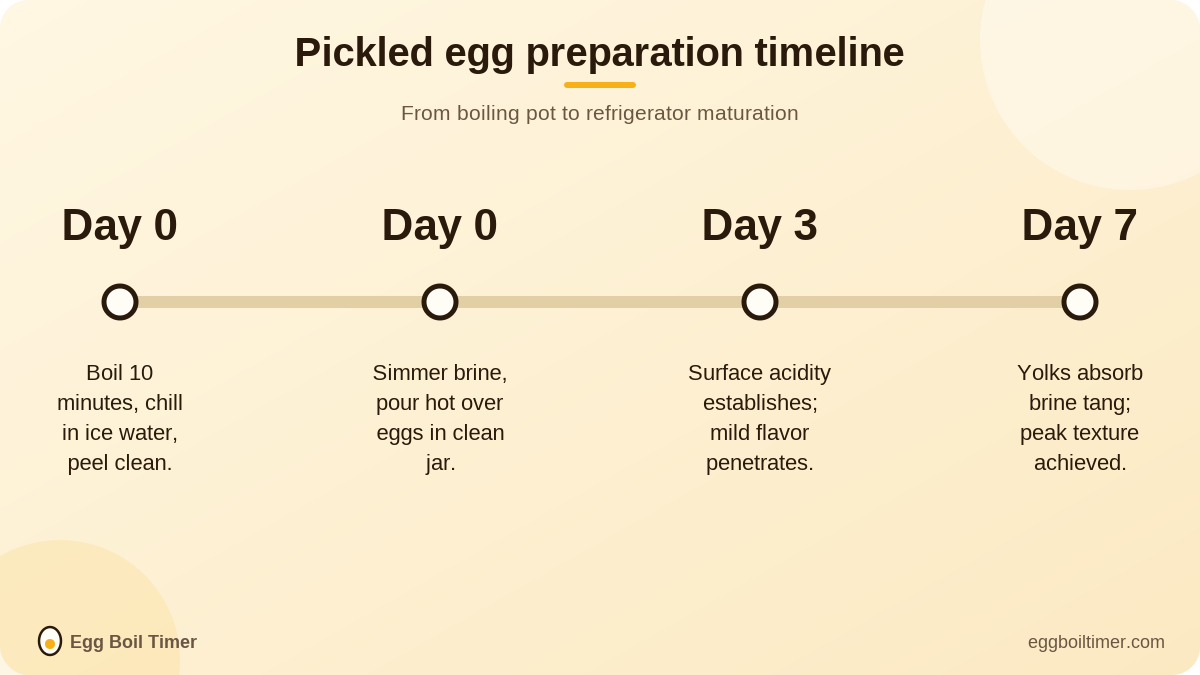
Resist sampling the eggs during the first few days. Surface acidity settles in within 24 hours. Full vinegar migration into the yolk takes 3 to 4 days for medium eggs and 7 days for large eggs. Similar slow marination principles govern soy-steeped Ramen Eggs at Home: The 30 Seconds That Decide Everything and spiced Chinese Tea Eggs: The Marbled Snack That Is Mostly Waiting.

Troubleshooting Brine Clarity and Texture Faults
Minor variations in cooking heat or salt selection quickly show up in the jar once vinegar begins denaturing egg proteins.
| Observed Issue. | Physical Cause. | Prevention or Correction. |
|---|---|---|
| Rubbery, tough whites. | Initial boiling exceeded 11 minutes or brine acidity sits far above 5 percent. | Boil eggs precisely 10 minutes; balance pure vinegar with permitted water ratios. |
| Cloudy or hazy brine. | Anti-caking additives in table salt dissolved, or fine shell debris remained. | Use additive-free pickling salt; rinse peeled eggs in cold water before packing. |
| Chalky, pale yolk rim. | Iron and sulfur reacted during extended hot cooking before chilling. | Drop cooked eggs into an ice bath the second the 10-minute timer sounds. |
| Bland center with sour shell. | Jar opened before acid diffused inward through the dense albumen. | Let large eggs steep undisturbed for a full 7 days before serving. |
Refrigerator Rules and Shelf Life
Pickled eggs require steady refrigeration at or below 4 °C (40 °F). Never can pickled eggs with a boiling water bath or store them at room temperature. The dense protein bulk of a whole egg slows heat transfer. Home canning equipment cannot heat the center yolk fast enough to destroy Clostridium botulinum spores without turning the white into sulfurous mush. Unrefrigerated pickled eggs have caused verified outbreaks of botulism.
When held continuously under refrigeration in sealed glass jars, pickled eggs retain firm texture and clean acidity for 3 to 4 months. Use clean stainless steel tongs or a slotted spoon to lift eggs from the liquid. Bare hands introduce ambient mold spores that contaminate the brine. Discard the jar immediately if you detect cloudy surface film, visible mold spots, yeasty odor, or gas fizzing upon opening the seal.
Ways to Serve Pickled Eggs
Beyond slicing them straight from the jar with coarse black pepper, pickled eggs bring acidity to rich dishes. Quarter them over bitter winter greens. You can also dice them into potato salad, where sharp vinegar cuts rich dressings made with Homemade Mayonnaise: Ratios, Oil Chemistry, and Technique.
Slice the eggs lengthwise and scoop the yolks into a bowl. Mash them with Dijon mustard, olive oil, and smoked paprika for tangy Classic Deviled Eggs Recipe: Creamy Filling and Easy Peeling. Sliced beet-pickled eggs with magenta rings also add striking color to cheese boards, sharp cheddar, and seeded rye bread. For more ideas built around boiled eggs, browse our directory of Egg Recipes: Breakfast, Lunch, and Dinner Ideas. They also make great packed lunches alongside Twelve Eggs, Five Lunches: A Week of Egg Salad That Does Not Get Boring.


