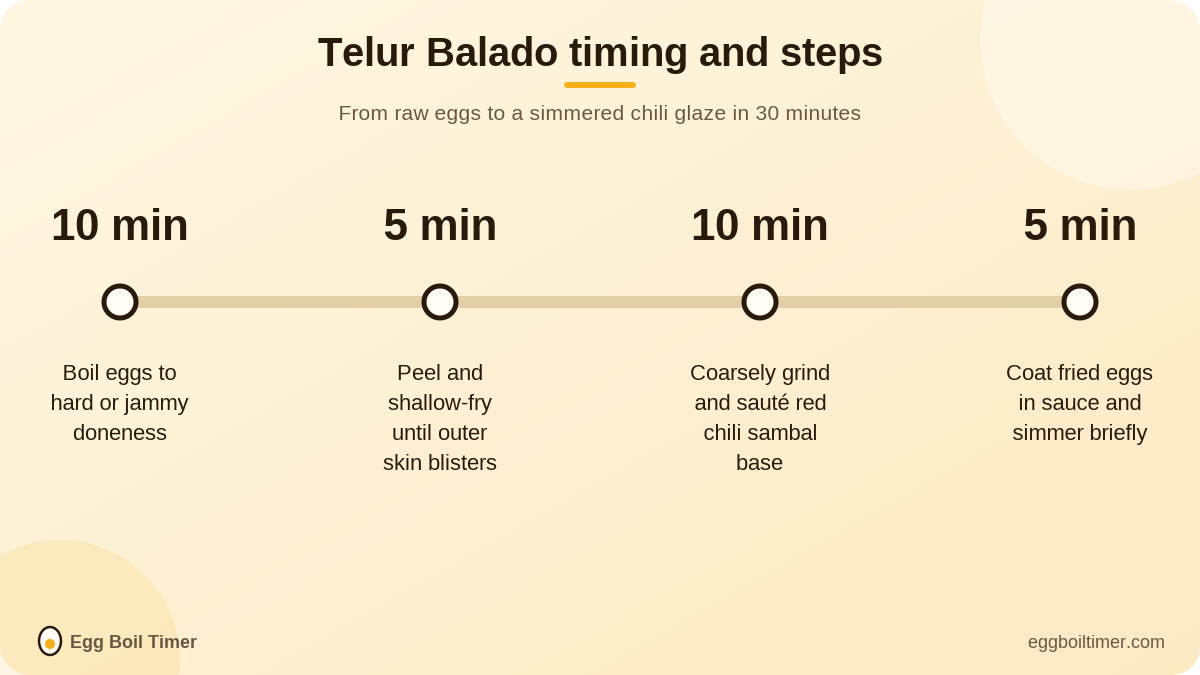
A traditional Telur Balado recipe pairs boiled eggs with a fragrant Minangkabau chili paste known as sambal balado. After peeling, the eggs are shallow-fried to form a golden, blistered outer skin before simmering in a coarsely ground sauce of curly red chilies, shallots, garlic, tomatoes, and kaffir lime leaves. The entire dish takes about 30 minutes from start to finish.
Telur Balado: The Spicy Indonesian Egg Dish Explained
Telur Balado originates from the Minangkabau culinary tradition of West Sumatra, Indonesia. In the Minang dialect, balado means "with chili," referring to a technique of cooking fried proteins or vegetables in a pounded red chili paste. While beef jerky (dendeng balado) and chicken are popular variations, eggs remain the daily staple across Indonesian homes and warung eateries. A single large egg provides about 6.3 g of protein, making this dish a nutrient-dense main course when paired with steamed white rice.
Unlike smooth pastes found in Western sauces, authentic balado features a rustic, textured grind. The aromatics are pounded coarsely rather than puréed into a liquid. Tomatoes provide refreshing acidity and natural sweetness to balance the heat of curly red chilies, while tear-scented kaffir lime leaves lend a floral lift. Cooked in oil over medium heat, the paste transforms as moisture evaporates and red chili oil separates around the edges of the pan.
Balado differs from everyday Indonesian sambals in purpose. Standard sambals serve as raw or cooked table condiments, whereas balado functions as a primary cooking glaze. If you enjoy exploring regional Asian egg preparations like Egg Recipes: Breakfast, Lunch, and Dinner Ideas or tea-infused Telur Pindang: Indonesian Braised Marbled Eggs Recipe, Telur Balado offers a distinct balance of heat, citrus, and savory depth.
Crafting the Balado Paste: Ingredients and Aromatic Balance
Selecting the right fresh aromatics creates a sauce that is bright red, moderately spicy, and glossy with aromatic oil.
- Curly red chilies (cabe merah keriting): 10 to 12 peppers (about 100 g). These supply vibrant color and moderate heat without overwhelming the palate.
- Bird's eye chilies (cabe rawit): 3 to 6 peppers. Optional, added to raise the heat to traditional Sumatran levels.
- Red shallots: 8 medium bulbs (about 80 g). Shallots lend a sweeter, more subtle base than standard yellow onions.
- Garlic: 3 cloves. Garlic anchors the savory background without dominating the fresh chili flavor.
- Ripe red tomatoes: 2 medium tomatoes (about 150 g), deseeded and chopped. Tomatoes soften the chili bite and create the necessary sauce body.
- Kaffir lime leaves: 4 leaves, torn along the center rib to release essential oils into the hot pan.
- Seasonings: 1 teaspoon salt, 1 teaspoon sugar (or palm sugar), and 1 tablespoon tamarind juice for balanced acidity.
- Cooking oil: 4 tablespoons of neutral oil, such as coconut or vegetable oil, for frying the paste.
Pounding the ingredients in a traditional stone mortar (ulekan) yields the ideal coarse texture. If using a modern food processor, pulse the chilies, shallots, garlic, and tomatoes in short bursts until broken down into small pieces. Avoid blending into a smooth purée, as excess liquid prevents proper oil separation during sautéing.
From Boil to Fry: Preparing Eggs for Optimal Balado Texture
The defining feature of Telur Balado is the skin of the egg. Boiled eggs are briefly fried in hot oil until the albumen forms a golden, blistered exterior. This rough surface acts like a sponge, allowing the thick red chili glaze to cling firmly to every bite. Timing your boil accurately matters before frying begins. You can calculate exact cooking times using our default Egg Boil Timer set for your egg size and altitude.
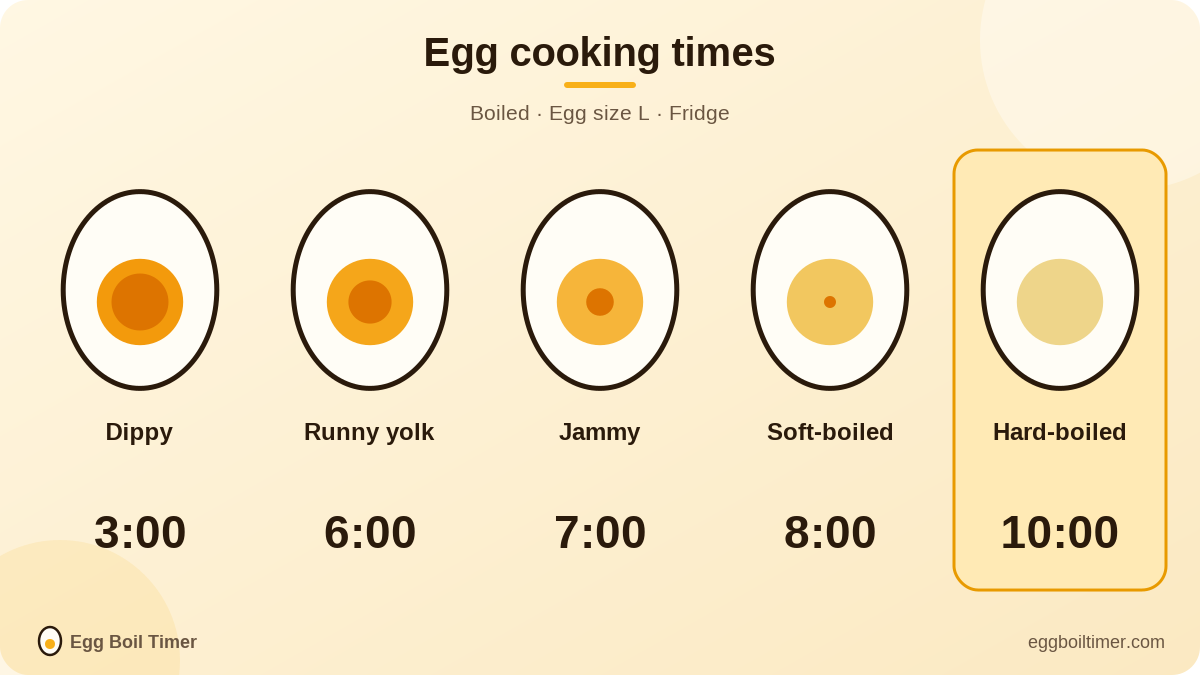
The table below shows cooking times for large (55 g) eggs straight from the refrigerator (4 °C) in boiling water at sea level, alongside their suitability for Telur Balado.
| Doneness Level | Boil Time (min:sec) | Yolk Temperature | Suitability for Telur Balado |
|---|---|---|---|
| Runny (Dippy) | 6:00 | 63 °C | Unsuitable; yolk breaks during peeling and frying |
| Jammy (Soft-Centered) | 7:00 | 66 °C | Excellent for modern versions; rich yolk creamy inside |
| Firm Soft | 8:00 | 70 °C | Great balance; set white with a tender, moist center |
| Hard-Boiled | 10:00 | 77 °C | Traditional choice; holds shape perfectly through intense frying |
To peel effortlessly, transfer boiled eggs directly into an ice water bath for 5 minutes. Tap the bottom shell to crack the air pocket, then roll gently on the counter. Once peeled, pat every egg completely dry with paper towels. Water droplets remaining on the egg white will cause hot oil to splatter dangerously during shallow frying.
Heat 3 tablespoons of oil in a wok or skillet over medium-high heat. Fry the eggs for 3 to 4 minutes, turning frequently, until a pale golden, blistered skin covers the entire surface. Remove the eggs and drain on paper towels while keeping the residual oil in the pan for the sambal.

Simmering to Perfection: Combining Eggs and Balado Sauce
Building the sauce requires careful heat control to cook out raw garlic harshness without scorching the chili sugars. Pour the remaining oil into the pan over medium heat. Toss in the torn kaffir lime leaves first, allowing their fragrant oil to infuse the fat for 30 seconds.
Add the coarsely ground chili paste to the pan. Stir continuously for 6 to 8 minutes. As the tomatoes release their moisture and break down, the paste will darken from bright scarlet to a deep crimson red. The sambal is fully cooked when small pools of red oil separate around the edges of the pan and the sharp, raw chili aroma disappears.
Season the paste with salt, sugar, and tamarind juice. Taste the sauce: it should offer an immediate punch of heat, followed by savory depth, subtle sweetness, and a clean citrus finish. Reduce heat to low, add the fried eggs to the skillet, and gently roll them in the sauce for 2 minutes. This brief coat warms the eggs through and lets the thick sambal settle into every crevice of the blistered skin.
Troubleshooting Telur Balado: Common Problems and Solutions
Skillet chili glazes require monitoring. Here is how to diagnose and resolve common issues during cooking.
Symptom: Watery, pale sauce that slips off the eggs.
Cause: Tomatoes contained too much liquid, or the paste was not sautéed long enough for water to evaporate.
Fix: Continue simmering the paste over medium heat before adding the eggs. Wait until oil visibly separates from the chili solids. If already combined, remove the eggs and reduce the sauce for another 3 minutes.
Symptom: Bitter or burnt chili paste.
Cause: Sautéing heat was too high, or sugar was added too early and caramelized into the pan base.
Fix: Sauté over medium heat only. Add sugar and tamarind during the final 2 minutes of cooking. If the paste burns, start fresh; burnt chili cannot be corrected with extra sugar.
Symptom: Sauce fails to stick to the eggs.
Cause: The eggs were boiled and added directly to the sauce without shallow-frying first.
Fix: Smooth egg whites naturally repel water-based pastes. Frying creates a wrinkled texture that mechanically locks the coarse sambal in place.
Serving and Customizing Your Telur Balado Experience
Telur Balado is traditionally served warm or at room temperature as part of an Indonesian family-style spread. Plate the eggs with warm steamed jasmine or coconut rice. Accompany the meal with fresh cucumber slices, fried shallots, and crisp prawn crackers to contrast the soft, rich eggs and spicy glaze.
Adjust the flavor profile easily to match your preferred spice tolerance and dietary needs:
- Milder heat: Deseed the curly red chilies before grinding and substitute red bell pepper for half of the chili volume.
- Extra tang: Increase tamarind juice to 2 tablespoons or squeeze fresh calamansi lime over the finished dish just before serving.
- Umami bump: Add 1/2 teaspoon of toasted shrimp paste (terasi) to the aromatics before grinding.
- Protein variations: Use the same balado sauce for hard-boiled quail eggs, crispy fried tofu, or tempeh.
Leftover Telur Balado stores well in an airtight container in the refrigerator for up to 3 days. The chili flavors penetrate deeper into the fried egg skin overnight, making leftovers exceptionally flavorful when reheated gently over low skillet heat.


