Soy sauce eggs are soft-boiled eggs steeped in an aromatic soy bath. The whites absorb savory seasoning while the yolks stay custardy. Known in Korea as mayak gyeran and in Japan as ajitama, they deliver concentrated umami with minimal effort. Marinating takes 6 to 12 hours.
Defining Soy Sauce Eggs in Korean and Japanese Cooking
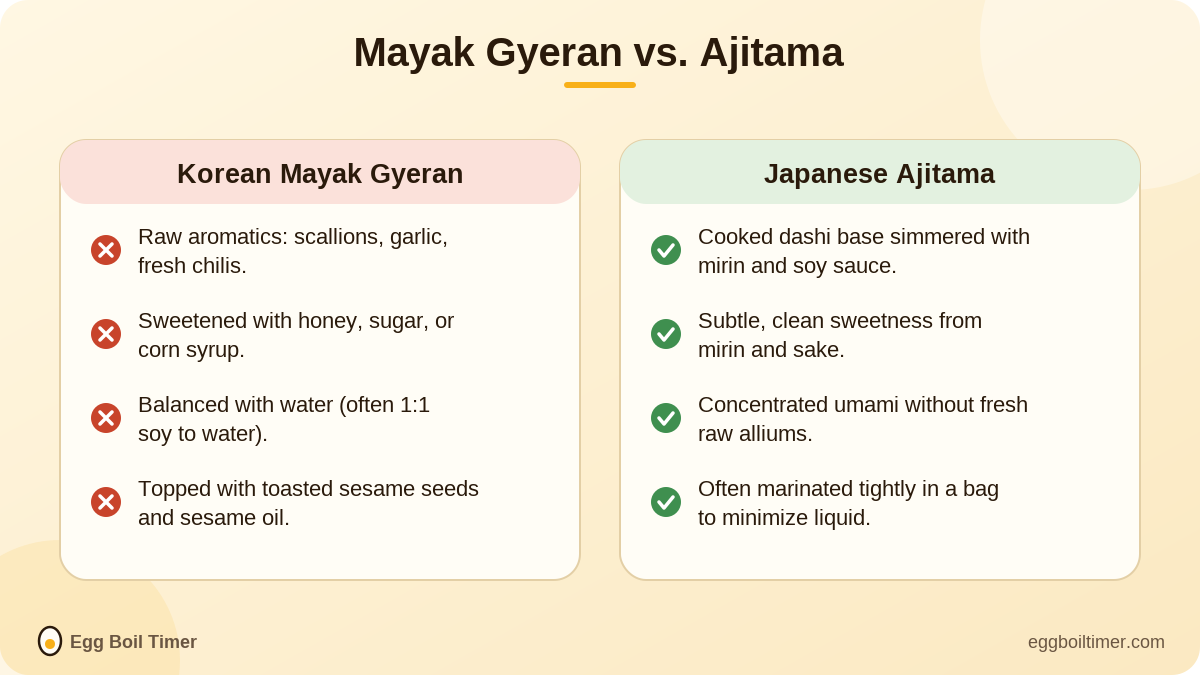
Marinating cooked eggs in seasoned brine has deep roots across East Asian kitchens. In Korea, the dish is called mayak gyeran, translating colloquially to "drug eggs" because the sweet-garlicky profile tastes addictive over warm rice. The Korean method uses raw aromatics: sliced scallions, minced garlic, fresh chilis, and toasted sesame seeds. These steep directly in soy sauce, water, and sweetener without cooking.
Japanese ajitama, detailed in our guide to Ramen Eggs at Home: The 30 Seconds That Decide Everything, relies on a simmered marinade. Cooks gently heat soy sauce with mirin, sake, and dashi stock before cooling the liquid. Simmering removes raw alcohol and softens allium bite, creating a clean glaze tailored for rich noodle broth.
Both styles differ from Chinese Tea Eggs: The Marbled Snack That Is Mostly Waiting, which simmer cracked eggs in spiced black tea to create a marbled surface. They also differ from Western Pickled Eggs Recipe: Brine Ratios, Peeling, and Safe Storage, which steep eggs in sharp vinegar brine.
Master Recipe for Korean Mayak Soy Sauce Eggs
This formulation prepares six eggs in a balanced marinade that seasons the whites without drawing moisture out of the yolks. A single large egg provides about 6 grams of complete protein, making this dish an efficient staple for advance meal prep.
Ingredients.
- 6 large eggs (55 g each, fridge-cold).
- 100 ml standard soy sauce (regular dark or light soy).
- 100 ml filtered water.
- 50 ml mirin.
- 40 g granulated sugar or honey.
- 3 cloves garlic, finely minced.
- 2 scallions, thinly sliced.
- 1 fresh red chili, seeded and finely chopped.
- 1 tablespoon toasted sesame seeds.
- 1 teaspoon toasted sesame oil (for serving).
- 2 tablespoons white vinegar (for the boiling water).
Preparation Steps.
- Bring 1.5 liters of water to a rolling boil in a medium pot. Add the white vinegar.
- Lower cold eggs into the boiling water with a slotted spoon. Set our Egg Boil Timer timer for 7 minutes for a jammy yolk. Keep the water at a steady simmer.
- Fill a bowl with cold water and ice cubes. Transfer the cooked eggs immediately into the ice bath for 10 minutes.
- Combine soy sauce, water, mirin, sugar, garlic, scallions, chili, and sesame seeds in a container. Stir until the sugar dissolves.
- Gently tap each egg to crack the shell all over. Peel under cold running water, starting at the wider air pocket end.
- Submerge peeled eggs in the marinade. Place a folded paper towel on top to keep them submerged. Cover and refrigerate for 6 to 12 hours.
Precision Boiling for Custardy, Jammy Yolks
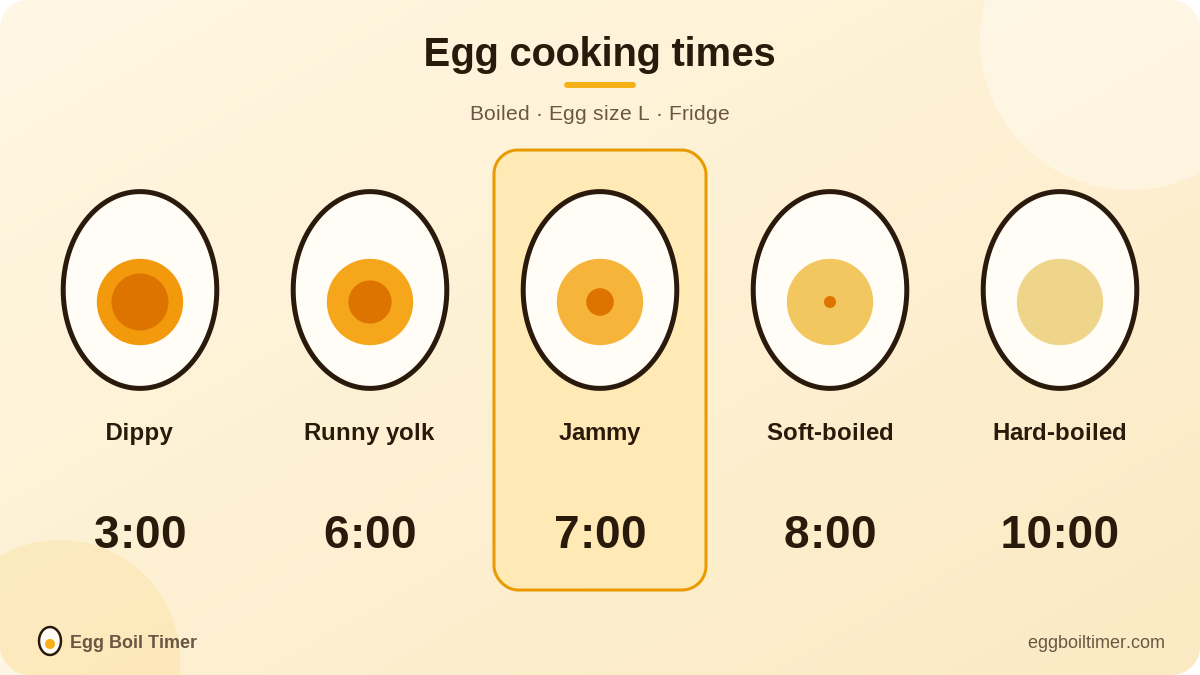
The technical goal of soy sauce eggs is a spreadable, custardy center inside a tender white that peels cleanly. Egg whites begin setting at 62 °C (144 °F) and firm up near 80 °C (176 °F). Egg yolks coagulate more gently: yolk proteins thicken into custard between 65 °C and 70 °C (149 °F to 158 °F). Heating past 77 °C (171 °F) turns yolks chalky.
Starting eggs in boiling water ensures easy peeling. Dropping cold eggs directly into boiling water causes rapid thermal shock: outer albumen firms instantly against the inner membrane, preventing stickiness. It also establishes an exact timing baseline.
| Egg Size. | Average Weight. | Fridge Temperature (4 °C). | Room Temperature (20 °C). |
|---|---|---|---|
| Medium (M). | 50 g. | 6 minutes 35 seconds. | 5 minutes 35 seconds. |
| Large (L). | 55 g. | 7 minutes 00 seconds. | 5 minutes 55 seconds. |
| Extra Large (XL). | 60 g. | 7 minutes 25 seconds. | 6 minutes 20 seconds. |
| Jumbo (XXL). | 65 g. | 7 minutes 50 seconds. | 6 minutes 40 seconds. |
Water boils cooler at elevation, dropping roughly 1 °C per 300 meters. If you cook at 1,500 meters (5,000 feet), add 35 seconds to the boiling times above to compensate for lower heat transfer.

Constructing the Marinade Ratio and Aromatics
Steeping eggs in undiluted soy sauce ruins their texture. Standard soy sauce contains 14% to 18% salinity, creating osmotic pressure that draws water outward through the white. Over 12 hours, pure soy sauce turns albumen leathery while drying the outer yolk.
The optimal base uses a 1:1 ratio of soy sauce to water, balanced by 0.5 parts mirin and 0.4 parts sugar. Water dilutes sodium concentration, allowing seasoning to penetrate smoothly without dehydration. Mirin adds mild acidity and glucose that mellows pungent garlic.
Fresh aromatics give mayak gyeran its signature profile. Thinly sliced scallions release aromatic sulfur compounds into the brine. Diced chilis supply capsaicin that cuts through yolk richness. For milder flavor, use sweet mini peppers instead of bird's eye chilis.
Marinating Windows and Cold Storage Limits
Timing determines whether eggs turn custardy or rubbery. Because peeled eggs lack shells, osmotic curing continues every hour they rest in liquid.
| Duration. | Visual Color. | Albumen Texture. | Yolk Core. |
|---|---|---|---|
| 2 to 4 Hours. | Faint tan. | Tender, lightly salted. | Completely liquid, unseasoned. |
| 6 to 12 Hours. | Warm caramel. | Firm yet supple, balanced umami. | Thick, jammy, subtle seasoning. |
| 24 Hours. | Deep walnut brown. | Chewy exterior ring. | Dense, partially cured custard. |
| 48+ Hours (in brine). | Opaque dark brown. | Rubbery, heavily salted. | Firm, dehydrated paste. |
For balanced texture, marinate eggs for 8 to 12 hours. Remove eggs from the liquid after 24 hours to prevent tough whites. Store them in a sealed container with a spoonful of aromatics spooned over top.
USDA guidelines state that peeled boiled eggs stored at or below 4 °C (40 °F) remain safe for 3 to 5 days. High-risk groups, including pregnant women, young children, and older adults, should consume eggs with fully set yolks and whites. This information provides general culinary guidance, not medical advice.
Diagnosing Rubbery Whites, Salt Spikes, and Shell Tears
Soft-boiled marinated eggs present a few common failure points. Understanding the physical causes makes them easy to fix:
- Egg shells stick and tear the white: Very fresh eggs have an albumen pH below 8.0, bonding the membrane to the shell. Use eggs bought a week prior. Always start them in boiling water and chill in ice water for 10 minutes.
- Eggs taste overly salty: The marinade lacked water or the eggs soaked past 24 hours. Soak over-salted eggs in cool water or dashi stock for 30 minutes to draw out surface salt.
- Whites tear during peeling: Under-boiling leaves albumen fragile. Ensure water stays at an active boil during cooking. Roll the egg gently on the counter before peeling under a thin stream of tap water.
- Floating eggs marinate unevenly: Eggs float when air pockets linger inside. Place a damp paper towel over the surface. Capillary action keeps exposed tops moist and evenly seasoned.
Korean Mayak Gyeran Compared to Japanese Ajitama
Korean and Japanese culinary traditions serve marinated eggs in distinct ways. Mayak gyeran functions primarily as an everyday side dish (banchan) alongside steamed rice. Home cooks spoon seasoned scallions, chilis, and sesame seeds directly over warm grains with the halved egg, often adding butter.
Japanese ajitama is tailored specifically for noodle assembly. Its marinade uses simmered mirin and sake to burn off raw alcohol notes. This creates clean glutamates that complement ramen broths without clashing. Explore our collection of Egg Recipes: Breakfast, Lunch, and Dinner Ideas to see how different cultures season soft-boiled eggs.
Ways to Serve Marinated Eggs Across Daily Meals
Soy sauce eggs adapt easily beyond ramen bowls. Their savory seasoning enhances simple breakfasts and quick grain dishes:
- Steamed rice with butter: Place two halved jammy eggs over hot rice. Add a slice of unsalted butter and drizzle two spoons of marinade over the grains.
- Mashed avocado toast: Spread mashed avocado across toasted sourdough with lime juice. Top with a halved egg; the rich yolk acts as a savory dressing.
- Cold buckwheat noodles: Toss chilled soba noodles with reserved marinade, rice vinegar, and sesame oil. Garnish with sliced cucumber and marinated eggs.
- Grain bowls: Top warm quinoa, steamed greens, and roasted sweet potatoes with a jammy egg for a protein-rich lunch prep.


