Telur pindang is an Indonesian braised egg dish boiled, cracked, and simmered in a spiced liquid enriched with black tea, shallot skins, and aromatic herbs. The process takes about 15 minutes of active preparation and initial boiling, followed by 1 to 3 hours of slow simmering to develop a deep brown color, distinct marbled surface, and savory-herbal profile.
Indonesian Braised Eggs: History and Tannin Dynamics
Originating across Java and the wider Malay archipelago, braised preserved eggs developed as a practical solution for tropical food preservation before refrigeration. Traditional recipes rely on native botanical elements like teak leaves (daun jati), guava leaves (daun jambu biji), and shallot skins.
These plants release natural tannins and pigments during a long simmer. Teak leaves supply dark reddish anthocyanins, while guava leaves contribute concentrated astringent tannins that historically helped inhibit bacterial growth on the egg surface. Tannins bind with surface proteins on the albumen, creating a dense outer barrier while imparting a distinct woody aroma.
Modern Indonesian kitchens often pair these plant tannins with strong black tea and sweet soy sauce (kecap manis). The combination deepens color uptake without requiring hard-to-find leaves. While tea-marbled eggs appear across several East and Southeast Asian cuisines, Java's version stands out for its warm herb profile, utilizing galangal, lemongrass, coriander, and bay leaves (daun salam).
Initial Boiling Parameters Across Egg Sizes and Altitudes
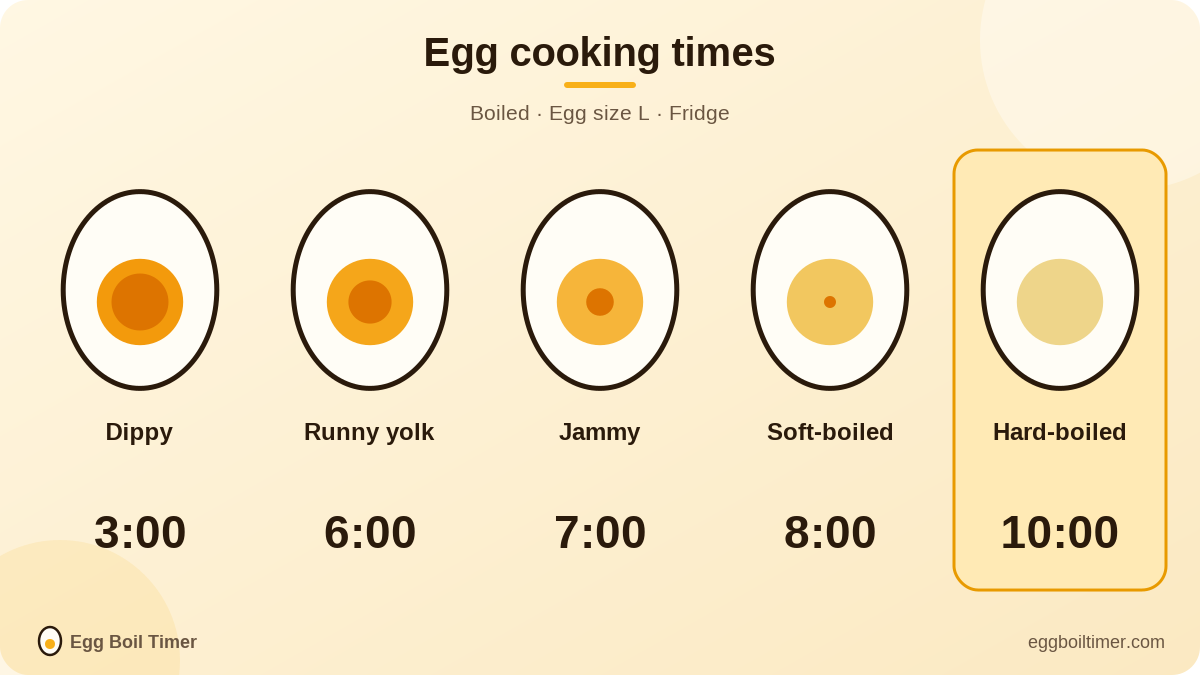
Achieving clean marbling requires starting with fully intact, properly set hard-boiled eggs. If the albumen remains soft when you crack the shell, warm aromatic broth will leak inside too quickly, causing structural collapse rather than distinct webbed lines. Setting the timer correctly for your initial boil ensures the outer egg white resists tearing during shell fracturing.
At higher elevations, lower atmospheric pressure drops the boiling point of water (for example, to 95 °C at 1500 meters altitude), which slows thermal transfer to the core. Because the yolk must reach 77 °C to establish a firm hard-boiled structure, initial boiling times must be adjusted upward based on elevation before shell cracking occurs.
Use cold eggs directly from the refrigerator and lower them into rolling boiling water. The timer above is calibrated for standard large eggs at sea level, requiring 10 minutes (600 seconds) to set the yolk and albumen completely. Use the exact initial timings below based on egg size and elevation before transferring eggs to the spice bath.
| Egg Size | Weight (g) | Sea Level Time | 500 m Altitude | 1500 m Altitude |
|---|---|---|---|---|
| Small (S) | 45 g | 8:45 | 9:15 | 10:30 |
| Medium (M) | 50 g | 9:25 | 9:55 | 11:10 |
| Large (L) | 55 g | 10:00 | 10:30 | 12:00 |
| Extra Large (XL) | 60 g | 10:35 | 11:10 | 12:40 |
| Jumbo (XXL) | 65 g | 11:10 | 11:45 | 13:20 |
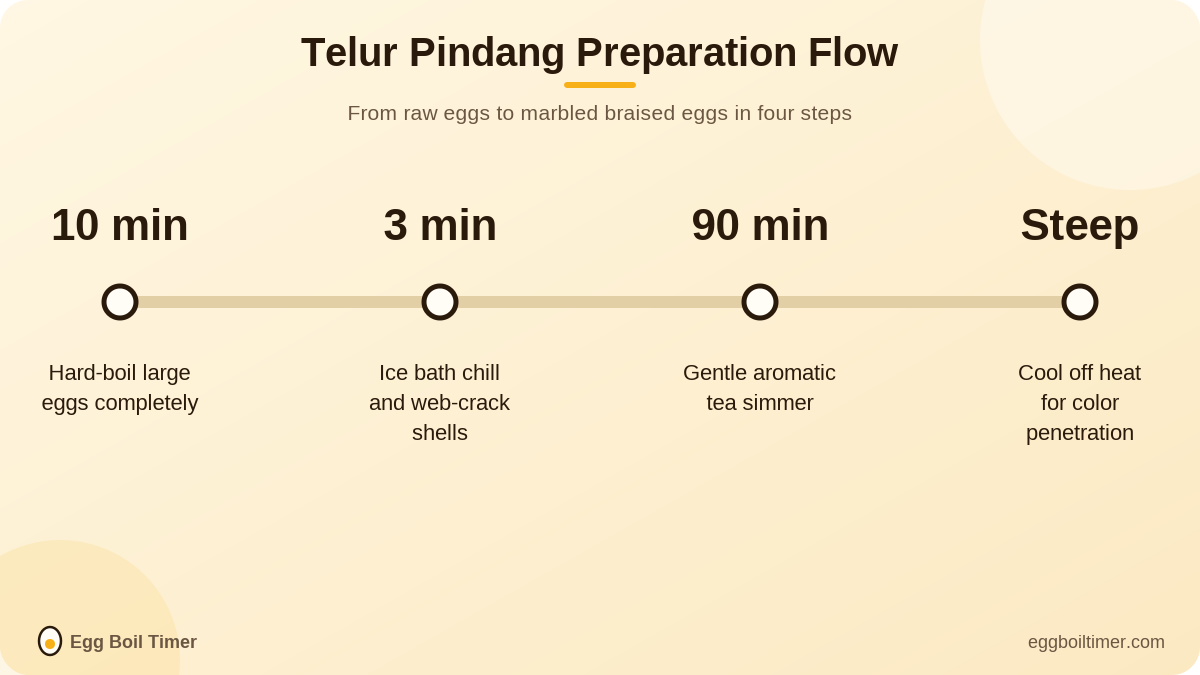
After boiling, transfer the eggs immediately to an ice bath for 3 minutes. Cooling contracts the interior slightly, loosening the membrane from the albumen so cracks form cleanly without tearing the surface.
Shallot Skins, Tea, and Daun Salam: Aromatic Braising Base
The braising stock supplies both pigment and savory flavor. Save the papery outer peels from 8 to 10 shallots, as they release a vibrant amber tint that synthetic dyes cannot replicate. Combined with loose black tea or tea bags, the liquid turns dark mahogany within minutes of heating. While authentic Javanese cooks traditionally used daun jambu biji for astringency, urban kitchens replicate this effect by pairing black tea polyphenols with shallot peel flavonoids.
For authentic Indonesian flavor balance, layer aromatics into the pot before adding liquid:
- Shallot skins and garlic: 10 g saved papery shallot skins and 4 bruised garlic cloves provide foundational earthiness and amber pigments.
- Black tea bags: 3 strong black tea bags (or 2 tablespoons loose leaf) contribute tannins for color fixative and mild astringency.
- Indonesian bay leaves (daun salam): 5 dried leaves add an herbal, subtle wood fragrance distinctly different from European bay laurel.
- Galangal and lemongrass: 3 cm sliced galangal root and 2 stalks bruised lemongrass provide citrus-peppery aromatic highlights.
- Palm sugar and soy sauce: 30 g dark palm sugar (gula jawa) and 3 tablespoons sweet soy sauce yield sweet depth and glossiness.
If authentic daun salam is unavailable, substitute a mixture of standard bay leaf and a strip of lime peel. Avoid using excess tea, which can make the white bitter over long cooking times.

Cracking Technique for Deep Marbling Without Shell Disintegration
Creating fine, web-like patterns across the albumen requires controlled pressure. Do not peel the eggs. Instead, gently tap each chilled egg against a hard surface or roll it lightly between your palm and a cutting board under mild pressure.
Aim for a fine network of thin cracks across the shell while keeping the inner membrane intact. Massive structural crushed areas produce dark blotches, whereas micro-cracks allow liquid to seep slowly along narrow lines, forming intricate brown veins. Contrast this gentle cracking with preparations like Japanese Ramen Eggs at Home: The 30 Seconds That Decide Everything, where shells are completely removed to ensure smooth, unblemished outer surfaces.
Place the cracked eggs into a medium pot, pour over the prepared aromatic infusion until completely submerged, and bring to a bare simmer over low heat. Maintain a liquid temperature between 80 °C and 85 °C for 90 minutes. Steeping off heat overnight in the covered pot darkens the lines further without toughening the yolk.
Fixing Bland Yolks, Rubbery Whites, and Pale Shell Lines
Long braising can occasionally yield textural or color flaws if heat and ingredient ratios drift. Use this troubleshooting matrix to correct common issues during preparation.
| Symptom | Probable Cause | Correction Strategy |
|---|---|---|
| Pale lines with minimal color contrast | Insufficient tannins or steep time too short | Add 1 extra tea bag and prolong post-simmer steeping off heat for at least 4 hours. |
| Rubbery, tough albumen | Liquid boiled rapidly instead of low simmer | Reduce heat immediately to maintain 80–85 °C; never boil rapidly once eggs are cracked. |
| Bland interior with no herbal aroma | Cracks were too shallow or membrane unruptured | Increase tapping pressure to break the shell membrane slightly without flaking off shell pieces. |
| Bitter exterior taste | Over-steeped cheap tea leaves containing excessive tannins | Remove tea bags after the first 30 minutes of braising while leaving aromatics in the pot. |
If you enjoy regional egg recipes with distinctive savory coatings, compare this technique with Filipino street specialties like Crispy Kwek Kwek: Filipino Fried Orange Quail Eggs or batter-rolled classics like Telur Gulung: Indonesian Street-Style Rolled Skewer Eggs. Explore our master collection of Egg Recipes: Breakfast, Lunch, and Dinner Ideas for further ideas.
Serving Pairings and Refrigeration Safety
Telur pindang is traditionally served at room temperature alongside classic Javanese festive meals like nasi gudeg (sweet jackfruit stew), nasi uduk (coconut rice), or dry sambal fried potatoes. Its subtle herbal sweetness cuts through rich, coconut-heavy curries and spicy sambals.
For safe storage, cool the braised eggs in their steeping broth. Once cooled, store the eggs submerged in the strained broth in an airtight glass container inside the refrigerator at or below 4 °C. They keep safely for up to 5 days. Reheat gently in warm water before serving, or enjoy them cold directly from the fridge. For non-braised boiled applications, check our main Egg Boil Timer timer for target yolk doneness levels.


