Traditional soleier are hard-boiled eggs cured in a salted, spiced vinegar brine, serving as a staple German pub snack since the nineteenth century. Preparing them requires hard-boiling eggs to a firm yolk, gently cracking or peeling the shells, and submerging them in a hot aromatic infusion of onion skins, caraway, mustard seeds, and allspice. Stored under continuous refrigeration, they develop a mellow, savory tang within one to two weeks.
The Berlin Hungerturm and the Origin of Saline Eggs
In Berlin and northern German taverns, tall glass counter jars known as the Hungerturm (hunger tower) sat beside cured sausages and pickled herring. Patrons ordered an egg as an inexpensive salty snack to accompany sour beer and grain spirits. The name comes from Sole, the German word for concentrated salt brine. Unlike Anglo-American Pickled Eggs Recipe: Brine Ratios, Peeling, and Safe Storage that rest in sharp, sugar-heavy vinegar, classic soleier balance vinegar with generous salt and simmer dry brown onion skins to stain the egg whites a pale amber.
German kitchens use two distinct approaches: naked peeled eggs or cracked-shell eggs. With cracked shells, cooks rap the boiled eggs gently against the counter to fracture the shell while keeping the inner membrane intact. The seasoned brine seeps through the cracks, leaving a marbled mosaic across the albumen much like Chinese Tea Eggs: The Marbled Snack That Is Mostly Waiting. Stripping the shells completely speeds up seasoning and lets the spices penetrate evenly, which works best for quick batches in home refrigerators.
Acidity and Botulism Safety: The 4.6 pH Barrier
Preserving eggs safely comes down to acidity and temperature. Clostridium botulinum spores germinate in anaerobic, low-acid food. Whole hard-boiled eggs are fundamentally low-acid, with yolk pH lingering near 6.8. A pickling brine must bring the equilibrium pH down to 4.6 or lower to block bacterial toxin production. Only vinegars with at least 5% acetic acid guarantee that barrier.
Pub lore often claims pickled eggs can sit indefinitely on a warm back bar. Food safety guidelines from the USDA and the National Center for Home Food Preservation contradict this: unchilled pickled eggs have caused severe botulism outbreaks. Always chill your jars in a refrigerator held at 4 °C (40 °F) or colder. Never leave the sealed jar at room temperature once the brine has cooled.
Boiling Firm Yolks Without Gray Sulfide Rings
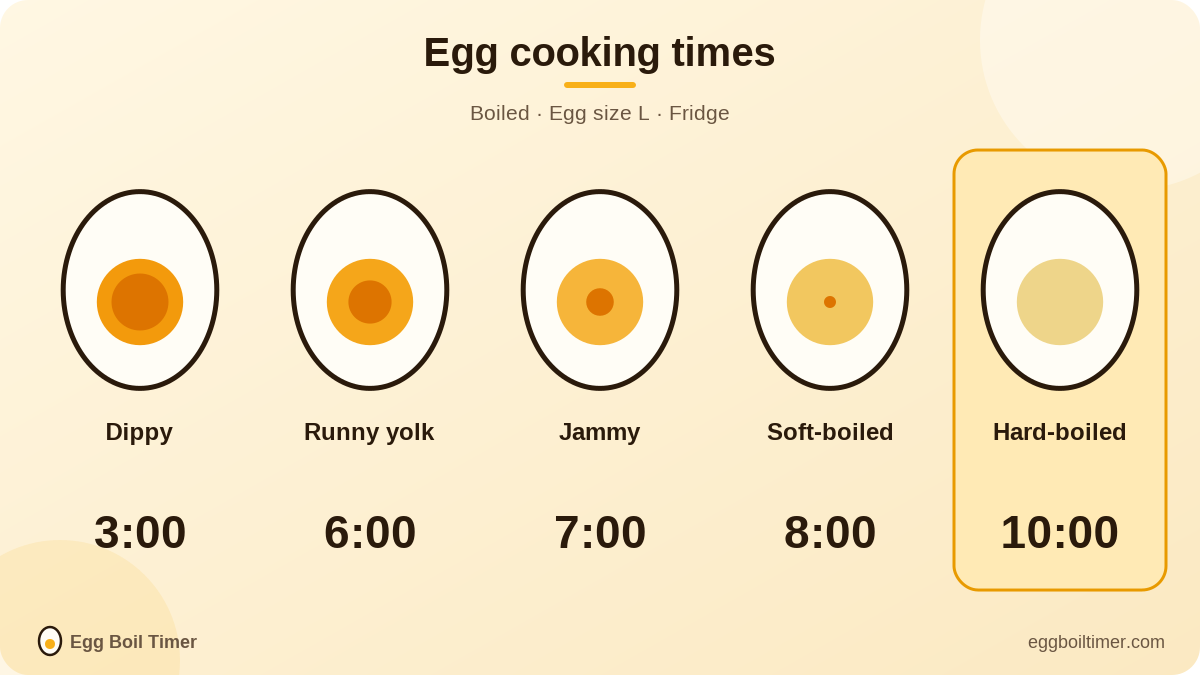
A good solei needs a fully set yolk that stays tender when sliced. Set the Egg Boil Timer timer for hard-boiled (level 4), which takes exactly 10 minutes for a fridge-cold large egg (55 grams) dropped into boiling water at sea level. If you cook at higher altitudes where water boils below 100 °C, add time: at 1,500 meters (5,000 feet), the timer adjusts to 10 minutes and 55 seconds to bring the yolk core to 77 °C.
Avoid eggs straight from the supermarket laid yesterday. Fresh albumen has a low pH that cements the inner membrane to the shell. Cartons kept in the fridge for a week shed carbon dioxide, raising white pH and loosening the bond. Plunge the cooked eggs straight into an ice bath for 10 minutes. This sudden temperature drop shrinks the egg away from the shell wall, guaranteeing clean peeling and stopping iron-sulfur reactions before a dark ring forms.

Caraway, Onion Skins, and Salt: The Twelve-Egg Pantry
This formulation produces a balanced brine with adequate salinity, aromatic warmth, and food-safe acidity for one dozen large eggs.
- Eggs: 12 large chicken eggs (grade A, about 55 g each, preferably one week old).
- Water: 500 ml (2 cups) filtered water.
- Vinegar: 500 ml (2 cups) white distilled vinegar or cider vinegar (standard 5% acetic acid).
- Coarse salt: 40 g (about 2 tablespoons) non-iodized sea salt or pure pickling salt.
- Granulated sugar: 15 g (about 1 tablespoon) to round off sharp acetic acid.
- Yellow onion skins: Papery outer dry skins from 2 medium brown onions for golden amber color.
- Caraway seeds: 5 g (1 teaspoon) whole caraway.
- Yellow mustard seeds: 5 g (1 teaspoon) whole seeds.
- Allspice berries: 8 whole berries.
- Black peppercorns: 10 whole peppercorns.
- Bay leaves: 2 dry leaves.
- Cloves: 2 whole cloves (optional).
Simmering the Amber Brine and Packing the Jar
Preparing the pickling brine requires extracting aromatic oils from the spices and heat-sanitizing the liquid before combining it with the cooked eggs.
- Boil the eggs: Lower 12 fridge-cold eggs into boiling water. Cook for 10 minutes. Shock in an ice bath for 10 minutes. Peel completely, or roll firmly on a flat counter to fracture the shells evenly while leaving them attached.
- Sterilize equipment: Wash a 1.5-liter wide-mouth glass preserving jar and its lid in hot soapy water. Submerge the glass jar in boiling water for 10 minutes to sterilize, then drain on a clean kitchen towel.
- Extract the brine: Combine water, vinegar, salt, sugar, onion skins, caraway, mustard seeds, allspice, peppercorns, and bay leaves in a stainless steel saucepan. Avoid aluminum or unlined cast iron, which react with hot acetic acid.
- Simmer: Bring the brine to a rolling boil over medium-high heat, stirring until the salt and sugar dissolve. Reduce the heat and simmer gently for 5 minutes. The onion skins will tint the liquid deep amber.
- Pack and fill: Arrange the prepared eggs snugly inside the warm, sterilized glass jar. Pour the hot pickling brine and whole spices directly over the eggs, ensuring every egg sits completely submerged under liquid. Discard large loose onion skins if space is tight.
- Seal and chill: Fasten the lid securely. Let the jar rest on the counter for 30 minutes until warm rather than hot, then transfer immediately to the refrigerator.
The Curing Window: From Forty-Eight Hours to Two Weeks
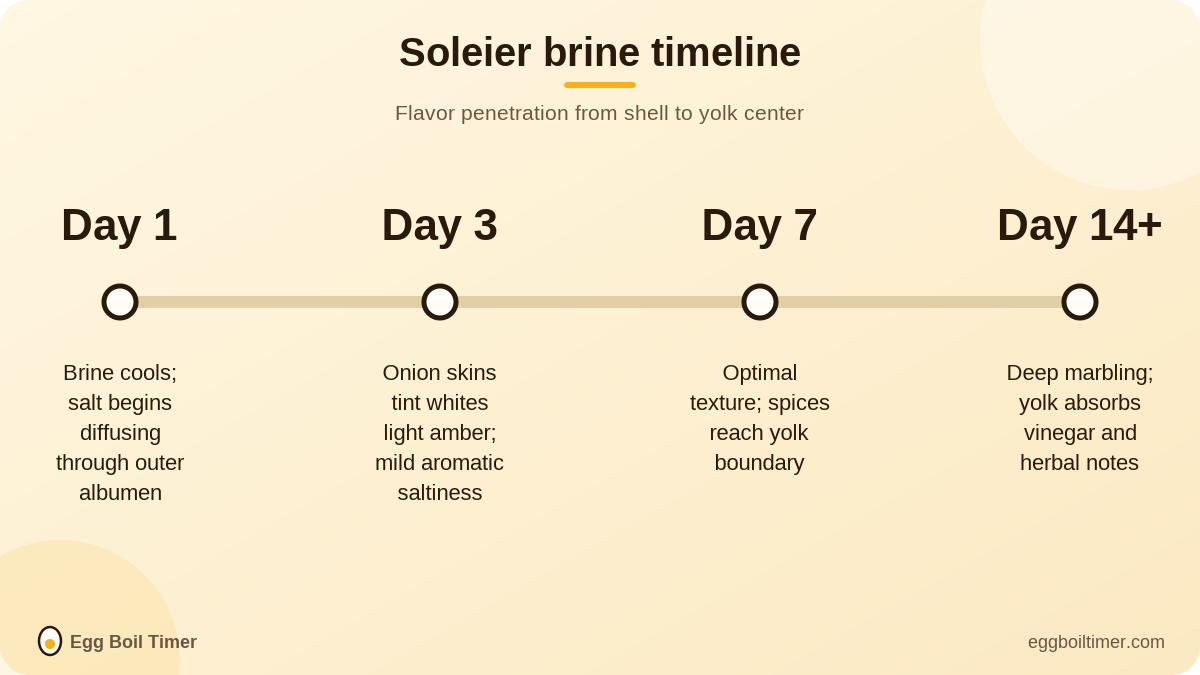
Brining moves by slow osmotic diffusion. Salt ions migrate into the white within forty-eight hours, but vinegar and aromatic spice volatiles take longer to navigate dense coagulated ovalbumin proteins and reach the yolk center.
Peeled eggs cure faster than eggs left in their shell. At 3 days, peeled eggs taste mildly pickled with a salty rim. Between 7 to 10 days, the brine hits its peak balance: the whites take on herbal caraway and mustard pungency while the yolks remain velvety. If you chose cracked shells, allow 10 to 14 days for the liquid to work through the membrane. Keep the jar cold at 4 °C throughout storage; eat homemade soleier within 3 to 4 months.
Why Brines Cloud, Whites Turn Leathery, and Yolks Gray
Pickling eggs involves acid-protein denaturation and mineral migration. Acidity firms egg albumen over time, while salt choice alters clarity. Use this matrix to identify and correct curing flaws.
| Observed Defect | Root Cause | Correction and Prevention |
|---|---|---|
| Leathery or rubbery egg whites | Brine vinegar concentration too high, or eggs left in brine over four months. | Maintain a 1:1 ratio of water to 5% vinegar; avoid pure undiluted vinegar brines. |
| Dark green or gray yolk circumference | Overcooking during boiling; hydrogen sulfide reacted with yolk iron. | Boil large eggs for exactly 10 minutes and chill instantly in an ice water bath. |
| Milky or cloudy pickling brine | Anti-caking agents in table salt, or active bacterial growth. | Use pure pickling or sea salt. If unprompted cloudiness occurs after weeks, discard the jar. |
| Torn, pitted egg whites during peeling | Super-fresh eggs with low albumen pH clinging to shell membranes. | Use eggs purchased 7 to 10 days prior; shock thoroughly in ice water before cracking. |
| Shriveled, wrinkled egg surface | Excessive sugar or salt drawing moisture outward through osmosis. | Limit salt to 40 g per liter of total liquid; do not exceed stated sugar quantities. |
The Kneipe Ritual: Mustard, Oil, and Vinegar in the Yolk Cup
Eating a solei in a German pub follows a deliberate, hands-on routine. You never bite into the egg whole or slice it into plain salad wedges. Instead, each egg half becomes a tiny, self-contained sauce bowl.
Peel the egg if you steeped it in a cracked shell, then slice it cleanly in half lengthwise. Pop out both firm yolk halves onto your plate. Into each hollowed white cup, pour a few drops of sunflower oil, a splash of mild vinegar, a pinch of freshly ground black pepper, and a dollop of sharp German mustard, preferably Düsseldorf Senf.
Turn each yolk upside down and press it back into the filled hollow, squeezing the condiments up around the sides. Eat the entire half in one bite. The mustard and vinegar cut through the dense, salty yolk immediately.
Any leftover soleier make an assertive base for snacks. Mash the seasoned yolks with chives and mayonnaise for German-accented Classic Deviled Eggs Recipe: Creamy Filling and Easy Peeling, or cube whole eggs into warm potato salad where their acidity replaces vinegar. Our Egg Recipes: Breakfast, Lunch, and Dinner Ideas hub covers more regional preserved eggs, from soy marinades to tea-stained street food.


