Shakshuka is a North African skillet dish of whole eggs poached in a thick, spiced sauce of crushed tomatoes, peppers, onions, garlic, and olive oil. Carve shallow wells into the simmered sauce, drop in the eggs, and cover with a lid: the whites set in 5 to 7 minutes while the yolks stay runny.
The Base Sauce: Reducing Peppers and Tomatoes into a Thick Bed
A watery tomato sauce spoils the structure of shakshuka. When whole eggs drop into thin liquid, the albumen disperses across the skillet, thinning out into watery shreds instead of gathering into tender pockets. A stable base needs thorough reduction and softened aromatics before any eggs touch the pan.
Start with a wide, heavy skillet, preferably cast iron or enameled stoneware measuring 26 to 30 cm across. Soften finely sliced onions and red bell peppers in plenty of extra virgin olive oil over medium heat for 8 to 10 minutes. The vegetables must turn soft, sweet, and lightly caramelized at the edges. Add minced garlic, ground cumin, sweet or smoked paprika, and ground coriander during the final minute of softening. Hot oil blooms these fat-soluble spice compounds, releasing aromatic oils that raw simmering cannot extract.
Pour in crushed canned whole plum tomatoes rather than standard puree. Whole peeled tomatoes packed in juice contain firmer pulp with less industrial pectin, breaking down into a jammy consistency as the sauce bubbles. Simmer the mixture uncovered for 10 to 12 minutes over medium-low heat.
Drag a wooden spoon across the bottom of the pan. If the sauce flows back immediately to fill the gap, it still carries excess water. Keep simmering until the channel holds open for two full seconds before slowly closing. At that density, the sauce cradles raw eggs without letting them sink or disperse.
Tested Shakshuka Recipe: Proportions and Skillet Method
This formulation serves four people as a hearty breakfast or dinner. It relies on standard pantry aromatics balanced with acid and warmth.
Ingredients
- 3 tablespoons (45 ml) extra virgin olive oil.
- 1 medium yellow onion, diced fine.
- 1 large red bell pepper, stemmed, seeded, and cut into thin 2 cm strips.
- 4 garlic cloves, finely minced.
- 1 teaspoon ground cumin.
- 1 teaspoon smoked paprika.
- 0.5 teaspoon ground coriander.
- 0.25 teaspoon red pepper flakes or cayenne pepper.
- 1 can (800 g / 28 oz) whole peeled plum tomatoes, crushed by hand with their juice.
- 1 tablespoon tomato paste.
- 1 teaspoon kosher salt.
- 0.5 teaspoon freshly ground black pepper.
- 6 large eggs, fridge-cold or room temperature.
- Fresh cilantro or flat-leaf parsley, chopped, for serving.
- 75 g feta cheese, crumbled.
Step-by-Step Cooking Instructions
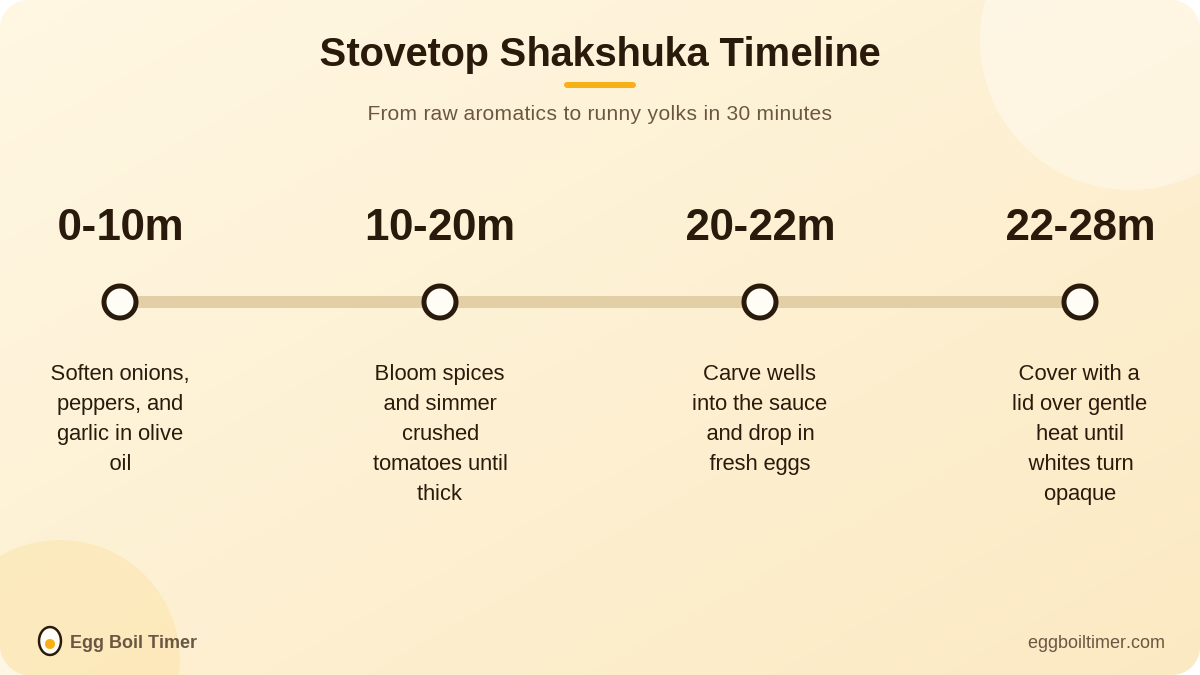
- Heat the olive oil in a 30 cm skillet over medium heat until shimmering. Add the diced onion and sliced red bell pepper. Cook for 8 to 10 minutes, stirring occasionally, until the vegetables are completely tender and starting to brown.
- Stir in the minced garlic, cumin, smoked paprika, ground coriander, red pepper flakes, and tomato paste. Cook for 60 to 90 seconds while stirring constantly until the paste darkens and turns fragrant.
- Pour in the hand-crushed plum tomatoes with their juices. Season with salt and black pepper. Stir thoroughly to scrape up browned bits stuck to the skillet bottom.
- Lower the stove burner to medium-low. Simmer uncovered for 10 to 12 minutes, stirring every couple of minutes, until the liquid reduces and the sauce thickens to a spoonable paste.
- Use the back of a large spoon to carve six distinct wells evenly spaced across the sauce surface. Make sure each well exposes the deeper skillet floor without scraping it entirely bare.
- Crack each egg individually into a small ramekin or teacup, then slide one egg into each carved pocket. This prevents broken yolks and catches stray shell fragments before they enter the hot pan.
- Turn the heat to low and immediately cover the skillet with a tight-fitting lid. Cook undisturbed for 5 to 7 minutes. Check at minute 5: the whites should look opaque and firm to a gentle touch, while the yolks should still wobble freely when the skillet is nudged.
- Remove the skillet from the heat source. Scatter crumbled feta, chopped cilantro, or fresh parsley over the surface. Rest for two minutes, then bring the pan straight to the table alongside crusty bread.
Managing Yolk Texture: Lid Trapping versus Oven Finishing
Egg albumen coagulates between 62 °C and 65 °C, but egg yolk only begins to thicken around 65 °C and sets hard by 70 °C. Because the tomato sauce bubbles beneath the egg at roughly 95 °C to 98 °C, bottom heat transfers rapidly into the lower white. Without overhead heat, however, the thick upper albumen sitting above the sauce surface stays raw and clear while the underside scorches.
Two reliable techniques solve this uneven heat distribution:
- The Trapped Steam Method (Stovetop): Placing a heavy, fitted lid over the skillet creates a pressurized microclimate of 100 °C water vapor. The rising tomato steam circulates over the exposed tops of the eggs, gently cooking the albumen blanket from above in 5 to 7 minutes. If your skillet lacks a lid, an inverted baking sheet works just as well. For cooks tracking doneness with our Egg Boil Timer or poached timer presets, five minutes produces liquid yolks, while seven minutes yields a dense, jammy center.
- The Dry Radiant Method (Oven Finish): Transfer the uncovered skillet to an oven preheated to 190 °C (375 °F) right after adding the eggs. This gives you evenly set whites and lightly browned edges. Dry radiant heat cooks the eggs from all angles within 8 to 10 minutes. This method works well when adding goat cheese or feta, which brown under the ambient heat.
Be cautious with residual heat. Heavy cast iron pans retain thermal energy long after you turn off the burner. If you intend to linger at the table, pull the skillet when the yolks are slightly runnier than your target. Carryover heat will continue setting the albumen for another two to three minutes.
Troubleshooting Matrix: Watery Sauce, Sunk Yolks, and Rubbery Whites
While shakshuka is forgiving, small miscalculations in heat management and egg handling lead to texture flaws. Use this diagnostic table to address common skillet issues:
| Symptom. | Underlying Cause. | Immediate Kitchen Fix. |
|---|---|---|
| Runny, slimy white layer over solid yolk. | Cooking without a lid or running bottom heat too high without trapped steam. | Cover the pan immediately. Carefully spoon hot sauce over the clear whites, or broil on low for 60 seconds. |
| Water pooling around the cooked eggs. | Tomatoes were not reduced sufficiently, or watery vegetables released moisture late. | Simmer the sauce 5 minutes longer before adding eggs. Press bell peppers dry if using thawed produce. |
| Yolk sinks completely and disappears. | Wells were carved too deep, or the tomato sauce was too thin to provide buoyancy. | Carve indentations only halfway into the sauce depth. Ensure the reduction passes the spoon test. |
| Rubbery whites with dry, chalky yolks. | Pan left on burner too long, or trapped heat built up excessively under high flame. | Pull the skillet off heat when yolks still wobble. Reduce stove dial to low once the lid is in place. |
| Bitter or harsh acidic aftertaste. | Unripe tomatoes or burnt garlic during the initial aromatic saute. | Stir 0.5 teaspoon of granulated sugar or a pinch of baking soda into the sauce before cracking eggs. |
Maghrebi and Levantine Profiles: Harissa, Herbs, and Dairy Additions
Shakshuka traces its roots across North Africa, with Tunisia widely credited for developing the earliest spicy pepper stews. The Ottoman Empire popularized similar egg-and-vegetable pans throughout the Levant and Mediterranean basins. Regional cooks adapt the heat profile, spice blends, and finishing textures according to local staples:
| Region / Style. | Dominant Spices & Pastes. | Vegetables & Proteins. | Typical Topping. |
|---|---|---|---|
| Tunisian Classic. | Baklouti pepper paste, ground caraway, garlic, coriander. | Red sweet peppers, crushed tomatoes, occasionally cured tuna. | Preserved lemon peel, whole brine-cured black olives. |
| Moroccan Style. | Sweet smoked paprika, cumin, turmeric, pinch of cinnamon. | Onions, roasted peppers, slow-simmered merguez sausage links. | Fresh flat-leaf parsley and torn fresh mint leaves. |
| Levantine / Israeli. | Sweet paprika, cumin, cayenne, fresh garlic cloves. | Yellow onions, sweet red bell peppers, rich tomato puree. | Crumbled sheep milk feta, chopped cilantro, tahini drizzle. |
| Green Shakshuka. | Coriander, ground cumin, green jalapeño or serrano. | Swiss chard, baby spinach, leeks, zucchini ribbons. | Labneh or goat cheese curd, toasted pine nuts. |
If you enjoy exploring baked skillet eggs across other cultures, try comparing shakshuka to a baked Italian Frittata Recipe: The Italian Skillet Method and Fillings or the Hollandaise richness of Classic Eggs Benedict Recipe: Poached Eggs and Silky Hollandaise. While European variations often lean on butter and cream, shakshuka draws its richness entirely from olive oil, sweet caramelized vegetables, and runny yolks.
Table Service and Storing Leftover Sauce
Shakshuka belongs in the center of the dining table directly inside its cooking vessel. Set the hot skillet on a thick trivet and serve it communally. Crusty, open-crumb breads like sourdough baguettes, thick slices of challah, or warm pita pockets are essential tools for wiping the pan clean. The bread acts as an edible spoon, catching spiced oil, thick tomato pulp, and liquid yolk together.
Cooked eggs do not reheat well because second-round heat turns delicate yolks rubbery. The base sauce, however, is exceptionally sturdy. You can prepare a double batch of the tomato and pepper sauce up to four days in advance. Store the cooled sauce in a sealed glass container in the refrigerator, or freeze it in portioned airtight bags for up to three months.
When ready to eat, ladle cold sauce into a hot skillet and bring it to a simmer. Form your wells and crack in fresh eggs as normal. Beyond breakfast, leftover sauce makes an exceptional braising liquid for chickpeas, white beans, or meatballs.
Nutritionally, whole eggs turn this vegetable reduction into a substantial meal. According to USDA FoodData Central, a single large whole egg yields approximately 6.3 g of high-biological-value protein alongside essential micronutrients like choline, lutein, and vitamin B12. Paired with the lycopene and dietary fiber present in stewed tomatoes and bell peppers, shakshuka delivers sustained energy without refined sugars or heavy starches.


