Eggs with pastirma, known as pastırmalı yumurta in Turkey and beid bel basturma across the Levant, is a skillet breakfast dish made by searing paper-thin slices of spice-cured beef in butter before cracking whole eggs directly into the pan. Cooking a large fridge-cold egg over medium-low heat requires 210 seconds (3 minutes 30 seconds) to set the albumen while preserving a runny yolk, ensuring the fenugreek spice rub on the beef softens without scorching.
What is Pastirma? A Culinary Overview
Pastirma is an air-dried cured beef with origins tracing back to Central Asia and refined across the Ottoman Empire and Armenia. Butchers cut salted beef, typically eye round or tenderloin, air-dry it for several weeks, and press out residual moisture. They coat the dried meat in a thick spice paste called çemen, composed of ground fenugreek seeds, fresh garlic, sweet paprika, and cumin.
The characteristic aroma of pastirma stems directly from fenugreek and garlic in the coating paste. Unlike cured meats that rely on liquid smoke, pastirma develops its deep red hue and concentrated savory taste entirely through ambient curing and drying. Slice pastirma thin across the grain so the muscle fibers separate easily when warmed in fat.
Essential Ingredients for Pastirma with Eggs
Cooking pastirma with eggs requires enough butter or oil to coat the pan and soften the spice crust without burning.
- Pastirma: 60 g (about 4 to 6 thin slices), with the outer çemen ring intact.
- Eggs: 2 large eggs (55 g each, cold from the refrigerator).
- Unsalted Butter: 15 g (1 tablespoon), or 10 ml olive oil mixed with butter.
- Black Pepper and Aleppo Pepper: 1 g each for finishing (pastirma already provides salt).
- Crusty Bread: Sliced sourdough or pide bread for dipping into runny yolks.
How to Cook Pastirma and Eggs Without Burning the Curing Paste
Fenugreek turns bitter when exposed to pan temperatures above 160 °C. The sequence below prevents scorching while setting the whites completely.
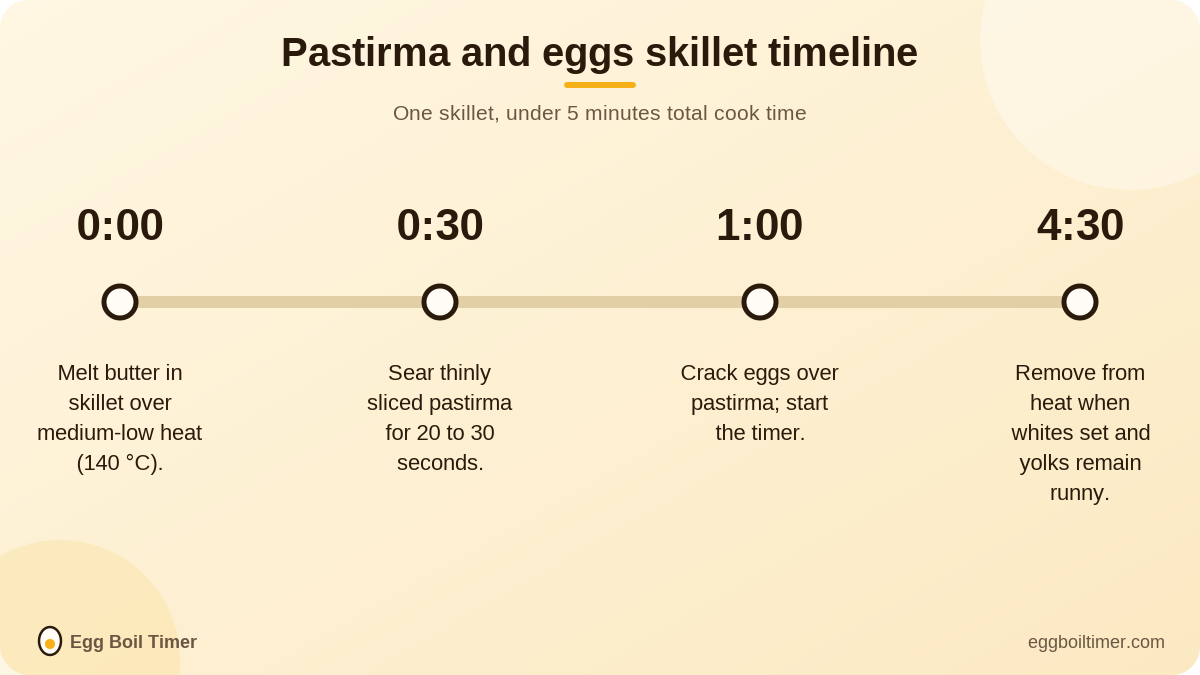
- Warm the skillet: Place a 20 cm cast-iron or stainless-steel pan over medium-low heat. Add 15 g of butter and allow it to foam gently at 140 °C.
- Briefly sear the meat: Lay 60 g of pastirma slices flat in the melted fat. Sauté for 20 to 30 seconds per side until the edges curl slightly and the garlic fragrance releases. Do not crisp the meat fully at this stage.
- Position the eggs: Crack 2 large eggs into the pan, placing them directly over or adjacent to the meat slices.
- Control the heat: Reduce heat to low. Use our Egg Boil Timer set to the fried egg preset to track target doneness accurately.
- Baste the whites: Spoon warm butter over the raw albumen surrounding the yolks to accelerate setting without turning the yolks hard.
- Finish and serve: Remove the pan from heat as soon as the whites turn opaque. Sprinkle light Aleppo pepper over the tops and serve immediately inside the hot pan.
Timing and Doneness Ratios for Fried Eggs with Pastirma
Cooking times depend on egg size, pan temperature, and starting egg temperature. Heat transfer from cold eggs drops local pan temperature, so precise timing maintains liquid centers. The reference values below apply to large (55 g) fridge-cold eggs fried in 15 g fat over medium-low heat.
| Doneness Level | Target Yolk Doneness | Pan Time (Seconds) | Visual Cue |
|---|---|---|---|
| Sunny Side Up (Level 0) | Warm liquid yolk (60 °C) | 180 s (3 min 00 s) | Whites barely set, yolk entirely fluid |
| Over Easy / Soft (Level 1) | Soft runny yolk (63 °C) | 210 s (3 min 30 s) | Whites firm, thin white skin over yolk |
| Over Medium / Jammy (Level 2) | Thick jammy yolk (66 °C) | 270 s (4 min 30 s) | Yolk holds shape when pierced |
| Over Hard / Firm (Level 3) | Solid set yolk (72 °C) | 330 s (5 min 30 s) | Yolk fully pale and firm throughout |
For custom timing adjustments based on egg size or room temperature starts, use our Fried Egg Timer: How to Fry an Egg to Any Doneness to calculate exact cooking times. If you enjoy pan-cooked eggs with warm spice bases, try Shakshuka: Eggs Poached in Spiced Tomato Sauce or traditional scrambled Menemen Recipe: Turkish Scrambled Eggs with Tomatoes.
Pan Temperature and Moisture Adjustments
Cooking cured beef alongside fresh eggs introduces competing thermal requirements. Beef slices require quick warming to render intramuscular fat, while egg proteins coagulate at specific thresholds: ovalbumin sets at 80 °C, whereas yolk vitellin thickens at 65 °C.
Pastirma drying or turning tough: High heat rapidly evaporates residual moisture from air-cured beef. Keep pan temperatures under 150 °C. Adding 1 teaspoon (5 ml) of warm water to the edge of the pan and covering it with a lid for 45 seconds traps steam, tenderizing the cured beef fibers while setting whites quickly.
Bitter garlic taste: The garlic and fenugreek in çemen turn astringent when burned. If your pan gets too hot, move pastirma slices to the outer edge of the skillet and cook eggs in the central fat pool.
Rubbery egg whites: Rapid high-heat frying dehydrates albumen structure. Maintain low, steady heat so whites coagulate gently without bubbling into tough outer rings.
Serving Traditions and Regional Sourcing
Across Turkish breakfasts, cooks present pastırmalı yumurta straight from small double-handled copper pans called sahan. Serve the dish alongside sliced cucumbers, ripe tomatoes, black olives, and fresh sheep's milk cheese such as white feta or beyaz peynir.
In Armenian households, basturma and eggs often accompany lavash bread and fresh herbs like tarragon, cilantro, and mint. Levant variations frequently substitute a drizzle of extra virgin olive oil for butter, cooking eggs sunnyside up so flatbread picks up seasoned fat directly from the pan. Check out our wider collection of regional skillet meals in our Egg Recipes: Breakfast, Lunch, and Dinner Ideas hub.
Safe Storage and Reheating Protocols
According to standard food safety guidelines, cooked eggs and cured beef dishes should be cooled to room temperature within two hours and stored in an airtight container under 4 °C in the refrigerator. Consume cooked leftovers within 3 to 4 days.
Reheating fried eggs in a microwave ruins yolk texture by rubberizing proteins. To reheat pastirma with eggs safely, warm a nonstick skillet over low heat with 1 teaspoon of butter. Place leftovers in the pan, add 1 teaspoon of water, cover tightly, and warm for 90 seconds until the interior reaches 74 °C.


