A classic egg fried rice needs dry chilled grains, a hot pan, and light seasoning so every grain stays separate. If you compare a standard egg fried rice bbc style recipe with takeout methods, the core rule remains identical. Cold day-old long-grain rice in a smoking skillet keeps starches from turning gummy. With three beaten eggs, the stir-fry takes under eight minutes from pan to plate.
Why Dry Rice and High Heat Prevent Sticky Grains
Moisture ruins fried rice. Freshly cooked rice vents steam during stir-frying, which softens surface starch and turns your pan into a bowl of gummy mush. Chilling cooked rice overnight lets surface water evaporate while amylose starches firm up. That physical shift keeps grains intact when tossed in hot oil.
High heat completes the job. When chilled grains touch a hot oiled skillet, remaining moisture flashes off before the rice can stew. Commercial kitchens rely on high-output gas burners to produce wok hei, a slight smoky aroma from vaporized oil droplets. At home, heat a heavy pan until it shimmers. Keep batch sizes under four cups. Let the grains sit undisturbed for 30 seconds to crisp before flipping.
Core Ingredients and Sauce Ratios for Two Portions
Balanced flavor depends on restrained sauce quantities. Heavy liquid seasoning turns dry rice wet. For a two-person batch using 400 g of cooked rice, these measurements prevent a soggy pan:
- Cold cooked rice: 400 g of chilled long-grain Jasmine or white rice.
- Large eggs: 3 whole eggs beaten with a pinch of salt. Each large egg delivers roughly 6.3 g of protein that coats individual grains during scrambling.
- High-smoke-point oil: 2 tablespoons of peanut, canola, or vegetable oil. Save olive oil for other dishes because it burns too early.
- Aromatics: 2 minced garlic cloves, 1 teaspoon minced fresh ginger, and 3 sliced green onions with whites and greens divided.
- Light soy sauce: 1.5 tablespoons for salt and savory body.
- Dark soy sauce: 0.5 teaspoon for color.
- Toasted sesame oil: 1 teaspoon, added off the heat right before serving.
- Optional seasonings: 0.25 teaspoon white pepper and 0.5 teaspoon oyster sauce or a pinch of MSG.
Choosing and Drying the Right Rice Variety
Not every grain handles stir-frying well. Short-grain varieties cling together by nature, which suits sushi or Omurice: Master Japanese Omelette Rice at Home but creates dense lumps here. Medium and long-grain varieties stay firm under high heat.
| Rice Variety. | Starch Profile. | Texture in Pan. | Preparation Requirement. |
|---|---|---|---|
| Jasmine (Long-grain). | Moderate amylose. | Separate, fragrant, slightly chewy. | Rinse well. Chill overnight spread flat on a tray. |
| American Long-Grain White. | High amylose. | Dry, loose, clean grain separation. | Rinse well. Reduce cooking water by 10%. |
| Basmati. | Very high amylose. | Extremely dry, light, elongated. | Rinse gently. Handle carefully so grains do not break. |
| Medium-Grain / Calrose. | Moderate amylopectin. | Slightly sticky, tender curds. | Chill 24 hours uncovered to dry the outer shell. |
If you must cook from scratch on the same day, drop the cooking water by 10 to 15%. Spread the hot rice across a rimmed baking sheet in a thin layer. Set the tray in front of a fan for 20 minutes, then slide it into the freezer for 15 minutes. Cold air strips surface moisture fast and hardens the exterior starch.
Step-by-Step: Pan Setup, Scrambling, and Seasoning
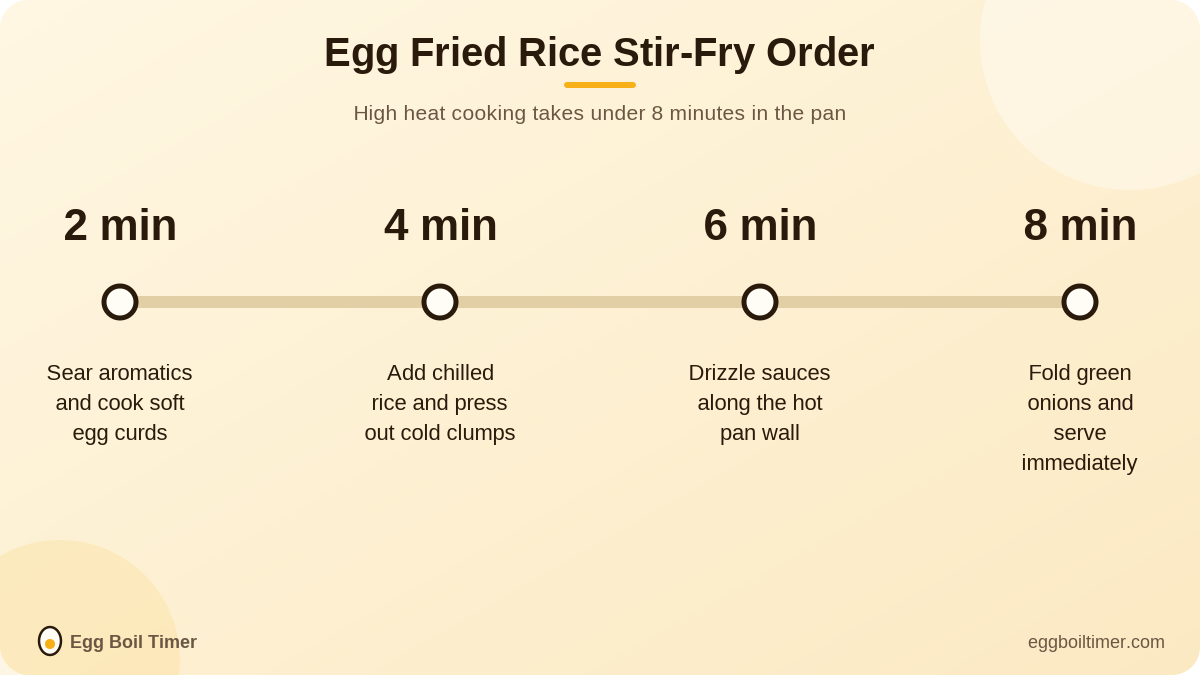
Stir-frying moves fast. Measure every ingredient beforehand so garlic does not burn while you reach for soy sauce.
- Separate cold grains: Rub your palms with a drop of oil. Break cold rice clumps apart into loose grains before lighting the stove.
- Preheat the pan: Set a carbon steel wok or heavy skillet over medium-high heat. Add 1 tablespoon of oil and swirl until thin smoke wisps rise.
- Scramble the eggs soft: Pour in the beaten eggs. They puff instantly along the hot edge. Sweep a spatula across the pan for 12 seconds to form loose curds, similar to the initial step on our Scrambled Eggs Timer: Stovetop Curd Guide and Times. Slide the soft curds into a small bowl.
- Squeeze in the aromatics: Pour another half tablespoon of oil into the hot center. Add garlic, ginger, and green onion whites. Stir-fry for 20 seconds until fragrant.
- Sear the rice: Tip in the loosened rice. Press it flat against the hot metal for 30 seconds, then toss. Repeat for two minutes until every grain gets hot and slightly translucent.
- Drizzle sauce on hot pan metal: Mix light and dark soy sauce in a small cup. Pour it around the top inside rim of the pan instead of over the rice. Hot metal sizzles and deepens the soy flavor before it touches the grains.
- Fold and finish: Return the soft scrambled eggs to the pan with the green onion greens and white pepper. Toss for 60 seconds.
- Finish off heat: Remove the pan from heat, stir in sesame oil, and serve. Pair this dish with other egg classics from our Egg Recipes: Breakfast, Lunch, and Dinner Ideas collection.
Troubleshooting Matrix: Fixing Soft Grains, Bland Flavor, and Pan Sticking
Different stove burners produce vastly different heat levels. Use this reference table to fix common problems at the pan.
| Symptom. | Primary Cause. | Immediate Correction. | Preventive Step for Next Batch. |
|---|---|---|---|
| Wet, clumping rice. | Excess water content or pan overcrowding. | Spread rice on a tray in a 200 °C (400 °F) oven for 5 minutes. | Chill rice uncovered overnight. Reduce liquid soy sauce. |
| Bland flavor despite soy sauce. | Lack of salt, aromatics, or umami accent. | Toss with a pinch of fine salt and white pepper off heat. | Increase garlic and add a pinch of MSG or oyster sauce. |
| Eggs stuck to bottom of pan. | Pan not hot enough before adding oil. | Scrape clean, reheat pan until smoking, re-oil. | Preheat dry pan thoroughly before oiling. Use hot pan and cold oil. |
| Dry, chalky grain interior. | Under-cooked initial rice or excessive reheating. | Sprinkle 1 teaspoon of hot water and cover for 30 seconds. | Use properly cooked long-grain rice with standard hydration. |
Simple Additions: Shrimp, Char Siu, and Golden Yolk Rice
Once the basic timing feels natural, test these variations without changing your core frying speed:
- Yangzhou style: Add small cooked shrimp and diced char siu pork. Fry the proteins first, set them aside, and fold them back in during the final 60 seconds.
- Golden egg rice: Stir raw egg yolks straight into cold rice until every grain turns yellow. Scramble the egg whites in the pan first, then add the yolk-coated grains.
- Rolled egg side: Serve your fried rice alongside sliced Tamagoyaki: How to Roll Japanese Rolled Omelette for a contrast between crispy pan grains and soft sweet omelette layers.
- Vegetable mix: Diced carrots, peas, and sweetcorn work well. Pat frozen vegetables dry with paper towels first so cold water does not drop your pan temperature.
Food Safety: Cooling and Reheating Leftover Rice
Uncooked rice grains often harbor spores of Bacillus cereus. These spores survive normal boiling temperatures. If cooked rice sits between 4 °C and 60 °C (40 °F to 140 °F), spores multiply and release heat-stable toxins.
To store cooked rice safely, cool it to 21 °C (70 °F) within 2 hours. Reach 4 °C (40 °F) or lower within an additional 4 hours. Keep cooled rice in shallow airtight containers in the fridge for up to 3 to 4 days.
Reheat leftover fried rice until the center reaches at least 74 °C (165 °F). Toss it in a hot skillet with a splash of water, or microwave it under a damp paper towel. Never reheat leftover rice more than once. Use our automated Egg Boil Timer timer when boiling eggs for quick meal preps.


