An uitsmijter (pronounced OUT-smay-ter) is a traditional Dutch open-faced sandwich. It features soft buttered bread topped with cold cooked ham, sliced Gouda cheese, and two sunny-side-up fried eggs. Born in Dutch taverns as a rapid late-night dish, its name translates to "bouncer" or "out-thrower." Today it stands as a staple lunch order across Dutch cafés and diners. Success relies on direct thermal transfer. Hot egg albumen gently softens the Gouda beneath without turning the un-toasted bread into a soggy paste.
Tavern roots and why bread stays un-toasted
Dutch pub owners originally prepared this meal in the late nineteenth century. It offered a fast, warm dish for patrons leaving taverns right before closing time. The name reflects this tavern ritual, signaling the final order before guests were ushered out the door. Today, Dutch grand cafés serve it as a hearty midday meal.
An authentic uitsmijter relies on soft, un-toasted bread. High pan heat belongs strictly to the eggs. When hot fried eggs rest over cold sliced Gouda, residual heat softens the cheese edges. This binds the egg to the ham while keeping the bread soft. Toasting the bread creates a firm crust that repels raw yolk instead of absorbing it. The soft crumb must absorb liquid yolk as you cut through the sandwich.
The dish differs structurally from a French croque madame. It skips béchamel sauce, broiling, and top bread slices. Instead, simple buttered bread meets skillet-hot eggs. Two large eggs yield about 12.6 grams of protein. Combined with ham and Gouda, a full portion provides over 25 grams of complete protein in under ten minutes.
Selecting bread, ham, and Gouda for authentic texture
Four cold ingredients construct the sandwich foundation before skillet heat is applied:
- Bread: Use medium-thick slices of Dutch white bread (casinobrood) or light rye (knipbrood). Slices should measure roughly 10 to 12 mm thick so they compress easily under a fork. Thick sourdough crusts resist knife cuts and cause egg yolk to spill across the plate. Avoid heavily seeded loaves that disrupt the soft crumb texture.
- Ham: Select thinly sliced cooked ham such as achterham (lean leg ham) or schouderham (shoulder ham). Blot excess brine with a paper towel before plating. Lay slices completely flat across buttered bread to ensure an even foundation for the cheese.
- Cheese: Choose young Gouda (jong) or medium-aged Gouda (jong belegen). Aged Gouda contains less water and breaks into oily liquid when heated. Young Gouda softens smoothly under warm yolks without separating. Use a Dutch cheese slicer (kaasschaaf) to produce even 1.5 mm ribbons.
- Butter fat layer: Spread room-temperature unsalted Dutch butter evenly across every edge of the bread. This moisture barrier prevents meat juices and egg liquid from soaking directly into the soft bread crumb.
Pan timing and heat calibration for runny yolks
Egg cooking parameters dictate the final dish texture. An authentic uitsmijter requires fully opaque whites and warm, liquid yolks that spill across the cheese at first cut. Frying two eggs side by side joins their whites into a single continuous sheet that fits two bread slices perfectly.
Cooking duration depends on egg size, skillet temperature, and starting temperature. Using our Egg Boil Timer">egg timer model, base timings for frying large (55 g) eggs in butter on medium-low heat are:
| Doneness Level. | Target Yolk State. | Fridge Cold (4 °C). | Room Temp (20 °C). |
|---|---|---|---|
| Sunny side up (Classic). | Liquid center, fully set white. | 3:00 (180 s). | 2:45 (165 s). |
| Over easy. | Runny yolk, light top film. | 3:30 (210 s). | 3:15 (195 s). |
| Over medium. | Jammy core, thick edges. | 4:30 (270 s). | 4:10 (250 s). |
| Over hard. | Fully solid yolk. | 5:30 (330 s). | 5:05 (305 s). |
For custom timing based on smaller or larger egg sizes, consult our Fried Egg Timer: How to Fry an Egg to Any Doneness">fried egg timer guide. Maintain pan temperatures between 140 °C and 150 °C. Excessive pan heat darkens the bottom albumen before thick upper whites solidify around the yolk. Use a 24 cm non-stick skillet or seasoned carbon steel pan so two eggs fit side by side without crowding.
Five-step assembly method
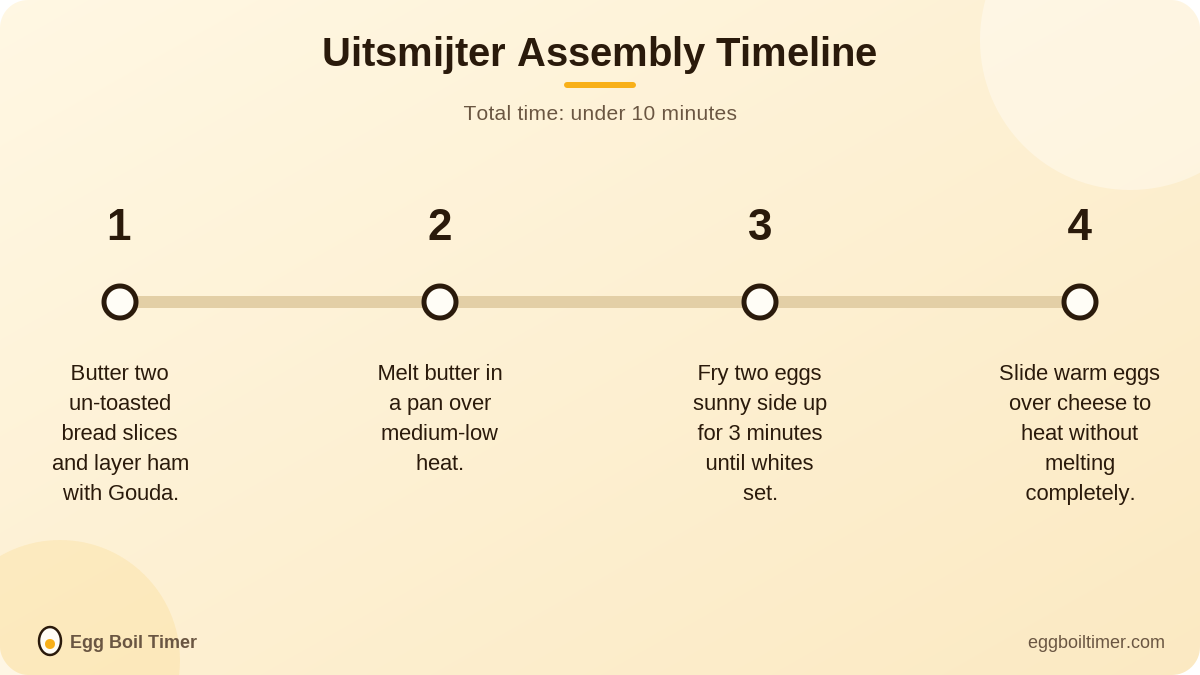
Assembling an uitsmijter requires prompt plating so egg heat warms the cold cheese immediately. Follow these five execution steps:
- Prepare the base: Place two un-toasted white bread slices side by side on a plate. Spread softened unsalted butter across the entire crumb face from edge to edge.
- Layer cold toppings: Place cooked ham flat over the buttered bread. Top with overlapping ribbons of Gouda cheese to cover the meat completely.
- Melt pan butter: Heat 15 grams of unsalted butter in a skillet over medium-low heat until foam subsides without browning.
- Fry the eggs: Crack two large eggs into the skillet side by side. Season whites with salt and black pepper, keeping yolks clean. Cook for 3 minutes while spooning hot pan butter over thick albumen around yolks.
- Plate the eggs: Slide a broad spatula beneath both connected eggs. Transfer them directly onto the Gouda cheese so one yolk rests centered over each bread slice.
Solving common technical issues
Minor adjustments in pan heat and layering fix common preparation errors:
Soggy bread crumb: Moisture leaking from wet deli meat softens the bread base. Always pat ham dry with paper towels before plating. Never skip the butter coating, as fat blocks liquid penetration into the soft crumb.
Rubbery whites with raw tops: High flame sears egg undersides before thick upper whites set. Lower pan heat to 140 °C. Add 1 teaspoon of water to the pan edge. Cover with a lid for 40 seconds to let steam set the top albumen gently.
Firm, un-melted cheese: Thick cheese slabs resist gentle heat from fried eggs. Slice Gouda into thin 1.5 mm ribbons with a cheese slicer. Thin Gouda softens within 20 seconds under hot egg whites.
Torn egg yolks during transfer: Narrow spatulas cause heavy dual-egg whites to split and rupture yolks. Use a wide silicone turner. Support the connected center point where the two whites meet during sliding.
Runny albumen spread: Old eggs have loose albumen that spreads thinly across the pan. Use fresh eggs with firm albumen rings. Alternatively, use a silicone egg ring to hold the whites compact while frying.
To learn more international egg preparation methods, explore our guides on Egg Recipes: Breakfast, Lunch, and Dinner Ideas">egg recipes, basic Hot Egg Sandwich Recipe: Crispy Toast, Melted Cheese, Soft Eggs">egg sandwiches, and classic French Toast: The Ratio, Bread Choice, and Pan Heat">french toast.
Regional variations, garnishes, and dining etiquette
Dutch cafés serve several traditional variations alongside the classic ham-and-cheese formula:
- Uitsmijter Spek: Replaces cooked ham with crispy Dutch bacon. Bacon strips fry in the skillet first. Eggs cook directly in rendered pork fat for extra flavor.
- Uitsmijter Rosbief: Uses thin cold roast beef instead of ham. A light smear of coarse Dutch Zaanse mustard is spread over the buttered bread before meat placement.
- Uitsmijter Veggie: Omits meat entirely. It doubles the Gouda layer and adds sliced fresh tomatoes, cucumbers, or chives under the eggs.
- Uitsmijter Gezond: Adds fresh garden lettuce, sliced hard-boiled eggs alongside fried eggs, and sliced cucumber for a salad-style presentation.
Plate the sandwich with sweet-and-sour Dutch pickles (zure bommen) or pickled gherkins. Add small dollops of coarse mustard or Dutch curry ketchup on the side. Eat open-faced using a knife and fork. Cut vertically through yolk, cheese, ham, and bread simultaneously so rich yolk coats every forkful.


