Egg wraps are high-protein, zero-flour sheets used as a low-carb alternative to tortillas or bread. While you can buy egg wraps from commercial brands like Egglife or Crepini for convenience, homemade versions cost pennies per serving and skip industrial stabilizers. A single large egg contains 6.3 grams of protein and 0.6 grams of carbohydrates, making these sheets a pillar of keto and gluten-free meal planning. You can explore more ideas in our hub of Egg Recipes: Breakfast, Lunch, and Dinner Ideas.
Beyond the Grocery Aisle: Evaluating Store-Bought Options
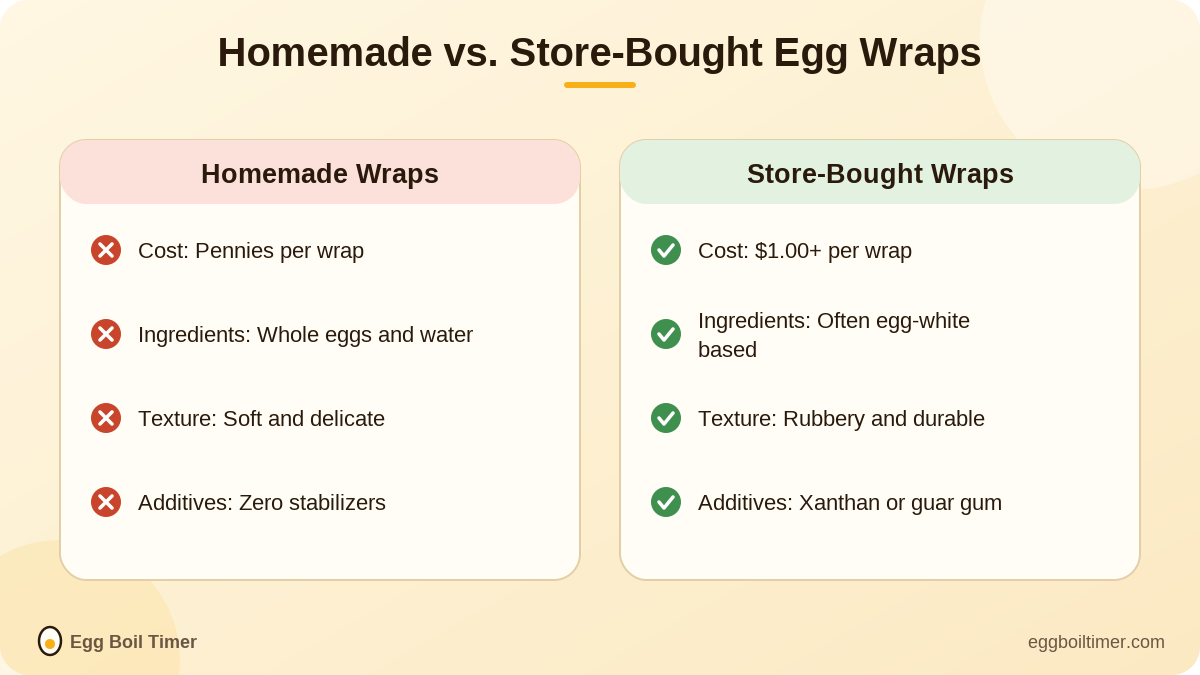
Purchasing pre-made wraps offers a distinct advantage in structural durability. Commercial brands rely heavily on egg whites combined with hydrocolloid stabilizers like xanthan gum, guar gum, or pea fiber. These additives create a rubbery elasticity. As a result, the wrap rolls tightly straight from the refrigerator without cracking. Packs from major brands retail between $5 and $8 for six to eight sheets, representing a clear convenience premium.
The trade-off for industrial durability comes in flavor and texture. Store-bought options often carry a neutral, slightly processed taste that requires heavy seasoning in the filling to mask. If you prefer a whole-food approach without plant gums or thickeners, kitchen-made versions are superior. Homemade wraps rely on the natural coagulation of egg yolk and albumen proteins. This creates a tender bite and rich flavor that mimics a French crepe rather than a synthetic sheet.
The Physics of the Batter: Why Water Beats Milk
To produce a wrap that behaves like a flour tortilla rather than a thick Frittata Recipe: The Italian Skillet Method and Fillings, the protein matrix must be diluted. Many home cooks add milk to their egg batter, but plain water is the superior choice for flexibility. Milk contains lactose sugars and milk solids. These components accelerate browning during cooking and cause the edges of the sheet to become brittle.
Water thins the ovalbumin proteins without introducing extra solids. Adding one teaspoon of water per egg lowers the temperature at which the protein network sets. This extra time allows the raw batter to flow smoothly across the pan surface before heat locks it into place. Heavy cream adds fat that yields a tender texture, though it increases fragility when flipping. For a sturdy wrap intended for a heavy Hot Egg Sandwich Recipe: Crispy Toast, Melted Cheese, Soft Eggs, stick to clean water.
Duck Eggs vs. Chicken Eggs for Structural Strength
Duck eggs offer distinct structural advantages when preparing larger wraps. A typical duck egg weighs roughly 70 grams compared to 55 grams for a large chicken egg. More importantly, duck egg whites contain a higher concentration of albumen protein and less water content. This composition forms a denser molecular mesh upon heating.
Wraps made with duck eggs exhibit high tensile strength. You can fold and roll them around dense fillings without tearing the outer membrane. The higher fat concentration in duck yolks also imparts a rich yellow color and supple texture. When substituting duck eggs, add one extra teaspoon of water per egg to offset the higher protein density and maintain smooth spreadability.
The 20 cm Technique: Achieving Uniform Pliability
A successful egg wrap must be less than 2 mm thick. Achieving this target requires matching batter volume to pan surface area. A 20 cm (8-inch) non-stick skillet works best for a standard single-egg batter batch. Excess surface area causes thin spots and tears, whereas a pan that is too small produces a thick, rigid omelette. You can consult our Egg Boil Timer tool and Omelette Timer: Exact Times, Pan Heat, and Folding guide for heat management principles.
- Whisking: Beat the egg and water thoroughly until no clear streaks remain. Stop whisking before heavy foam forms, as trapped air pockets create weak points in the finished sheet.
- Heat Check: Set the pan over medium-low heat. Test surface temperature by flicking a drop of water onto the pan. The water should simmer gently rather than sizzle violently.
- The Pour: Pour exactly three tablespoons of batter directly into the center of the preheated pan.
- The Swirl: Lift the skillet immediately from the burner. Swirl the pan in a smooth circular motion until liquid batter covers the entire bottom surface.
- The Set: Cook for 45 to 60 seconds. The egg surface will shift from glossy to matte. When the outer edges pull away from the pan sides, the wrap is ready to flip.
- The Flip: Slide a broad silicone spatula beneath the full center of the sheet. Lift gently, turn the wrap over, and cook for 10 seconds to finish.
Temperature Control: Avoiding the Rubbery Texture
Rubbery egg sheets result from excess heat. High temperatures cause coiled protein chains to contract rapidly, squeezing out moisture and hardening the matrix. To maintain a soft, pliable wrap, prevent browning entirely. A correctly cooked wrap exhibits an even, light yellow color across its surface. Brown spots or browned edges indicate excessive pan heat or excess cooking fat.
Even high-grade non-stick pans require a thin fat layer to ensure clean release. Avoid pouring liquid oil directly into the pan. Instead, moisten a paper towel with avocado oil or clarified butter and wipe the interior pan surface. This leaves a micro-thin film that aids release without frying the egg. Adding a tiny pinch of cornstarch (1/8 teaspoon) to the raw batter interrupts protein cross-linking, keeping cooled wraps soft for hours.
Flavoring the Sheet: Sweet and Savory Variations
Neutral egg wraps adapt easily to sweet or savory applications through minor batter additions. For savory lunch wraps, whisk finely minced chives, garlic powder, or smoked paprika into the batter. Dried herbs like oregano or basil add visual texture and aroma without weakening the sheet matrix. Keep spice additions finely ground so they do not puncture the delicate film during swirling.
For sweet dessert wraps or low-carb crepe substitutes, add a splash of vanilla extract and a drop of liquid stevia to the batter. A pinch of ground cinnamon pairs exceptionally well with sweet fillings. Fill these sweetened sheets with whipped cream cheese and fresh berries. You can even roll them up to serve alongside grain-free Fluffy Eggnog Pancakes: Spiced Holiday Griddle Recipe for breakfast.
Assembly Logic: Preventing a Soggy Wrap
Homemade egg sheets are more porous than flour tortillas. Without proper assembly, moisture from interior ingredients can migrate into the egg layer and cause structural failure. Following a systematic layering order protects the wrap integrity when packing meals in advance.
- The Fat Barrier: Spread a thin layer of cream cheese, mayonnaise, or avocado directly onto the wrap. Fats create a hydrophobic barrier that repels water.
- The Dry Shield: Place dry lettuce or baby spinach leaves over the fat layer to cushion wet ingredients.
- The Core Fillings: Layer sliced meats, cheeses, or cooked proteins along the center axis of the sheet.
- High-Moisture Items: Slice tomatoes or cucumbers thinly and deseed them completely before adding. Place these items in the exact center so they do not touch the outer edges.
Repurposing the Sheet: Grain-Free Noodles and Lasagna
Cooled egg wraps convert into high-quality grain-free pasta substitutes. These sheets lack the slimy texture of shirataki noodles and hold sauce far better than zucchini strands. Stack three cooked wraps, roll them tightly into a cylinder, and slice crosswise with a sharp chef knife to produce tender Gluten-Free Egg Noodles Recipe: Fresh Homemade Pasta.
Toss these egg ribbons into warm soups or sauces right before serving. Do not boil the ribbons in liquid, as prolonged simmering breaks down cooked egg protein. Full rectangular or round sheets also replace wheat pasta in baked lasagna dishes. You can also trim the sheets to line muffin tins when preparing baked Egg Muffins for BLW: Safe Baking, Ratios, and Textures or crustless Egg Bites DIY: Fluffy Muffin-Tin Recipe and Ratios.
Preservation and Reheating: The Moisture Barrier Method
Egg wraps store efficiently because of their low profile. You can store ten wraps inside a single compact food container. Stacking wet wraps directly together causes condensation to bind the sheets into a solid block. Place a square of parchment paper or waxed paper between individual wraps to ensure smooth separation.
Refrigerated wraps stay fresh for four days. Avoid microwave reheating when possible, as microwave energy vaporizes internal moisture and toughens the wrap structure. Warm wraps by placing them in a dry skillet over low heat for 15 seconds per side. If using a microwave, cover the sheet with a slightly damp paper towel and heat at 50% power for 10 seconds.
Nutritional Profile: A High-Protein Bread Substitute
A standard flour tortilla contains 25 to 35 grams of refined carbohydrates. An egg wrap prepared from one large egg provides 6.3 grams of protein and less than 1 gram of carbs. Swapping grain tortillas for egg sheets reduces glycemic load while increasing nutritional density. Eggs supply essential nutrients including choline, lutein, and vitamin B12.
For ketogenic, Paleo, or low-carb diets, egg wraps deliver dietary protein and healthy fats without grain filler. They are naturally gluten-free and contain no artificial gums or industrial emulsifiers when made at home. Controlling your own ingredient quality also allows you to manage sodium levels, which run high in store-bought options.
Diagnostic Matrix: Symptom, Cause, and Correction
| Symptom | Primary Cause | The Fix |
|---|---|---|
| Wrap sticks to pan surface | Pan temperature is low or oil is spotty | Preheat pan to medium-low; wipe oil with paper towel |
| Sheet tears during flip | Flipped before set or batter lacks water | Wait until surface is matte; add 1 tsp water to batter |
| Crispy or browned edges | Pan temperature is too hot | Reduce burner heat; rest pan off burner for 30 seconds |
| Wrap snaps when folded | Overcooked protein or missing liquid | Whisk 1 tsp water per egg; cook 45 seconds maximum |
| Small pinholes in sheet | Air bubbles created during whisking | Rest batter for 2 minutes before pouring into pan |


