An egg dosa (mutta dosa) is a crisp South Indian fermented rice-and-lentil crepe griddled on a flat tawa with a seasoned egg spread across its surface. Cooked in four minutes over medium heat with ghee, the fermented base develops a lacy, golden crunch while the egg layer cooks into a tender, savory blanket.
Porous Fermented Crumb Meets Fresh Egg
At night food stalls in Tamil Nadu and Kerala, cooks crack a fresh egg onto the crepe as the batter turns opaque. Unlike stuffed rolls or flatbread sandwiches, the liquid egg sinks directly into the porous steam holes of the cooking dosa. This direct contact binds the egg proteins straight to the cooked starch matrix without turning the underside soggy, provided the tawa temperature stays steady.
While Western breakfast combinations often layer scrambled or fried eggs over toast, an egg dosa fuses both layers into a single griddled sheet. A standard large chicken egg provides roughly 6.3 g protein, turning a light carbohydrate staple into a filling meal. Similar stovetop fusing appears in Anda Poli: How to Make Spiced Indian Egg Paratha. Even so, fermented rice-and-urad-dal batter yields a tangy flavor and crackling rim that wheat dough cannot match.
Fermented Batter Density and Seasoning Staples
Pouring a successful egg dosa requires batter slightly more fluid than thick idli batter. Heavy batter produces a dense pancake that stays damp beneath the egg; over-thinned batter runs off the tawa perimeter before setting.
- Fermented dosa batter: 1/2 cup (120 ml) per crepe. Room-temperature batter spreads evenly without dragging against the griddle.
- Fresh eggs: 1 large egg per dosa. You can crack the egg straight onto the crepe for street-style browning, or lightly beat it in a ramekin with a pinch of salt beforehand for even coverage.
- Cooking fat: 1 to 2 teaspoons of sesame oil (gingelly oil) or melted ghee. Ghee gives a nutty aroma, whereas cold-pressed gingelly oil delivers the authentic punch found in Madurai street carts.
- Aromatics: Finely minced shallots, minced green chilies, chopped fresh coriander, crushed black pepper, and a teaspoon of coarse idli podi.

Spreading and Griddling on Cast Iron
A well-seasoned cast-iron tawa holds the thermal mass needed to brown the rice crust while the cool egg layer sets. Keep a damp folded cloth and half a cut onion nearby to regulate the metal surface between rounds.
- Regulate pan heat: Heat your tawa over medium-high until a drop of water bounces and sizzles. Rub the surface lightly with the cut onion dipped in oil, then dial the burner to medium.
- Swirl the batter: Ladle the batter into the pan center. Using the curved base of the ladle, spiral outward in one steady circular stroke to form a 22 cm disk.
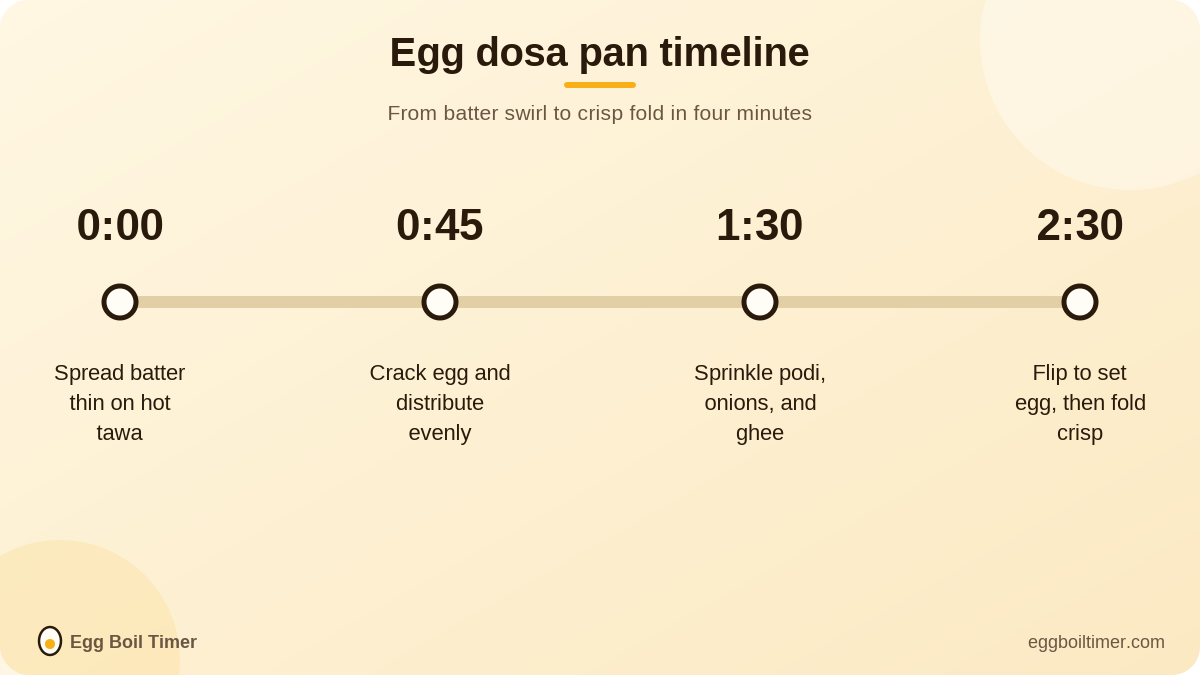
- Set the foundation: Drizzle a half-teaspoon of ghee along the edges. Cook undisturbed for 45 seconds until steam vents open and the glossy white surface turns matte.
- Apply the egg: Crack the egg onto the center. Using the back of a metal spoon, pierce the yolk and spread the liquid outward, stopping 1 cm short of the lacy rim to prevent runoff.
- Scatter seasonings: Dust the wet egg with minced shallots, green chilies, coriander, freshly cracked black pepper, and idli podi. Spoon another half-teaspoon of ghee over the toppings.
- Sear or steam: Cook for 90 seconds until the bottom crust lifts cleanly from the iron. For a toasted surface, flip the dosa and press gently for 45 seconds. For a glossy, jammy topping, omit the flip and cover the pan with an inverted bowl for 60 seconds. Fold in half and serve straight from the tawa.

Yolk Doneness: Covered Steam vs Griddle Flip
Spreading technique and pan airflow dictate whether your egg topping cooks to a custard softness or turns into a deeply toasted omelette surface.
| Target Texture | Spreading Action | Tawa Method | Pan Result |
|---|---|---|---|
| Jammy & Custardy. | Pierce yolk lightly; leave centered. | Cover with dome lid for 90 seconds without flipping. | Snapping crisp bottom beneath a thick, spoonable egg center. |
| Silky & Uniform. | Whisk with spices; coat entire surface. | Cook open 90 seconds, followed by a 30-second quick flip. | Delicate, even omelette sheet bonded flush with the crepe. |
| Charred & Crisp. | Break yolk and push thin toward edges. | Flip over medium-high heat for 60 seconds with edge oil. | Toasted shallots, browned egg edges, and maximum griddle crunch. |
Surface Tears, Egg Runoff, and Heat Corrections
Most egg dosa failures trace back to pouring raw egg before the batter proteins have gelatinized, or misjudging griddle temperature.
| Issue | Root Cause | Kitchen Correction |
|---|---|---|
| Egg runs off the sides into the pan. | Applied while batter was still wet liquid. | Wait 45 seconds until the batter surface looks matte and dry before cracking the egg. |
| Spatula tears the crepe floor. | Spreading raw egg with excessive downward force. | Angle your spoon horizontally to sweep the egg, or pre-whisk the egg in a bowl. |
| Soft, limp, and rubbery base. | Low tawa temperature trapped moisture. | Raise burner heat to medium-high and drizzle oil directly down the inner edges. |
| Scorched crust with uncooked egg. | Cast iron was overheated at the start. | Flick water droplets across the empty pan to drop surface heat before the next ladle. |
Chutney Pairings and Street-Style Variations
Egg dosa needs bright, sharp accompaniments to balance the rich emulsion of egg yolk and ghee. Traditional tea shops serve it alongside roasted gram coconut chutney, spicy onion-tomato kaara chutney, or a ladle of thin mutton salna. Leftover chicken curry gravy makes an equally authentic dipping sauce.
To vary the griddle profile, try these established regional adaptations:
- Chettinad Kari Dosa: Spoon two tablespoons of dry, spiced minced mutton keema across the egg before folding.
- Milagai Podi Ghee Roast: Double the idli podi and toast the flipped egg side in extra browned ghee until mahogany.
- Kerala Thattukada Style: Whisk the egg with thinly sliced shallots, crushed fennel seed, and torn fresh curry leaves prior to griddling.
For more stovetop egg dishes, browse our full index of Egg Recipes: Breakfast, Lunch, and Dinner Ideas. When preparing soft or hard boiled eggs alongside your breakfast spread, use our interactive Egg Boil Timer to pinpoint exact boiling minutes for cold or room-temperature eggs.
Storing Fresh Batter and Reheating Leftover Crepes
Keep fermented dosa batter in a covered container in the refrigerator for up to 5 days. Never beat raw eggs into the batch container ahead of time; raw eggs spoil quickly and ruin the active fermentation. Let chilled batter rest on the counter for 15 minutes before pouring so cold batter does not abruptly chill your tawa.
Cooked egg dosas soften quickly as the egg releases steam, so eat them fresh from the griddle. If you need to refresh an already cooked dosa, reheat it on a dry, hot skillet for 60 seconds per side. Avoid the microwave, which turns the crisp crust chewy and rubbery.