Nargesi spinach eggs, known in Iran as Nargesi-e Esfenaj, combine slow-sautéed onions, garlic, turmeric, fresh spinach, and pan-cooked eggs. The dish requires roughly 25 minutes from initial prep to table. Soft whites and liquid yolks sit over savory, turmeric-infused greens. Cooking under a tight skillet lid traps steam to set the top albumen while keeping the yolk liquid and warm.
Nargesi: The Narcissus Flower of Persian Skillet Dishes
The name Nargesi comes from the Persian word for the narcissus flower, known locally as Narges. When eggs crack onto dark spinach leaves, bright yellow yolks surrounded by white albumen resemble white narcissus blossoms blooming over green stems. This traditional Persian skillet dish sits alongside smoky eggplant specialties like Mirza Ghasemi Recipe: Persian Smoked Eggplant and Eggs and herb-packed skillet baked dishes like Kuku Sabzi: Traditional Persian Herb Frittata Recipe.
Unlike creamed spinach recipes from European culinary traditions, Nargesi relies on caramelized onions, garlic, and extra virgin olive oil for richness. A single large chicken egg (55 g) supplies 6.3 grams of protein and essential lipids. Fresh spinach provides vitamins A, C, and K, along with folate and plant-based iron. Olive oil fat helps the body absorb fat-soluble carotenoids like lutein and beta-carotene from cooked leaves. Serve this versatile skillet warm with whole-grain flatbread for breakfast, lunch, or a light evening meal.
Sautéing Aromatics: Onions, Garlic, and Turmeric Mechanics
Bland or bitter flavor in Nargesi usually stems from rushing the aromatic base. Raw spinach possesses mild earthy notes that can easily taste flat if the underlying onions and spices lack depth. Building a savory foundation requires patience during the initial sautéing phase.
Slice one large yellow onion into thin, uniform half-moons. Sauté in two tablespoons of olive oil over medium-low heat for 10 to 12 minutes. This slow heating initiates caramelization, converting complex starches into natural sugars without scorching the edges. Add three minced garlic cloves during the final two minutes. Garlic contains sensitive sulfur compounds that turn unpleasantly bitter if exposed to high heat for extended periods.
Stir in half a teaspoon of ground turmeric, half a teaspoon of fine sea salt, and freshly ground black pepper. Sautéing ground turmeric directly in warm fat for 60 seconds is essential. Turmeric contains curcumin, an oil-soluble pigment and flavor compound. Heating turmeric in oil releases aromatic terpenes while removing the raw, astringent notes present in un-sautéed powder. For special occasions, stir in a pinch of bloomed saffron water or Persian advieh spice mix before adding greens.
Moisture Evaporation and Spinach Volume Control
Excessive water ruins the texture of Nargesi, turning savory greens into a soggy mess that dilutes the egg whites. Fresh baby spinach contains roughly 91% water by weight. Throwing 400 g of raw leaves into a pan at once drops skillet temperature sharply, trapping steam and releasing excess liquid that cannot evaporate quickly enough.
Add fresh baby spinach in three distinct batches. Stir each batch over medium-high heat until leaves collapse within 30 to 40 seconds before adding the next batch. Once all greens enter the pan, cook uncovered for an additional 3 to 4 minutes until liquid on the pan bottom evaporates completely. 400 grams of fresh spinach shrinks down to approximately 120 grams of concentrated cooked greens.
Before cracking the eggs, use the back of a large spoon to press four shallow wells into the spinach bed. Push greens aside slightly so the well floor exposes the hot pan metal. Cracking eggs into these specific cavities allows the bottom albumen to make direct contact with the pan surface, accelerating setting while holding the egg structure firmly in place.
Precision Egg Timing for Nargesi Skillets
Achieving your target egg yolk texture requires careful control of steam and pan temperature. Placing a lid over the skillet traps rising steam, which cooks the upper layer of white without requiring you to flip the egg. Check our central Egg Boil Timer cooking tool or dedicated Fried Egg Timer: How to Fry an Egg to Any Doneness guide to fine-tune timings for different stove heat outputs.
| Yolk Preference | Lid Steam Time (Medium-Low Heat) | Target Yolk Temp | Albumen and Yolk Consistency |
|---|---|---|---|
| Liquid Yolk (Runny) | 3:00 to 3:30 | 63 °C | Whites completely set, glossy yolk liquid inside. |
| Jammy Yolk (Soft) | 4:00 to 4:30 | 66 °C | Whites firm, yolk edge soft and center fudge-like. |
| Firm Yolk (Hard) | 5:30 to 6:00 | 77 °C | Whites firm, yolk solid pale yellow throughout. |
Turn off the heat roughly 30 seconds before your desired doneness time. Heavy cast iron or stainless steel skillets retain considerable thermal energy, continuing to cook the albumen and yolk after leaving the burner.
Fixing Soggy Spinach, Bitter Garlic, and Rubbery Yolks
Even simple skillet recipes can run into technical issues. Diagnosing small cooking errors guarantees consistent results every time you prepare Nargesi.
If liquid pools around the spinach leaves when you make wells, the greens were not cooked long enough uncovered. Push the spinach to one side of the pan, tilt the skillet slightly, and let the pooled water boil away over medium heat for 60 seconds before cracking the eggs.
If the overall dish tastes flat or lacking depth, seasoning was applied too late. Salt must be added to the onions and spinach during sautéing so the leaves absorb flavor during thermal breakdown. Sprinkle a tiny pinch of flake sea salt directly onto each yolk right after cracking.
If whites turn tough and rubbery while yolks remain completely cold, skillet heat was too high. Excessive bottom heat overcooks lower whites before trapped steam can heat the upper white. Keep burner heat on medium-low once eggs enter the pan and ensure the lid seals tightly.
If garlic leaves a harsh, acrid taste, it was added too early or cooked over high heat. Always add minced garlic after onions have softened, and never let garlic brown beyond a light golden hue.
Flatbread Pairings and Fresh Versus Frozen Spinach Rules
Serve Nargesi warm directly from the pan. Traditional Persian breakfast or light dinner spreads pair this skillet dish with sangak, barbari, or lavash flatbreads. The bread serves as the primary eating utensil for scooping up warm spinach and runny yolk. Accompany the meal with fresh radishes, spring onions, mint leaves, and a side bowl of plain whole-milk yogurt or mast-o khiar.
Frozen spinach provides a convenient substitute when fresh baby spinach is unavailable. Thaw 250 g of frozen whole-leaf spinach in warm water. Wrap thawed spinach in a clean kitchen towel or cheesecloth and squeeze aggressively to eliminate trapped moisture. Squeezing reduces water content below 15%, preventing soggy greens when added to caramelized onions.
For flavor variations, sprinkle crushed sumac, Aleppo pepper flakes, or dried mint over finished eggs before serving. To explore other international skillet egg dishes, compare this recipe with North African Shakshuka: Eggs Poached in Spiced Tomato Sauce or sweet Persian Khagineh Recipe: Traditional Persian Sweet Omelet. Discover additional skillet ideas inside our Egg Recipes: Breakfast, Lunch, and Dinner Ideas hub.
Persian Nargesi Spinach and Eggs Recipe
Follow these structured instructions to prepare a balanced two-serving Persian spinach skillet.
- Prep time: 10 minutes
- Cook time: 15 minutes
- Yield: 2 servings
Ingredients
- 4 large chicken eggs
- 400 g fresh baby spinach (or 250 g frozen spinach, thawed and thoroughly squeezed dry)
- 1 large yellow onion, thinly sliced into half-moons
- 3 cloves garlic, finely minced
- 2 tablespoons extra virgin olive oil
- 1/2 teaspoon ground turmeric
- 1/2 teaspoon fine sea salt (divided)
- 1/4 teaspoon freshly ground black pepper
- Flatbread, plain yogurt, and fresh herbs for serving
Method
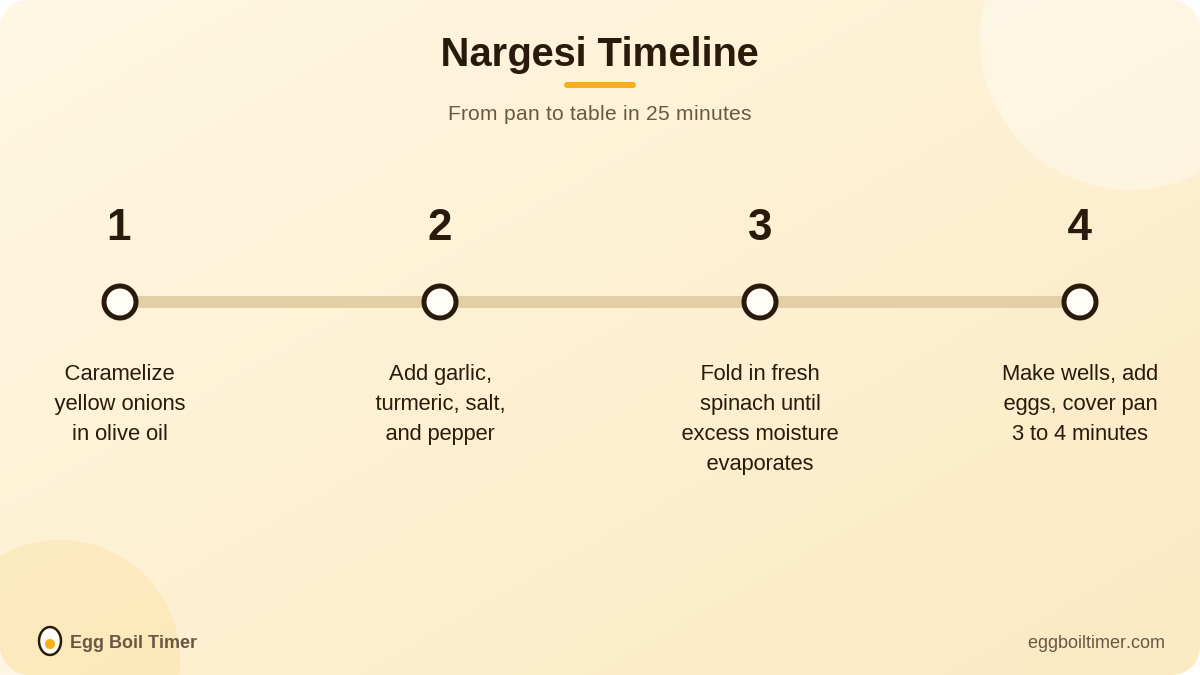
- Caramelize onions: Heat olive oil in a wide 26 cm skillet over medium-low heat. Add sliced yellow onions and cook for 10 to 12 minutes, stirring occasionally until soft and golden brown.
- Incorporate aromatics: Add minced garlic, ground turmeric, black pepper, and half the sea salt. Sauté for 90 seconds until highly fragrant.
- Wilt spinach: Add fresh spinach in three batches, stirring after each addition until leaves collapse. Cook uncovered over medium heat for 4 to 5 minutes until pan floor remains dry.
- Form wells and add eggs: Reduce heat to low. Make four shallow wells in the spinach bed down to the metal surface. Crack one egg into each well. Season exposed yolks with remaining salt.
- Cover and steam: Place a tight lid on the skillet. Cook for 3 minutes and 30 seconds for runny yolks, or 5 minutes for firm yolks.
- Serve: Remove skillet from heat immediately. Garnish with black pepper or sumac if desired, and serve warm with flatbread and plain yogurt.


