Khagineh is a traditional Persian sweet omelet that bridges breakfast and dessert. Cooks whisk fresh eggs with plain yogurt and flour, fry the golden pancake in butter, and saturate the warm skillet with aromatic saffron syrup. Ready in 25 minutes, this Iranian dish yields crisp edges, a tender interior, and rich floral aromas.
Ratios for the egg batter and saffron syrup
Khagineh relies on two distinct elements: an aromatic spice syrup and an unsweetened egg batter. Unlike Western sweet crepes where sugar blends directly into raw eggs, Khagineh keeps the batter sugarless. This unsweetened foundation acts as an edible sponge, ready to absorb warm syrup immediately after cooking.
Three large eggs provide roughly 19 grams of protein, forming the structural foundation of the pancake. Whole-milk yogurt contributes mild lactic acid. That acidity tenderizes egg albumen proteins, preventing them from turning tough under skillet heat. A measured amount of flour and baking powder traps rising steam inside the pan. This reaction creates microscopic air pockets that draw in syrup later.
Some Persian home cooks add a teaspoon of cornstarch alongside all-purpose flour. Cornstarch lowers total gluten content, ensuring a crisp exterior with a delicate, melt-in-the-mouth center.
- Saffron syrup: Combine 200 g granulated sugar, 180 ml water, 2 tablespoons rosewater, 1/4 teaspoon bloomed saffron, and 1/2 teaspoon ground cardamom.
- Egg batter: Whisk 3 large room-temperature eggs, 45 g plain whole-milk yogurt, 25 g all-purpose flour, 1/2 teaspoon baking powder, 1/4 teaspoon ground cardamom, and 1/8 teaspoon fine salt.
- Frying and garnish: Prepare 30 g unsalted butter for frying, 20 g chopped walnuts, 10 g slivered pistachios, and 1 teaspoon dried edible rose petals.
Cooking the syrup and setting the skillet pancake
Preparing the saffron syrup before heating the skillet allows the liquid to cool down. Room-temperature syrup preserves the delicate structural integrity of hot fried eggs.
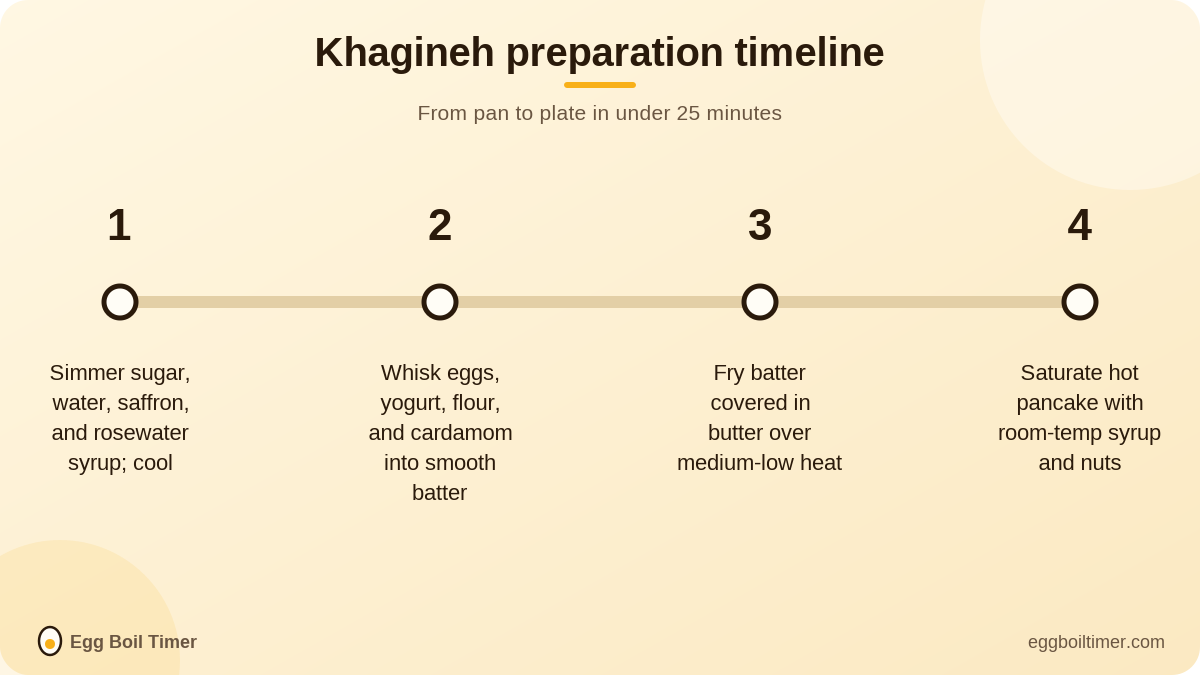
- Simmer the syrup base: Combine sugar and water in a small saucepan over medium heat. Stir for 3 minutes until sugar crystals dissolve completely. Lower the heat, stir in bloomed saffron and cardamom, and simmer gently for 8 minutes. Remove the saucepan from heat, stir in rosewater, and let the syrup cool.
- Whisk room-temperature eggs vigorously in a large mixing bowl for 2 minutes until light and frothy. Warm eggs trap air bubbles far better than chilled eggs straight from the refrigerator.
- Blend the batter: Add plain yogurt, ground cardamom, and salt to the beaten eggs. Sift in flour and baking powder. Whisk gently until smooth. Never over-whisk the batter once flour enters the bowl, as excess gluten creates a rubbery texture.
- Fry and crisp: Melt butter in a 20 cm non-stick skillet over medium-low heat. Pour in the batter and swirl to coat the pan evenly. Cover with a tight-fitting lid and cook for 5 to 7 minutes until the top surface sets completely. Slide a wide silicone spatula beneath the pancake, flip carefully, and cook uncovered for 2 minutes until the second side turns rich golden brown.
- Soak and garnish: Pour room-temperature syrup over the hot pancake directly in the skillet. Let the pan rest off heat for 5 minutes while the egg matrix absorbs the liquid. Top with chopped walnuts, pistachios, and rose petals before slicing.

Temperature contrast and liquid absorption mechanics
Soaking a hot egg pancake in dense spice syrup requires exact temperature regulation. Cooking egg proteins creates a springy structural matrix. Yogurt and flour expand that network into fine open cells.
When boiling syrup hits a scorching pancake, intense heat breaks down flour starches. That thermal shock turns the crumb gummy and mushy. Conversely, pouring chilled syrup onto a cold pancake fails entirely because thick sugar viscosity blocks surface penetration.
Pouring room-temperature syrup over a hot skillet pancake creates an inward thermal draft. As hot air pockets inside the egg cool and contract, they pull liquid deep into the sponge. You can calibrate basic egg cooking times with our Egg Boil Timer main egg timer or discover other pan traditions in our guide to Egg Recipes: Breakfast, Lunch, and Dinner Ideas.

Regional Persian variations and nut-stuffed styles
Cooks across Iran and Azerbaijan adapt Khagineh to local crops and sweetener traditions. In Tabriz, cooks call the dish Gheyganakh. Tabrizi home cooks often prepare a stuffed version known as Khagineh-ye Maghz-dar. They scatter crushed walnuts, cinnamon, and cardamom over half the batter before folding the omelet into a plump crescent.
Central provinces often replace refined sugar syrup with concentrated grape molasses, known as Doshab. This yields a dark pancake carrying deep caramel undertones.
| Regional Style | Primary Sweetener | Batter or Filling | Final Texture |
|---|---|---|---|
| Tabrizi Gheyganakh. | Saffron sugar syrup. | Walnut, cinnamon, and cardamom center. | Crisp folded crescent with aromatic nut core. |
| Khagineh-ye Maghz-dar. | Spiced sugar syrup. | Layered crushed walnuts and dried rose petals. | Thick omelet with a crunchy filling. |
| Doshab Khagineh. | Grape molasses syrup. | Whole milk in batter with extra cardamom. | Dark crumb with rich fruit sweetness. |
| Honey and Walnut. | Warm raw honey syrup. | Coarsely ground walnuts folded into batter. | Dense slice with a glossy sheen. |
| Zanjani Style. | Sugar mixed into batter. | Ground nutmeg and liquid saffron in eggs. | Thin crepe-like texture without syrup soak. |
Grape molasses provides rich natural fruit sweetness without processed sugar. Dilute 120 ml of grape molasses with 60 ml of warm water before soaking. This lower viscosity allows the syrup to penetrate the egg crumb smoothly.
Historical roots in Persian culinary traditions
Khagineh holds an established place in classical Persian culinary writing. Court records from the Qajar Dynasty, including the historic cookbook Sofreh At'ameh, describe several sweet egg skillet preparations served at royal banquets. Persian cooks valued eggs for their versatility and swift preparation during elaborate gatherings.
Today, families serve Khagineh during festive Nowruz mornings and wedding celebrations. It offers a fragrant cultural alternative to Western breakfast staples like French Toast: The Ratio, Bread Choice, and Pan Heat and fluffy Fluffy Eggnog Pancakes: Spiced Holiday Griddle Recipe.
Fixing soggy centers, tough eggs, and burnt butter
Managing skillet heat and liquid temperature solves almost every common failure. The diagnostic guide below outlines simple solutions for pan issues and texture faults.
| Symptom | Root Cause | Corrective Action |
|---|---|---|
| Soggy or falling apart. | Syrup poured boiling hot onto hot pancake. | Cool syrup to room temperature. Keep pan uncovered while soaking. |
| Tough or rubbery crumb. | Batter over-whisked after adding flour. | Fold flour in gently. Cook covered on low heat so steam puffs eggs. |
| Syrup turns cloudy or grainy. | Syrup boiled too long or stirred cold. | Simmer gently without stirring. Add a drop of lemon juice to stop crystallization. |
| Pancake sticks or scorches. | Skillet lacked butter or heat was too high. | Use a heavy 20 cm non-stick pan over medium-low heat. |
| Syrup pools without absorbing. | Pancake cooled down before syrup was added. | Pour room-temperature syrup immediately while the pancake is hot. |
Heavy cookware distributes burner heat evenly across the entire pan bottom. This prevents hot spots and scorching while the egg interior finishes cooking under the lid.


