A well-crafted breakfast burrito balances tender scrambled eggs, savory breakfast meat, seasoned potatoes, and melted cheese wrapped tightly inside a warm flour tortilla. Texture decides everything. When made properly, the flour exterior turns deeply crisp on a dry griddle while the interior remains creamy, savory, and rich without leaking liquid onto your hands. Preparing these wraps in advance provides fast morning fuel that reheats evenly.
Trapped Steam and Tortilla Breakdown
Steam ruins tortillas. Rolling steaming hot eggs or watery vegetables straight into a cold flour round traps condensation against the interior starch wall. The gluten matrix dissolves. Within minutes, the soaked wrapper softens into a gummy paste that splits open under the weight of your fillings.
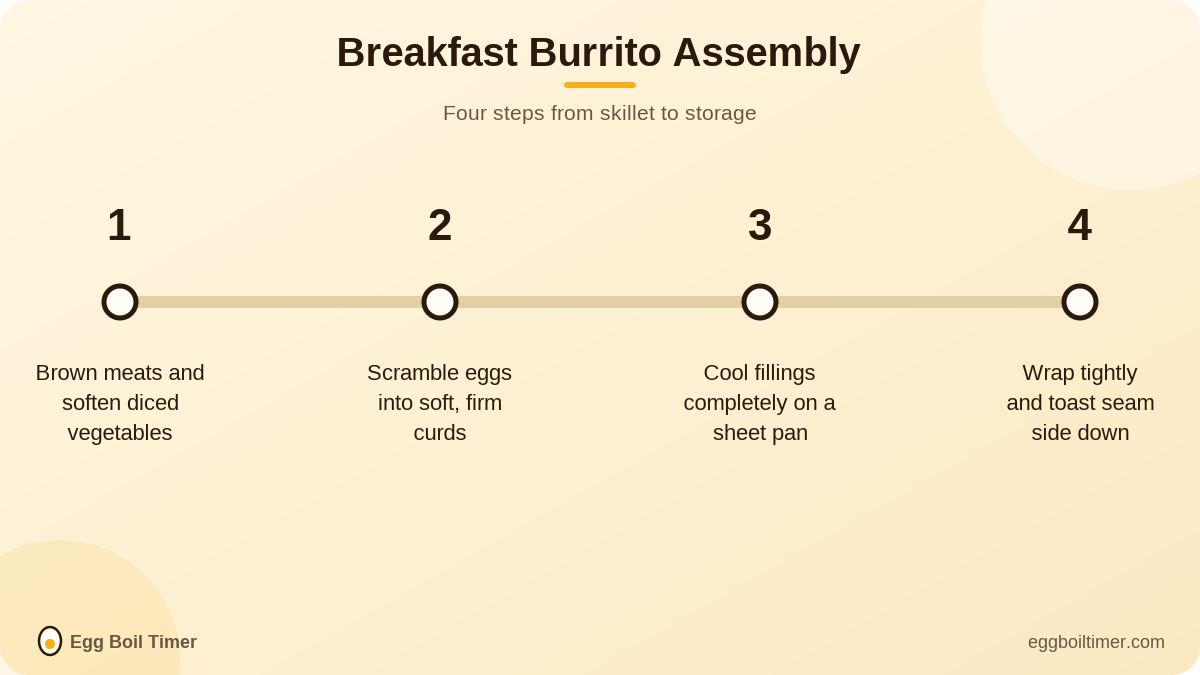
Three rules prevent sogginess. Cool every cooked filling on a flat sheet pan. Fat acts as a water barrier, so scatter shredded cheese directly over the warm wrapper before layering the remaining ingredients. Blot sausage drippings thoroughly. If you enjoy spicy Mexican egg formats like Huevos Rancheros Recipe: Authentic Mexican Fried Eggs, keep liquid salsa on the side as a dipping sauce rather than folding it into the wrap.
Core Ingredients and Skillet Sequencing
Plan ahead. One skillet handles the entire prep sequence when you cook each ingredient in order. Searing the components step by step infuses the vegetables and potatoes with savory rendered drippings while keeping cleanup simple.
- Six large 30 cm (12-inch) flour tortillas. Small taco rounds tear.
- Eight large eggs whisked with fine salt and black pepper. Each large whole egg delivers roughly 6.3 g protein, supplying the structural protein base for your breakfast.
- 250 g bulk pork breakfast sausage or thick-cut bacon, browned and drained. Chorizo works equally well.
- 300 g russet potatoes or frozen hash browns, pan-fried in sausage drippings until deeply golden. Crisp edges hold up best.
- One small yellow onion and one bell pepper, finely diced and cooked until dry.
- 150 g freshly shredded sharp cheddar or Monterey Jack. Pre-shredded bagged cheese contains potato starches that prevent a smooth melt.
Brown the sausage first. Break the meat into fine crumbs over medium heat so it disperses evenly across every bite. Remove the meat with a slotted spoon, leaving two tablespoons of rendered fat in the pan. Fry the diced potatoes in those seasoned drippings until golden brown and crisp on the edges. Soften the onions and peppers last until all free water cooks away completely.
Moisture Control for Scrambled Burrito Eggs
Moisture control dictates success. Wet, custardy curds ruin burritos because trapped residual heat and freezing force the egg proteins to contract and weep free liquid into the tortilla. Conversely, hard-scrambled dry eggs turn into rubbery pellets upon reheating. Aim for medium curds. The baseline timing matches level 2 in our Egg Boil Timer scrambled egg model.
Whisk the eggs thoroughly. Melt 15 g unsalted butter in a nonstick skillet set over medium-low heat before pouring in the seasoned egg mixture. Push curds slowly toward the center. Pull the pan off the burner early while the eggs still look glossy and soft. Residual pan heat finishes setting the curds to roughly 75 °C (167 °F).
Spread the cooked eggs onto a wide, shallow plate. Cool them completely. Warm curds generate steam inside the rolled tortilla. For other high-protein egg prep ideas, explore our full index of Egg Recipes: Breakfast, Lunch, and Dinner Ideas.
Folding Technique: Locking in Fillings Without Tears
Cold wraps tear. Warm each flour tortilla on a dry griddle for fifteen seconds per side until completely pliable, or microwave the stack under a damp cloth for twenty seconds.
- Scatter 25 g of shredded cheese along the lower third of the warmed tortilla, leaving a 5 cm border on the sides. Cheese creates an effective moisture barrier.
- Arrange an even strip of cooled potatoes directly over the cheese, followed by the drained sausage and softened peppers.
- Spoon the cooled scrambled eggs on top. Keeping eggs away from direct tortilla contact protects structural integrity.
- Fold the left and right sides inward over the filling edges. Pull the bottom edge up and over the ingredients, using your fingertips to draw the filling backward into a compact cylinder. Roll forward firmly toward the top edge, resting the burrito on its seam.
- Set a skillet over medium heat with a light film of oil. Toast seam-side down for two minutes. Flip and crisp the top.
Freezing Protocol and Reheating Pathways
Temperature control matters. Never place warm burritos directly into the freezer. Trapped interior warmth causes large ice crystals to form on the tortilla, which melt into water when thawed. According to USDA food safety standards, perishable cooked foods must cool down to 4 °C (40 °F) or below before freezing.
Double wrapping protects freshness. Wrap each cooled burrito tightly in unbleached parchment paper to absorb surface condensation during thawing. Follow with heavy foil. This outer layer seals out moisture and prevents freezer burn. Store the wrapped bundles in an airtight freezer bag for up to three months.
When you are ready to eat, follow one of three reheating pathways to reach the safe internal temperature of 74 °C (165 °F):
- Oven or Toaster Oven: Keep the burrito wrapped in foil. Heat at 190 °C (375 °F) for 30 to 35 minutes directly from frozen, or 20 minutes if thawed overnight in the refrigerator. Open the foil for the final five minutes to crisp the tortilla exterior.
- Microwave plus Skillet: Discard foil. Keep the parchment paper wrap loosely in place. Microwave at 50% power for two minutes, flip, and heat for another minute until hot throughout. Toast in a hot, dry skillet for sixty seconds per side to restore crispness.
- Air Fryer: Unwrap completely. Cook at 160 °C (320 °F) for fifteen minutes from frozen, flipping halfway through cooking.
Diagnostic Table for Burrito Texture Failures
Moisture shifts during storage. The matrix below outlines how to correct the four most common breakfast burrito flaws quickly.
| Defect Observed | Primary Cause | Corrective Technique |
|---|---|---|
| Soggy, translucent bottom tortilla | Assembled while fillings were hot; steam trapped inside wrap. | Cool all components on flat trays to room temperature before rolling. |
| Tortilla tears at the side seams | Cold, stiff tortilla, or overfilling past the center line. | Warm tortillas for 15 seconds on a griddle; maintain 5 cm clean side margins. |
| Rubbery, weeping egg curds after reheating | Overcooked during initial scramble; high-heat microwave reheating. | Pull eggs off heat while glossy; reheat at 50% microwave power before searing. |
| Frozen center with burned exterior shell | High oven heat applied to rock-hard frozen core. | Keep foil wrapped for 30 minutes at 190 °C (375 °F) or thaw overnight in the fridge. |
Custom Fillings and Dietary Adaptations
Fillings must stay dry. Similar to baking a vegetable Frittata Recipe: The Italian Skillet Method and Fillings, wet vegetables require precooking in an open pan to drive off free moisture before rolling.
Beans make an excellent vegetarian base. Drain canned pinto or black beans thoroughly, then simmer them with ground cumin until the liquid cooks away into a thick, dry paste. Squeeze greens dry. If adding spinach, wilt the leaves in butter and wring out all remaining moisture using a clean kitchen towel before rolling.
Never freeze fresh salsa. Diced tomatoes break down into watery slush when frozen and thawed, dissolving the surrounding starch wrapper. Instead, stir roasted diced poblanos or pickled jalapeños into the potato skillet for internal heat. Keep fresh salsas, sour cream, and sliced avocado chilled in bowls for dipping at the table.


