A traditional Filipino silog pairs sinangag (garlic fried rice) with an itlog (fried egg) and a savory protein known as ulam. The entire dish relies on high-heat starch caramelization, rendered fat, and a golden runny egg yolk that creates a natural sauce for the garlic-rich grains underneath.
The Anatomy of a Filipino Silog Breakfast
The name silog is a portmanteau joining two staple culinary terms: sinangag (garlic fried rice) and itlog (fried egg). The prefix changes depending on the protein chosen to anchor the plate. Combining tapa (cured beef) yields tapsilog, tocino (sweet cured pork) forms tocilog, and longganisa (garlicky sausage) creates longsilog. While traditionally served for breakfast across the Philippines, silog appears at all hours in road-side eateries (carinderias) and home kitchens alike.
Balance on the plate comes from simple contrasts. Cured meat brings sweet or salty density, cold day-old rice absorbs rendered garlic oil, and a crisp-edged fried egg adds rich moisture. A single large egg provides roughly 6.3 grams of protein, which helps turn simple fried rice into a complete meal. A splash of spiced cane vinegar or pickled papaya (atchara) cuts through the heavy fat with necessary acidity.
Cooking Sinangag: Moisture Control and Garlic Calibration
Garlic rice forms the base of every silog variant. The most frequent failure is soggy rice caused by excess surface moisture. Freshly cooked warm rice releases steam in the pan, softening the grain exteriors until they clump into a gummy mass instead of frying individually.
- Select and prep the rice: Use jasmine or long-grain white rice cooked the day before and stored uncovered in the refrigerator. Cold air dehydrates the grains. Before adding the rice to the skillet, damp your hands with cold water and break firm clumps into loose, separate grains.
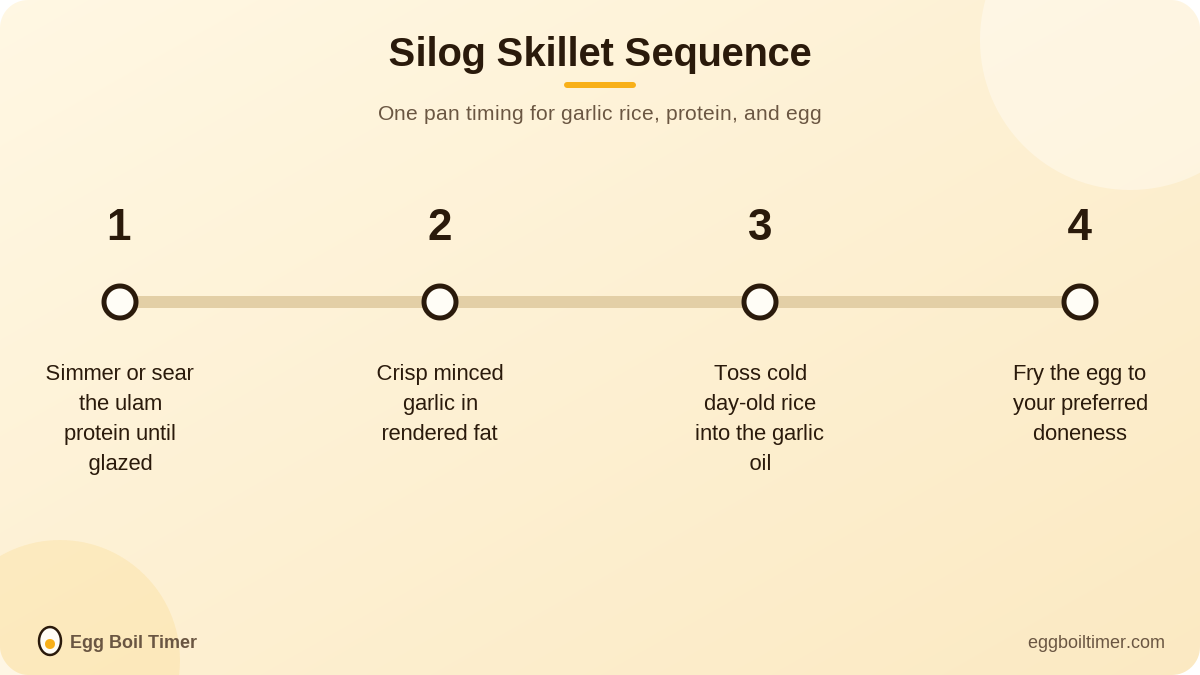
- Infuse the oil slowly: Mince 6 to 8 fresh garlic cloves per four cups of rice. Heat two tablespoons of neutral oil in a wide skillet over low-medium heat. Add the garlic immediately. Fry slowly for 2 to 3 minutes until light straw-yellow. Dark garlic turns bitter.
- Sear and season: Turn the burner heat to high and add the cold rice. Toss continuously for 4 to 6 minutes, ensuring every grain coats in garlic oil. Sprinkle with fine sea salt to taste. Stir-fry until the rice becomes fragrant, light, and slightly crisp around the edges.
If you enjoy fried rice variations across Asian cuisines, explore our step-by-step guide on Egg Fried Rice Recipe: Dry Grains, High Heat, and Fast Stir-Frying">egg fried rice for alternative wok techniques.
Fried Egg Mechanics: Skillet Heat, Edges, and Yolk Settings
The ideal egg for a silog features lacey, crispy brown outer whites alongside a soft, liquid yolk that runs across the rice when punctured. Achieving this requires regulating oil temperature and tracking cooking seconds accurately using our Egg Boil Timer">egg timer tool.
Heat two tablespoons of neutral oil or bacon fat in a nonstick pan or seasoned cast-iron skillet over medium-high heat until shimmer appears. Crack a large fridge-cold egg straight into the hot oil. The outer edges of the albumen bubble immediately and expand. Lower the heat slightly to medium so the white cooks through without blackening the base.
| Doneness Level | Skillet Time | Technique Details | Yolk Texture |
|---|---|---|---|
| Sunny-Side Up | 3:00 (180s) | No flip. Spoon hot oil over thick white around yolk. | Completely liquid and warm |
| Over Easy | 3:30 (210s) | Flip at 2:50 mark. Cook top side for 40 seconds. | Thick runny center |
| Over Medium | 4:30 (270s) | Flip at 3:20 mark. Cook top side for 70 seconds. | Jammy and custard-like |
| Over Hard | 5:30 (330s) | Flip at 3:20 mark. Cook top side for 130 seconds. | Fully set and firm throughout |
Tocino, Longganisa, and Tapa: Cooking the Ulam Component
The protein selection determines the personality of your silog. Cured meats demand a specific cooking sequence to prevent surface sugars from charring before the center reaches temperature.
- Pork Tocino: Sweet cured pork loin or belly thinly sliced. Place the meat in a skillet with half a cup of water. Simmer covered over medium heat until the water completely evaporates. Lower the heat to allow the rendered pork fat to fry the meat in its own sugar glaze for 2 minutes per side until caramelized.
- Longganisa: Filipino garlic or sweet sausage link. Add sausages to a pan with 1/3 cup of water. Prick skins with a toothpick, then simmer until the water dries up. Let the sausage casing sizzle in the rendered fat for 4 to 5 minutes, rolling frequently until shiny mahogany and cooked through.
- Beef Tapa: Thinly sliced cured beef sirloin marinated in calamansi or vinegar, soy sauce, and minced garlic. Heat one tablespoon of oil in a skillet over high heat. Flash-fry the drained beef strips in a single layer for 1.5 to 2 minutes per side to prevent drying out.
Plating Strategy: Balancing Heat, Fat, and Acidity
Plating silog effectively preserves temperature and texture differences across elements. Pack the cooked garlic fried rice tightly into a small bowl, invert it onto one side of a warm shallow plate, and lift the bowl off to form a tidy rice dome.
Arrange the cooked ulam beside the rice dome. Gently slide the fried egg over the junction where the rice meets the meat, allowing lacey whites to rest slightly up the side of the rice mound. Serve immediately alongside sliced fresh cucumbers, ripe tomato wedges, and a small dipping dish of spiced cane vinegar packed with crushed garlic, bird's eye chilies, and whole black peppercorns.
Fixing Sticky Rice, Burnt Garlic, and Undercooked Meat
Achieving clean results at home comes down to heat control and moisture management. Use this grid to diagnose common cooking errors quickly.
| Symptom | Root Cause | Direct Fix |
|---|---|---|
| Rice becomes mushy or sticky in the pan | Using warm, fresh rice with high moisture levels | Use chilled day-old rice, uncover in fridge, and break up grains prior to frying |
| Garlic tastes sharp and bitter | Fried too fast at high temperature or burned in dry skillet | Add garlic to cold oil over low-medium heat; add rice as soon as garlic turns pale yellow |
| Egg white remains raw around yolk while bottom burns | Pan heat set too high without covering or basting | Lower stove heat slightly and baste top white with hot pan oil or pop a pan lid on for 30s |
| Tocino or longganisa burns on outside while raw inside | Frying high-sugar cured meat in dry hot oil directly | Simmer meat in water first to cook interior before letting rendered sugars caramelize |
Regional Silog Combinations and Dip Customization
Beyond the classic trio of tapa, tocino, and longganisa, regional variations throughout the Philippine archipelago highlight coastal seafood and preserved canned favorites. Bangsilog features a pan-fried marinated milkfish (bangus) topped with crispy garlic flakes. Cornsilog uses savory corned beef sautéed with diced onions, while Hotsilog uses red Filipino-style hot dogs.
Street food enthusiasts curious about other iconic Filipino egg preparations should check out our guide on Crispy Kwek Kwek: Filipino Fried Orange Quail Eggs">kwek-kwek (deep-fried orange batter quail eggs). If you enjoy Asian breakfast staples featuring rolled or folded egg techniques, explore our articles on Telur Gulung: Indonesian Street-Style Rolled Skewer Eggs">telur-gulung and Omurice: Master Japanese Omelette Rice at Home">omurice for technical inspiration from neighboring culinary traditions.
Customize your dipping vinegar to suit the protein. Sweet meats like tocino pair best with extra spicy, garlic-heavy vinegar, whereas salty beef tapa excels with a simple splash of calamansi citrus juice and soy sauce.


