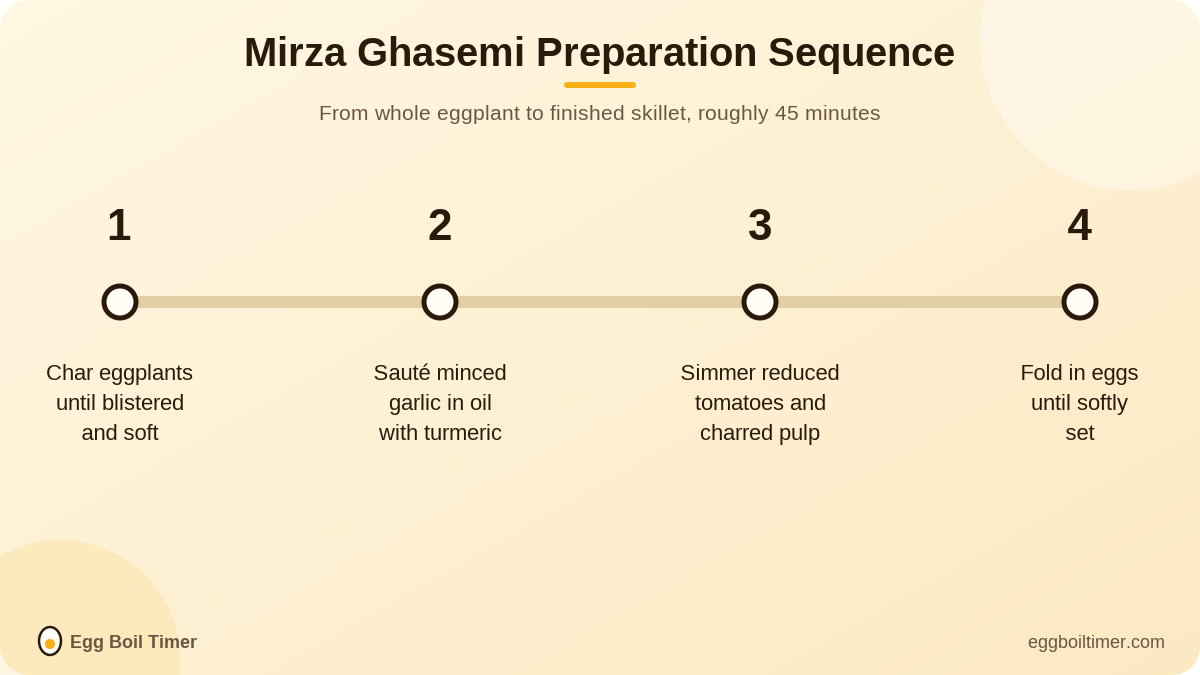
Mirza Ghasemi is a traditional Northern Persian dip and main dish from Gilan made by combining fire-charred eggplants, abundant garlic, ripe tomatoes, and softly set eggs. An authentic pan starts by charring whole eggplants directly over an open flame for 15 to 20 minutes. The peeled pulp simmers with sautéed garlic and reduced tomatoes before large eggs are folded in during the final 3 minutes of cooking.
Mirza Ghasemi: The Smoky Eggplant Staple of Gilan
Originating in the Caspian province of Gilan during the 19th century, Mirza Ghasemi balances strong garlic with rich, smoke-infused eggplant flesh. Named after Mohammad Ghasem Khan Vali, a 19th-century governor of Rasht, the dish remains a cornerstone of Iranian home cooking. Middle Eastern eggplant dips such as baba ganoush rely on tahini and cold service. Mirza Ghasemi arrives hot or warm directly from the skillet.
Eggs play both a structural and culinary role in this dish. They add protein while softening the sharp acidity of cooked tomatoes. A single large egg contains about 6.3 g of high-quality protein, making the combined skillet a nutritious center of a meal. In Northern Iran, local cooks serve it as an appetizer with crisp flatbread or as a main course alongside Caspian-style boiled rice (Egg Recipes: Breakfast, Lunch, and Dinner Ideas). Understanding how the ingredients interlock helps you control texture and aroma without overwhelming the natural sweetness of the char.
Charring Eggplants for Maximum Smoke: Fire, Broiler, and Stovetop
The defining character of Mirza Ghasemi comes from intense skin blistering, which transfers smoke compounds deep into the interior flesh. Choose medium globe or Italian eggplants weighing 350 g to 450 g each. Their high skin-to-flesh ratio concentrates the smoky taste during roasting.
| Method | Temperature / Heat Level | Active Time | Smoke Intensity | Best For |
|---|---|---|---|---|
| Open Gas Flame | Direct high flame on burner | 15–20 min | High (Authentic) | Gas stoves, outdoors |
| Charcoal Grill | Direct coals at 230 °C | 20–25 min | Maximum | Outdoor cooking |
| Oven Broiler | Top rack, max heat (260 °C) | 25–30 min | Moderate | Electric kitchens |
| Cast Iron Dry Roast | Medium-high skillet heat | 30–35 min | Mild to Moderate | Indoor, minimal mess |
Turn the eggplants every 4 to 5 minutes using tongs. The skin should turn black and papery, while the center yields easily when pressed. Immediately transfer the hot eggplants to a bowl and cover tightly with a plate for 10 minutes. The trapped steam loosens the skin from the flesh, allowing you to peel off the charred coat cleanly under cool running water or with moist fingers. Drain the peeled pulp in a colander for 5 minutes to remove excess liquid before coarsely chopping or mashing it with a fork.
Building the Garlic-Heavy Tomato Base
Garlic gives Mirza Ghasemi its aromatic backbone. Traditional Caspian recipes call for an entire head of garlic (roughly 8 to 10 cloves) sliced thin or finely crushed. Frying the garlic correctly prevents harsh bitterness while extracting rich flavor into the cooking oil.
Heat 3 tablespoons of extra virgin olive oil or vegetable oil in a wide skillet over medium heat. Add the minced garlic and 1 teaspoon of ground turmeric. Sauté for 60 to 90 seconds just until the garlic turns light golden and aromatic. Do not allow the garlic to brown deeply, as burnt garlic ruins the sweet undertone of the sauce.
Add 400 g of peeled, finely chopped fresh tomatoes or canned plum tomatoes, plus 1 tablespoon of tomato paste for color depth. Lower the heat to medium-low and simmer for 10 to 12 minutes until liquid evaporates and red oil separates from the tomato pulp.
Stir in the mashed charred eggplant, 1 teaspoon of kosher salt, and half a teaspoon of freshly cracked black pepper. Simmer uncovered for 8 to 10 minutes until the mixture forms a thick, cohesive jam with no pooled liquid. Reducing the sauce before adding eggs prevents a runny pan, similar to Mediterranean Shakshuka: Eggs Poached in Spiced Tomato Sauce or Turkish Menemen Recipe: Turkish Scrambled Eggs with Tomatoes.
Folding, Scrambling, or Poaching the Eggs
How you introduce eggs determines the final bite and visual presentation of Mirza Ghasemi. Regional cooks practice three distinct techniques, ranging from fully integrated creamy streaks to distinct poached yolk pockets.
- The Classic Soft Fold: Crack 3 to 4 large eggs directly into a small bowl and whisk lightly with a pinch of salt. Push the simmering eggplant mixture to the outer edges of the skillet, creating a well in the center. Pour the eggs into the middle. Let them sit untouched for 60 seconds until the bottom begins to set at approximately 62 °C to 65 °C. Using a wooden spoon, gently fold the setting whites and yolks outward into the surrounding eggplant base. Continue cooking on low heat for 2 minutes until the eggs form soft, moist curds throughout the pan.
- The Visible Scramble: Whisk the eggs in a separate pan and cook them into soft curds. Gently fold them into the finished eggplant sauce right before taking the skillet off the heat. This retains clear yellow and white pockets without clouding the dark red color of the tomato base.
- The Poached Yolk Well: Make 3 or 4 small indentations in the top of the simmering sauce. Crack one whole egg into each well and cover the skillet. Cook on low heat for 4 to 5 minutes until whites set while yolks stay runny. Guests break the warm yolks at the table, creating a silky coating over the rustic dip.
For those avoiding animal products, crumbled silken tofu seasoned with a pinch of black salt (kala namak) provides a similar texture and subtle sulfurous note without changing the cooking order.
Diagnosing Watery Sauce, Lack of Smoke, and Tough Eggs
Even straightforward regional recipes can run into texture or flavor issues if heat levels and timing drift. Use this troubleshooting guide to correct your pan on the fly.
| Issue | Cause | Direct Fix |
|---|---|---|
| Watery puddle around dip | Tomatoes or eggplants were not reduced before adding eggs | Push sauce to skillet sides, widen center well, and cook uncovered on medium heat until steam clears. |
| Weak smoky flavor | Broiler or oven roasting without direct skin charring | Add 1/4 teaspoon of food-grade liquid smoke or 1/2 teaspoon of smoked paprika with the garlic. |
| Rubbery, dry egg pieces | Eggs cooked over high heat or left too long on active flame | Remove skillet from burner 30 seconds before eggs look fully set; residual pan heat finishes cooking. |
| Bitter garlic aftertaste | Garlic browned too quickly in hot oil | Sauté garlic on medium-low heat alongside turmeric; add tomatoes immediately once garlic turns golden. |
| Tough eggplant strands | Eggplant skin was undercooked or pulp was undersliced | Mash peeled eggplant flesh thoroughly on a cutting board using a knife or potato masher before sautéing. |
Serving Mirza Ghasemi: From Mezze to Main Course
Serve Mirza Ghasemi hot or warm, straight from the cast iron or stainless skillet. In Iran, hot Persian flatbreads such as Barbari, Sangak, or Lavash are essential for scooping up the dip. The contrast between warm, crispy yeast bread and rich, garlic-laden eggplant makes it a popular lunch or appetizer choice.
In Gilani tradition, serve Mirza Ghasemi as a main course with hot Persian rice. Steamed white rice or pot-cooked kateh works exceptionally well. Pair the meal with fresh herbs such as basil, radishes, scallions, and mint, along with pickled garlic or plain whole-milk yogurt. Using our Egg Boil Timer timer ensures you time any companion egg preparations accurately when serving mixed Persian spreads.
To store leftovers, place the cooled dip in an airtight glass container and keep refrigerated for up to 3 days. Reheat gently in a skillet over low heat with 1 tablespoon of water or olive oil, stirring constantly until warm throughout. Avoid freezing, as cooked egg yolks and eggplant pulp split and lose their creamy finish upon thawing.


