Making fresh egg noodles gf (gluten-free) requires a balanced flour blend, whole eggs, extra yolks, and xanthan gum to replace wheat gluten. Combine 200 grams of 1-to-1 gluten-free baking flour with 2 large eggs, 2 extra egg yolks, and 1/2 teaspoon of xanthan gum. Boil fresh ribbons in salted water for 2 to 4 minutes until tender and pliable.
Traditional egg noodles rely on wheat gluten proteins (gliadin and glutenin) to create an elastic network during kneading and rolling. In gluten-free doughs, that natural protein lattice is missing. Coagulating egg albumen and hydrocolloid binders like xanthan gum provide the structural network needed for thin, resilient ribbons. Maintaining a dough hydration level between 35 and 40 percent by weight ensures the sheets roll cleanly without cracking.
Flour Dynamics: Starch, Protein, and Binders in Gluten-Free Noodles
Commercial gluten-free flour blends differ significantly in their starch-to-grain ratios. A versatile 1-to-1 baking blend combines refined starches like tapioca starch or potato starch with finely milled white rice flour or sorghum flour. Starches yield a smooth mouthfeel and delicate chew, while whole grain flours add structural body and weight.
Without a hydrocolloid binder, a simple starch and rice flour dough crumbles into powder under a rolling pin. Xanthan gum acts as the primary structural substitute for gluten. When mixed with liquid, xanthan gum creates a viscous gel network that traps moisture and holds the starch granules together. If your commercial flour blend already lists xanthan gum or guar gum in its ingredients, add only 1/4 teaspoon of extra xanthan gum for added tensile strength. If the flour blend lacks added gums, use 1/2 teaspoon per 200 grams of flour.
Egg proteins and lipids play a vital dual role in noodle mechanics. Albumen proteins set firm when boiled, preventing the noodle from dissolving into starch paste. Meanwhile, egg yolk lecithin emulsifies fats and water, keeping the raw dough workable and preventing the edges from drying out during rolling.
Homemade Gluten-Free Egg Noodle Ingredients and Ratios
Precision by weight is essential when making pasta without gluten. Measuring flour by volume with measuring cups often introduces up to 20 percent variance, resulting in dry or gummy noodles. A standard large egg contributes roughly 50 grams of liquid mass, along with 6.3 grams of protein and 5 grams of lipid fats.
- 200 grams gluten-free 1-to-1 baking flour blend. Choose a blend containing white rice flour and tapioca starch.
- 1/2 teaspoon xanthan gum. Omit or halve if your flour blend already contains a heavy binder portion.
- 1/2 teaspoon fine sea salt. Enhances flavor and tightens the egg protein matrix.
- 2 large whole eggs. Room-temperature eggs (roughly 100 grams total liquid weight).
- 2 large egg yolks. Adds richness, flexibility, and a classic yellow egg noodle color.
- 1 to 2 tablespoons cold water. Added gradually only if the dough curds feel dry.
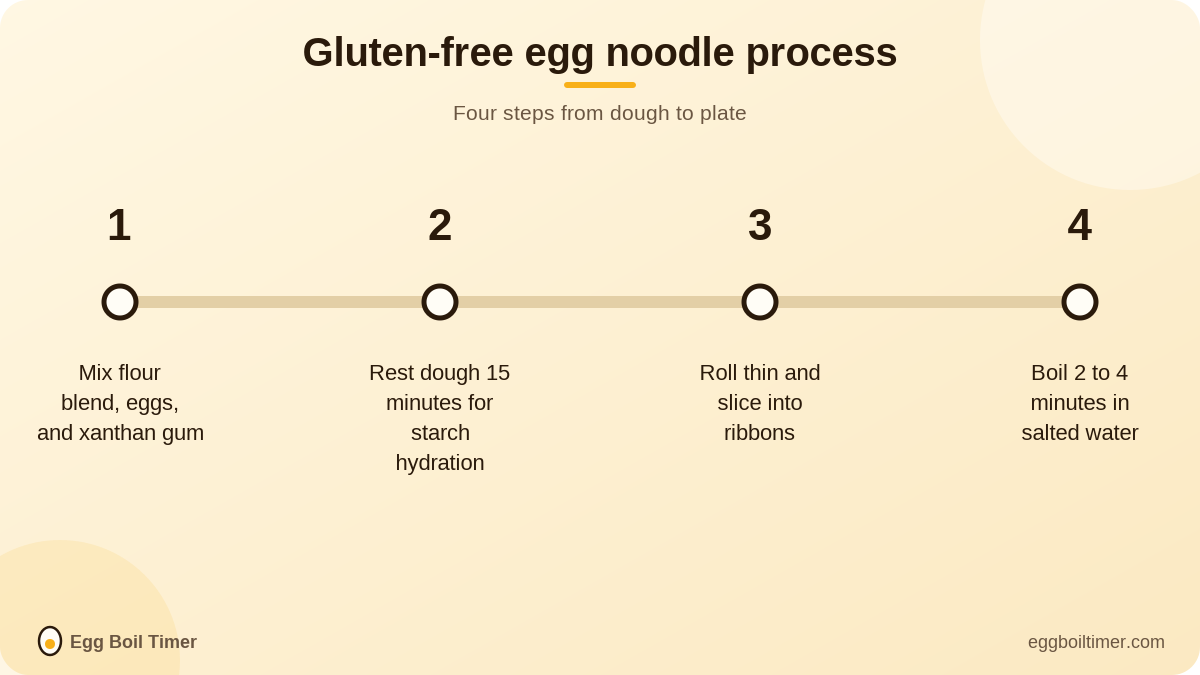
Place the flour blend, xanthan gum, and salt in a food processor fitted with a steel blade. Pulse three times to blend dry ingredients thoroughly. Add the whole eggs and egg yolks. Process on low speed for 20 to 30 seconds until small, uniform dough curds form. Squeeze a handful of curds together. If the mixture forms a cohesive ball without feeling sticky, hydration is optimal. If it crumbles, add 1 tablespoon of cold water and pulse for 5 seconds.
Turn the dough onto a piece of parchment paper lightly dusted with tapioca starch. Knead gently for 60 seconds to consolidate the mass into a smooth disk. Wrap tightly in plastic wrap and let it rest at room temperature for 15 minutes. Resting allows the starch granules and hydrocolloids to absorb liquid completely, improving rollability.

Dough Troubleshooting: Fixing Crumbly, Sticky, or Brittle Sheets
Gluten-free dough reacts noticeably to kitchen temperature, ambient humidity, and specific flour formulations. Making prompt adjustments during mixing prevents structural failure during rolling or boiling.
| Symptom | Probable Cause | Corrective Action |
|---|---|---|
| Dough cracks along edges when rolled. | Low hydration or insufficient binder. | Knead in 1 tsp of cold water and 1/8 tsp xanthan gum. Rest 10 minutes wrapped. |
| Dough sticks to parchment or rolling pin. | Excessive moisture or warm egg lipids. | Dust dough surfaces lightly with tapioca starch. Chill wrapped dough for 10 minutes. |
| Noodles fall apart in boiling water. | Weak egg protein binder network. | Add 1 extra egg yolk to the initial dough batch to strengthen coagulation. |
| Gummy or rubbery mouthfeel when chewed. | Too much xanthan gum or starch ratio. | Balance future flour mixes with higher proportions of white rice or sorghum flour. |
| Ribbons snap when lifted off the board. | Dough sheet rolled too thin for GF dough. | Maintain a minimum sheet thickness of 1.5 millimeters (setting 4 on pasta rollers). |
If dough sheets begin cracking at the outer edges during rolling, the perimeter has lost moisture. Trim away frayed edges using a bench scraper. Gather the remaining dough, knead lightly with a drop of water, and rest for 5 minutes before rolling again.

Rolling and Cutting: Manual Pin vs. Roller Attachment
Gluten-free noodle dough can be rolled using either a heavy manual rolling pin or a mechanical pasta machine. Because gluten-free sheets lack gluten stretch, apply even, gentle pressure without pulling the dough.
To roll by hand, cut the rested dough disk into four equal portions. Keep unused portions wrapped in plastic wrap to prevent surface drying. Position one piece of dough between two sheets of parchment paper. Roll outward from the center, turning the parchment frequently to maintain a uniform thickness of 1.5 millimeters.
To slice ribbons by hand, peel off the top parchment sheet. Dust the dough surface with tapioca starch to prevent sticking. Use a sharp pizza wheel or bench scraper to cut ribbons. Slice thin 4-millimeter ribbons for soup, or cut broad 12-millimeter ribbons for rich pasta dishes.
When using a mechanical pasta roller, set the machine to its widest setting (setting 1). Pass the dough portion through twice. Fold the sheet into thirds like an envelope, dust lightly with tapioca starch, and pass through setting 1 again. Progress step-by-step through setting 4 or 5. Avoid rolling past setting 5, as paper-thin gluten-free sheets tear under machine tension. Lay cut ribbons flat on parchment-lined trays until ready to cook.
Boiling Fresh Gluten-Free Noodles Without Disintegration
Cooking fresh gluten-free pasta requires ample water volume and high heat. Using a small pot causes the water temperature to plunge when raw dough enters, resulting in soggy, waterlogged noodles.
- Bring water to a rapid rolling boil: Fill a large stockpot with 4 liters of water and add 1 tablespoon of fine sea salt. High heat seals noodle surfaces instantly.
- Shake off excess starch and add noodles: Gently drop the cut ribbons into the boiling water. Stir once with a wooden spoon to separate ribbons without tearing them.
- Cook for 2 to 4 minutes: Fresh gluten-free egg noodles cook rapidly. Test a ribbon at 2 minutes for a firm, tender center.
- Drain and rinse briefly: Transfer cooked noodles to a colander. Rinse quickly with warm water to wash away loose surface starch, then toss with 1 teaspoon of olive oil or melted butter.
If you plan to use these noodles in chicken noodle soup, do not boil them directly inside the soup stock pot. Starch shed from gluten-free noodles turns clear chicken broth cloudy and thick. Boil noodles separately in salted water, divide into serving bowls, and ladle hot soup over them just before serving. Explore other structural egg dishes across our complete collection of Egg Recipes: Breakfast, Lunch, and Dinner Ideas for full menu planning.
Broth and Sauce Pairings for Homemade Egg Noodles
Fresh gluten-free egg noodles feature a rich yolk taste and a textured surface that clings exceptionally well to pan sauces and broths. Because their texture is tender, pair them with sauces that highlight their velvety bite.
In emulsified pasta preparations like classic Authentic Carbonara: The Roman Egg Emulsion Recipe, fresh egg noodles offer a tender base that absorbs rendered bacon fats and grated cheese effortlessly. For a simple comfort meal, toss warm noodles with salted butter, freshly ground black pepper, and chopped parsley.
These egg ribbons also excel in Asian broth dishes. Serve them alongside soft soy-cured yolks like those prepared for Ramen Eggs at Home: The 30 Seconds That Decide Everything in a rich garlic chicken broth. The rich egg protein in both the noodle ribbon and the topping creates a unified flavor profile. For cold meal prep ideas featuring cooked egg components, review our guide to Egg Salad BLT: Recipe, Assembly, and Egg Boiling Timing. Use our central Egg Boil Timer portal to calculate precise egg boiling times for accompanying side dishes.
Preservation: Freezing, Refrigerating, and Reheating Fresh Pastas
Uncooked gluten-free egg noodles preserve well, allowing home cooks to prepare large batches in advance for easy meal planning.
To freeze raw noodles, coat freshly cut ribbons thoroughly in tapioca starch. Form loose 50-gram nesting mounds on a parchment-lined sheet pan. Place the tray in the freezer for 60 minutes until the nests are completely frozen, then transfer them into an airtight freezer storage bag. Freeze for up to 3 months. Cook frozen noodle nests directly in boiling salted water without thawing, adding 60 seconds to the total boiling time.
Refrigerate cooked leftover noodles in a sealed container for up to 3 days. To reheat cooked noodles, submerge them in a bowl of hot water for 30 seconds, then drain thoroughly. Avoid microwaving dry gluten-free noodles without extra liquid, as dry microwave heat dehydrates starch networks, making cooked ribbons tough and rubbery.


