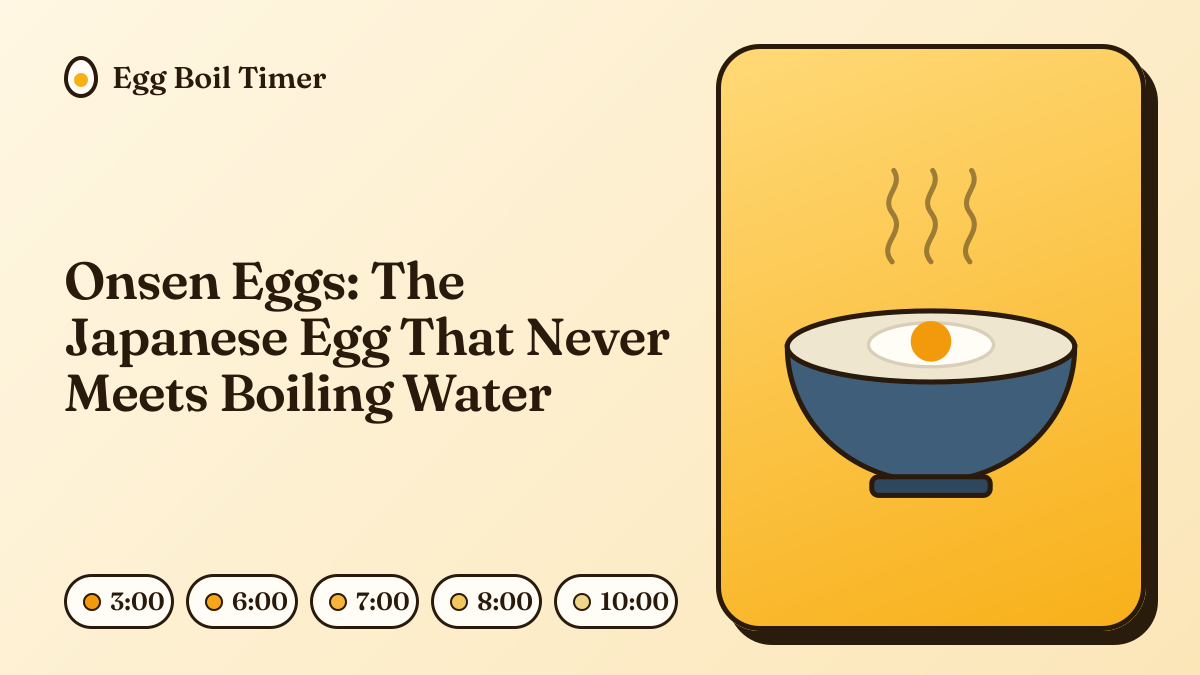
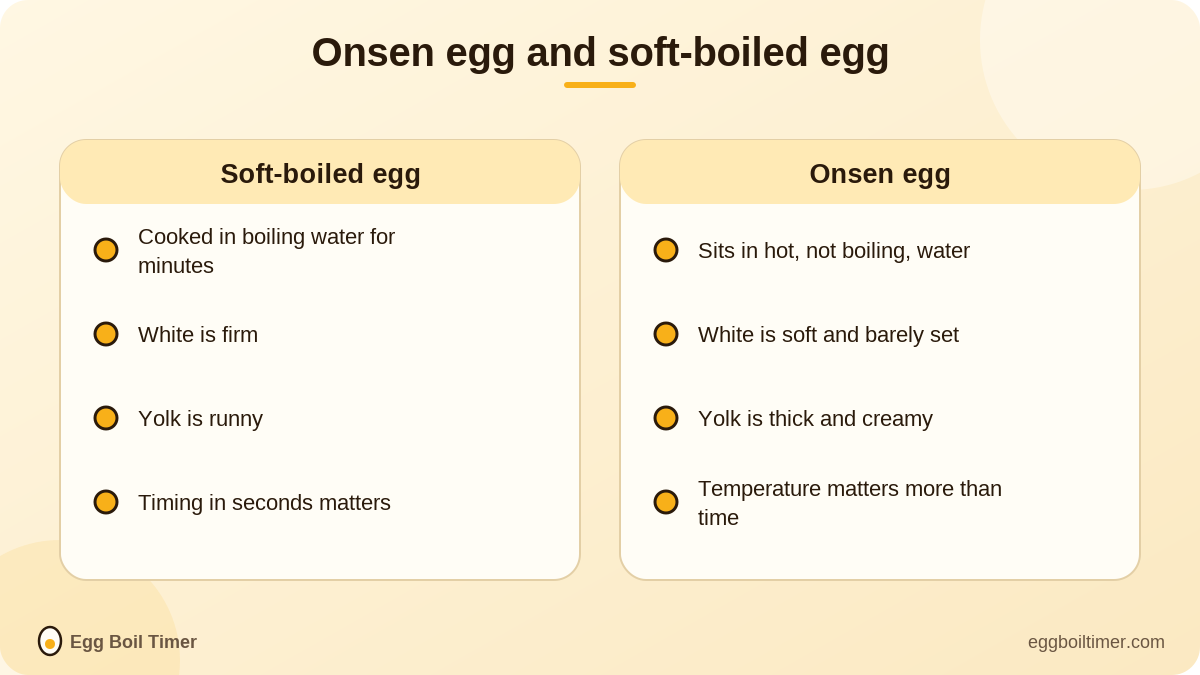
Crack an onsen egg into a bowl and it looks wrong at first. The white is loose and milky, barely holding together, while the yolk in the middle is thick and creamy. It is the opposite of a soft-boiled egg, and that is the point.
An egg cooked in a hot spring
Onsen tamago means hot-spring egg. Traditionally the eggs were lowered into the water of Japan's natural hot springs, which is hot but far from boiling, and left there for a long time.
Why the white stays softer than the yolk
Egg white and egg yolk set at different temperatures. The yolk becomes thick and then solid at around 65 to 70 °C, while most of the white only turns firm near 80 °C. In boiling water the outside of the egg races ahead, so the white is firm long before the yolk. In water held just below 70 °C the whole egg slowly reaches the same temperature: warm enough to thicken the yolk, not warm enough to firm up the white.
Time matters as well as temperature. A study in the journal Food Biophysics, on the nature of the 6X °C egg, found that a yolk held at these temperatures keeps thickening the longer it stays there, so two eggs cooked at the same temperature for different times are not the same egg.

A way to do it at home
You do not need a hot spring or special equipment. This widely used method, published by Just One Cookbook, works with a pot and a lid:
- Bring 1 litre of water to the boil in a small heavy-bottomed pot and take it off the heat.
- Add 200 ml of cold tap water. The water is now at roughly 80 °C.
- Lower in 4 large eggs straight from the fridge and put the lid on at once.
- Leave them for 17 minutes for a runnier yolk, or 20 minutes for a creamier one. The water cools to about 68 to 70 °C while they sit.
- Lift the eggs out and let them rest for 5 minutes before cracking them.
The amounts belong together: the recipe's author warns against doubling it, because more water or more eggs change how quickly the pot cools. If you have a kitchen thermometer, the target is a steady 65 to 68 °C for 30 minutes, or 68 to 70 °C for 20 minutes.

How to serve it
Crack the egg into a small bowl, like a raw egg, and pour over a spoonful of soy sauce and dashi or a light broth. It is also very good on hot rice or noodles. For a firmer egg that is marinated before it goes on the noodles, see Ramen Eggs at Home: The 30 Seconds That Decide Everything.
A note on safety
An onsen egg is deliberately undercooked. It stays well below the point the FDA recommends, which is to cook eggs until the yolk and the white are firm. Young children, pregnant women, older people and anyone with a weakened immune system should not eat it, unless the eggs are pasteurised or your country's food-safety authority says its eggs are safe to eat lightly cooked. Why that advice differs between countries is explained in Runny Eggs for Toddlers: Why the Answer Depends on Where You Live.
If you want a firm white with a soft yolk
Then you want boiling water and a clock, not a hot spring. The Soft Boiled Egg Timer is set for exactly that, and the Egg Boil Timer covers every other doneness.