Cascarones are hollowed chicken eggshells packed with paper confetti, sealed with light tissue, and cracked over a friend's head to shower them with good fortune. Popular across Mexico and the southwestern United States during Easter, Carnival, and weddings, these vibrant shells turn common kitchen discards into an energetic communal tradition.
Tracing the Silk Road to 19th-Century Mexico
Packing hollow eggshells with surprises began far from the Americas. Historians trace the earliest known ancestors of cascarones to imperial China, where emptied shells carried scented powders as formal gifts. These fragile tokens moved westward along maritime trade routes into southern Europe.
Italian courts embraced them during the Renaissance as scented projectiles for spring masquerades. Nobles tossed shells filled with perfumed water or floral talc at people they wanted to court. Spanish households continued the custom, but the modern version took shape in the 1860s. Empress Carlotta, wife of Emperor Maximilian of Mexico, brought perfumed eggshells to court gatherings in Mexico City. Everyday families adopted the ritual soon after, substituting affordable slips of cut scrap paper for costly colognes.
The term comes from the Spanish word cáscara, meaning shell or husk. Over generations, the practice moved from aristocratic ballrooms to open plazas and family gardens.
Spiritual Renewal, Good Fortune, and Fiesta Etiquette
In Mexican folklore, an egg cracked over your head confers an impromptu blessing. The custom carries strong ties to the Lenten season, linking the empty shell to the tomb and themes of resurrection found in traditional Easter Eggs: History, Meaning, Dyeing Methods, and Food Safety.
During the forty days of Lent, home cooks emptied dozens of eggs to prepare holiday pastries and casseroles. Saving those intact shells yielded clean containers for Easter Sunday. Breaking the shell signifies casting off the quiet restraint of Lent, echoing the rolled stone and the arrival of fresh spring life. The drifting burst of paper brings immediate laughter.
Regional gatherings rely on unspoken rules of courtesy. Smashing a rigid shell flat onto someone's scalp hurts. Experienced participants gently crush the shell in their palm a fraction of a second before touching the recipient's hair. This action shatters the dome in advance, dropping a loose shower of paper without a painful impact.

Preparation: Emptying, Cleaning, and Dyeing
Making a batch of cascarones works best when you save shells across several weeks of everyday breakfast prep. Taking albumen and yolk out without splintering the main body demands steady hand pressure at the wider end.
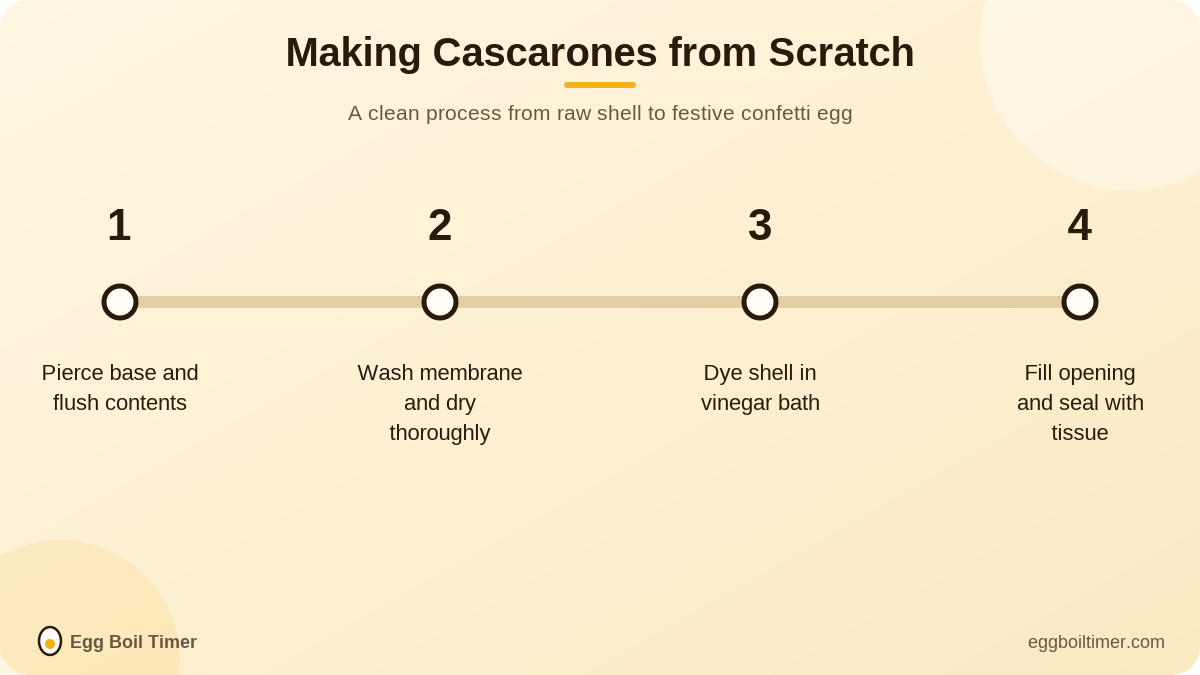
- Puncture the base: Tap the wide base of a fresh egg against a counter edge or pierce it with the tip of a paring knife. Peel back enough shell fragments to build an opening between 12 and 15 mm across. Keep the narrower pointed end intact.
- Empty and store the whites: Stir a thin metal skewer or toothpick inside the opening to rupture the yolk membrane, then shake the contents into a clean lidded bowl. Cook these eggs thoroughly for a frittata or scramble; raw eggs removed from shells belong in the refrigerator below 4 °C (40 °F) and should never sit on the counter.
- Rinse and clear the inner skin: Submerge empty shells in warm water with a drop of liquid soap and a splash of vinegar. Flush each cavity until clean. Strip out the white inner membrane near the opening so trapped moisture does not sour later on.
- Dry completely: Rest the wet shells open-end down inside a cardboard carton on a sunny windowsill for at least 24 hours. Damp walls will cause paper confetti to mold or stick inside.
- Apply color: Dip dry shells into hot dye baths mixed with vinegar, matching the liquid ratios used for standard Egg Dyeing Guide: Vibrant Colors, Natural Dyes, and Safety. Let the color set and dry before filling.

Comparing Fillings: Traditional Paper Versus Backyard Ecology
Factory-packaged cascarones often use metallic foil, plastic glitter, or mylar disks. When these break outdoors, plastic flecks scatter across turf, slip into storm lines, and present hazards for foraging songbirds and small pets.
Using compostable fillers keeps neighborhood gardens clean and cuts out tedious post-party raking.
| Filling Material | Decomposition Time | Safety for Hair and Eyes | Impact on Backyard Wildlife |
|---|---|---|---|
| Tissue paper confetti | 2 to 4 weeks in soil | Safe and soft | Neutral; dissolves in wet weather |
| Crushed dried flower petals | 3 to 7 days | Soft with faint scent | Adds organic matter to soil |
| Millet or finch birdseed | Eaten within hours | Can sting bare skin if thrown | Nutritious feed for birds |
| Punched dried leaves | 1 to 2 weeks | Light and soft | Decomposes into garden mulch |
| Metallic plastic mylar | Years | Sharp corners can scratch eyes | Toxic choking risk for wildlife |
Dried lavender, chamomile, and standard newsprint circles drop softly and vanish into lawn soil after a couple of rains. When using birdseed for park games, crush the shell above the head rather than directly on hair so loose seeds tumble into clothing rather than eyes.
Filling and Sealing the Finished Shells
With clean, colored shells ready on the table, spoon your filler into the base until the interior is roughly half full. Packing a shell to the brim leaves no air space, causing the contents to dump out as a dense wad instead of floating through the air.
Cut tissue paper into 25 mm squares to cover the hole comfortably. Brush a thin ring of white craft glue or a flour-and-water paste along the rim. Smooth the paper square across the opening, pressing the borders tight against the shell wall. Allow the glue thirty minutes to cure. You can sketch line designs over the surface with ink or wax, drawing on motif layouts common to folk Pysanky: Ukrainian Egg Decorating Symbols, Tools, and Method.
Troubleshooting Common Crafting Flaws
Preparing dozens of shells for school festivals or community events reveals a few predictable structural headaches. These practical fixes keep the project on track:
- Shells split down the middle when punctured: Cold eggs straight out of the refrigerator crack easily. Let them warm to room temperature on the counter before tapping. A small strip of masking tape placed over the base before piercing will stop shock cracks from running up the sides.
- Colors turn out streaky or faint: The natural protective cuticle on raw shells repels water-based pigments. Add 15 ml (1 tablespoon) of distilled white vinegar per 250 ml of warm dye liquid to etch the calcium carbonate surface.
- Paper patches peel loose: Adhesive fails if dried albumen coats the rim. Wipe the edge with a cotton swab dipped in rubbing alcohol before applying glue.
- Confetti sticks inside the shell: Moisture remains inside the dome. Shake the shell near your ear before filling. If you hear no dry echo, give the shells another afternoon in dry air.
Whether you break them during Easter celebrations alongside traditional outdoor How to Play Egg Toss: Rules, Variations, and Physics or save a basket for a summer block party, cascarones turn basic kitchen materials into shared play. To prepare smooth shells for future crafts or table displays, use the boiling guidelines at Egg Boil Timer to refine your kitchen technique.


