An egg hair mask delivers topical proteins, essential lipids, and micronutrients directly to damaged hair strands. Whole raw eggs contain 12.57 grams of protein and 10.61 grams of fat per 100 grams. This provides a natural conditioner. It smooths the cuticle, bonds split ends, and adds shine. A successful mask matches the egg component to your scalp condition. Leave the mixture on for 20 to 30 minutes. Rinse with cool water to stop the egg from cooking.
How Keratin, Albumin, and Yolk Lipids Work on Damaged Hair
Applying an egg hair mask reinforces the structural integrity of individual hair shafts. Human hair consists mostly of keratin. Heat styling, chemical dyes, and sunlight degrade this structural protein. Topically applied egg protein adheres to damaged areas along the hair cuticle. It temporarily fills microscopic cracks and coats the strand to reduce breakage.
Each component of the egg contributes distinct nutritional properties to hair care:
- Protein: Whole raw eggs supply 12.57 grams of protein per 100 grams. This aids short-term cuticle repair and tensile strength.
- Lipids: Egg yolks contain 10.61 grams of fats per 100 grams. These lipids nourish dry strands and restore flexibility.
- Biotin and Folate: Raw eggs supply roughly 22 micrograms of biotin and 47 micrograms of folate per 100 grams. These nutrients support hair cell metabolic processes.
- Vitamin A and Iron: Vitamin A prevents dryness. Iron supports cellular oxygenation across the scalp.
Topical egg treatments cannot alter follicle activity below the scalp skin layer. However, they physically shield the visible hair shaft from environmental wear. Fresh egg yolk lipids mirror healthy cell membranes. Our guide on Eggs and Cholesterol: What Current Science Recommends covers egg fats in detail.
Matching Egg Whites, Yolks, and Whole Eggs to Scalp Condition
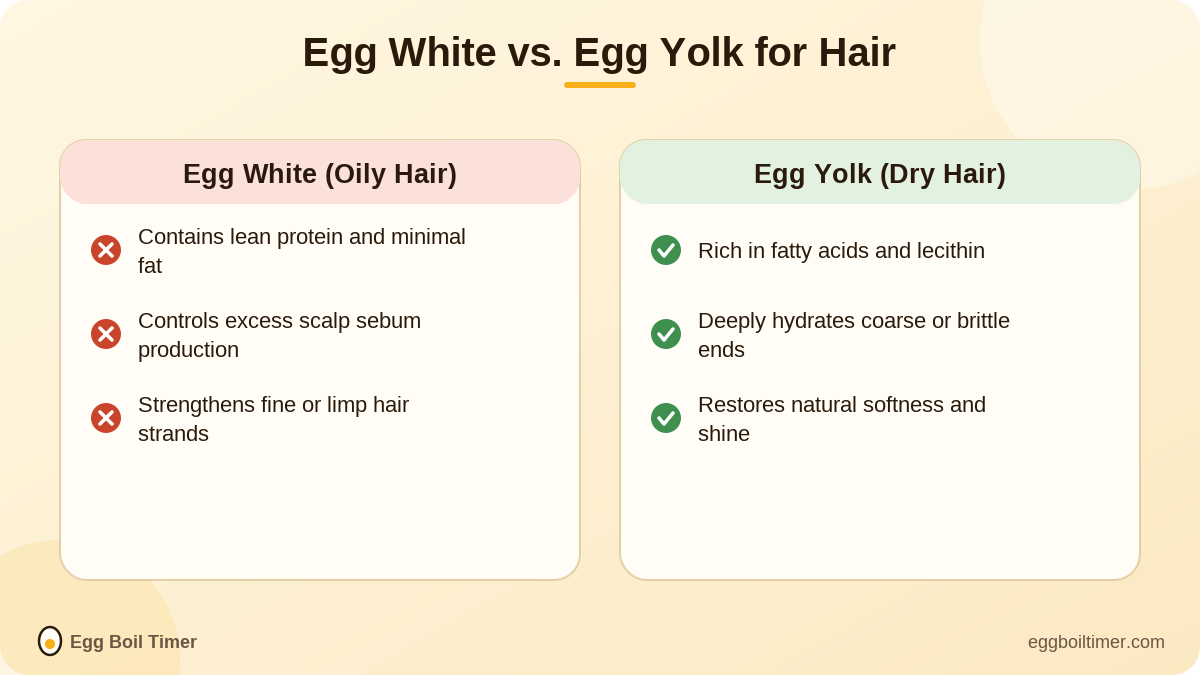
Selecting the correct part of the egg depends on your hair texture and scalp oil levels. Egg whites contain pure albumin protein with almost zero fat, making them ideal for oily scalps. Egg yolks contain high concentrations of fatty acids, lecithin, and fat-soluble vitamins. This makes yolks well suited for thick, dry, or chemically processed hair. Whole eggs work best for normal or combination hair.
Use this reference table to choose the best egg formula for your hair profile:
| Hair Type | Egg Component | Primary Benefit | Recommended Mix-In |
|---|---|---|---|
| Oily Scalp and Fine Hair. | Egg Whites (2). | Removes surplus oil and adds volume without weight. | 1 tbsp lemon juice or apple cider vinegar. |
| Dry, Coarse, or Damaged. | Egg Yolks (2). | Provides deep moisture, softens texture, and adds gloss. | 1 tbsp olive oil or melted coconut oil. |
| Normal or Combination. | Whole Egg (1-2). | Offers balanced hydration and protein reinforcement. | 1 tbsp plain yogurt or honey. |
Using the wrong part of the egg can produce unwanted results. Applying egg yolks to an oily scalp leaves hair feeling heavy and greasy. Conversely, applying plain egg whites to brittle ends can make them stiff and dry.

Mixing DIY Egg Masks for Dry, Oily, or Fragile Strands
Preparing a homemade egg hair mask takes under five minutes using basic kitchen tools. Always start with fresh, chilled or room-temperature eggs. Mix thoroughly before applying to damp hair.
Follow these standard preparation steps:
- Whisk the eggs: Crack one or two eggs into a clean bowl based on hair length. Whisk vigorously for 60 seconds until smooth with no stringy bits.
- Add functional ingredients: Blend in your chosen oil, honey, or citrus juice. Stir in one tablespoon of olive oil for dry hair. Add one tablespoon of fresh lemon juice for oily hair.
- Dampen your hair: Spray your hair with water until damp. Damp strands allow the mask to spread evenly.
- Apply systematically: Section hair into four quarters. Work from mid-lengths to ends first. For oily scalps, massage egg whites directly into the roots.
- Cover and wait: Gather hair into a loose bun. Cover with a plastic shower cap to retain moisture and prevent drips. Leave on for 20 to 30 minutes.
Never leave a raw egg mask on until it dries completely hard on your hair. Dry egg forms a stiff film that requires harsh scrubbing to remove. This aggressive scrubbing can cause hair breakage during washing.

Cool-Water Rinsing and Odor Prevention Rules
Rinsing an egg hair mask correctly requires cool water. Egg proteins denature and coagulate into solid white lumps when exposed to temperatures above 35 °C (95 °F). Rinsing with warm or hot water cooks the egg directly into your hair strands. This creates a messy residue that is exceptionally difficult to comb out.
To eliminate lingering sulfur smells and wash the mask out cleanly, follow these practical steps:
- Rinse thoroughly with cool water: Stand under cool water for two minutes. Massage your scalp gently until all liquid egg rinses away.
- Shampoo with a gentle formula: Wash immediately with a mild, sulphate-free shampoo to clear away remaining proteins and fats.
- Use an acidic rinse for odor control: Add three drops of peppermint oil to your mask mixture to reduce egg smell. Alternatively, rinse with diluted apple cider vinegar after shampooing.
- Condition as normal: Apply a light commercial conditioner to the ends. This seals the cuticle and locks in moisture.
Rinsing away raw egg residue thoroughly prevents bacterial growth in the shower basin. If you also cook with eggs, our main Egg Boil Timer provides exact boiling timers for every egg size and doneness.
Scalp Safety, Allergen Risks, and Growth Misconceptions
While egg hair masks offer clear cosmetic benefits for hair texture, several popular claims lack scientific support. Topically applied egg protein molecules are too large to penetrate deep into the hair cortex. They cannot alter the cellular growth cycle of hair follicles beneath the skin. Eggs condition existing hair strands, but they do not increase hair density or accelerate genetic hair growth rates.
Keep these safety precautions in mind when using raw egg beauty treatments:
- Egg allergies: Avoid raw egg hair masks if you have known egg allergies. Contact can trigger localized hives, redness, or allergic reactions.
- Bacterial safety: Raw eggs can harbour Salmonella bacteria. Avoid applying egg masks over open scalp scratches, severe eczema, or broken skin. Wash your hands thoroughly with soap after handling raw eggs.
- Perform a patch test: Dab a small amount of mixed egg onto your inner wrist. Wait 20 minutes to verify that no redness occurs.
Note: This content provides general cosmetic information and does not constitute medical advice. Consult a dermatologist for severe hair loss.
Masking Schedules and Refrigeration Limits
Using an egg hair mask once every two to four weeks delivers optimal conditioning without causing protein buildup. Overusing protein-rich treatments can make hair feel stiff, brittle, or straw-like over time. Hair that feels tough or loses its elasticity needs moisturizing conditioners rather than extra protein treatments.
Always mix egg hair masks fresh immediately before use. Raw egg mixtures mixed with oils or fruits should never be stored at room temperature. Bacteria grow rapidly in liquid raw egg. Keep prepared mixtures in a sealed container in the refrigerator and use them within 24 hours. Allow cold egg masks to sit on the counter for 10 minutes to remove the chill before scalp application.


