Filipino egg pie pairs a rich, firm milk custard with a flaky pastry crust, topped with a browned layer of whipped egg whites. Bakeries often pack this golden pie in a square cardboard egg pie box for easy transport. Baking it without cracks requires a two-stage oven method: 15 minutes at 180 °C (350 °F) to set the top, then 30 to 35 minutes at 165 °C (325 °F) until the core hits 71 °C (160 °F).
Filipino Egg Pie: Structure and Baking Origin
Filipino egg pie is a staple item in neighborhood bakeries across the Philippines, often sold fresh in a cardboard egg pie box for afternoon tea or family gatherings. While it shares ancestry with Spanish flan and American egg custard pies, the Filipino version stands out through its distinct two-layer construction. It features a dense custard base made from evaporated milk, sugar, and whole eggs, topped with a light blanket of whipped egg white foam that turns dark brown under high heat.
A standard slice of egg pie holds clean, sharp edges when cut at room temperature. Each 50 g egg in the recipe supplies roughly 6.3 g of structural protein, forming a firm gel matrix as heat coagulates the albumen and yolk proteins. The result is a dessert that balances clean vanilla sweetness with a dense, creamy bite, framed by a crisp butter pastry shell.
Building a Flaky Pie Crust: Fat Ratios and Blind Baking
The crust must form a sturdy moisture barrier capable of holding heavy liquid custard without softening during baking. Keeping ingredients cold prevents gluten development, preserving a tender crust texture.
- Measure dry ingredients: Whisk 180 g of all-purpose flour with 2 g of fine salt in a chilled mixing bowl.
- Cut in cold fat: Add 115 g of unsalted butter, cubed and thoroughly chilled. Work the butter into the flour using a pastry cutter or fingertips until the mixture forms coarse, pea-sized crumbs.
- Bind with liquid: Drizzle 45 ml of ice-cold water over the flour mixture. Stir with a fork just until cohesive dough clusters form.
- Chill the dough: Press the dough into a flat disc, wrap tightly in plastic wrap, and refrigerate for 30 minutes.
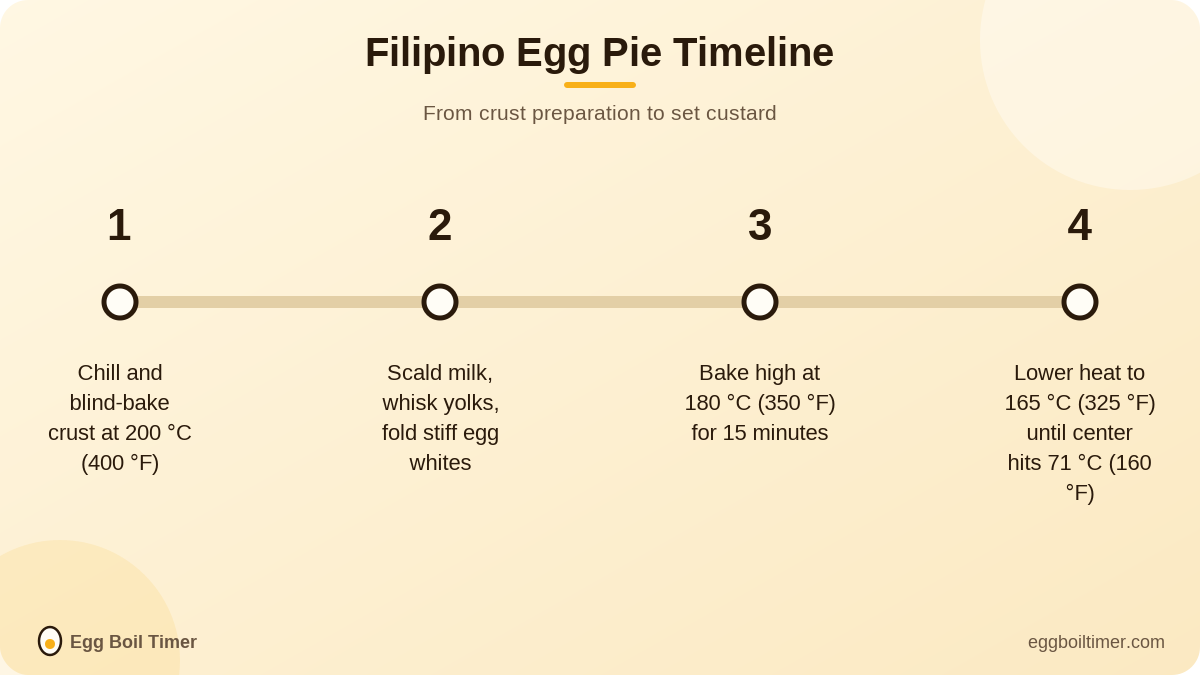
- Roll and pre-bake: Roll the dough into a 30 cm circle on a floured surface. Line a 23 cm pie pan, trim excess edges, and crimp the rim. Dock the bottom with a fork, line with parchment paper, fill with pie weights, and blind-bake at 200 °C (400 °F) for 12 minutes before adding the liquid filling.

Mixing the Custard: Scalding, Tempering, and Folding Whites
The filling relies on separating egg components to create two physical textures inside a single pie pan. Egg yolks supply emulsified fats and smooth yellow color, while beaten whites rise to form the toasted upper crust during baking.
Scald 360 ml of evaporated milk in a saucepan until steam rises, reaching roughly 70 °C (160 °F), then remove it from the heat. Scalding denatures whey proteins, preventing them from weakening the final custard set. In a large bowl, whisk 4 egg yolks, 1 whole egg, 150 g of granulated sugar, and 5 ml of vanilla extract until smooth. Slowly stream the warm milk into the yolk mixture while whisking constantly. Tempering the yolks slowly prevents them from scrambling upon contact with heat.
In a separate clean bowl, beat the remaining 3 egg whites with 1 g of cream of tartar until stiff peaks hold. Gently fold the whipped whites into the milk-yolk liquid. The airy foam will float to the top once poured into the baked crust shell. If you enjoy custard recipes like Classic Quiche Recipe: Flaky Crust and Silky Egg Custard or classic breakfast bakes like French Toast: The Ratio, Bread Choice, and Pan Heat, mastering this tempering step prevents scrambled specks in the finished pie.

Two-Stage Baking: Brown the Top, Set the Center
Baking a custard pie requires balancing two thermal needs: initial high heat to brown the egg white foam layer and gentle, lowered heat to set the inner custard without curdling the eggs. A two-stage baking schedule achieves both.
| Baking Stage | Oven Temperature | Duration | Primary Culinary Goal |
|---|---|---|---|
| Initial High Heat | 180 °C (350 °F) | 15 minutes | Browns the top foam layer and sets the outer crust perimeter. |
| Secondary Low Heat | 165 °C (325 °F) | 30–35 minutes | Gently cooks the inner custard to a safe internal temperature without cracking. |
To test doneness, insert an instant-read thermometer into the center of the pie filling. Custard pies reach safe structural solidity when cooked to an internal temperature of 71 °C (160 °F). The center should wobble slightly like gelatin when gently shaken, without sloshing. Residual thermal energy will complete setting the core as the pan cools on a wire rack.
Preventing Cracks, Weeping, and Soggy Crusts
Minor variations in oven output or pan placement can alter custard cohesion. The matrix below outlines how to spot and correct common baking defects.
| Symptom | Root Cause | Corrective Action |
|---|---|---|
| Deep surface cracks | Oven temperature too high or baking time extended too long. | Reduce second-stage heat to 160 °C (320 °F) and pull pie when core hits 71 °C (160 °F). |
| Watery base (syneresis) | Overcooked protein matrix contracting and expelling water. | Avoid overbaking; use full-fat evaporated milk rather than skim milk variants. |
| Soggy bottom crust | Liquid custard seeping into raw pastry dough before baking. | Blind-bake the crust shell and brush with thin egg white wash before adding filling. |
| Coarse, grainy filling | Egg yolks cooked too quickly during hot milk addition. | Temper yolks gradually with warm milk and pour filling through a fine mesh sieve. |
Cooling, Slicing, and Refrigeration Guidelines
Cool the baked pie completely on a wire rack at room temperature for 2 hours. Slicing warm egg pie causes the soft custard structure to collapse. Transfer the cooled pie to the refrigerator for at least 4 hours, or overnight, allowing the dairy fats and protein matrix to firm completely.
For clean bakery-style slices, cut with a thin chef knife dipped in hot water and dried between slices. Store leftover pie covered tightly in the refrigerator for up to 4 days. Because egg pie carries high moisture and protein content, keep it chilled and do not leave it at room temperature past 2 hours. Freezing is not advised, as ice crystal formation damages the custard gel, causing heavy weeping upon thawing. To explore more classic egg dishes across our guides, view our collection of Egg Recipes: Breakfast, Lunch, and Dinner Ideas or check exact egg boiling times on our Egg Boil Timer.
How Filipino Egg Pie Differs from Tart and Custard Variants
Custard pastries feature across many global baking styles, but key structural choices separate them from the Philippine bakery standard.
Hong Kong egg tarts and Portuguese pastel de nata utilize shortbread or puff pastry shells filled with yolk-heavy custards that bake glossy and smooth. They omit the whipped egg white top layer that forms the Filipino pie's characteristic dark crown. Southern American buttermilk pie mixes lemon juice and cornmeal into its base, creating a tart taste profile compared to the simple vanilla-milk base of the Philippine pie. French chess pie uses cornmeal and high sugar concentration to develop a crackled top glaze without using separate whipped whites. The Filipino method remains unique in using separated egg whites to create two distinct structural layers within a single pie crust.


